 |
| September, 2004 |
| Silver City was released on September 17, 2004 to theaters Click HERE to read Roger Ebert's movie review. HERE is another review from Connie Ogle of the Miami Herald. New York Newsday Sayles to screen new film in upstate hometown (article added September 4, 2004) By Michael Virtanen Associated Press Writer SCHENECTADY, N.Y. � Filmmaker John Sayles plans to return to his upstate hometown for an early screening of the political satire Silver City on Sept. 18, and its release in election season is no accident. The movie concerns Dickie Pilager, candidate for Colorado governor, and a corpse that turns up during a political outing. Advance notices have made comparisons to Michael Moore's Fahrenheit 911, the independent documentary critical of the Bush administration and the Iraq war. "It certainly has some of the same aim, which is to get people speaking about connections between things as they go in to vote in whatever race, including races I know nothing about," Sayles said. "It's a murder mystery as well, and it's a movie movie, a fiction movie, not a documentary." It also has Bush in its sights. The neophyte candidate Pilager is prone to misspeak, has politicians in the family and a lot of corporate money behind him. "He's pretty much based on George Bush when he ran for governor of Texas the first time," said screenwriter and director Sayles. "You get the feeling the backers found the candidate rather than the candidate found the backers." The 53-year-old independent filmmaker's 15th movie will open in about 25 cities and 60 screens Sept. 17, probably twice that the second week. "It's a bit more than usual," he said last week, though far from the 2,000 or 3,000 screens for a studio release. "It's still a very low-budget movie," Sayles said. The cast includes Oscar winner Chris Cooper as Pilager, plus Kris Kristofferson, Daryl Hannah, Richard Dreyfuss and Mary Kay Place. On Sept. 18, Proctor's Theatre in Schenectady is hosting a screening after discussions by Sayles and partner Maggie Renzi on the connection between independent filmmaking and politics. The theater scheduled four of his other films in the week before. The 78-year-old downtown theater also is establishing a regional entertainment hall of fame with Sayles as its first inductee, Proctor's spokeswoman Kathy Jarvis said. Democratic Schenectady Mayor Brian Stratton will give Sayles the key to the city, she said, and the fine arts wing of the high school will be named for him. A post-screening party with Sayles and the other events are fund-raisers for the theater, now undergoing renovation with major expansion planned that officials hope will revive the Rust Belt city's downtown. City Democrats plan to hold a fund-raiser as well at the Parker Inn next door and expect Sayles and Renzi to stop by, Jarvis said. After growing up in Schenectady, Sayles attended Williams College. He appeared in school plays and summer stock. In the 1970s, he published two novels and a short story collection and worked as a screenwriter for Roger Corman. The screenplay for 1980's Return of the Secaucus Seven, about a reunion of '60s activists, won the Los Angeles Film Critics Award. In 1983, Sayles received a MacArthur Foundation grant. He has acted in two dozen films, including many of his own. "I've certainly done other political films," Sayles said. "City of Hope was probably the most political of the other ones. Matewan got into the labor politics of the early 1920s. And certainly there is some satire in Return of the Secaucus Seven, although it's kind of about footsoldiers, not about politicians themselves. "I think it's (Silver City) the first movie that we made that very specifically deals with electoral politics." When asked, Sayles recalled being an independent but voting for George McGovern for president in 1972, despite suspicions many people held about the Democratic Party machinery that had made Hubert Humphrey its candidate four years earlier. He also recalled the late Rep. Sam Stratton, longtime Democratic congressman from Schenectady and father of the current mayor, as someone his father knew a little and admired for being straightforward. "We lived in upstate New York so it was a place where a lot of people voted Democratic in presidential elections," he said, "and voted for Nelson Rockefeller for governor." IGN Entertainment Interview: Enid Zentelis The writer-director discusses her debut film, Evergreen. (Article added September 13, 2004) By Todd Gilchrist After receiving a nomination for the Grand Jury prize at the 2004 Sundance Film Festival, Enid Zentelis' feature writing and directing debut Evergreen finally makes its way to theaters this week in a limited run that promises to win the film a modest degree of commercial success in addition to the accolades of months past. At the same time, its themes of poverty and affluence and their relative effect on everyday problems becomes an interesting quandary for the filmmakers to confront as the picture reaches out towards audiences nationwide: does box office success resolve those heady production problems and miserable negotiations that transpired during the incipient stages of the film's development, or do they merely obscure the battle that was fought to bring the material to the screen? As Zentelis recently described to IGN FilmForce, the victory is just earning Evergreen the chance to be seen. "There was nothing easy about making this film," Zentelis said at the film's recent press day. "Waking up today was one of those revelatory moments; I made this brick by brick, starting out alone without producers or anyone else. I just started gathering nuts and berries hoping that one day it would pull together," she says with a laugh. Detailing some of the hurdles she had to overcome, Zentelis says, "I was a first time director, and the lead was a fourteen-year-old girl, which I didn't want a starlet [for], I wanted to shoot it in Washington state. There were certainly some support systems I had, like the Sundance Institute, but essentially no one thought it was a good idea for me to go up to small town Washington and bring in all of the actors and shoot half on 35mm and half on HD, and all of these kinds of things that slowly but surely started aligning themselves in a really amazing and efficient way. "We were able to pull it off in a really short amount of time, I [was lucky] that I had gotten what I needed to get on film emotionally and story-wise." Evergreen follows the coming-of-age story of Henri (Addie Land), a mopey 14 year old who begins to idolize the affluent but far-from-perfect lifestyle of her boyfriend Chat (Noah Fleiss) and his parents Frank (Bruce Davison) and Susan (Mary Kay Place). Even though it traces her existence with the same basic framework as recent films like Thirteen, Zentelis insists that it was not her intention to make the film appealing only as a teen tome. "I didn't set out to make a teen movie or think about those kinds of films," she says. "I really wanted to find a way to talk about class in small town America and talk about it directly without any excuses. I thought the best way to do that was to create characters that were as sympathetic as possible, but flawed. I wanted to make a realistic story. To me, the 14-year-old girl in the movie is just an interesting character and not at all a 'teen movie' [character]." Part of Zentelis' insistence of focus on the subject of class was based on her own childhood, which more closely resembled Henri's life at home with her mother and immigrant grandmother than her well-to-do hosts across town. "I grew up poor, but I grew up with many other privileges. Both my parents were immigrants, but they were very well educated and I had a lot more privileges than most people in a lot of respects � except for economically � so I was able to have an outside eye on what it was I was experiencing. Making this film, one of the key things I wanted to counter was some of those 'wish fulfillment' films that are so popular. It's not that I am opposed to escapist films, but in the case of class, I think it's [likely] to do more damage than good for a lot of people, particularly the working poor, because [these movies] all but sculpt what we're supposed to dream and aspire to. "It pushes one more untruth onto people, especially young people who maybe don't have a perspective on the situation," Zentelis continues. "They think, 'Oh, once I get paid, this is all going to change. This is what I aspire to, and this is how it all works � I just keep working, and it's rags to riches.'" Zentelis notes that much of the feedback she received from potential studios and production companies asked her to soften the edges of her unflinching scrutiny of the divide between the haves and have-nots. "As I was trying to get the film made, and one note that was repeated [from studios] was 'Can you make the poor family less poor and make the wealthy family wealthier?' Some studio people just could not understand how the mother could end up in such a bad situation. She was so intelligent, so how could she be so poor? The notes asked if she could be an alcoholic or in an abusive relationship; drama is big, they said, and audiences expect a big event to shock them. "To me, there are plenty of events in everyday life that don't involve crack cocaine or someone getting their head blown off that are plenty dramatic and can engage audiences." As Evergreen engaged audiences at Sundance this year, one member in attendance happened to be no less than AMC Theatres' Chairman Dick Walsh, and he ultimately inked a deal for the exclusive distribution rights to the film, which is now playing across the country. For Zentelis, the lessons learned on her first film are more valuable than multi-picture deals or potential commercial success, nice though both of those things may be. "There's this political aspect to my personality that pushes me to make films that are difficult to get made," she says. "There also is this artistic side of me that is interested in getting people involved in the story and makes them empathize in a way that's not political. "Finding a way to balance both sides of my personality for Evergreen definitely taught me things I'll use again," Zentelis reflects. "I have an agent and I have scripts sent to me, which is a big difference, but I want to stay committed to writing and directing my own stories. "I did so much on my own for this film that I know the ins and outs of what it takes, and feel I can use that to make more informed creative decisions in the future." Evergreen was released on September 10, 2004 to theaters Click HERE to read an excellent movie review from the Hollywood Reporter. The Boston Globe Exhibiting creativity pays off for director (Article added September 10, 2004) By Robert W. Butler Knight Ridder Michelangelo had the de Medicis. Shakespeare had the Earl of Southampton. First-time feature film director Enid Zentelis has AMC Entertainment. Today, AMC will debut Zentelis's coming-of-age film Evergreen, on 114 of its screens in 27 cities. It may be the first time a major theater chain has "adopted" a film, bypassing conventional distribution to bring a picture directly to customers. To cut costs associated with marketing and distributing the modestly budgeted movie, AMC has taken advantage of digital technology. Rather than strike exhibition prints of Evergreen (which could cost up to $2,500 each), the company is beaming the film into theaters by satellite. It will be shown using the digital projectors that display the chain's shows of trivia and advertisements. That's another first. For Zentelis, who feared that her low-budget movie might go unseen or be lost in the art-house ghetto, it's a happy ending to a project that has consumed several of her 33 years. Evergreen is the story of Henri (Addie Land), a teen dragged by her single mother (Cara Seymour) between minimum-wage jobs and bad relationships. Now they've spent their last dollars on bus tickets to Everett, Wash., where they'll sleep on the floor of the tumbledown house occupied by Henri's grandmother (Lynn Cohen). Henri hates her poverty, and is ashamed of her family. When classmate Chat Turley (Noah Fleiss) invites her to his home, she's welcomed by his parents (Mary Kay Place and Bruce Davison) and floored by the Turleys' wealth and sophistication. She wants desperately to become part of their seemingly ideal world. Only later does Henri realize that the Turleys have problems that not even money can solve. Evergreen isn't autobiographical, Zentelis said. "It's a work of fiction, but I write about what I know. I've worked every kind of [lousy] job you can think of since elementary school." Zentelis studied film at New York University, where she won several awards for her shorts Dog Race and The Man With My Nose and made the documentary Granny Was an Outlaw, about her grandmother's experiences during World War II. She was a director for hire, making documentaries. "I also did housekeeping, office work . . . whatever it took to keep my head above water." In 1999 Zentelis began writing Evergreen and in 2000 she refined it at the Sundance Writers Lab. Getting the film made, though, was another story. "We put together some financing in New York, but it all fell apart. Instead of giving up, I went to Seattle determined to put the production together any way I could." The Sundance Institute gave her a camera and film stock. She assembled a crew, most of whom agreed to work for deferred salaries. And she sent her script to Place and Davison. At January's Sundance Film Festival, Evergreen played to enthusiastic audiences but wasn't picked up for distribution. In recent years the cost of marketing and distributing a typical Hollywood feature has risen to nearly $30 million. Without major stars, action, special effects, or adolescent humor, the low-profile Evergreen couldn't justify that sort of investment. Quality wasn't the issue. Marketability was. A month later Zentelis was brainstorming with her producers and colleagues about how they might get Evergreen into theaters when she remembered meeting a man named Dick Walsh at the final Sundance screening of her film. Walsh, chairman of the AMC Film Group, recalls being blown away by Evergreen. "My economic background wasn't the greatest," he said. "I wasn't born on third base, . . . and watching this movie I was reminded of my own teen years. The experiences this girl in the movie goes through were exactly the sort of thing I remembered. "It was a very accurate portrayal of the things a family goes through when they're struggling economically." Walsh was one of several people who left Zentelis their business cards. "He told me: `This film deserves to be screened in a top-quality venue.' " It was a few weeks before she actually took a hard look at the card and realized that Dick Walsh ran one of America's biggest exhibition chains. "It took a while for us to wrap our minds around what this could mean," she said. � Copyright 2004 Globe Newspaper Company. Latter Days was released on DVD on September 7, 2004 Here is a link to the film's official site: http://www.latterdaysmovie.com Product Details Actors: Steve Sandvoss, Wes Ramsey, Rebekah Johnson, Amber Benson, Khary Payton, See more Directors: C. Jay Cox Format: Closed-captioned, Color, Widescreen, NTSC Language: English Region: Region 1 (U.S. and Canada only. Read more about DVD formats.) Aspect Ratio: 1.77:1 Number of discs: 1 Rating: Unrated (or R) Studio: TLA Releasing DVD Release Date: September 7, 2004 Run Time: 107 minutes DVD Features: Available Subtitles: English Available Audio Tracks: English (Dolby Digital 5.1) Commentary by: C. Jay Cox, Wes Ramsey and Steve Sandvoss Music Videos Behind the Scenes Featurette Deleted Scenes Photo Gallery Reason Thirteen Short by C. Jay Cox Commentary with C. Jay Cox, Wes Ramsey and Steve Sandv |
 |
|
 |
| Back to Mary Kay Place News Main Page |

|
| Visitors Since September, 2004 |
 |
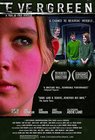 |
| Click HERE to visit the Official Evergreen Film Site |