| Page 3 of 5 | ||||||||||||||||||||||||||||||
| Revised: Feb 26, 2001 | ||||||||||||||||||||||||||||||
| The Nullabor Plain | ||||||||||||||||||||||||||||||
| How the Nullabor was Formed | ||||||||||||||||||||||||||||||
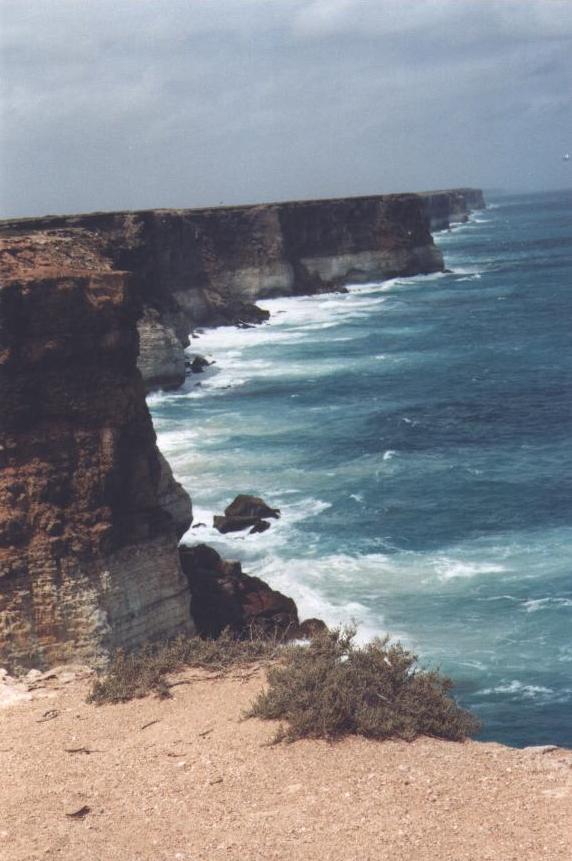
| The Nullabor Plain is the world's single biggest lump of limestone..over 250,000 square kilometers The limestone that comprises the vast Nullabor Plain was formed approximately 50 million years ago, about the same time Australia was breaking away from Anarctica. The continent tilted slightly, and the Nullabor Plain became part of the seabed where marine organisms deposited their skeletons over 20 million years ago, eventually forming a crust of limestone over 300 meters thick. |
||||||||||||||||||||||||||||||
| With the coming of the ice age the seas receded leaving the Nullabor Plain both high and dry. The process was repeated about 20 million years ago during a bit of a warm spell, and the end results of Mother Nature's handiworkcan be viewed in the colored striations in the towering Bunda Cliffs. | ||||||||||||||||||||||||||||||
| Nullabar Pages: | ||||||||||||||||||||||||||||||
| back to WA Hone Page |
||||||||||||||||||||||||||||||
| 2 | ||||||||||||||||||||||||||||||
| 1 | ||||||||||||||||||||||||||||||
| 5 | ||||||||||||||||||||||||||||||
| 3 | 4 | back to INDEX Page |
||||||||||||||||||||||||||||