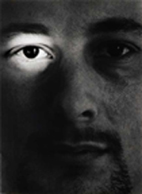
| LOUIS ARMAND is an artist and writer who has lived and worked in prague since 1994. his work has appeared internationally. his reviews, critical essays, poetry, fiction and translations have appeared in numerous journals and anthologies, including sulfur, meanjin, frank, poetry review, stand, triquarterly, culture machine and calyx: 30 contemporary poets, eds. michael brennan and peter minter (sydney: paper bark press, 2000). in 1997 he received the max harris prize for poetry at the penola festival (adelaide), and more recently he was awarded the nassau review prize, 2000 (new york). louis armand is a member of the editorial board of rhizomes: studies in cultural knowledge, an editor of the comparative studies journal litteraria pragensia and founding editor (1994) of the online journal hjs (hypermedia joyce studies). armand is also an editor at the prague-based publishing house Litteraria Pragensia (www.litterariapragensia.com). his literary publications include: strange attractors (cambridge: salt, 2003) land partition (melbourne: textbase, 2001) the garden (cambridge: salt, 2001) inexorable weather (lancashire: arc, 2001) base materialism (new york: x-poezie, 2001) synopticon with john kinsella (florida: mudlark, 2000) anatomy lessons (new york, 1999) erosions (sydney: vagabond press, 1999) seances (prague: twisted spoon press, 1998). malice in underland (melbourne: textbase, 2003). other books include techne: james joyce, hypertext & technology (prague: karolinum/charles university press, 2003) and joycemedia (prague: litteraria, 2004). louis armand is currently director of intercultural studies at the philosophy faculty of charles university, and director of the prague james joyce centre. |
 |
| Among the most prolific and widely received poets of his generation, Armand�s work has been described by Miroslav Holub as luminous with verbal innovation and critical insight. As the editor firstly of the Prague Revue and later of the PLR (Prague Literary Review) � Armand has participated in, and often presided over, many of the literary transformations and reformations of the decade since communism�s collapse in central Europe. At the same time, Armand�s work has remained strongly internationalist, eschewing the facile temptations of literary nationalism This volume confirms Armand�s standing as a major figure of the Prague renaissance and the post-fin-de-si?cle of English-language poetry internationally. |