EDIFICES OF THE REAL: THE ART OF LOUIS ARMAND
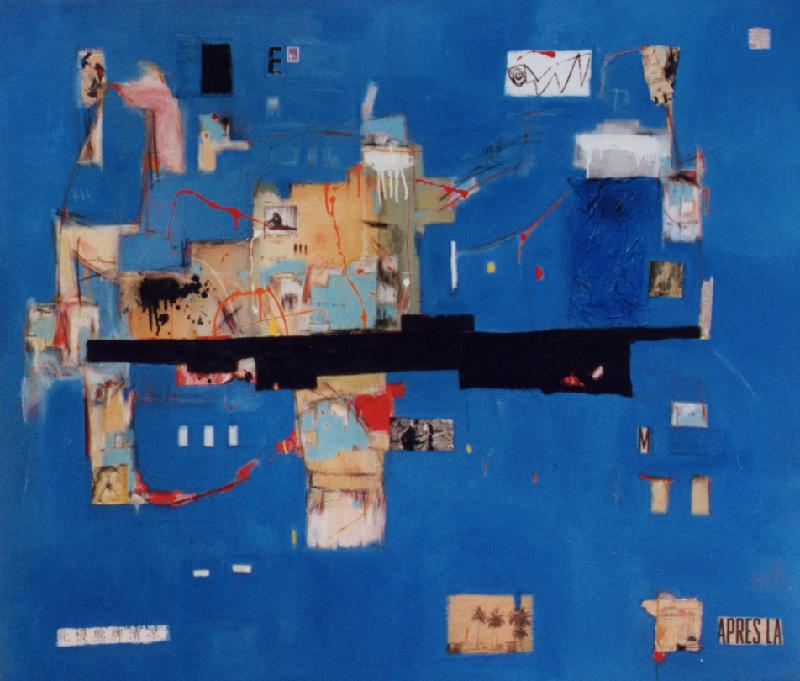
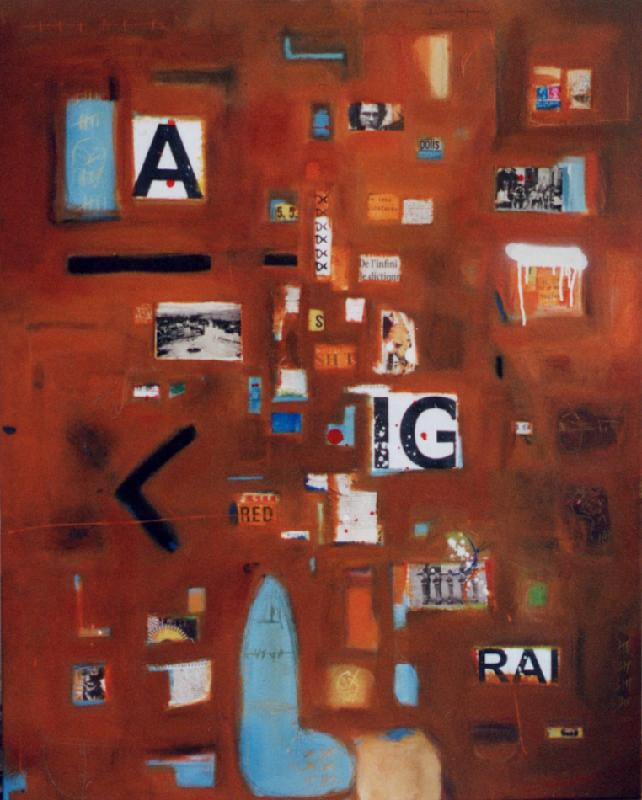
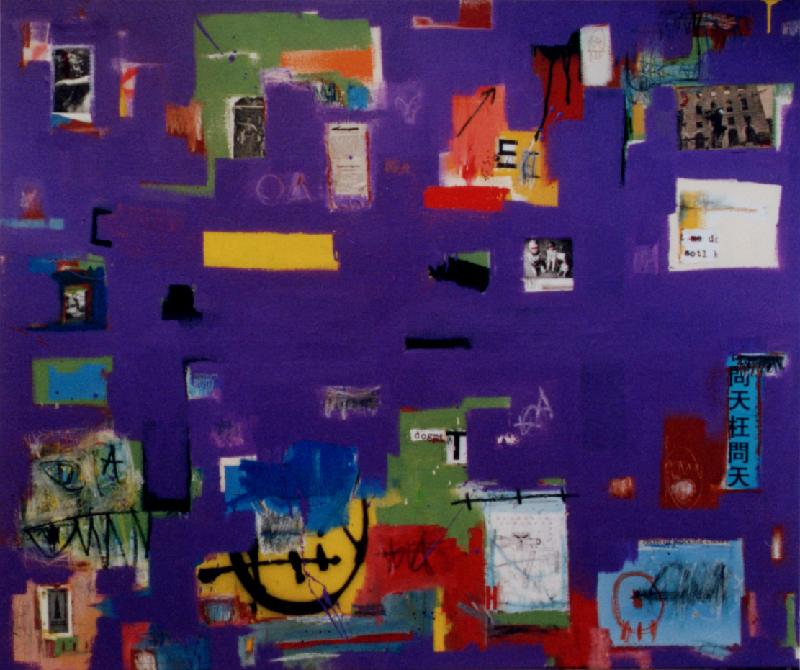
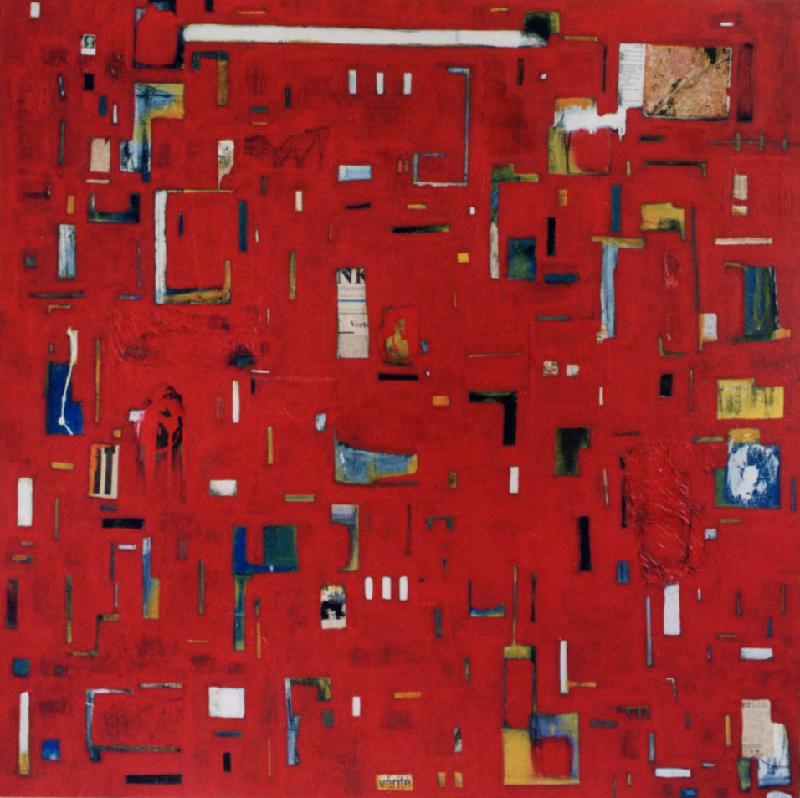
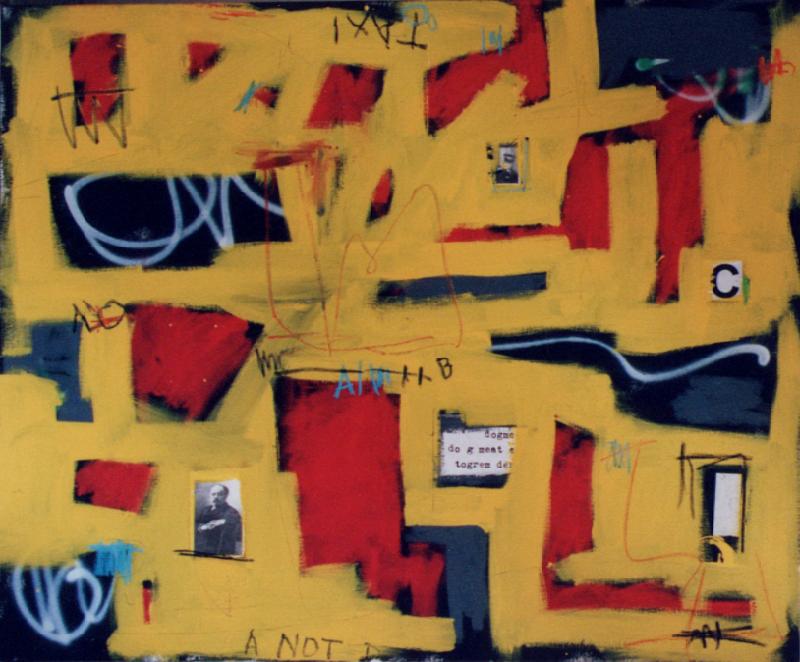
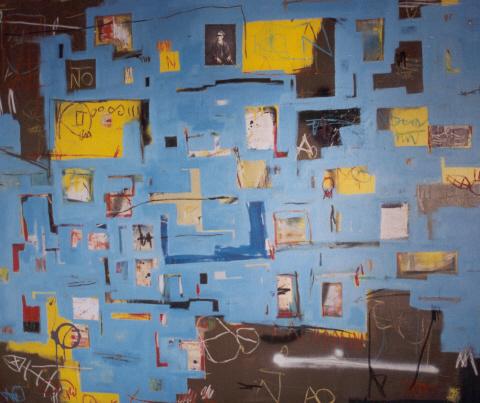
The work of Australian-born painter and poet Louis Armand infuses elements of the historical avant-garde with street art into compositions of epic proportion. A professor of critical theory at Charles University, Armand's clear affinity for the textual apparatus becomes apparent when looking at his mixed media compositions, which tend to occur on large canvases densely layered with acrylic paints and scraps torn from magazines, newspapers, mail, and other sources. One finds in their similarity an interconnectedness that in many ways unites them all into one large, on-going work-in-progress, one that may never be completed. But that's not the point; what's important here is the process itself, which the painting records.
With their heavy usage of fragmentation, Armand's canvases can be viewed from a distance, although there is so much happening in them that they require detailed examination. Examining the scraps that one finds integrated into the paintings, often times painted over so that they're only partially visible-or placed "under erasure," the initial temptation is to be totally seduced by the image as an individual part of the whole. But when one stands at a distance, the randomness of its contribution to the overall composition allows it to retain its elemental status; that is, none of these tiny bits possess a cement of their own, ultimately relying on the composition as a whole.
Everywhere one looks, the artist's hand is present. Armand works fast, clinging hard to the impulsive moment of creation, constantly re-working the paint to avoid a flat surface until he gets frustrated and walks away. This frustration with the process of artistic creation reveals itself in the finished painting, effectively bringing to light the inherently chaotic machinations of everyday life while simultaneously commenting on an unpleasant facet of artistic creation, namely the inability to ever "finish" what one has started.
Armand's "graffiti modernism" alternately calls to mind dada collages, geometrical abstraction, concrete poetry, Rauschenberg, Pollock, Twombly, and Basquiat, and embedded within his paintings is a critique of the gross usurpation of these artists and methods into the art historical canon, as well as a more general sociocultural reflection that is situated both in history and the present. One finds an example of Armand's particular style of expropriation in the large-scale paintings Part One and Part Two. Here, we encounter a violent melding of media onto the canvas, a sort of dance between blood red paint, pages and pictures and advertisements ripped out of magazines, air mail envelopes, empty crossword puzzles, bits of heavy canvas and screen applied directly to the larger canvas. (Due to their texture, Armand's paintings suffer severely in photographic reproduction.) These disparate elements of an urban environment are articulated more precisely in the second painting, wherein bluish-grey city tenements seem to vaguely emerge amidst the chaos of detritus, rising higher and higher until disappearing off the canvas.
These works abound with windows, shapes, and bizarre configurations that are scratched, chalked, erased, or painted on to the canvas into a multidimensional universe of geometry. In the words of the artist, "The 'edifice of the real' is simply a matter of geometry--geometry being the set of relations between points defined in space (or by spatial duration). Each of these point-relations constitutes in itself a set of alternative possibilities to its particular situation at a given time. Geometry, therefore, is a means of describing situations for which it can neither account nor determine a meaning. Nor does it constitute a technics, as in fact geometry does nothing in and of itself. In this way, too, geometry is proximate to what is termed art--that is, one means among others of describing a certain type of material situation."
--� Travis Jeppesen, 2003 (originally published in Umelec) |