 |
| THEMES & SYMBOLS |
| Page 4 |
 |
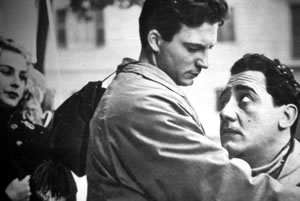
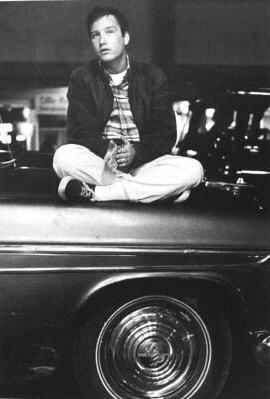
| There are similar characters in both Graffiti and its Italian predecessor. In both films, the sensitive intellectual acts as the director's surrogate. He is the amiable dreamer and writer of the group and is the one who finally breaks away. In the closing scene, Moraldo leaves town in search of a better life in the middle of the night. Similar to Moraldo, Curt in American Graffiti leaves town to go to college back east leaving behind his family, friends and all that is familiar. |
| George Lucas at 28 years old created a masterful cinematic work with American Graffiti. From a loose, autobiographical perspective, he recreated and documented the car cruising culture of his teenage years. Within the film, themes and motifs are used that were first evident in his student films at USC and later re-examined in his first three feature films. The fact that Lucas is able to re-visit and explore similar themes in vastly different contexts is a testament to the consistency and quality of his work. |
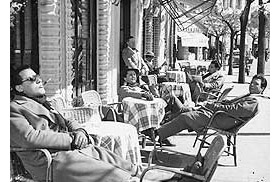
| The storyline for Graffiti was inspired by a movie that Lucas admired very much. A devotee of post-war European films, Lucas has said Italian filmmaker Federico Fellini's, I Vitelloni (1953) directly influenced him. Fellini's film is about a group of five vitelloni or slackers who live in a small costal town. They are clinging hopelessly to their adolescents while they struggle to come to terms with adult responsibilities. Fausto (Franco Fabrizi) is the head of the group, a sly womanizer who will stop at nothing to score with the ladies. He is joined by aspiring writer Leopoldo (Leopoldo Trieste), musician Riccardo (Riccardo Fellini), the immature Alberto (Alberto Sordi), and Moraldo (Franco Interlenghi). The only way for any of the guys to fulfill their dreams is to leave their hometown. But none seem too motivated. They are desperate to get out yet terrified to leave. |
| -Artifacts from the Future: The Making of THX: 1138. Prod. Dir. and Ed., Gary Leva. Supplementary to THX: 1138 Director�s Cut. DVD. Warner Brothers, 1970, 1998. -Baxter, John. Mythmaker:The Life and Work of George Lucas. Avon Books, New York, 1999. -Greenspan, Roger. American Graffiti. New York Times. Aug 13, 1973. Levy, Emanual. Cinema of Outsiders. New York University Press, New York. 1999. -Margolis, Jon The Last Innocent Year. William Morrow and Company, Inc. New York, 1999. -My Voyage to Italy. Dir. Martin Scorsese. DVD. Dist. Buena Vista Home Entertainment, 2003. -Pollock, Dale. Skywalking: The Life and Films of George Lucas. Updated Edition. DeCapo Press, New York, 1983, 1999 -Weigand, Chris. Federico Fellini. Taschen, Los Angeles, 2003. |
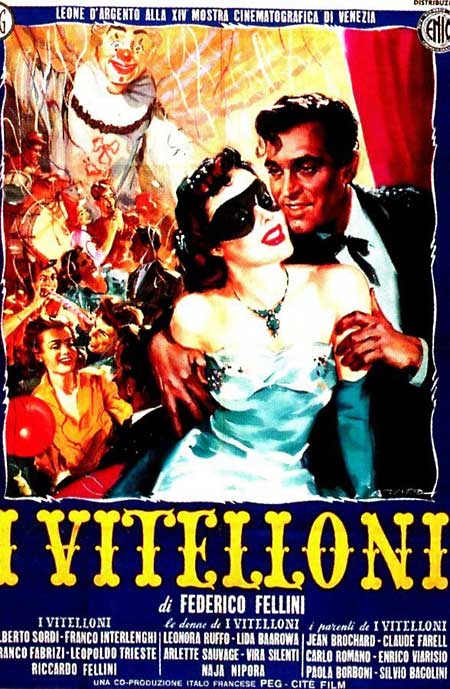 |
| VITELLONI means "big calves" in Italian; Fellini uses the word to describe idle young men without occupations who refuse to grow up and are supported by parents, relatives and friends. |
| Of the entire circle of friends, only Moraldo seems to have concerns about his actions. The others don't care very much about their lives or their future. The vitelloni's biggest ambitions are playing pool and finding their next sexual conquest. Fausto is the worst about sexual encounters, as he will do whatever it takes to seduce a woman, then drop her like a hot potato. All of them still live at home with their parents, but instead of going to school, learning a trade, or putting in a hard days work, they choose to stay out all night and chase women. But when Fausto has to face the music when one of his conquests turns up pregnant, the eternal childhood is endangered. Moraldo has started to doubt his choices as well, but he must break free in order to enact real change in his life. He has doubts as to weather he can leave his friends behind. Sound familar? Filmmaker, Martin Scorsese has wonderfully summarized the theme of I Vitelloni, saying, "It captures the bittersweet emotions of a moment that eventually comes for everyone. The moment you can either grow up or stay a child forever." |
 |
 |
 |
 |
|
| NOTES: |