 |
 |
| Heart and Soul: The Cleftones (1:49) Hailing from Jamaica, New York, The Cleftones were a quintet that was adept at re-interpreting old standards. Larry Clinton who had a number one hit with the tune in 1938, originally popularized "Heart and Soul." The song turned out to be good luck for the Cleftones, giving them a hit single in 1961 that reached number 18 on the charts. It was their first chart single in five years. Green Onions: Booker T. and the M.G.'s (2:25) Booker T. Jones who played saxophone and keyboards became part of the Stax establishment in 1960. Jamming with Mar-Keys guitarist, Steve Cropper led to the creation of the M.G.'s (Memphis Group) and to the recording of "Green Onions." The single went to number 3 in 1962. Several instrumental hits followed but the band is most famous for doing back up work on hits by other Stax artists including Otis Redding, Wilson Pickett, and Rufus Thomas. |
| Side 4 of 4 (Record 2) Continued |
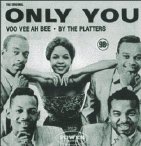
| Only You (And You Alone): The Platters (2:35) Released in July of 1955, "Only You" The song became an instant hit and stayed on the charts for an incredible 30 weeks. The tune was written by the bands manager, Buck Ram who also played piano on the session when the original pianist had to leave early |
 |
| Goodnight, Sweetheart, Goodnight: The Spaniels (2:43) Like so many black artists in the 1950s, The Spaniel's single, "Goodnight, Sweetheart, Goodnight" had to compete in the charts with the McGuire Sister's version of the song that was recorded for the white market. Despite the competition, The Spaniels' version managed to reach number five on the R&B charts in 1954. |
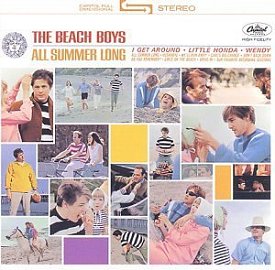 |
| All Summer Long: The Beach Boys (2:05) Probably the first rock song to feature a xylophone, 1964's "All Summer Long" is an upbeat classic summarizing all the fun that happened over the summer, presumably at some California beach. Such fine song craftsmanship was the result of songwriter Brain Wilson feeling an immediate and lasting rivalry between the Beach Boys and the lads from Liverpool, The Beatles. A little healthy competition never hurt anyone, and it certainly sparked a creative drive in Brian that resulted in many catchy pop-gems like this one. |
| REFERENCES: George-Warren, Holly (Ed) The Rolling Stone Encyclopedia of Rock & Roll Fireside. New York. 2005 Warner, Jay American Singing Groups Hal Leonard Corp. Milwaukee. 2006 |
| (c.) Mark Groesbeck 2006-2008 |
| SOUNDTRACK Page 7 |
|
| BONUS!: Two songs from the movie that didn't make the soundtrack album |
| Gee: The Crows The Crows were a vocal quintet that consisted of Sonny Norton (lead), Harold Major (tenor), Mark Jackson (tenor) Bill Davis (baritone) and Gerald Hamilton (bass). Their song "Gee" along with "Sh Boom" by the Chords, are often credited as being the first records to "crossover" into the white market. Good things were happening for the Crows in the spring of 1953 when they won first place in the finals of the amateur night show at Harlem's Apollo theater. This led to a record contract with record label Rama and the single "Love You So" b/w "Gee" being released in June. The single gained some popularity on the R & B charts before it started to fizzle. However, after a lapse of a few months, "Gee" began to slowly build in popularity. By the end of the year it was beginning to get serious airplay on mainstream radio. The popularity of the tune, with its catchy vocals and Charlie Christain-like guitar solo, spawned two cover versions by other artists in 1954: June Hutton on Capitol and The Skyliners on Columbia Records. Despite the competition of other groups, The Crow's version of "Gee" was quite successful, reaching number 14 on the pop charts during the early months of 1954. |
| Louie, Louie: Flash Cadillac The Kingsman were the band that popularized "Louie, Louie" back in 1963. However, the song's history goes back a bit further. "Louie, Loue" was written in 1955 by Richard Berry and released as a single in 1957 on Flip Records. Recorded with the Pharaohs, Richard created an infectious, calypso-style tune that was originally intended as the B-side for his recording of "You Are My Sunshine." Although Berry's version was a moderate success in the Los Angeles area, he wound up selling the publishing rights to pay for his wedding. It wasn't untill later that he realised he had made a mistake by prematurely selling the publishing rights to a song that would become an ever-lasting, well-known party favorite. Luckily, with the help of an organization by the name of Artists Rights Enforcement, Richard Berry was able to recover some of his publishing rights in 1986. |
| Notes: Predoeh, Eric Louie, Louie. <http://www.louielouie.net/03-richardberry.htm> The Crows and The Chords : Rock Begins by JC Marion <http://home.earthlink.net/~jaymar41/Crows_Chords.html> |
|