| Fanny Mae: Buster Brown (2:52) Buster Brown (real name Wayman Glasco) was close to fifty years old when his infectious, FANNIE MAE hit the charts in 1959. The versatile Georgia-born musician plays harmonica and sings on the tune. The recordings he made for the owner of Fire Records, Bobby Robinson (who discovered Brown working in a chicken and barbecue joint in New York), demonstrates Browns adaptability and ease at playing the Blues as well as Pop music, Folk music, and standard R&B material. At the Hop: Flash Cadillac and the Continental Kids (2:25) Flash Cadillac were the musical answer to the 1970s nostalgia craze as baby boomers longed for the good old Happy Days of the '50s and '60s. Forming in 1969 on the campus of the University of Colorado in Boulder, Flash Cadillac and The Continental Kids played and performed new songs in the manner of preceding decades. Eventually they moved to Los Angeles and landed a gig at the famous Troubador where Fred Roos, casting director for Graffiti, saw them perform and then later asked them to be in American Graffiti. In the summer of 1972, before filming, the band recorded three songs in San Francisco, at Wally Heiders studio. The next day they lip-synced them during the filming of the sock hop scene. The first song they perform in the film is the Philadelphia-based Danny and the Junior's 1957 classic AT THE HOP She's So Fine: Flash Cadillac and the Continental Kids (2:18) SHES SO FINE is the second song performed by Flash Cadillac in the film. The tune was penned by the band and is an excellent piece that fits right along side the bands cover versions of oldies. The simple production, slow tempo and falsetto vocals all work together to give the song an authentic 50s feel while at the same time sounding like an original group piece.3 |
 |
| The Stroll: The Diamonds (2:26) Originally based in Ontario, The Diamonds were the ultimate cover act recording tunes often made famous by other artists, including their 1956 version of WHY DO FOOLS FALL IN LOVE by Frankie Lymon and the Teenagers. Up until December of 1957, THE STROLL became the Diamonds only original hit. Dick Clarks American Bandstand helped popularize the tune and make it the number one dance of 1958, while topping out at number four on the Pop charts. |
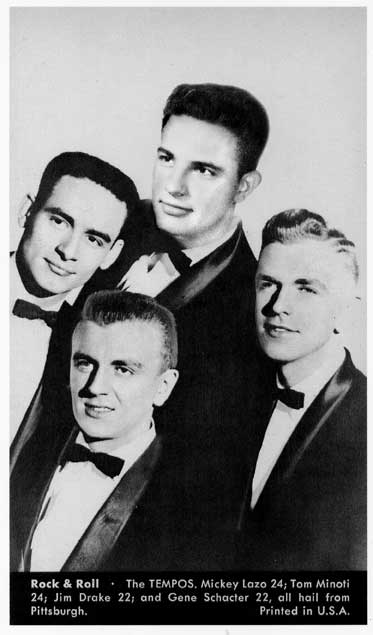
| See You in September: The Tempos (2:03) In late 1959 the Pittsburgh vocal group, The Tempos received a temporary set back when one of the band members left to pursue a solo career. Jim Drake filled the vacancy and the band, under contract with Climax Records, quickly recorded their next single. The A-side, BLESS YOU MY LOVE generated little interest however due to popular acclaim the B-side SEE YOU IN SEPTEMEBER, became a hit. The song was (and still is) unique to pop music because it has a bolero rhythm that is usually associated with a ballroom dance called the beguine. Although the music is somewhat refined the lyrics are closer to something teenagers on summer vacation could relate to as the vocalist asks, WILL I SEE YOU IN SEPTEMBER OR LOSE YOU TO A SUMMER LOVE? The song lasted 23 weeks on Cash Box charts and 14 weeks on the Billboard charts. |
 |
 |
| Notes: 3 http://www.flashcadillac.com/AmericanGraffiti.html 4 <http://www.chuckberry.com/about/bio.htm> |
| Side 2 of 4 (Record 2) |
| Surfin' Safari: The Beach Boys (2:05) The group consisted of three brothers, Carl, Dennis, and Brian Wilson, their cousin Mike Love and friend Al Jardine. Being the only boy who surfed in the band, Dennis thought the sport would be a great topic for a song and suggested it to Brian. Brian then wrote SURFIN SAFARI with cousin Mike. Nick Venet of Capitol records heard a demo of the song and signed the boys in June of 1962. The demo was then embellished with additional harmony parts and released as a single. On August 11, 1962, the tune reached number 14 and the B-side, a song about a hotrod called, 409 charted at number 76. The Beach Boys had taken two popular trends and turned them into a moneymaking formula that would last for several years. He's The Great Imposter: The Fleetwoods (1:33) This vocal group from Olympia Washington consisted of two females: Gretchen Christopher, and Barbara Ellis and one male, Gary Troxel. As was the case of many male vocalists, Troxel was drafted into the Navy in 1960. However, the group did not breakup, as many did, once its male singer was in the military. The same year Troxel was drafted the band achieved a hit with RUNAROUND. After that, the Fleetwoods only recorded on Troxel's occasional leaves but still managed to score hits with songs like TRAGEDY and the beautiful smooth ballad, THE GREAT IMPOSTER, both charting in 1961. The group had been prolific and recorded so much material before Troxel�s service time that they were able to release five albums while he was in the service. One album cover, DEEP IN DREAM even has him pictured in uniform. |
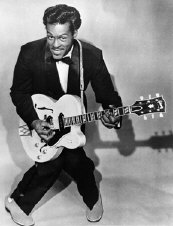
| Almost Grown: Chuck Berry (2:09) The debate of who had the first rock and roll record is an argument that may never be settled, but Berrys influence on rock music is unquestionable. His familiarity of the pop market allowed him to break color barriers and play to an integrated audience. The lyrics on ALMOST GROWN conveyed the attitude and sentiment of his teenage fans who felt oppressed by adults: DONT BOTHER ME LEAVE ME ALONE. ANYWAY IM ALMOST GROWN! The tune was on the charts for 39 weeks in 1959 reaching its peak at number thirteen. Trivia note: Etta James sings back up vocals on this one. 4 |
 |
|
|
| SOUNDTRACK Page 3 |
|
| The TEMPOS |
| Side 1 of 4 (Record 1) continued |