American Graffiti�s impact could be felt across American culture, inspiring many - more or less nostalgic - representations of the 1950s and early 1960s. Among other things, the film prepared the ground for the massive television success of Happy Days (which ran from 1974 to 1984, and starred Graffiti's Ron Howard) and of Laverne and Shirley (which ran from 1976 to 1983 and starred Graffiti's Cindy Williams). The film also influenced huge box office hits as varied as Grease and Animal House (both from 1978).
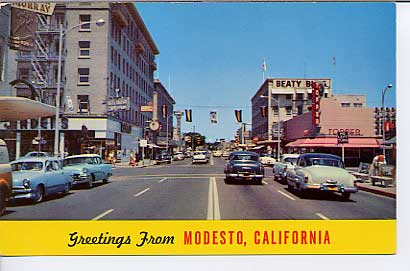
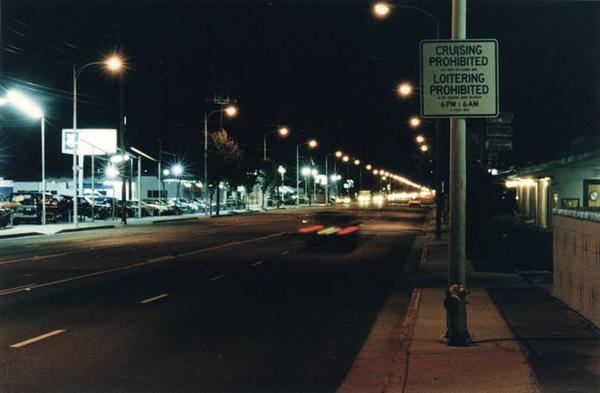
What about the film's impact here in Modesto? Its local premiere at the Briggsmore Theater on 21 November 1973 was a special event. It served as a fund-raiser for the Central California Heart Association and was also used to honour Lucas by giving him the key to the city. The film's enormous success later inspired a revival of early 60s cruising culture in the city. Local historian Colleen Stanley Bare writes: "Modesto became famous for its Graffiti Nights during a 15-year period from the late 1970s into the early '90s... (c)elebrated on the Saturdays following high school graduations...What started as a simple local festivity soon became a law enforcement nightmare. It attracted cruising devotees from all over the country, and at its peak, Modesto's downtown streets and McHenry Avenue were jammed with more than 100,000 cruisers and spectators... (W)hen the city's cost for extra police protection and clean-up totaled more than $150,000 per event, Graffiti Night was banned in 1994." |