 ..
.. ..
..
| . | . | |
|
|
..
..
|
|
|
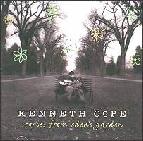
A Conversation with Kenneth Cope Composer-Singer Kenneth Cope, well known for his albums including Greater Than Us All, spent last year creating a celebration of the life of Joseph Smith called My Servant Joseph. The album begins with voices in song pleading for the Lord to open the heavens again, "Oh let Thy living voice be heard," and ends after Carthage as Joseph sings," Free at last." This People interviewed Kenneth to find out what he came to feel about the prophet while working so intently on his story. This People: Why did you choose to tell Joseph's story in music? Kenneth: I wanted to create something to commemorate the one hundred and fiftieth anniversary of the martyrdom. Joseph is the closest thing we can get to seeing what Jesus wanted us to become and what we are able to reach in this life. He is tangible to us; he did not live that long ago. What's more he is young. As his story unfolds, he is in his twenties and thirties. I am going to be thirty-three next year, and I relate to his age. I use him as a reference point, and his kind of character is what I want to obtain as I'm maturing. If in his thirties he can forgive the mob who tars and feathers him, can I do that? This People: What moved you the most as you studied his life? Kenneth: There's a hidden invitation from Joseph to come and know the Lord. That's what I feel from Joseph all the time. "I know Jehovah and I want you to know him, too," Joseph says. "Take my hand and let's go talk to him." The New Testament teaches us that Jesus talked with authority and not as the scribes. Joseph was like that, too. When Joseph is in conversation or giving a talk, he just keeps touching on these things that indicate his depth. Paul, the apostle, mentions that Jesus visited him last night. How much of that did Joseph have? I was struck by that when I read a journal entry where Joseph says that he was staying up past 1:00 a.m. in the Kirtland Temple doing washings and anointings before the temple was dedicated. Then, he said, he went home and "the dreams of the night were sweet unto me." I think he had so much more experience with the heavens than he shared. This People: Your music catches the spirit of the martyrdom with such a feeling and poignancy. How did you come to feel about it? Kenneth: Particularly as I read John Taylor's and Willard Richard's accounts, I can see Joseph kneel over his dead brother, Hyrum. I just keep trying to put myself in his place and think about it until I can get it. It is a little like writing a piece of music. I have to ponder about it for some time until I can get it. But I began to see something. As Joseph leaps from the window and is murdered, he cries out, "O Lord, my God." This is not just a random cry, but a profound expression of relationship. Again and again in revelation, the Lord tells him, "I am the Lord, your God," and these are Joseph's last words. It means more than I think we realize. Joseph seems to e saying to the Lord, "You've been teaching me. You've been leading me this whole way." What strikes me about all this is how much the Lord wants to be our God, if we will let him. He wants to be our God. He wants to be the one to save us and guide us and teach us. Most of us put all kinds of obstacles in the way of the relationship. Joseph didn't. He knew more of this God than I think we realize. This People: What was the creative process in producing My Servant Joseph? Kenneth: I try to fill myself up with as many good things as I can. I listen to music. Beautiful music stimulates emotion, and where there is emotion, something inside of me responds. I pour over the scriptures and underline the phrases that keep coming back. I put as much in my soul as I can, and then if something jumps out of my mind, that's the thing I keep working on. I have learned to pay attention to my ideas when I'm eating breakfast or riding alone in the car, because often, something comes leaping into my mind as if from nowhere. I often have to interrupt what I'm doing to get a pen and paper. The creative process has to do with feeding and building your soul through the years, and then your mind is quickened. It starts coming, and you have to grab it while its coming. This People: Do you think of this as revelation? Kenneth: I do, which is why I don't consider myself a songwriter. It's not mechanical. It seems to come as a gift. I think sometimes people might think that sounds presumptuous, but I have to say it, because you can only take credit for so much. Heavenly Father does work through us, but still, for me, it has been a gradual process. Ten years ago, I couldn't write the songs that I can write today. We have different levels of abilities and skills, and from there the Lord inspires us to an expanded vision. The Lord will work with us on the level to which we are prepared. I yearn to be prepared and inspired enough to create a work that I feel the Lord has touched. This People: Who has done that kind of thing? Kenneth: Nephi built a ship that was not like the workmanship of man. The Lord showed him how and touched his work with a greatness it would not have had. If Nephi can do it, let's do it. As partakers of the gospel, let's have God set his hand in whatever we do, so we don't have to slip back into the world. For the past years, I have been working in Los Angeles where there is an extraordinary level of professionalism. Filmmakers and musicians there excel at taking something and making it look believable and professional and reaching us on the inside, but too often it is Satan's method of getting evil into us. Today some of the most highly skilled movies created are rated R, but I don't think we have to see R-rated movies to be a good moviemaker. God can teach us about moviemaking without us going and subjecting ourselves to the world. If he can teach Nephi to build a ship, he can teach us to create work that will lift and touch an audience. This People: So what do you want for your artistic life? Kenneth: I just want to do something that's good. My good friend and I moved down to Los Angeles with our families with the idea of creating music that could touch the greater world, but sometimes you plan something with your life with one purpose in mind, and the Lord sees a bigger picture. Joseph went to Salem, Massachusetts [see D&C 111] looking for treasure, hoping to help the financially struggling church. The Lord didn't stop them, but he had something else in mind. He foresaw something that Joseph didn't. That was my experience in Los Angeles. The Lord didn't stop me from going, but what I received there was far different and better than I expected. Yes, my level of craft was raised, but the best things that happened to me were connected to the Church. I taught early morning seminary, and that raised me to a whole different level of person. I met friends who changed my life. What we went for we didn't get, but what the Lord wanted us to get, we got. I have learned that in our lives we should let God do his work and quit questioning it. This People: What is your favorite song in My Servant Joseph? | |||||||||||||