|
|
|
|
SIXTH
GENERATION 1871-1873
155-431
Albert Joseph WIEDEMEIER, son of Johann Ignaz and Maria Sophia (Wenner)
WIEDEMEIER, born in Dortmund, Westfalen, Prussia, 1 Sep. 1871. He was christened at Sankt Johannes Baptist Church on
September 10 of the same year.
Witnesses to this event and people he was named after
were Albert Paschen and Joseph Hutkeas.
Albert lived with his parents at Linden Allee #671 3/4 etage or on the
first floor during these first few years. Albert's
father, a day worker, was around 47 years of age when his sons were born.
(He died on September 30, 1873 just after his second son Joseph Gerhard
was born.) Johann Ignaz intended to
move his family to America. Therefore,
Maria Sophia, Albert's widowed mother of 31 years of age, made plans to take the
children to America. She worked as
a day worker or a hireling to take care of her family.
However, something caused her to change her mind about her immigration
decision. She then married Henry
Miller around 1874 or 1875. Albert was 3 years
old at that time. Henry Miller
raised the children as his own and because of their young age was the only
father that Albert and Joseph Wiedemeier knew.
Albert's half brother Henry Miller Jr
was born in 1875. Albert's
second half brother Anton was born in Feb 1880. Albert's half sister Anna Miller
was born in Dec 1884. Maria
Sophia had 4 other children with Henry that must have died.
The family lived in Essen ,
Westphalia, Prussia before they immigrated.
All the boys were employed around a foundry making nails near the Rhein
River to make money to come to America. Albert Joseph Wiedemeier
Albert Wiedemeier at age 18 began preparations for his immigration to the
United States by signing a promissory note for the sum of $16.00 from Fred Beck
on June 21 1890 due to be paid on Aug 21 1890.
He obtained his Reise Pass(kingdom pass to leave kingdom) for a 1/2 mark
which was valid from Oct 16 1890 to March 1 1891 from the Lippstadt District in
Westfalen, Prussia. The story passed
down is the following: Henry Miller
planned that he and his step son Albert would leave Prussia together.
This was to help Albert leave Prussia in order to escape becoming a
soldier in another Prussia war. While
at the port of Bremen there was a sudden change of plans probably due to problem
with the authorities. This caused
Albert and Henry to be seperated. Henry diverted the police in his direction.
Another person close to the family named Wilhelm had to stay in Prussia
because of this as well. Albert
went by himself. Henry boarded a
sailing ship and arrived some months later.
Henry had given instructions to Albert to make his way to Missouri to a
designated location. The
family worried about Albert because they did not know for many months if he had
even made it out of Prussia. The US
Census says that Albert arrived in New York in 1891.
It is believed that he was the first in this particular family line of
the Wiedemeiers to have immigrated to the United States.
Albert Wiedemeier, his half brother Henry Miller Jr. and his step father Henry Miller Senior
His destination was St. Louis, Missouri.
Many Germans came to Missouri because of Gottfried Duders's book
published in 1829 "Report on a Journey to the Western States of North
America" which gave glowing accounts of soil and climate of Missouri to
potential immigrants in Europe. St.
Louis had become an important manufacturing center during the 1800’s.
During the mid-1800’s, large numbers of German workers settled in this
area. Albert first lived near a
place in Missouri called Stove Pipe Creek.
There he lived with Mr. and Mrs. Miller, old friends from Germany, in their old sod house. Albert got a
job and after Henry arrived started sending money back for his mother,
brothers and sisters in Prussia. Around
Sept 25 1891 the rest of the family left with permission from the
Lippstadt District for America. They
lived there for about one year. Then
the Miller/Wiedemeier group moved to Madison County,Nebraska just as many other
pioneers did at that time. At this
time farmland prices in Nebraska were quite low; as the drought that struck the
state in 1890 had caused the land prices to collapse.
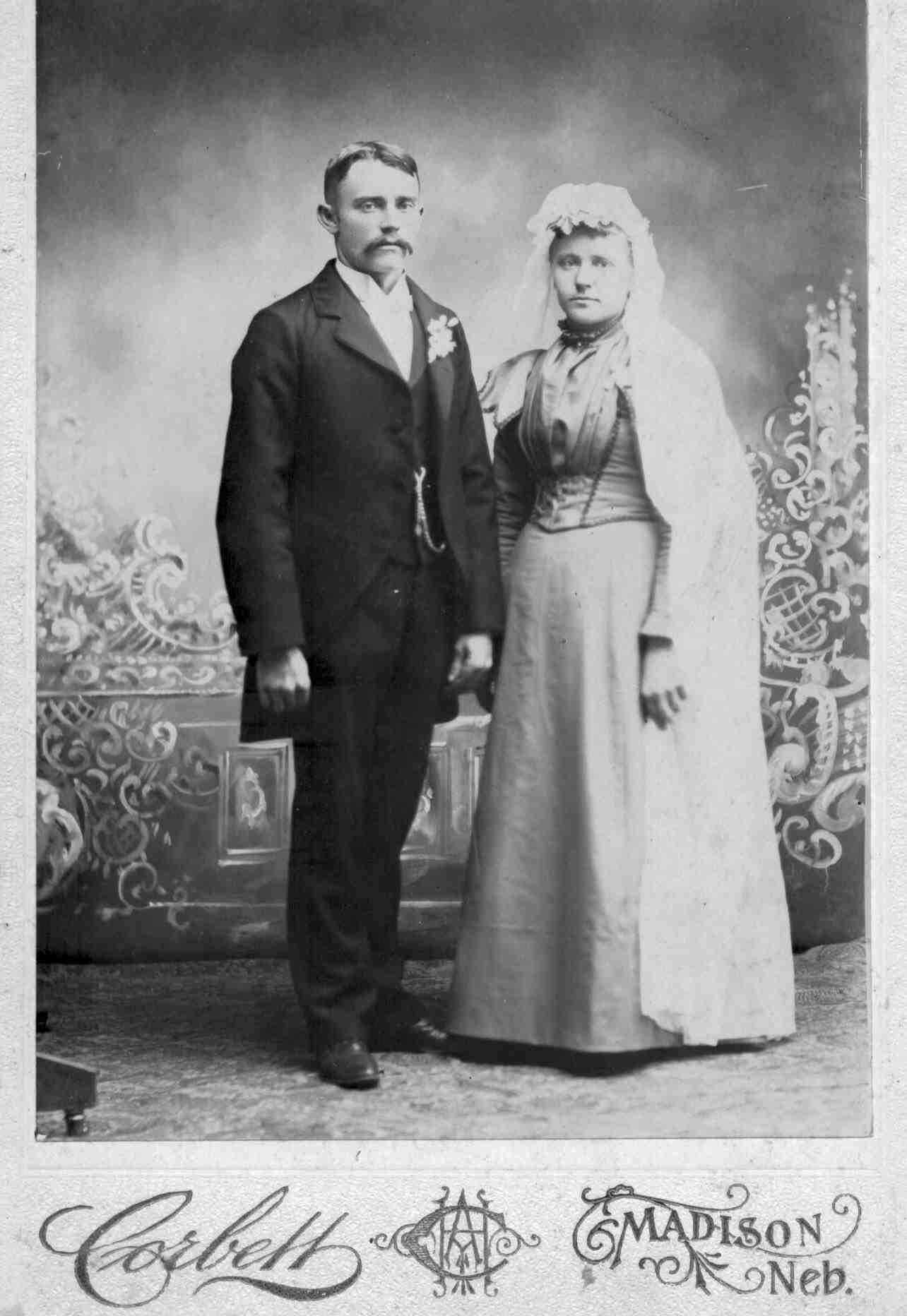
Albert and Mary Wiedemeier
It was while living in Madison County, Nebraska in 1898 that
the Wiedemeier boys found their wives. Albert met Mary Schilder,
an Austria-Hungarian born young lady from what is today's Teremia‑Mare,
Timis, Romania born on 1 Feb. 1878, who had immigrated to that area a decade
earlier. Mary Schilder was living
in Kalamazoo County, Nebraska with her parents, Charles and Cecilia (Niesner)
Schilder and her 4 out of a
total of 7
brothers and sisters still living.
They married in a Catholic Church in Madison County, Nebraska in Aug. 20
1898 and resided for four years on a farm in Madison, Nebraska.
The location of this farm is described in a document handed down to Henry
Wiedemeier which was nearly destroyed by fire. "
Madison, Neb Jan 26,1903 I
have purchased a farm in Wisconsin and will leave here shortly. I will sell at
public auction to the highest bidder without reservation, my own farm 3 miles
west and 4 1/2 miles south of Madison
on what was the Old Conrad Delter farm, 2 miles west and 5 1/2 miles north of
Humphrey on Monday at 10:30am."
In the Madison County area Albert made friends with the Omaha Indians.
They apparently camped in the fields on his farm in Nebraska. His sons
Fred, Henry, and Charles were born in Nebraska. Albert and Mary had some
friends called the Hotzels who left for Wisconsin some time before writing
letters back to Mary and Albert telling them about Wisconsin and the land.
Eventually they made the decision to move.
A document handed down to Henry Wiedemeier describes the property sold
before moving to Wisconsin. "
Auctioneers
Davis & Webb
STAR PRINT Eight
Head of Horses‑team wt 2500 1
gray mare-3yrs old Broke single team 5-6
yrs, wt 2300, 1 horse 5 yr old, 1 hoarse 3 yrs old 1 mule colt, 4
fresh milch cows, 2 Spring calves, 2 Heifers, 3 Yearling Steers, 21
Hogs, 10 Brooding Sows, 10 Hogs, 1 Chester White and Black Sow." "Jan
20, 1903 taxes on the farm Raymond & Karen(Wiedemeier) own was $10.33.
We(Raymond and Karen Wiedemeier) paid $2,400 for the same property in
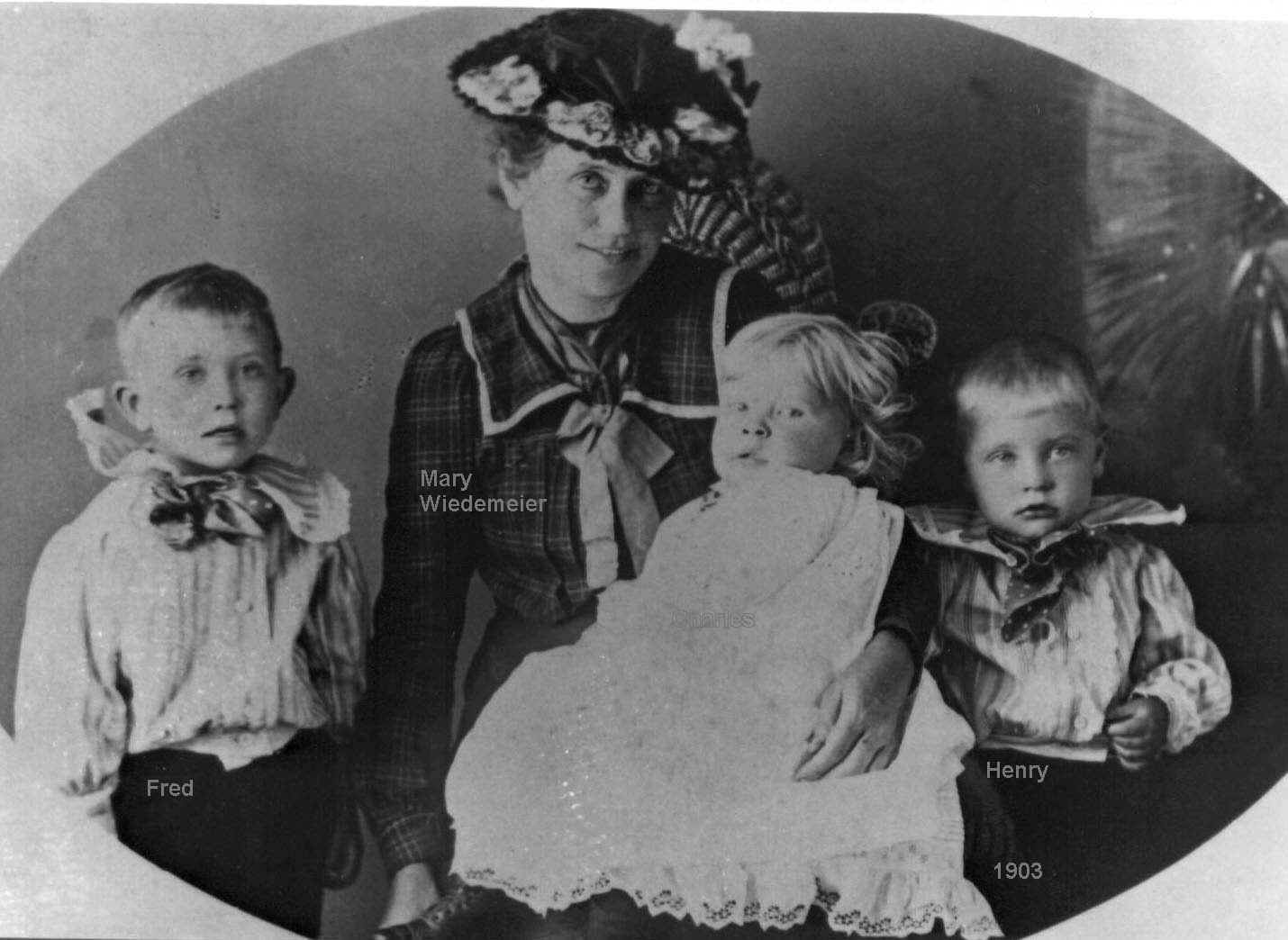
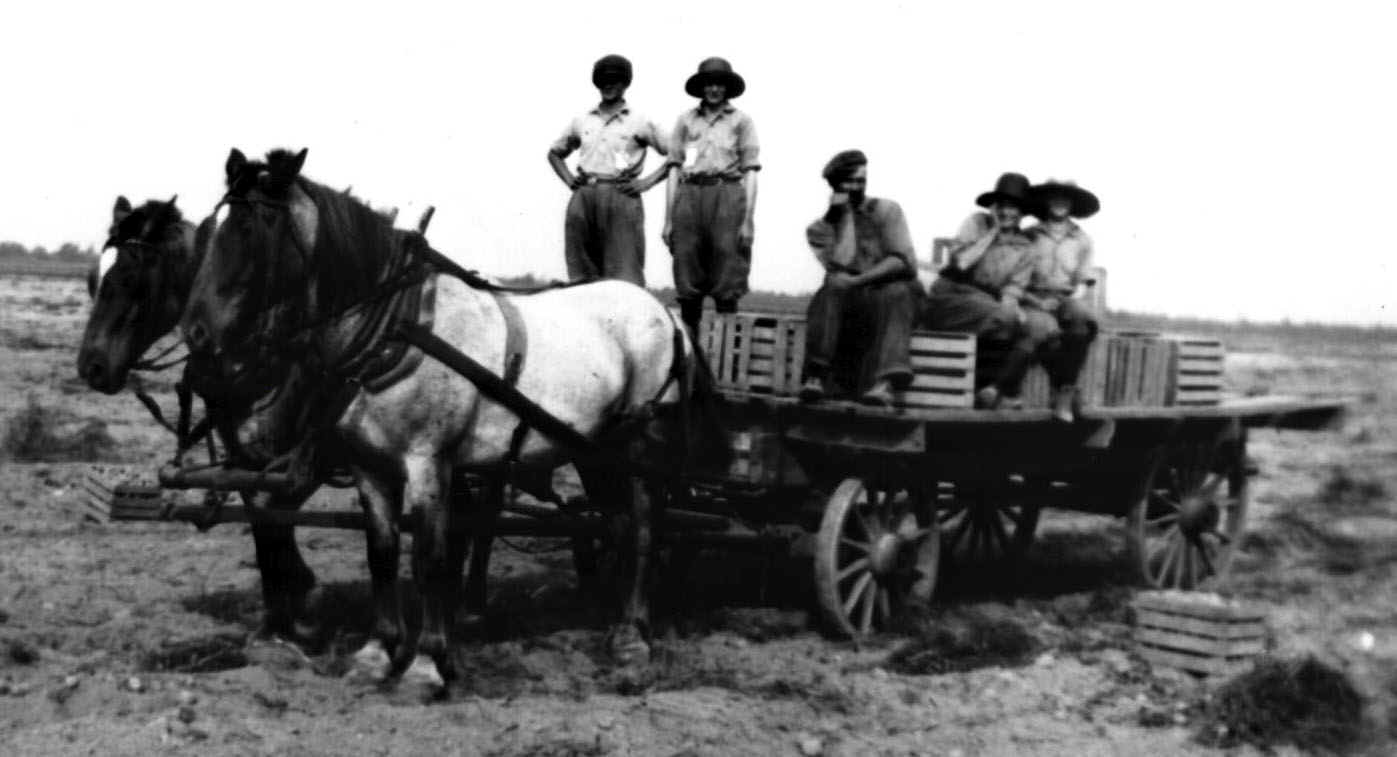
1993 ninety years later with some changes in building etc.." So after selling their farm they packed their team of horses, wagon,and cultivator which was a 1-row mostly wood except for the shovels and their personal belongings on a passenger locomotive train and headed to Wisconsin arriving at Ellis Jct. March 1903 which is now called Crivitz today. When they arrived they had their picture taken.
Mary and her children Fred, Henry and Charles
This was of Mary and
their children, Fred 4, Henry 2 and Baby Charles.
They unloaded their covered wagon, a young team of horses and all their
belongings and went to live with the Hotzels.
They stayed with them for awhile while waiting for their paperwork to be
done for their property of 80 acres of land(Raymond Wiedemeier Family in Route 1
Porterfield now live there today.)
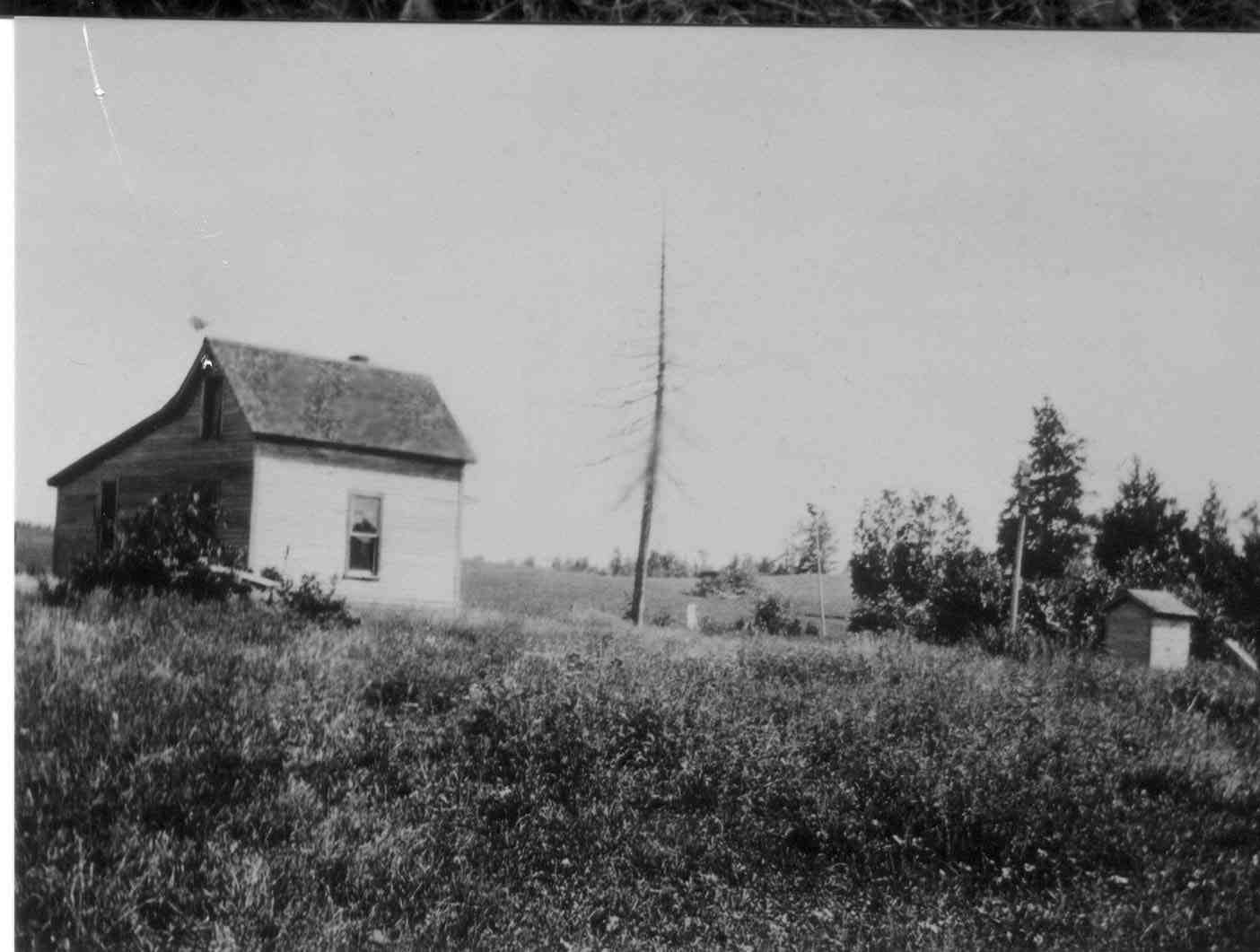
They lived in an old logging camp until they built a loghouse by the Peshtigo
river which gave them protection against forest fires. The Schilders had already
arrived. Alberts property was on
the side of the Schilders. They
left behind a dog named Shep in Nebraska with Albert's sister Anna(Miller)
Ficter(she took care of the Wiedemeier boys when they were babies back in
Nebraska). but the dog howled so
much that Albert sent for the dog by train.
Mary was so glad to see the dog and the dog so glad to see the family. Mary always spoke German to the dog and that's what he
understood. He was a great
protector for the family. Joseph
Wiedemeier and his family moved
there in 1905. Sophia and Henry
Miller came next and wrote to Henry Jr. and Anna Miller ” It was just like
paradise”. The Nebraskan baren countryside compared to the forests, rivers,
lakes and the general greenery of Wisconsin, must
of been a state of supreme bliss to her.
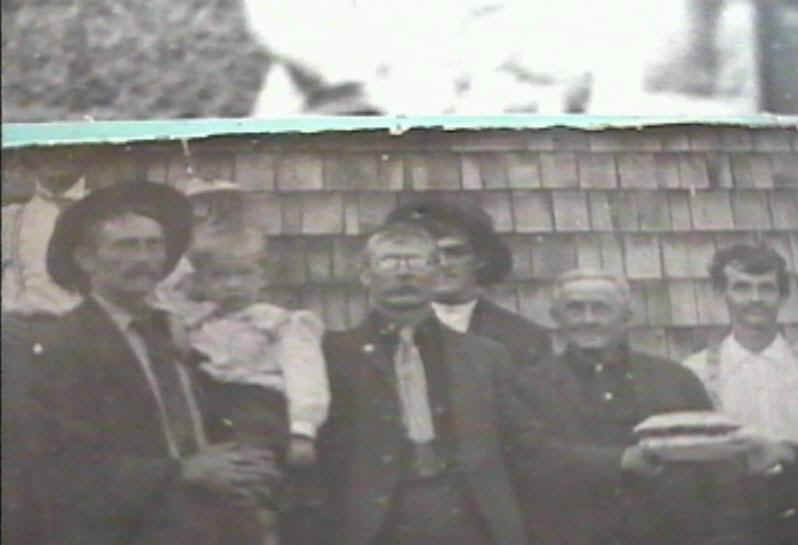
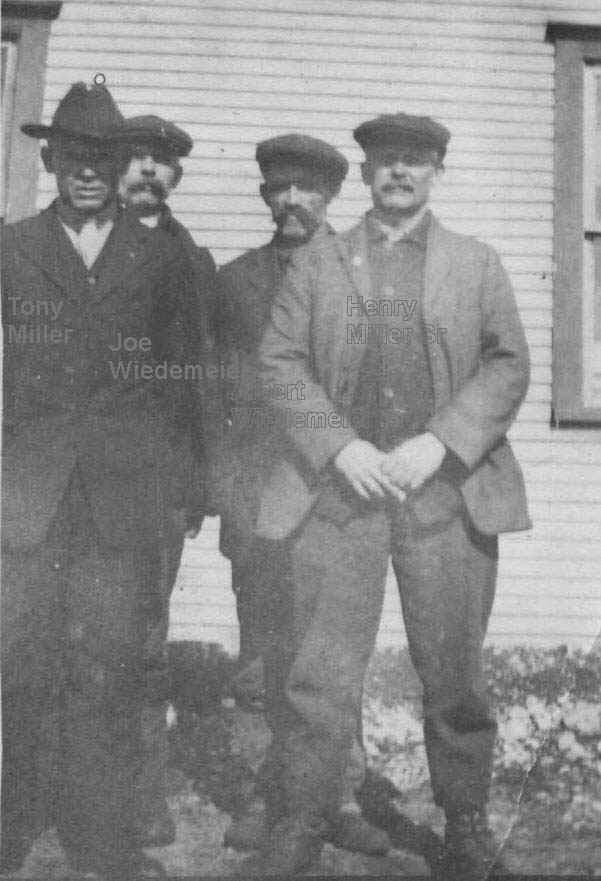
Henry Jr and family moved there in 1908. Antony Miller, Henry Miller Jr, Joseph Wiedemeier, Albert Wiedemeier Albert had a log house and a grainery which was built on land close to the Peshtigo River.
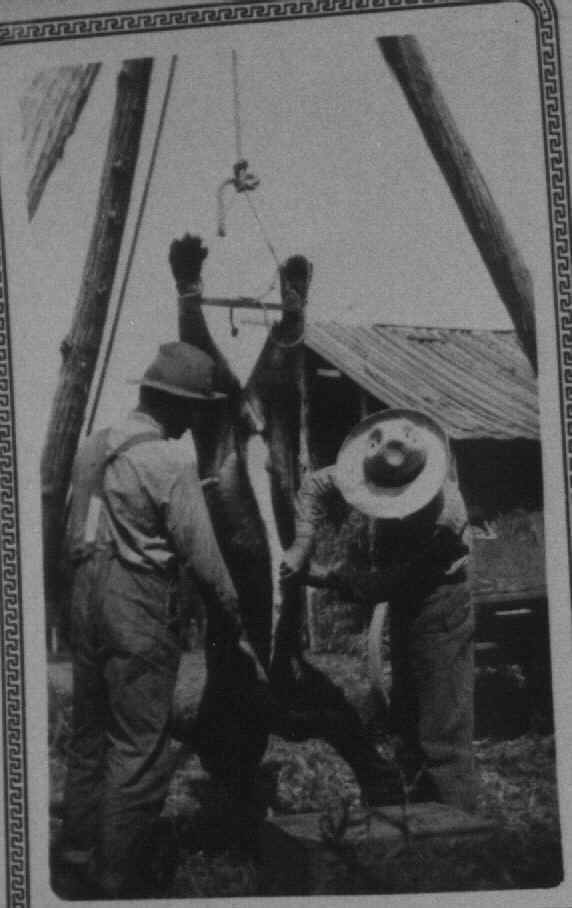
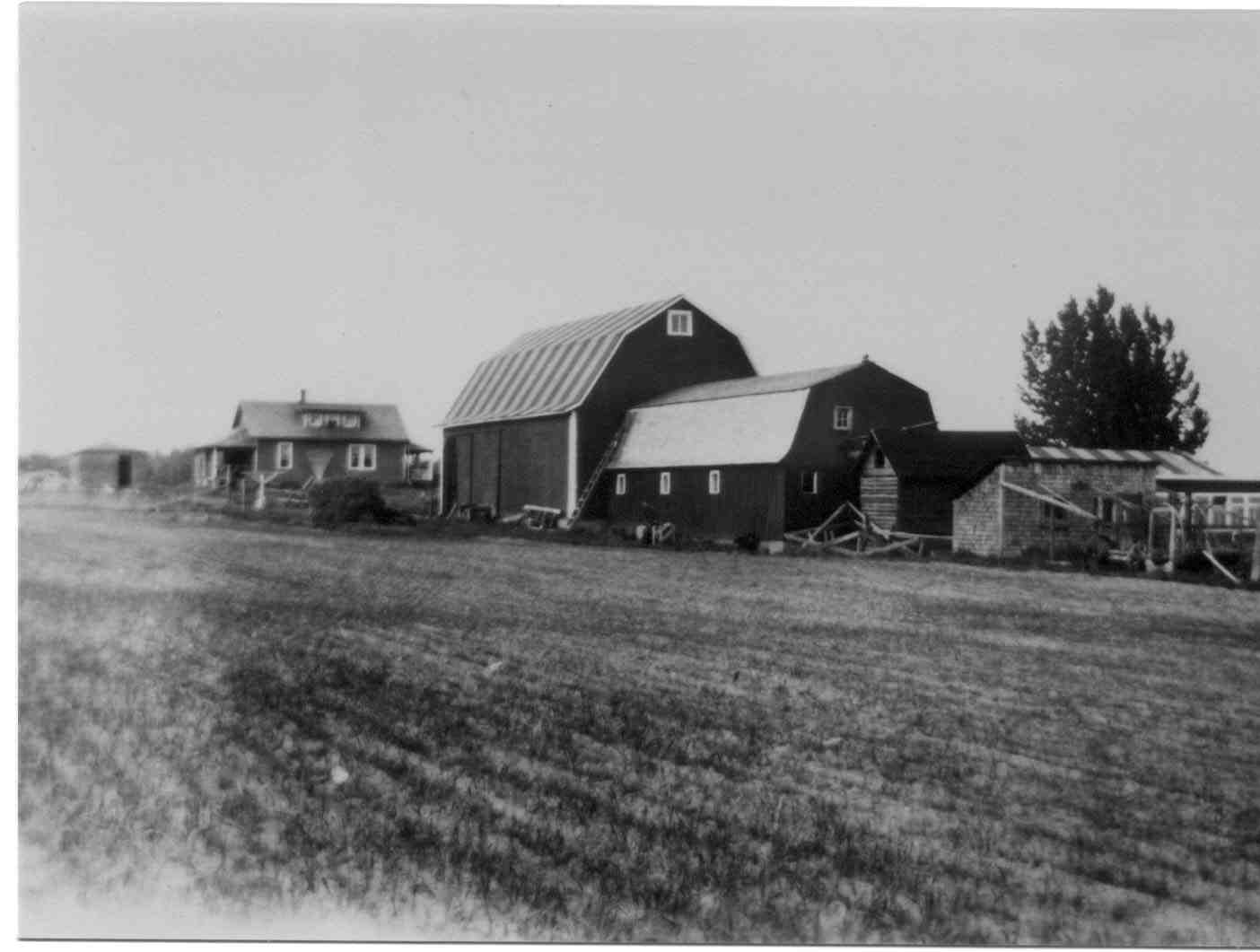
For food they would trap or Albert would dynamite the Peshtigo River and with a boat and help of Fred and Henry they would pick up all the fish they could. Albert and the boys hunted for most of the meat that they ate,however, it was said that Albert would not hunt the deer. What they couldn't eat Mary would pickle for them for Winter food. Mary often canned bear that Albert frequently shot.
Canned bear was said to be quite delicious. Mary was very skilled in canning food. The winters were so cold often 38 degrees below zero, it was
therefore hard to survive. You had
the "smoke house" on the farm to smoke meat in, and you canned as much
as possible to store up for the winter. When
they got a cattle herd later on, some were often killed off, because the barn
was not adequate in those days to keep your cows alive through the winter.
A stroke of bad luck hit when they lost their young team of
horses. An old timer told them to
leave the horses run and eat the grass along the logging roads as they would
always come home. All went well for
a while until one day they did not come home.
They hunted for a week finally finding the horses dead mired in the marsh
of the swamp in what is now the Robert Zorn Farm.
From then on there was no money to buy a young team so they had to settle
for old horses which did not live long.
They experienced two horrible fires, know as the Peshtigo 1908 and 1910
forest fires. An account by Cecilia Wiedemeier said" Once we moved
into the grainery on account of fire, thinking the old camps would burn.
The skies became fiery red and the wind was very loud like the sound of
many locomotives. Albert hitched
the horse team to the covered wagon outside the grainery we stuffed food
blankets and anything else we could grab. The fire was growing closer so we
headed for the river in an half hour. The wind shifted and the fire was eventually smothered.
It was considered a miracle. They
came back and found that the fire had just missed the old log camp.
The fire missed a few buildings but left behind white ashes like a puffy
blanket of newly fallen snow covering the earth.
The remaining trees were cut down and used for new homes, fuel for the
schools and neighbors." This was how Albert's family survived after the
fire.
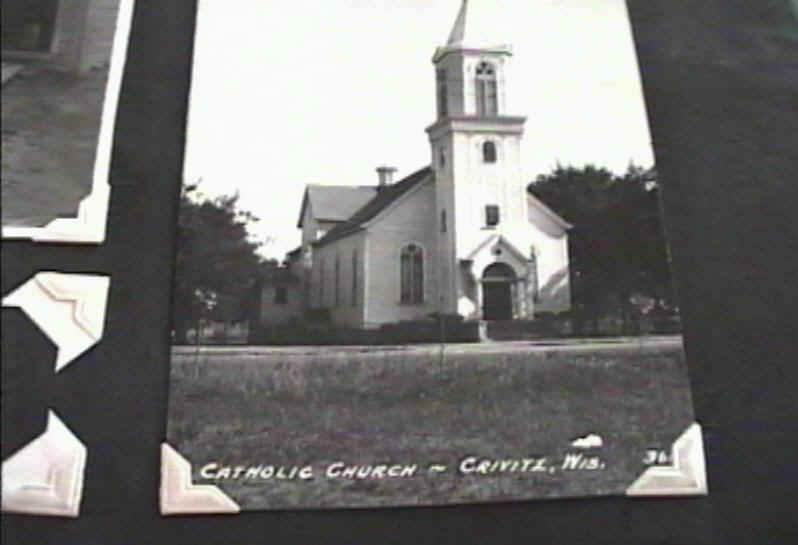
The chief religion of the time was Lutheran the same church that was still standing tall in Crivitz. When the Catholic Church came to Crivitz, the Catholics converted back.
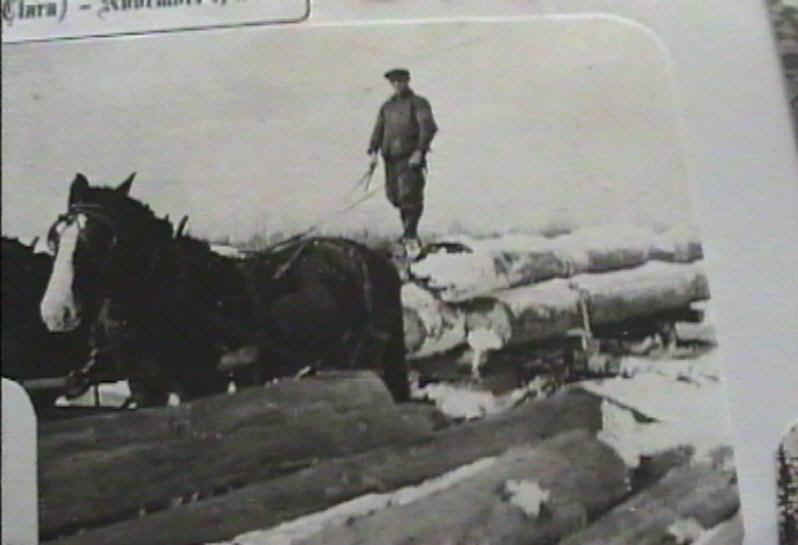
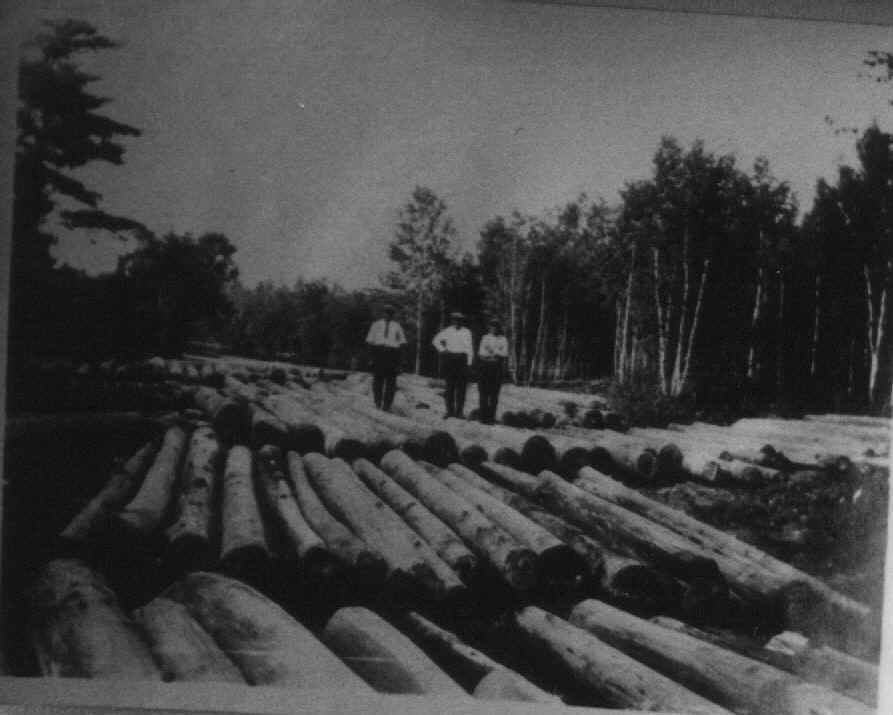
The first few years Albert logged and sold the logs by rolling them into
the river after the scaler came and scaled them. They floated down to Peshtigo
and slowly they got their farm land in the Town of Lake cleared to plow a garden
with corn, oats, potatoes and hay. They blew up the left over stumps with
dynamite and the rest they burned as fuel for winter. The only roads were
logging roads. To get to
Crivitz they had to go to the plains and then ford the outlet river until the
first bridge was built.
Henry remembered sleeping together in a cradle with baby Charles. The roof was leaking during the rain and Mary his mother held an umbrella over them to keep them from getting wet. On another rainy day Mary became frightened when she heard a scratching near the darkened window but to her surprise it was a large porcupine trying to get into the house. When Henry was a young boy he was very ill for weeks Mary would rock him and cradle him. When he would wake up she would feed him. She would never sleep during this time and always kept a smile on her face. She was a very kind mother.
Their first grain was cut with a cradle and raked up with a wooden rake.
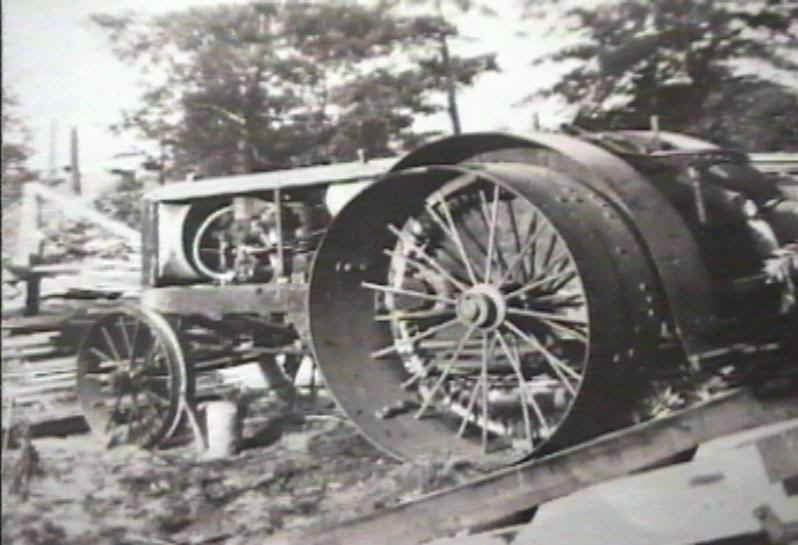
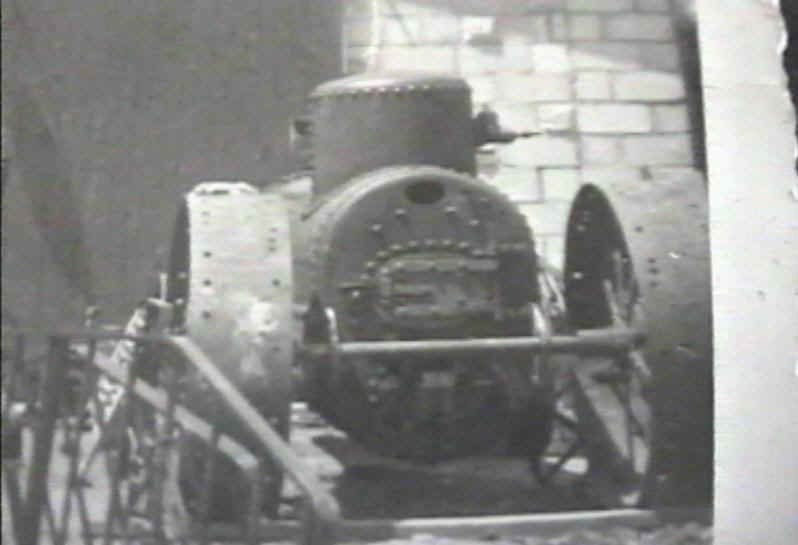
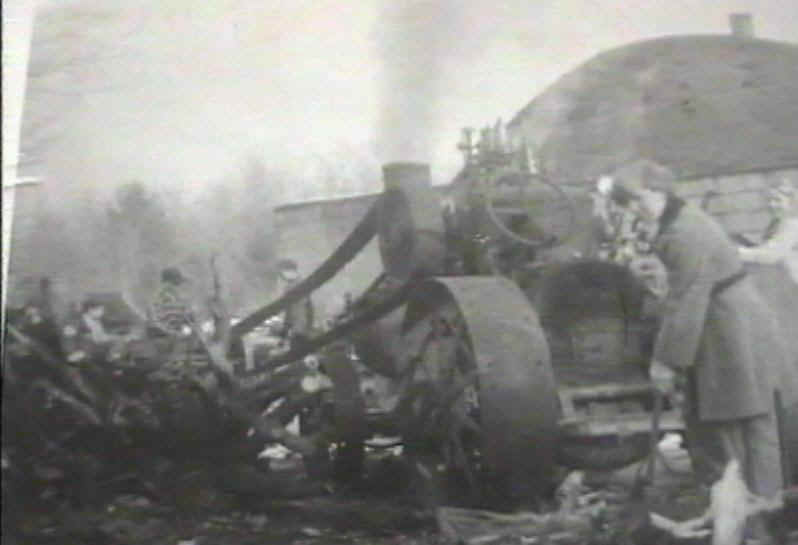
Albert built a little threshing machine. Later they bought a threshing machine. They ran it with horses.
The step grandfather Henry Miller sat on it and kept the horses going.
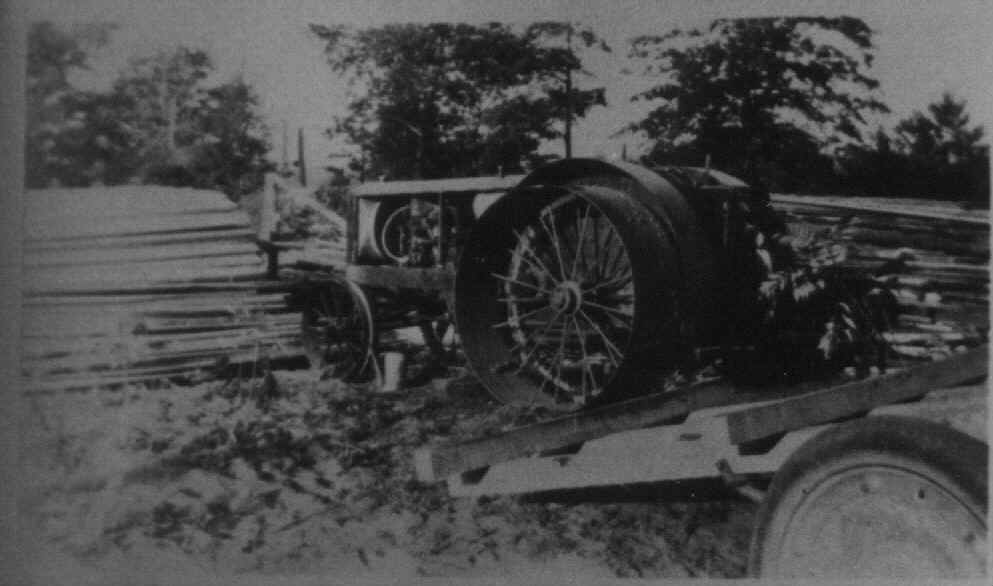
Later it was run with a gas engine. His first tractor was a Turner.
The first car was a 1921 or 1922 Ford.
While in the beginning years Albert
engaged in logging he later spent
more time operating a farm. He
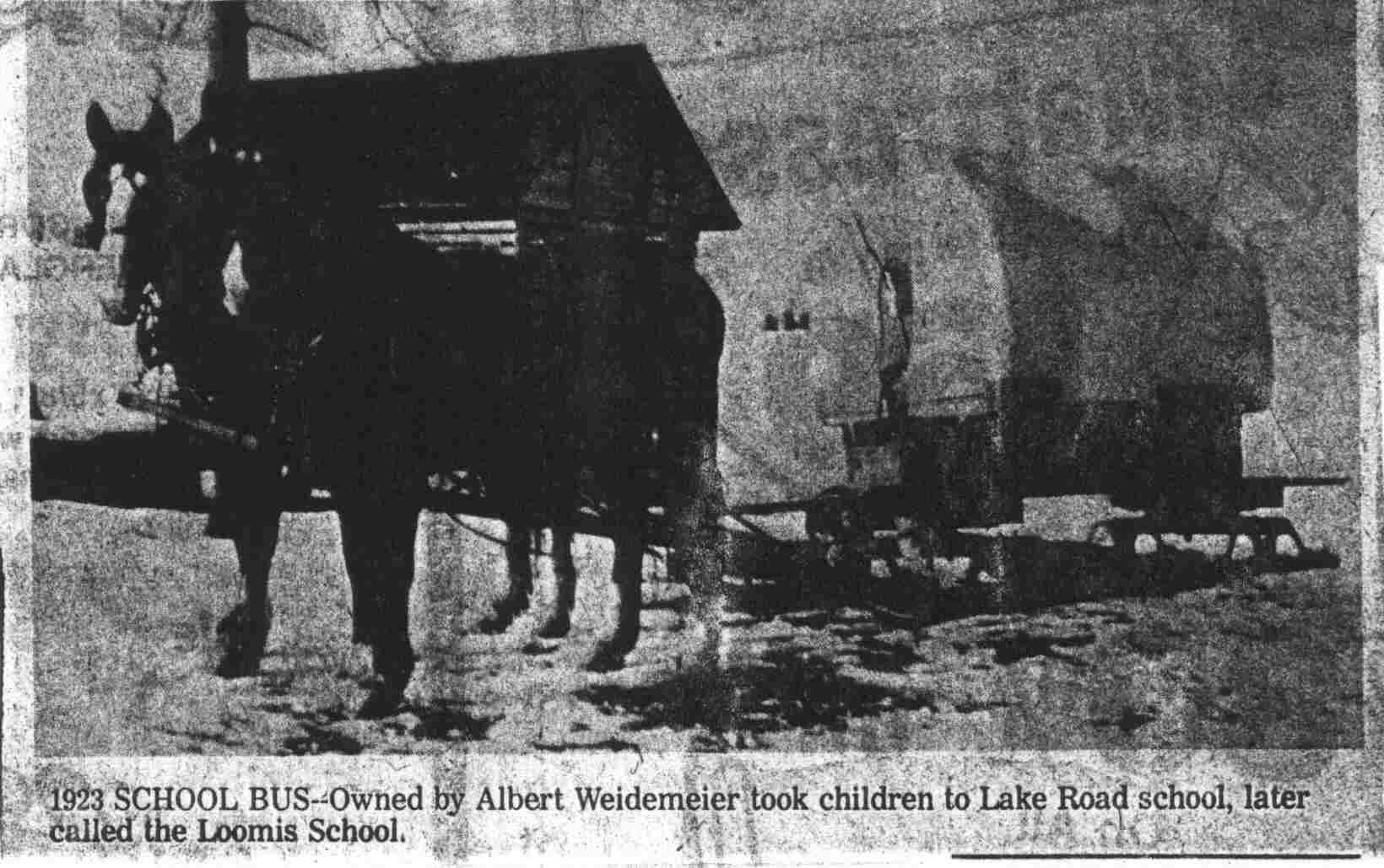
supported the community in the 1920s by driving a horse pulled wagon used as the
school bus for Lake Road school later called the Loomis School in the winter.
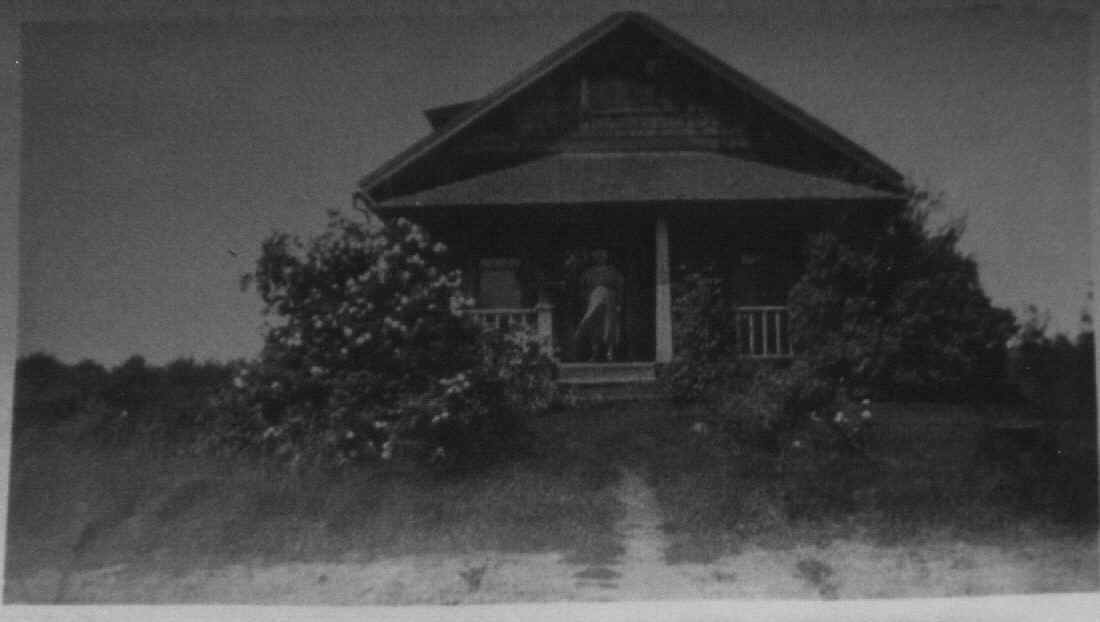
Charles, their son, built a rambling farm house for them sometime in the 1930s. It was the first modern style house they had ever had and was said to be the first house that Charles ever built by himself. Mary became very sick in the 1930s and Katherine,Charles's wife took care of her at their home.
She eventually got better and went home to her rambling farm house.
In their last 10 years they left that house because they could not manage
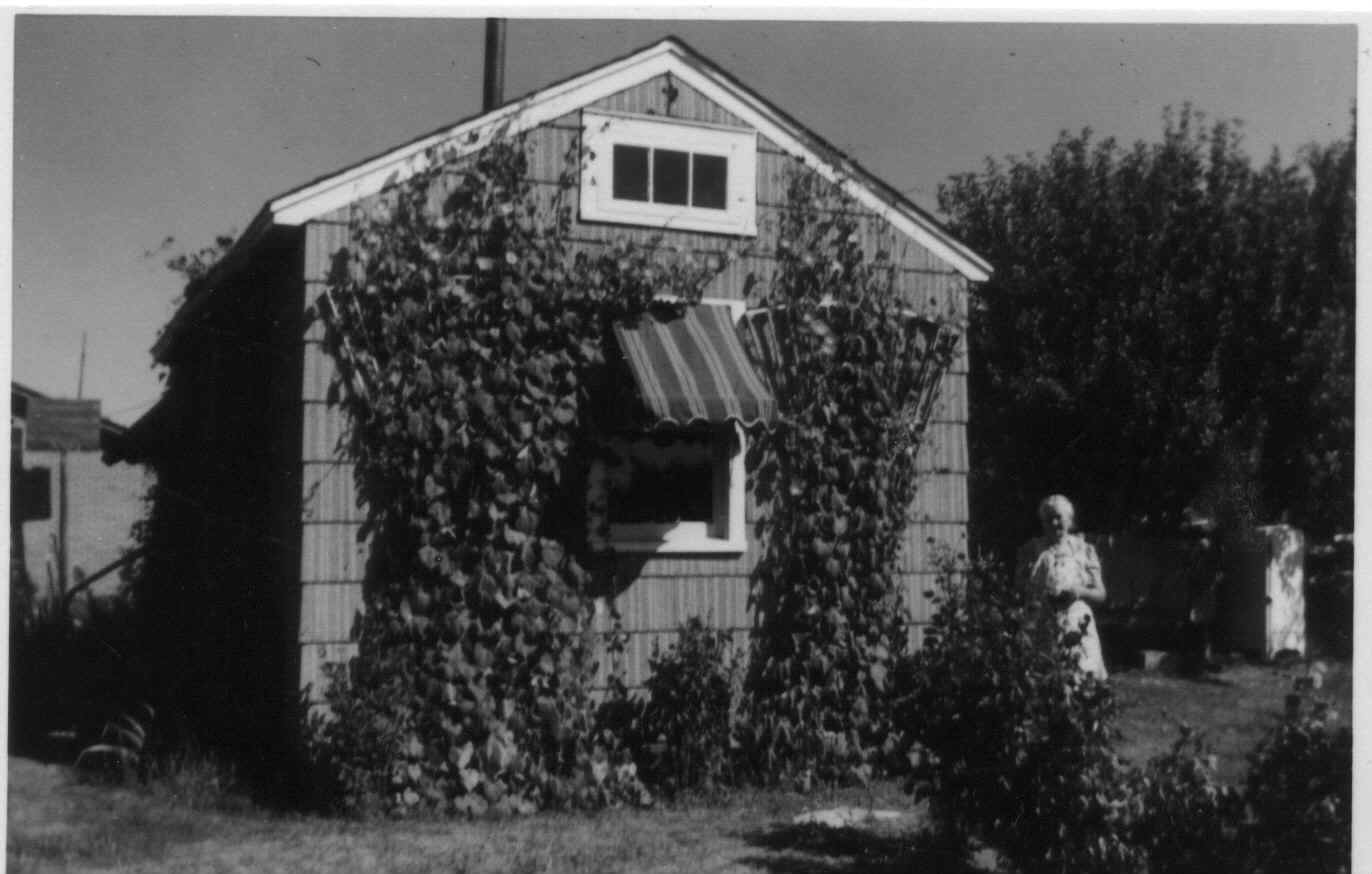
the farm. Fred provided a 2-room
home next to Art’s home. Sometime
later(after Albert died) the house was moved to Cecelia’s yard where Mary
lived until she went to the nursing home. The
house was moved back to Arts’ farm.
There was a big tree next to the moble home which had a big dog chained
to it that was their pet. It was a
big rough tough dog, that loved them dearly but would not let anyone else come
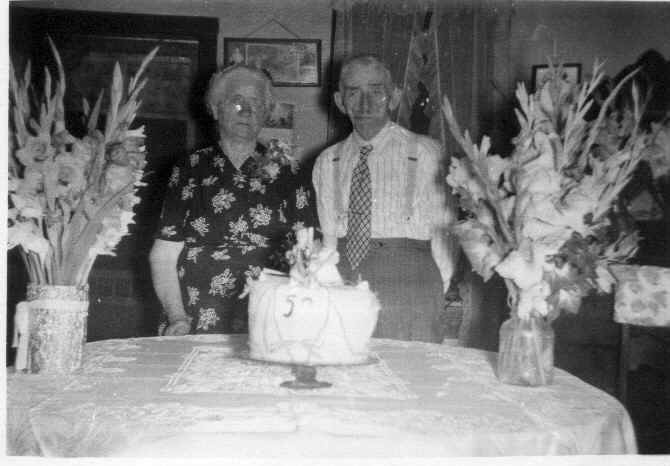
near. They called each other "ma" and "pa".
Mary was short, square, low to the ground, and he was thin and slim.
She had her hair braided and up on the top of her head right up to the
end. That's the way they wore it in
the old country. They spoke
"low german".
“Mary Wiedemeier always had apple butter on the table, and offered
bread and apple butter when ever you visited there.
The recipe from her is the following: Apple
butter is a spread for bread made by cooking apples to a thick, pasty
consistency, and seasoning with spices. Sometimes
cider is added. Always
use a copper kettle, because an iron kettle will turn the apple butter black and
spoil the taste. The inside of a
copper kettle is as bright as a new penny.
In fact, heard of people putting pennies in the pot if they were making
just a little apple butter and didn’t have a copper kettle. Apple
butter takes about 1/2 as much sugar as does jelly. And it can be made with the sound portions of windfall and
cull fruit. It does require very
long cooking, and careful cooking at that, because it sticks and scorches if you
turn your back. OLD STYLE APPLE BUTTER Make
about 10 6-oz jars. Cust
in pieces, but do not peel or core 4 pounds tart apples. Cover
with your choice of 2 cups cider, mild cider vinegar or water. Cook
until soft and put through a sieve, or use a food mill. Add
1/2 cup sugar for each cup of pulp Add
few grains of salt 2
teaspoons cinnamon 1/2
teaspoon allspice 1
teaspoon cloves 1
grated lemon, including rind and juice Cover
and cook over low heat until the sugar dissolves. Uncover
and cook quickly until thick and smooth,
when you spoon a bit onto a cold plate. Stir
with a wooden spoon during the coooking so that the apple butter will not stick
and burn.”
Albert died on 22 Sep 1953 in Crivitz, Marinette Co, WI, buried
Crivitz Cemetary,Crivitz, Marinette Co, WI.
Mary Schilder died in the Ida Mevane Memorial Nursing Home, Crivitz,
Marinette Co, WI, 21 Nov. 1960, buried Crivitz Cemetary, Crivitz, Marinette Co,
WI. Albert and
Mary (SCHILDER) WIEDEMEIER had the following children: 155-431-1
Fred Joseph William WIEDEMEIER, b in Lincoln, Nebraska, 1 Aug. 1899,d in
Marinette, Marinette Co, WI, 1 Aug. 1980, bu in St.Mary Cemetary, Crivitz,
Marinette Co, WI. +
155-431-2 Henry Charles WIEDEMEIER, b 18 Nov. 1900, d 1 Jun. 1990; m
Elizabeth Theresa WEICHEL +
155-431-3 Charles Antony WIEDEMEIER, b 14 Apr. 1902, d 27 Jun. 1976; m
Katherine Marian WEICHEL +
155-431-4 Cecelia Clara WIEDEMEIER, b 5 Nov. 1904; m Carl Henry SCHWARTZ +
155-431-5 Arthur Louis WIEDEMEIER, b 13 Mar. 1908, d 1 Sep. 1990; m
Elizabeth (Betty) DITTMAN +
155-431-6 Oscar Henry WIEDEMEIER, b 14 Jan. 1919; m Maria BOGDANOWA
155-432
Joseph Gerhard WIEDEMEIER, son of Johann Ignaz and Maria Sophia (WENNER)
WIEDEMEYER, born in Dortmund, Westfalen, Prussia, 30 Jun. 1873.
He was christened in Sankt Johannes Baptist Church on July 13.
He was named after Joseph Naegele and Gerhard Faschen.
He died in Marinette Co, WI, 26 Jan. 1951; married Madison Co, Neb, 19
Dec. 1898, Francis Elizabeth REZENCAK, daughter of Anton John and Annie (YEDICK)
REZENCAK, born in Iowa, 4 Apr. 1882, died 13 Oct. 1961.
Joseph Gerhard and Francis Elizabeth (REZENCAK) WIEDEMEIER had the
following children:
+
155-432-1 Clara WIEDEMEIER, b 1 Apr. 1900; m Peter HOMAN +
155-432-2 Ella WIEDEMEIER, b 1 Mar. 1902; m Mike MEYER
+
155-432-4 Hubert WIEDEMEIER, b 9 Jan. 1907, d 19 Oct. 1986; m Loretta
MEYER +
155-432-5 Victor WIEDEMEIER, b 12 Jul. 1911, d 26 Aug. 1966; m Angeline
BALCERZAK +
155-432-6 Antone (Tony) Albert WIEDEMEIER, b 2 Nov. 1913, d 23 Dec. 1991;
m Luella
NISCHKE +
155-432-7 Herman A. WIEDEMEIER, b 2 Apr. 1918, d 1962; m Bertha NISCHKE +
155-432-8 Evangeline WIEDEMEIER, b 12 Jul. 1922, m Louis ORLANDO
|