
Essentially, this theory holds that the human body was filled with
four basic substances, called humors, which are in balance when a
person is healthy. All diseases and disabilities resulted from an
excess or deficit of one of these four humors. These deficits could be
caused by vapors that were inhaled or absorbed by the body. The four
humors were black bile, yellow bile, phlegm, and blood. Greeks and
Romans, and the later Muslim and Western European medical
establishments that adopted and adapted classical medical philosophy,
believed that each of these humors would wax and wane in the body,
depending on diet and activity. When a patient was suffering from a
surplus or imbalance of one fluid, then his or her personality and
physical health would be affected. This theory was closely related to
the theory of the four elements: earth, fire, water and air; earth
predominantly present in the black bile, fire in the yellow bile, water
in the phlegm, and all four elements present in the blood.
http://en.wikipedia.org/wiki/The_four_humours
This theory of bodily humors -- called "humorism " or "humoralism"
-- holds that each person produces all of these humors, but that the
preponderance of one relative to the others -- a condition called
"dyscrasia" -- brings on illness. Each of these humors was believed to
be associated with one of the four elements which, when combined in
various proportions, make up all things:
http://www.fisheaters.com/fourtemperaments.html
The humor of Blood, associated with the
liver and with Air, which is the hot and moist element.
A person in whom blood predomtes is said to be "sanguine," from
the Latin "sanguis" (blood).
The humor of Yellow Bile, associated with
the spleen and with Fire, which is the hot and dry
element. A person in whom yellow bile predominates is said to be "choleric,"
from the Greek "khole" (bile).
The humor of Black Bile, associated with
the gall bladder and with Earth, which is the cold and dry
element. A person in whom black bile predominates is said to be "melancholic,"
from the Greek "melas" (black) and "khole" (bile).
The humor of Phlegm, associated with the lungs and brain and with Water, which is the cold and moist element. A person in whom phlegm predominates is said to be "phlegmatic," from the Greek "phlegmatikos" (abounding in phlegm) .

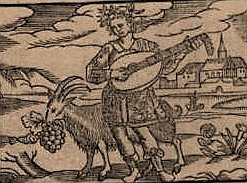
 Self-composed
Not
given to worry Liberal
Self-composed
Not
given to worry Liberal
Tends
to follow rather than lead Cordial
Peaceable
Talkative
Not
averse to change Adjusts
easily
Tends
to prefer informality Aware
of surroundings Impetuous
Impulsive
Lacking
in perseverance Lacking
in initiative
Prone
to carelessness, hedonism, flightiness, and lust
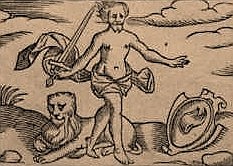
Self-composed
Not
given to worry Persuasive
Independent
Rarely
shows embarrassment Tends
to lead rather than follow
Persistent
Insistent
Decisive
Dynamic
Impetuous
Impulsive
Touchy
Prone
to hypocrisy, deceit, pride, and anger
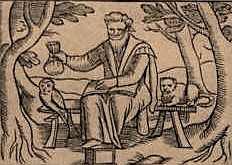
Sensitive
Intuitive
Self-conscious
Easily
embarrassed
Easily
hurt Introspective
Sentimental
Moody
Likes
to be alone Empathetic
Often
artistic
Often
fussy and perfectionist Deep
Prone
to depression, avarice, and gluttony
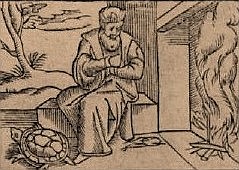
Peaceful
Easy-going
Deliberative
Faithful
Reliable
Relatively
unaffected by environment Reserved
Distant
Slow
in movement Constant
in mood Not
prone to worry
Prone
to stagnation and sloth


 |
 |
 |
 |
|
| Tetrahedron (fire) | Octahedron (air) | Icosahedron (water) | Cube (earth) |
Plus, the "5th element": ether (spirit)... relates to the
dodecahedran:

http://en.wikipedia.org/wiki/Timaeus_(dialogue)
and
http://www.kheper.net/topics/cosmology/solids.html