Performance Comparison
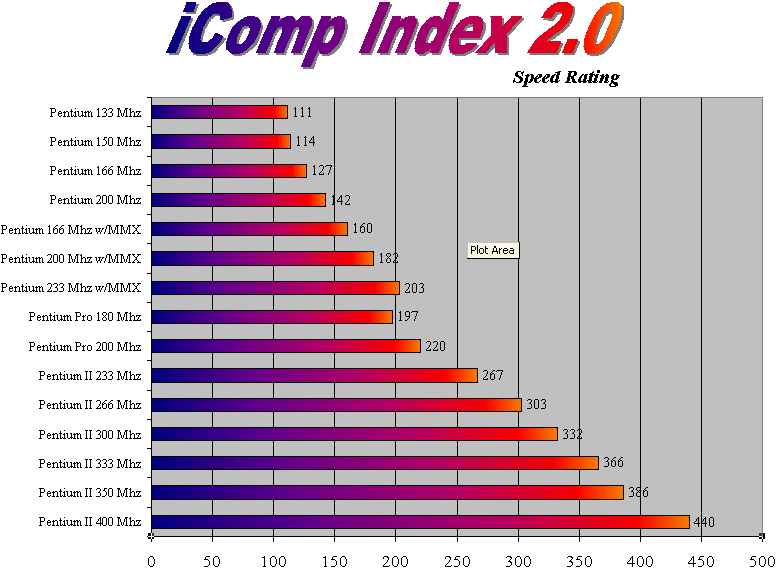
The iCOMP® index provides a simple relative measure of microprocessor performance. It is not a benchmark, but a collection of benchmarks used to calculate an index of relative processor performance intended to help end users decide which Intel microprocessor best meets their computing needs. iCOMP Index 2.0 comprehends:
- The accelerating transition to 32-bit operating systems and applications on the desktop.
- The proliferation of multimedia, communications and 3D applications.
- Updated industry-standard benchmarks appropriate for emerging popular application profiles.
The iCOMP Index 2.0 ratings cannot be compared with the earlier version of iCOMP because different benchmarks are used.
The iCOMP Index 2.0 rating is based on the technical categories that encompass three separate aspects of 32-bit CPU performance: integer, floating-point, and multimedia. The multimedia portion is further divided into four sub-components: Audio, Imaging, Video and 3-D. The higher the iCOMP rating, the higher the relative performance of the microprocessor.
For more information about iCOMP® Index 2.0, including a description of the systems used to calculate ratings, please refer to the iCOMP® Index 2.0 Performance Brief or contact your local Intel sales office. The iCOMP® Index 2.0 Performance Brief is available in HTMLand PDFformats.
Figure 1 illustrates the iCOMP Index 2.0 ratings for thirteen Intel microprocessors. System configurations used in iCOMP Index 2.0 measurements are listed in Appendix B.
- iCOMP® Index 2.0 Performance Brief Addendum addressing the Pentium® II Processor is available in HTML, PDFand Postscriptformats.
- iCOMP® Index 2.0 Performance Brief Addendum addressing the Pentium® Processor with MMX™ Technology is available in HTML, PDFand Postscriptformats.
iCOMP® Index 2.0 reflects the approximate, relative performance of Intel microprocessors on 32-bit applications and benchmarks. It combines five benchmarks: CPUmark32*, NortonSI-32*, SPECint95*, SPECfp95*, and the Intel Media Benchmark. Each processor's rating is calculated only at the time the processor is introduced, using a particular, well-configured, commercially available system. Ratings for Pentium® II processors were calculated with 512K L2 cache. Ratings for Pentium Pro processors were calculated with 256K L2 cache. Relative iCOMP Index 2.0 scores and actual system performance may be affected by differences in system hardware (other than microprocessors) or software design and configuration, including MMX™ media enhancement technology-enabled software. Buyers should consult other sources of information, including system benchmarks, to evaluate the performance of systems they are considering purchasing. For more information about iCOMP Index 2.0, including a description of the systems used to calculate ratings, and other information about microprocessor and system performance and benchmarks, visit Intel's World Wide Web site at www.intel.com and follow the appropriate links.
*Other brands and names are the property of their respective owners