
Wonderful
Creatures
Once upon a time there were wonderful flying creatures.
Their wings were fragile and iridescent like fine gauze.
These wonderful creatures were noted for their swift, darting, soaring motion
and for their power of sustained flight.
Each one, in each moment flew differently.
They loved the sun and seemed to disappear miraculously whenever the sky became
cloudy.
Some believed that these creatures were the spirits of people who had recently
died.
They insisted that the creatures be left undisturbed.
Male and female often flew together and sometimes made love while in flight.
The male warmly embraced her releasing her, when she was leaving the little
ones on the water,
clasping her again as she rose,
to circle off and away before repeating the performance.
They spent the greater part of their lives in water where
they transformed many times. When they transformed into
adults they were no longer
confined to the vicinity of the water.
They lived only a few days.
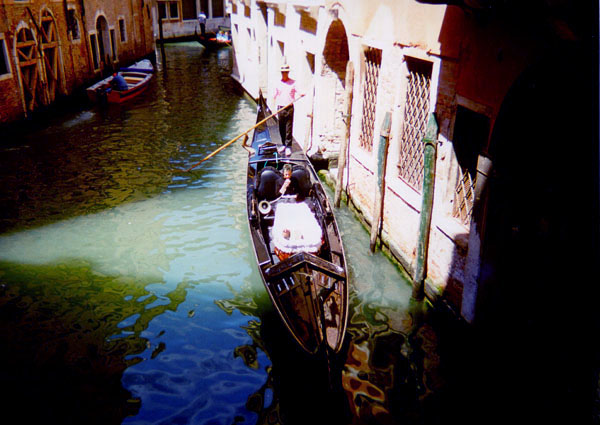
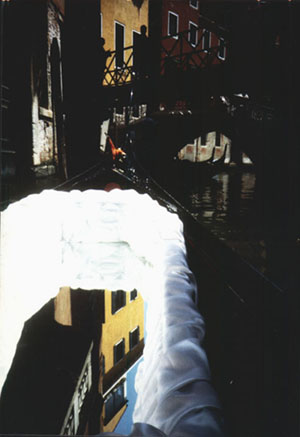
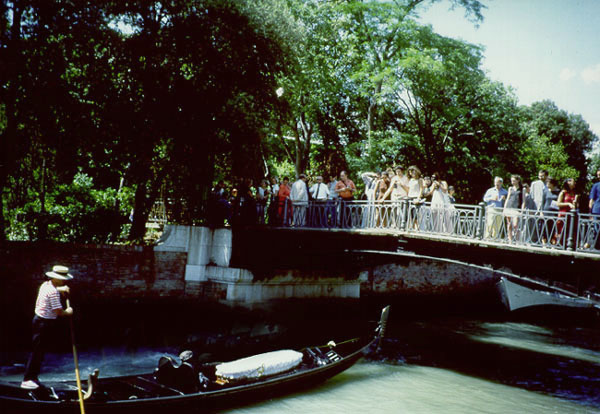
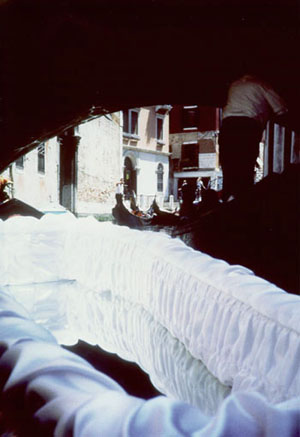
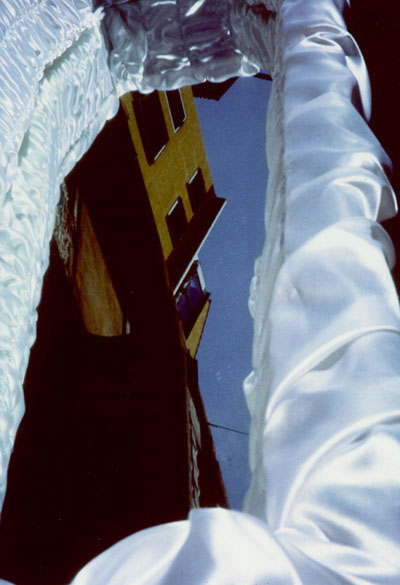
Photos: Zivko Popovski, Nebojsa Vilic, Iskra Dimitrova
Creature
Meravigliose
Installazione e performance
Presentazione non-ufficiale
della Macedonia
fuori dall'ambito della 48.Biennale di Venezia
10 - 13 giugno, 1999
Curatore: Nebojsa Vilic
testo Creature Meravigliose
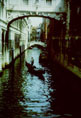
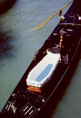
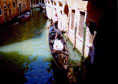
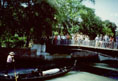
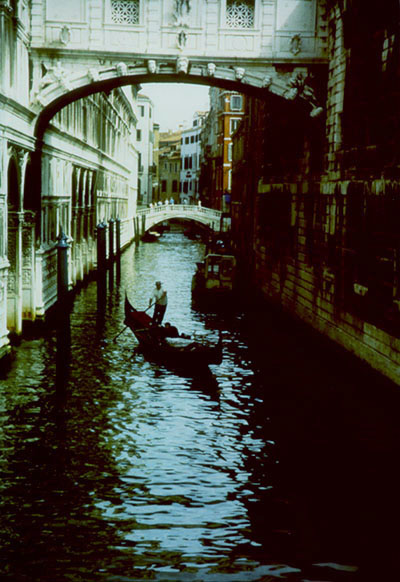
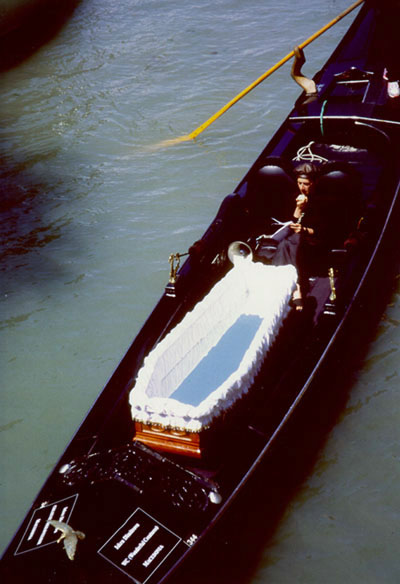
Una gondola con una cassa da morto circola tra le fermate ed i canali più
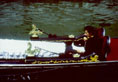
frequentati di Venezia, accompagnata da un suono monotono. Autore recita il
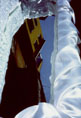
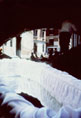
testo/la favola al megafono, in lingua italiana e inglese. Nella bara, che
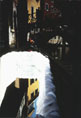
è senza il fondo, è stato sistemato uno specchio, per tutta la sua lughezza,
affinchè il cielo e/o qualche spettatore curioso vi si rispecchiasse.
Questo progetto, anche se a prima vista appare alquanto grottesco, in realtà
è molto serio, e all'inverso, anche se sembra troppo serio in realtà è pregno
di ironia.
L'elemento auditivo è ciò che ne stabilisce la comunicabilità, sia attraverso
il monotono suono di sfondo sia attraverso la nazione gridata della favola.
A differenza delle installazioni Creature Meravigliose (Skopje, 1998, Norimberga
1999) dove il testo veniva narrato a bassa voce, il presente progetto implica
un'aspetto impegnativo molto più
potente (la favola viene "gridata" narrata attraverso un megafono,
avviene un terrificante richiamo dell'attenzione; l'opera non viene situata
in un classico spazio espositivo - non sta sul "terreno"), riflettendo
la protesta alle situazioni attuali nei Balcani, e particolarmente in Macedonia.
Il progetto elabora il paradosso dell'esistenza, ed è perciò che l'opera in
complesso si compone di contraddizzioni, cominciando già dal titolo stesso.
Quali contrappunti fondamentali sono stati posti due elementi, da una parte
quello poetico, fantastico, sacro, romantico (Venezia - la citta dei sospiri
degli amanti, la gondola - paradigma dell'incontro d'amore romantico, la favola
delle creature meravigliose, il cielo che si rispecchia nel fondo della bara),
e dall'altra parte quello terreno, reale, concrete, mortale (la Venezia di
Thomas Mann, dei sospiri dei condannati, le gondole come forma particolera
della cassa da morto, la cassa stessa sistemata sulla gondola, la frase conclusiva
del testo narrato).
Il progetto in sè espone il mio atteggiamento personale verso l'arte come
unico spazio sicuro della vita, ovvero cerco il significato della realtà in
cui ci troviamo nell'ironia intessuta nell'atto artistico.
Uso un oggetto già fabbricato come accostamento al momento reale. L'intenzione sta nell'esplorare il fenomeno 'spazio nello spazio' attraverso il conseguimento della profondittà visiva che revochi una delle regole della Lapide di Smeraldo degli alchimisti (nella cavità della bara/in basso si trova ciò che di solito sta in alto - il cielo).
Il testo della favola rapressenta una specie di legame simbolico tra la vita umana e quella delle "creature meravigliose". associazioni stratiformi della metamorfosi, della vita nella quale subiamo le trasformazioni, ma anche della morte intesa come trasformazione. E tutto in un incessante, interminabile circolare....
Iskra Dimitrova
Creature Meravigliose
C'erano una volta delle bellissime creature volanti. Avevano
ali variopinte, tanto delicate che parevano di seta finissima.
Erano molto note ovunque per i loro di movimenti di volo librato e sospeso
e per i loro costante volare.
Tutte e sempre volavano in maniera diversa.
Erano innamorate del sole e appena esso si rannuvolava -
misteriosamente scomparivano. Sono in molti a credere che esse erano
le anime di persone rimaste senza corpo, e a pensare che esse
non dovrebbero essere turbate.
Volavano insieme sempre un maschio e una femmina e talvolta
volando facevano l'amore. Il maschio la stringeva a sè teneramente
mentre ella calava i suoi piccoli sull'acqua, la mollava appena per
riabbracciarla ancora quando ella si fosse rialzata in volo, girandole
intorno, prima di riprendere lo spettacolo.
Vivevano nell'acqua finchè non fossero cresciuti, trasformandosi
varie volte. E appena adulti - non accedevano più all'acqua.
La loro vita durava appena qualche giorno.
© 1999-2000 Iskra Dimitrova
All rights reserved.