home
Hoc est corpus meum, "This is my body"
(1 Cor. 11:24; Matt. 26:26; Mark 14:22; Luke 22:19)
-
interactive video installation -
assistants: Berna Zengin Arslan and Burcu Sumer
|
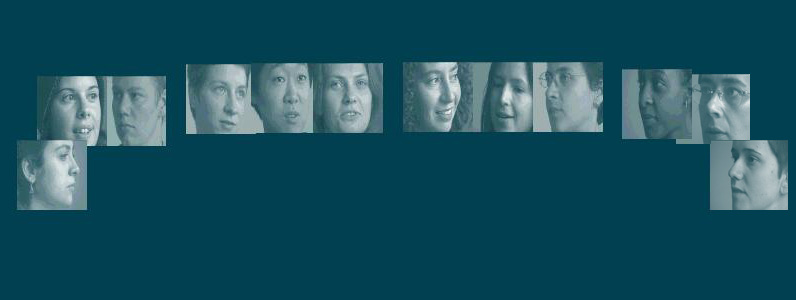
"The Last Supper" is a projection of a digital images. The audience
is invited to choose one of the images. A projection of digitalized
video appears up showing the chosen person speaking in an "unhuman"
voice. Women from 11 countries are recorded for this purpose, each one
speaking in her own "language"...
|
|
Why
"The Last Supper"?
Both this artwork and the one by Leonardo da Vinci are dealing with the issues: |
|
The
Last Supper
Leonardo da Vinci |
:
|
The
Last Supper
Hoc est corpus meum |
1. of communication
|
Covenant
between the Disciples 1
|
The
Internet communication, the creation of a common language instead of
the many national languages, overcoming the language barrier
|
2. of parts of the body
|
The
reality of the flesh and blood (bread and wine) that Christ offered
on this occasion and the Disciples ate, is issue of debating until the
present day among the Catholic and Protestant Churches.2
|
The
postmodern discourse of the cyborg
|
3. use of the living models
| The faces in the painting, with the exception of Christ's are reportedly those of actual people Leonardo sought out in the near Milan. According to Leonardo da Vinci, "Painted figures ought to be done in such a way that those who see them will be able to easily recognize from their attitudes the thoughts of their minds". 3 | Women from different countries are recorded for this purpose and from the visual presentation their inner beauty should be recognized. |
4. of the attempt to make the artwork an extension of the real space or vice versa
|
"In
addition to using living models for the Disciples, Leonardo surrounded
them with objects then in everyday use… in the painting, the tablecloth,
knives, forks, glassware, and china were all similar to those of the
monks themselves. The effect of the painting, at least as it appeared
at the time of its completion in 1498, must have been an overwhelming
reversal of reality and illusion: the actual room became an extension
of the picture." Leonardo's painting could be understood as an attempt
to make
an installation. 4
|
Beamers,
computers etc. today's everyday objects - set into this installation.
|
| "The Last Supper (Hoc est corpus meum)" is a conceptual work of 'translation' of the medieval painting of Leonardo da Vinci into a contemporary language, both in the allegoric and visual way. It is a piece ironically questioning the method of authority, no matter to which kind of authority refers. Christ is offering his own body in the name of the idea, thus giving the main characteristics of the forthcoming culture - culture of a priori sense of guilty, of sufferings and waiting for a better life after the death. In a comparison with this cannibalistic act, today, when we are so alienated and frightened of the body that the physicality of the flesh and the body liquids have never appeared so disgusting, Donna Haraway's myth of the cyborg looks like a love story. |