Chapter 4 : Automated Tools for Systems Development

Objectives
  1. Identify the trade-offs when using CASE to support systems development activities.
  2. Describe organizational forces for and against the adoption of CASE tools.
  3. Describe the role of CASE tools and how they are used to support activities within the SDLC.
  4. List and describe the typical role of CASE components of a comprehensive CASE environment.
  5. Describe the general fuctions of upper CASE tools, lower CASE tools, cross life cycle CASE tools, and the CASE repository.
  6. Describe visual and emerging development tools and how they are being used.


Chapter overview:

The purpose of this chapter is to introduce the process of designing forms and reports. Form and report design is a key ingredient for successful systems because users often equate the quality of a system to the quality of its input and output methods. Because of this, we need to understand the role of active user involvement in the form and report design process. A key to designing usable forms and reports is consistency. We can gain the skills needed to design consistent, usable forms and reports by learning the guidelines of formatting information, using color, highlighting, and avoiding the biasing of information. The deliverable from this design process is a specification that has three sections: a narrative overview explaining the need for and use of the form or report, a sample design, and all testing and usability assessment information. Understanding that individuals who design a form or report may not be the individuals responsible for implementing it underscores the need for complete design specifications.

  1. Introduction
  2. The Use of CASE Organization
  3. Components of CASE
  4. Visual and Emerging Development Tools
  5. Broadway Entertainment Company


Introduction.
In the past, system development was viewed by many as an art that only a few skilled individuals could master. Within many organizations, the techniques employed by each developer could also vary substantially. This lack of consistncy in technique and methodology often made it difficult to integrate systems and data or to quickly construct new systems. As a result, many organizations forced a growing backlog of applications to be developed; once developed, many of these systems were error-ridden, overbudget, and late. Lack of standard also made maintenance difficult.
To address these problems, information systems professionals concluded that software development needed an engineering-type discipline. The goal was to concentrate on developing common techniques, standard methodologies, and automated manner similar to the traditional engineering field.

Computer-aided software engineering (CASE) : Software tools that provide automated support for some portion of the systems development process.


Return

The Use of CASE Organization.
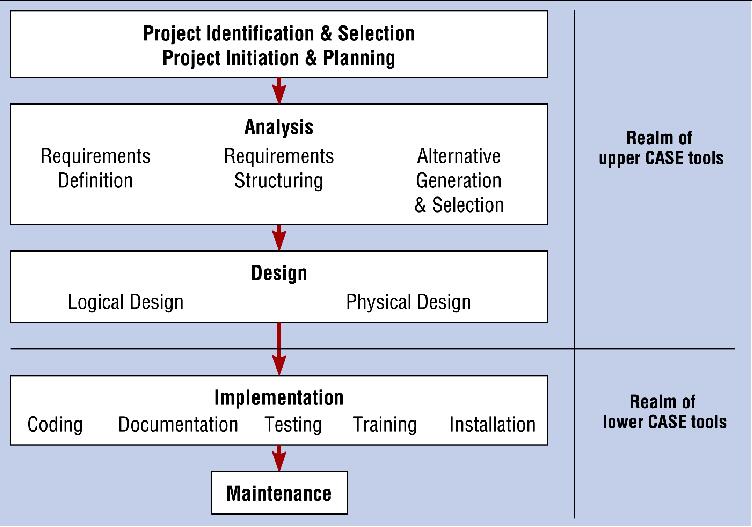
The purpose of CASE is to make it much easier to entact a single design philosophy within an organization with many projects, systems, and people. CASE can support most of the system development activities like:
  1. Planning matrices, entrprise data model.
  2. Project schedules, system size estimates.
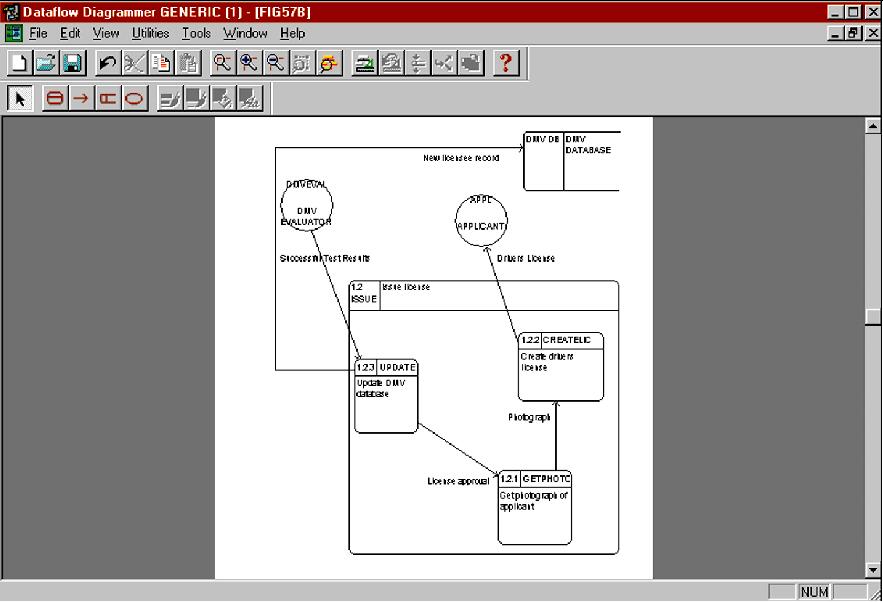
  3. Data flow diagrams, state-transition diagram.
  4. Normalized relations, form and report designs.
  5. Data Structures, structure charts.
  6. Installation schedule, code.
  7. Version control, specification changes.
---> Project Identification & Selection
---> Project Initiation & Planning
---> Analysis
---> Logical Design
---> Physical Design
---> Implementation
---> Maintenance
Although CASE tools run on a variety of mini and mainframe systems, recent advances in minicomputers have made the PC the predominant CASE workstation. CASE helps provide an engineering discipline to software development and to the automation of the entire software life cycle process, sometimes with a single family of integrated software tools. In general, CASE assissts systems builders in managing the complexities of information system projects and helps assure that high-quality systems are constructed on time and within budget.

Objective of CASE: Most organizations use CASE to:
  • Improve the quality of the systems developed.
  • Increase the speed with which systems are designed and developed.
  • Ease and improve the testing process through the use of automated checking.
  • Improve the integration of development activities via common methodologies.
  • Help standardize the development process.
  • Improve the management of the project.
  • Simplify program maintenance.
  • Promote reusibility of modules and documentation
  • Improve software portability across environments.

example

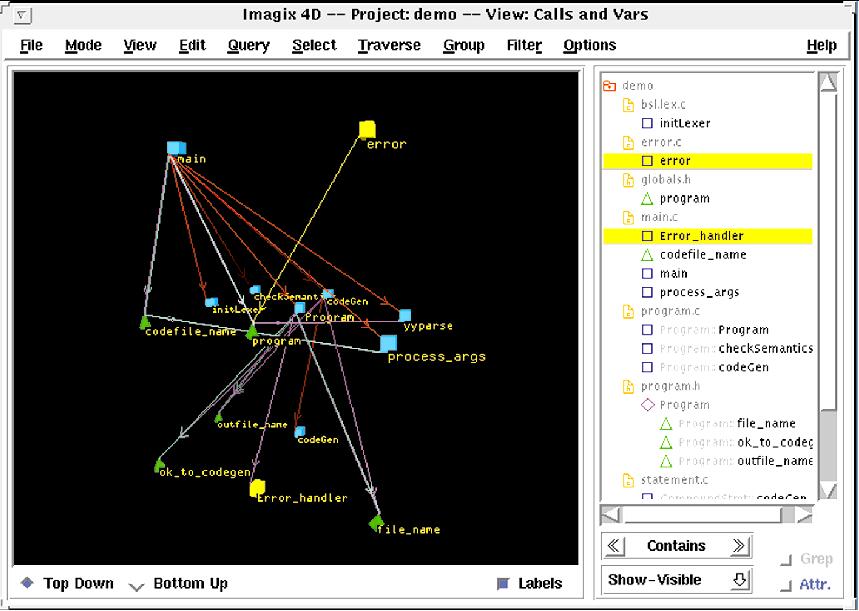
Reverse Engineering : Automated tools that read program source code as input and create graphical and textual representations of program design-level information such as program control structures, data structures, logical flow, and dataflow.

Sample screen of reverse engineering tool from imageix.


Reenigineering : Automated tools that read program source code as input, perform an analysis of the program's data and logic, and then automatically, or interactively with a system analyst, alter an existing system in an effort to improve its quality or performance.
Common Impacts of CASE on Individuals within Organizations
Individuals Common Impact
Systems Analyst CASE automates many routine tasks of the analyst, making the communication skills (rather than analytical skills) of the analyst most critical
Programmers Programmers will piece together objects created by code generators and 4th-generation languages. Their role will include more maintaining designs using diagramming tools rather than source code
Users Users will be much more active in the systems development process through the use of upper CASE tools.
Top Managers Top managers will play a more active role in setting priorities and strategic directions for IS by using CASE-based planning and through user orientated system development methods
Functional Managers Functional managers will play a greater role in leading development projects by using CASE to reengineer their business processes
IS Project Managers IS Project Managers will have greater control over development projects and resources


Return

Components of CASE.

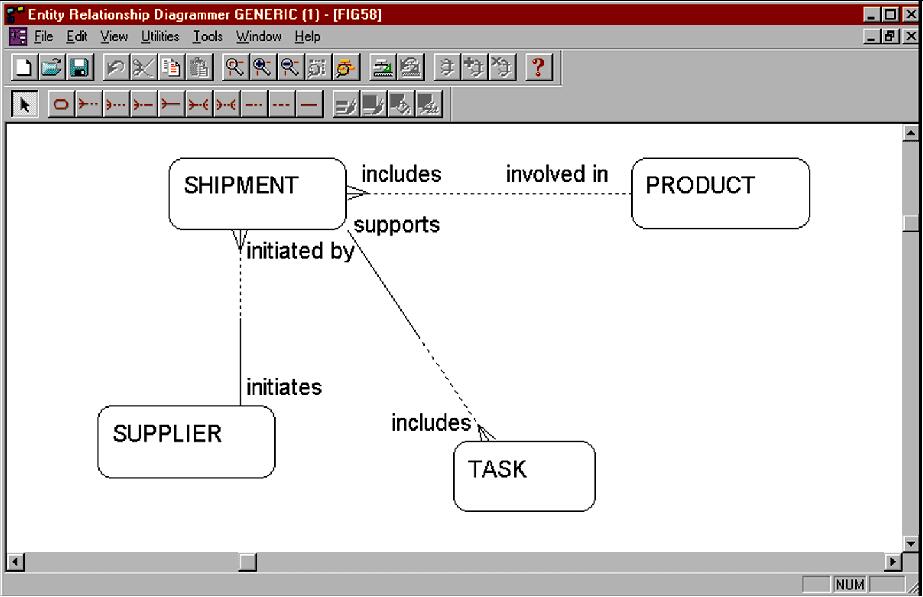
The relationship between CASE tools and the system development life Cycle:

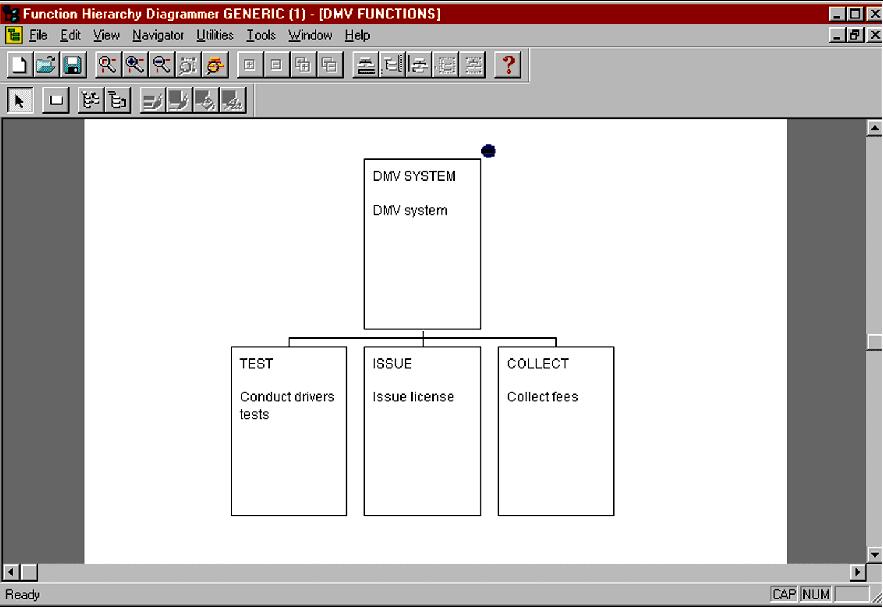
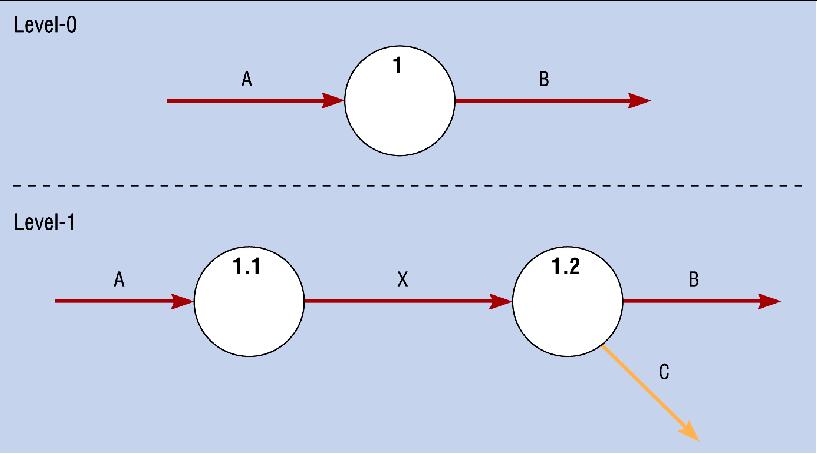
  • CASE Diagramming Tools.


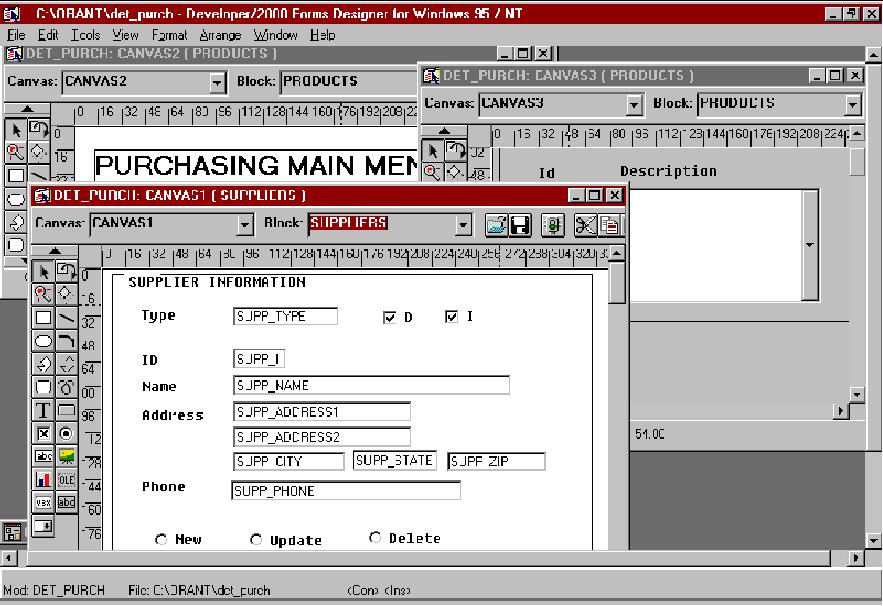
  • CASE From and Report Generator Tools.


  • CASE Analysis Tools.
    Analysis tools CASE tools that enable automatic checking for incomplete, inconsistant, or incorrect specifications in diagrams forms, and reports.


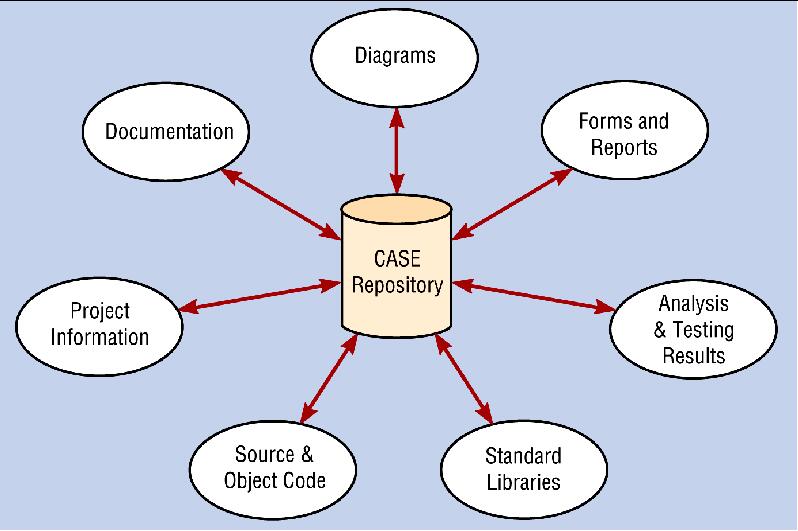
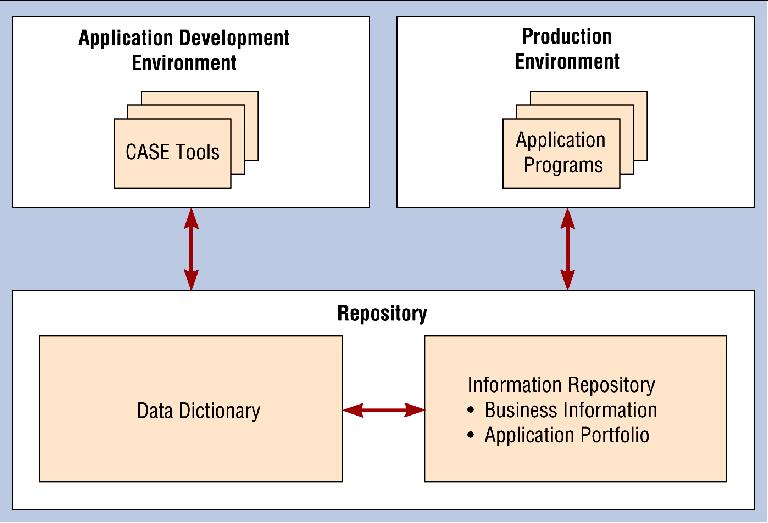
  • CASE Repository.


    • CASE Repository and SDLC.


    • Additional Advantages of CASE Repository.
    • CASE without a Comment Repository.
  • CASE Documentation Generator Tools.
  • CASE Code Generator Tools.


Return

Visual and Emerging Development Tools.
  • Object-Oriented Document Tools.
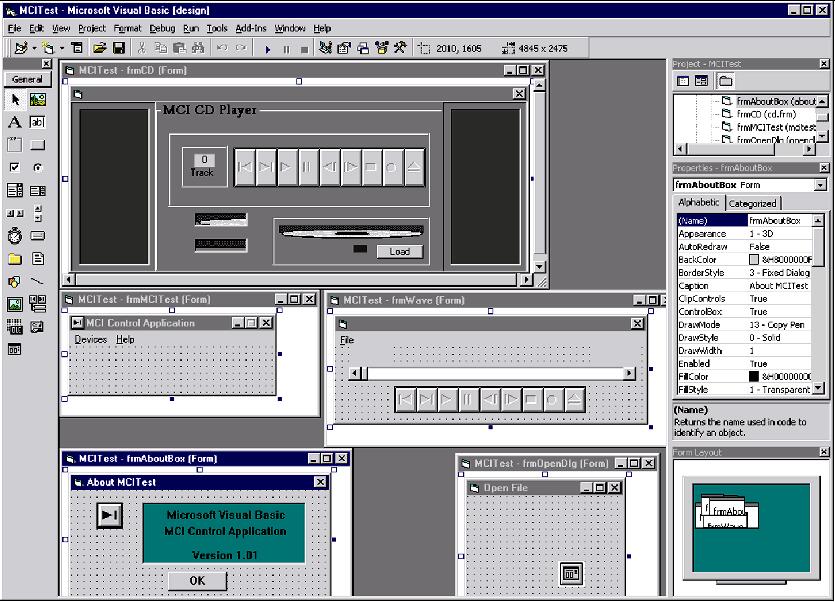
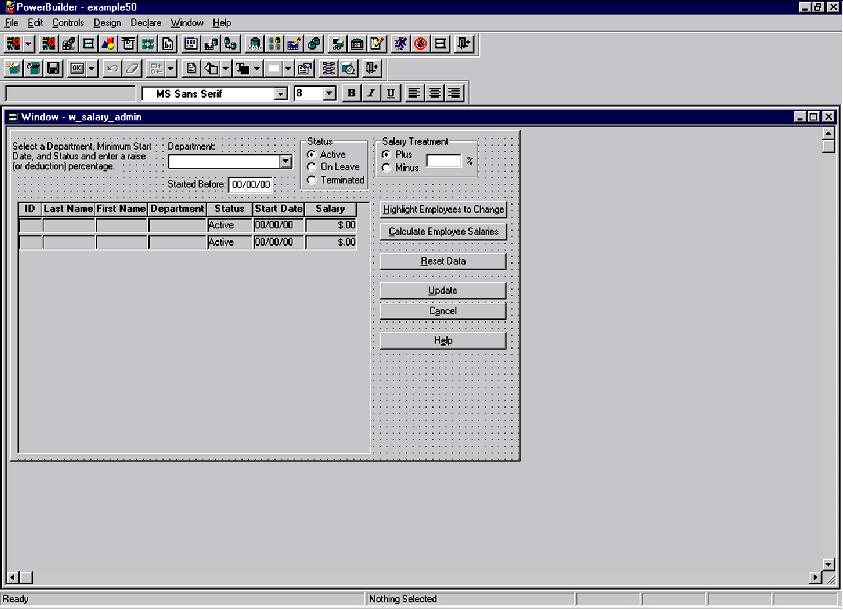
  • Visual Development tools.


  • Evolution and Future of Development Tools.


Return

Broadway Entertainment Company.


Return


Hosted by www.Geocities.ws

1