 |
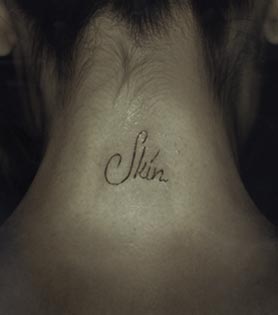
| VH1 interveiw On the new Skin and in her tell-all autobiography, Melissa Etheridge vigorously investigates her own life, unearthing secrets and explaining plenty about the person behind the artist. by Steffie Nelson Melissa Etheridge has been called the love child of Bruce Springsteen a nd Janis Joplin - an insightful songwriter and passionate performer. Also dubbed the gay girl next door, Etheridge has wryly noted that when she came out in 1992, her straight-up rock tunes found their way onto "alternative" radio playlists. Unsurprisingly, she would rather sidestep categorizations: "I've never really hung my hat anywhere on any wave or trend of music," she declares. Since 1988, the year she released her Grammy-nominated debut, Etheridge has consistently rocked and shocked us with her searing songs and lesbian lifestyle. Her audience is made up of true zealots, and continues to expand as the Kansas-born musician draws from the deep well of country and blues that inspired her heroes. Recently split from partner Julie Cypher, Etheridge is hitting us with a one-two punch: a disarmingly candid autobiography titled The Truth Is..., and her new album, Skin, both out July 10. In tandem, they present a brutally honest portrait of emotional repression, sexual abuse, infidelity, insecurity, and ultimately, catharsis and healing. Speaking with VH1.com just days after her 40th birthday, Etheridge reflected on the turns of her personal life, the creative strategies behind Skin, and what it means to return to her roots as a solo performer. Proud of the brand-new tattoo on the nape of her neck, the mother of two is truly discovering what it means to shed the old skin and get comfortable in the new. Steffie Nelson: You've just made your most personal record and you are releasing it on the same day asyour autobiography. Are you prepared for the onslaught of publicity? The New York Post is already talking about it. Melissa Etheridge: They are? Well, I don't know if I'm prepared now. You're making me nervous! SN: You must have some idea that this is going to provoke some very strong reactions. ME: Yeah, well I've already been there with strong reactions. I'm aware that not everyone in the world feels and thinks the way that I do, and that's OK. I know what my truth is and who I am and where I'm at and what I'm doing. And so, you know, reaction is reaction, but I get to do what I love: make my music, and sing, and be me! SN: Do you have a sense why this point in your life was the time when these intensely personal projects came together for you? ME: You know, that was not planned. About a year and a half ago, I thought, "Maybe I'll write a book." I didn't really feel like making an album yet, and creatively I was thinking of different things. And I started the book and it ended up being more putting my life down [on paper]. Then the album came as a result of the breakup. So my life sorta took a turn that I didn't know it was gonna take, and now I have these creations to give to the world. SN: I was wondering if the announcement of David Crosby as the biological father of your children prompted a situation where you presented the full story of your life. You came out in 1992, a big step, but do you think that Rolling Stone cover with Crosby opened things up more, and made you want to tell your story? ME: Wow. I hadn't thought about that, but I think you're right. When we had the children, there was the whole personal experience of it, but the whole public experience - people really wanting to know what's going on, know the story, know who the father was - really started during that time. The whole world was knocking, and I didn't enjoy constantly looking over my shoulder. And I didn't want it become a joke that could be held over my children's head. I started to say, "Look, I don't want anything in any closets or any drawers anywhere." It was a decision to put that out there so everybody knew it, and they would go away. And once I started, it was kinda like, "Well, there's this, too. And there's that. I might as well just put a book out and tell everybody!" [laughs] SN: When you started writing the book, you had no idea that your long-term relationship was going to be over by the time you finished. What was the most important realization during that time? ME: The more I examined my path up to then, the more I could look back and say, "Yeah, this was f*cked up, I gave my power away here," and the more I could see how I was repeating these patterns in my relationship. Forcing myself to go back and examine and write it down, was like going through really, really good therapy before a big change and an emotional experience in my life. SN: How did it compare to writing music or working in the studio? ME: It was so different. Making a record, being in the studio, there's a craft: You choose this or that word, and you have these sounds and textures you create; it's like painting a picture. Writing a book is like vomiting. You can't hide behind anything. I suppose I could have written a more literary book and made it more colorful and artful but it's just "Blaaah! I did this and I went there." SN: So for the new album, you had this mass of raw material that you channeled into carefully crafted work. ME: Well, that was me doing what I really do, which is write music about what I'm going through. I put the fears, hopes, and pain - everything - into the music. And when I was feeling this and knowing it was all coming down and ending, I just went into the writing and into the studio. That healed me as much as anything else. SN: Why did you decide to do this album without a band? ME: Once again I sort of started it with something else in mind. I thought it was gonna be my Nebraska album - just me and my acoustic guitar, really sparse. And when I went in and started working with David Cole, who was the engineer and co-producer, he kept showing me options and I started building more and more. I played all the keyboards, the guitars, harmonica. I was like, "Find me a mandolin!" It was just a delightful experience in the midst of a lot of pain. And [Cole] is just a wonderful human being. He helped me personally as much as professionally. SN: What made you decide to record this album on a computer? ME: Well, I thought this was going to be a very small project, just these sad breakup songs, a one-off piece of work. I was just gonna go in for a couple weeks and put 'em down. It was kind of a lucky choice. I really didn't have a concrete vision of what the end result would be. We would start with each song and there would be this blank screen, and we would just start laying things down. The one thing I did say was, "I am going to be completely open to any of this; if it goes in a certain unforeseen direction, great." SN: Could you talk about the trajectory of the songs? I understand you very specifically sequenced the songs with a beginning, a middle, and an end. ME: It's a journey, it's a concept. It's the pain of "Lover, Please," the realization of "Oh my God, this is gonna hurt but here it is." Then the darkness of "The Prison," which is the realization of my role in where I am in my life. You know, I've carried this with me and I can't say it's all this other person's fault. Going into "Walking on Water": There's no turning back. It's impossible. And then "Down to One," a sort of a reckoning with myself. "Goodnight" is a turning. I'm brand new. Oh, ow, how sharp [and] new this life is. And then "It's Only Me" is kind of the scream in the last bit of darkness before it breaks into "I Want to Be in Love," which is finally myself going, "OK, what do I want? If it's all starting again I wanna do it right this time." "Please Forgive Me" is imagining what it's going to be like when I get back out there in the world, and then "Heal Me." I certainly wasn't healing yet when I started writing it, but I could see the light at the end of the tunnel, I could see that it was possible to get there. SN: "The Prison" is sort of this straight-up folk song. It feels like this very gentle side of yourself that I don't think the public is so familiar with. ME: Oh, wow. That was one of the last songs I wrote, and I wanted to reckon with the whole arc of my emotional experience. It was like, OK, I'm going back to Leavenworth, Kan. And Leavenworth is the prison town; it was always the symbol of my childhood. And so I sort of went back to my roots: The song is very simple and folksy, and country, even. SN: I was wondering if it was similar to the earliest songs you would write? You talked about writing sad songs when you were younger and playing on an acoustic guitar. ME: Yeah, it's the exact picking pattern and rhythm that I've always had. Very much my beginning sound and back to my core, musically and emotionally. SN: You often talk about how emotionally distant your family was, how things just weren't discussed. How do you explain your ability to channel such passion through your music? ME: Well, that's where I put it, from the age of 10. That was the safe place to put it. You know, I'd feel something in the household and we wouldn't express it but I could sing a really, really sad song and everyone would listen and applaud. SN: How have your own children impacted your life as an artist and a musician? ME: They've impacted me as a person, in my individual human life, and then it goes from there. I want to be the best human being I can be, for them, and for me. And then that goes into my work. SN: You said that the first single, "I Want to Be in Love," reveals a softer, more feminine side of you. ME: Did I say that? Well, it's a very vulnerable side. It's, OK, I'm gonna say the corny things that I think. You know, I want somebody to send me flowers for no reason, I want someone to put me first. To show up and feel so much that in front of total strangers they're not ashamed to kiss me. I want those things, which is a very vulnerable, feminine state. SN: There are rumors that Tammy Lynn Michaels from the show Popular is your new girlfriend. Is that true? ME: Yes, it is. SN: So that's going well? ME: That's going very, very, very, very, very well. It's very clean, it's very good, it's very sweet. It's new, but I'm not gonna tell people I'm not [dating]. I do - I have a girlfriend! [cackles] SN: A very cute one, too. ME: A very cute one, yeah. Lucky me, I win! SN: So in August you're going to set out on a solo tour. Live and Alone, that's the name of your tour. ME: Yeah, like I haven't done enough singular soul searching. Yeah, it's alone. And I made that decision all by myself. SN: Will your children be joining you on the tour at all? ME: I think they'll come with me to New York, but other than that I've arranged a tour where I'm the one doing all the traveling. It's hard for them. After a couple days they're like, "OK, where's my truck? Where's my friends?" It's not so interesting for them at this age. SN: Will you be using a computer onstage? ME: No, I decided not to go that route. I will have some highly technically advanced guitars, but it's very solo and very sparse. I mean, I can play about four or five songs on my acoustic guitar and then I'm gonna lose everybody. So I'm gonna play the keyboard, I'm gonna play electric, I'm gonna do a cappella. I'm gonna mix it up and make it sonically and visually very entertaining. SN: It almost seems like that's the final chapter in this whole process. ME: I hope so. Yeah, I believe it is. It feels right, and it just feels like this whole experience of my year comes down to this: burning it off onstage and letting it go. Saying, wow, I did that. I stood there in it and felt it and have grown through it. SN: Are you at all apprehensive about meeting the public this time around, or do you feel like the scrutiny has died down? ME: Right now I feel like the scrutiny has died down but I'm always surprised, so I don't have any ideas of what it's going to be like. I am more exposed than I have ever been, and that's kind of my journey right now, the bringing together of my whole self. I'm not afraid, there's not anything anyone can do to hurt me. I wouldn't be surprised if someone said, "Stop it all, we don't want to know any more!" But they don't have to read it. We'll see how it all translates. It's a trip, and I don't know what's around the corner. |
|
 |