I just spent an incredible four days at the Gartner IT Symposium Xpo, and honestly, I'm still reeling from all the insights and key takeaways. As a tech enthusiast, I was excited to dive into the top strategic trends shaping the industry in 2025, and I've got to say, it was a wild ride. From the moment I stepped into the exhibition hall, I was surrounded by innovators, thought leaders, and forward-thinkers who were all eager to share their expertise and showcase the latest breakthroughs.
You know, the thing that struck me most was the emphasis on digital transformation. It's no secret that we're living in a rapidly changing world, where technology is the driving force behind every sector. But what I took away from the Gartner IT Symposium Xpo was that digital transformation is no longer just about adopting new technologies or systems – it's about revolutionizing the way we work, collaborate, and interact with each other. It's about creating a culture of innovation, where every individual has the freedom to experiment, learn, and grow.
One of the key areas of focus was on artificial intelligence (AI) and machine learning (ML). We're all familiar with the buzz around AI, but what I was impressed by was the level of maturity and sophistication in the industry. From the intelligent chatbots to the predictive analytics tools, it was clear that AI and ML are no longer just science fiction – they're a reality that's transforming businesses and disrupting traditional workflows. And let me tell you, the potential is staggering. I saw demonstrations of AI-powered virtual assistants that can diagnose medical conditions, automate customer service, and even predict equipment failures. It's mind-boggling to think about the possibilities.
But, to be fair, AI and ML are not without their challenges. As more and more data is being generated, there's a growing concern around data privacy and security. And with the rise of edge computing, there's a need for more localized processing capabilities to ensure that sensitive data is handled securely. It's a delicate balance between innovation and security, and one that requires careful consideration and collaboration between stakeholders.
Another trend that caught my attention was the rise of the metaverse. We're all familiar with virtual reality (VR) and augmented reality (AR), but the metaverse is something entirely different. It's a shared, immersive, and interactive space where people can come together to learn, work, and socialize. And let me tell you, it's not just a concept – it's a reality that's already taking shape. From the virtual product demonstrations to the remote workspaces, the metaverse is redefining the way we interact with each other and with information.
One of the things that struck me about the metaverse was its potential to democratize access to education and training. Imagine being able to attend lectures, workshops, and conferences from anywhere in the world, without the need for physical travel or transportation. It's a game-changer for anyone who's ever struggled to balance work and study, or for those who need to learn new skills to stay relevant in the job market.
Of course, the metaverse also raises questions about ownership and control. Who owns the virtual spaces and assets? How do we ensure that they're secure and accessible to everyone? These are questions that require careful consideration and a commitment to collaboration and transparency.
As I left the Gartner IT Symposium Xpo, I couldn't help but feel a sense of excitement and trepidation. The tech trends of 2025 are undeniably complex and multifaceted, and they're going to require us to work together to navigate the challenges and opportunities. But I also felt a sense of hope and optimism. Because when it comes down to it, technology is about people – about creating connections, building relationships, and improving lives.
I guess, in the end, it's up to us to harness the power of technology to create a better world for everyone. And that's exactly what I'm hoping to see in the years to come – a world where technology is driving innovation, inclusivity, and progress, rather than division, inequality, and stagnation.
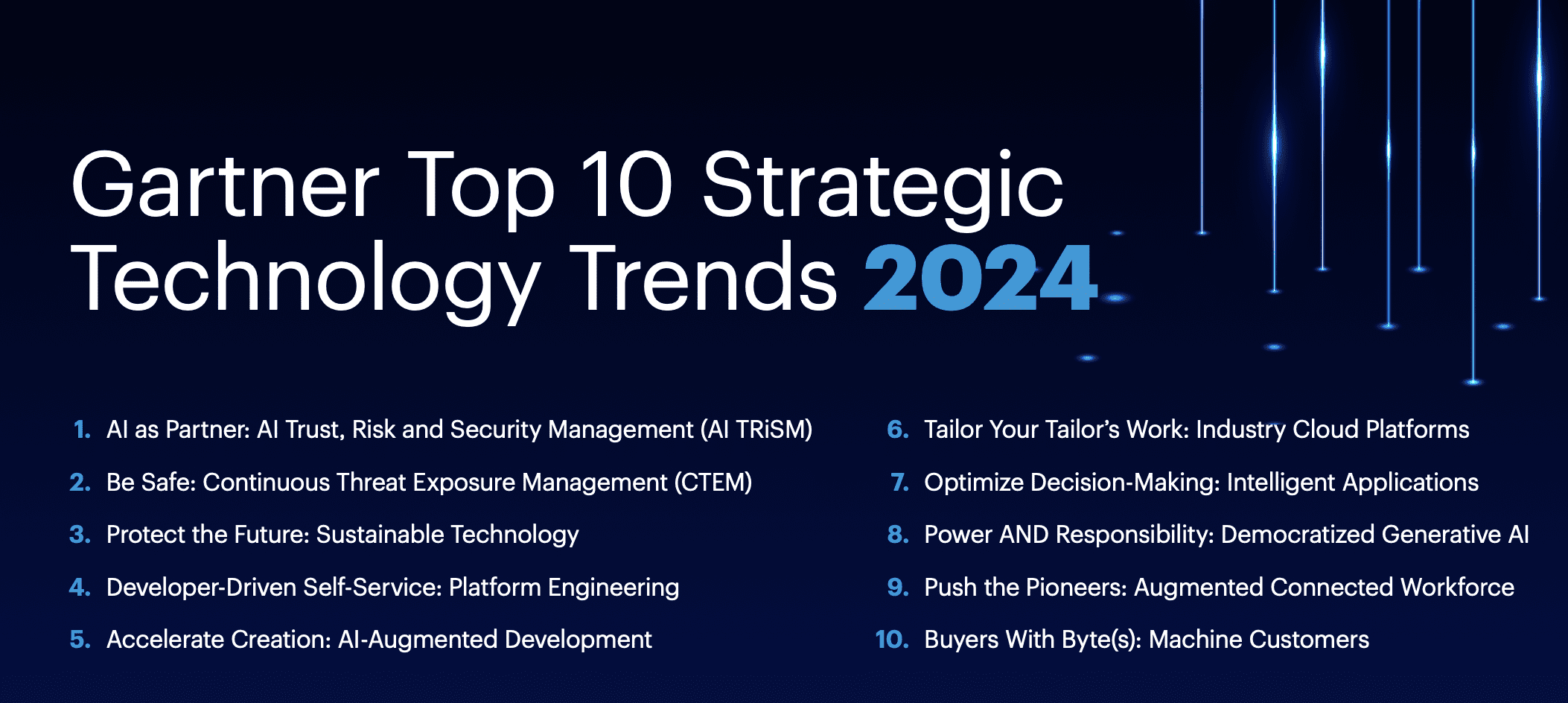
top strategic tech trends for 2025 live from gartner it symposium xpo

Published on 2025-10-25 20:53:09