 |
|
|
|
|
|
|
|
|
|
|
|
|
|
|
|
|
|
|
|
|
|
|
|
|
|
|
|
|
|
Music Theory |
|
|
|
Note Names and Clefs
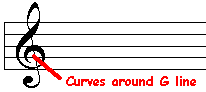
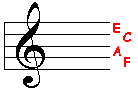
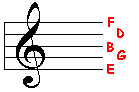
Treble Clef- Almost all the time, flutists will only have to worry about one clef- treble cleff. The clef is a curly q that wraps around the second line from the botton and designates all notes on that line as G. (For this reason, the treble cleff is also called the G clef). The notes progress up and down on the rest of the lines and spaces. The notes in the spaces of the treble clef spell "FACE" and the line notes are "EGBDF." There are various memory tricks to remember EGBDF. The most common is Every Good Boy Deserves Fudge. The problem with these tricks is that you can't come to a D in the music and then go through the whole trick in your head before playing- there just isn't time. It is best to memorize the notes and their positions. I did this by making flashcards. |
|
|
|
 |
|
|
|
 |
|
|
|
|
 |
|
|
|
|
|
|
|
|
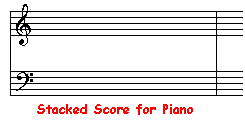
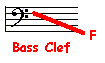
Bass Clef- This is a common clef used for low instruments, but flutes *almost never* have to play in bass clef. No flute music is written in bass clef; the only time you would ever have to read it is if you are given, say a bassoon part, and asked to play it on your flute. (Pianos also play in bass clef. In stacked score for piano, the top staff is in treble clef for the right hand, and the bottom staff(s) is in bass clef for the right hand.) Anyway, bass clef is also called F clef because the 2 dots designate the fourth line from the bottom of the staff as F. Again, the rest of the notes just read up or down from the F. |
|
|
|
 |
|
|
 |
|
|
|
|
|
|
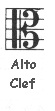
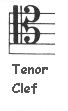
Alto and Tenor Clefs- These are the two more obscure clefs. Unless you are doing advanced theory or you play another instrument or sing, you will probably never see these. Just keep in mind that the "center" of the clef designates C. |
|
|
|
 |
|
 |
|
|
|
Back |
|
|
|
 |
|
|
|
Home ~ Playing Tips ~ Be The Best ~ Instruments ~ Reference ~ Contact |
|