




The film Text copyright (c) Filmverdict 2006-present. Any film titles and artwork used are copyright of their respective owners.
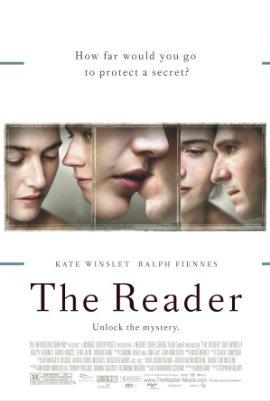
When watching The Reader, it's hard not to think back to the episode of the TV series Extras which guest starred Kate Winslet, who in the episode was playing a nun in a holocaust film, in a desperate bid for Oscar glory. It was one of the highlights of the series, proving that Winslet is not afraid to send herself up. Confirming just how dead-on the satire was, Winslet now looks set to win an Oscar for real, by playing a German woman who is tried for holocaust crimes in postwar Germany. Although the similarities are uncanny, that shouldn't obscure the standard of her performance here. She takes on a tough role in The Reader, playing an emotionally aloof woman who discloses little about herself, and the story spans a period of 40 years, meaning that for some of the time she's buried under layers of prosthetic aging makeup. It may be the sort of role that self-consciously demands awards attention, but the performance in this instance is worthy of it.
The story of The Reader begins in 1958 Berlin, where a fifteen year old boy, Michael (David Kross), falls ill on the side of the street. A passing woman, Hanna (Winslet), helps him back home. Three months later, Michael has recovered from scarlet fever and takes a bouquet of flowers to Hanna (whose name he doesn't yet know) to thank her. Before long, they embark on a passionate but largely wordless love affair. Hanna likes to hear Michael read from various books (such as Homer's Odyssey), which comprises most of the words that pass between them. This affair lasts for the first act of the film, and is quite riveting with its subtle eroticism. Director Stephen Daldry (Billy Elliot, The Hours) films the events in a detached yet tasteful manner, meaning that despite the two leads being completely naked for much of the first act it never comes across as gratuitous or graphic. Kross is excellent here as the young Michael, and he is missed later in the film when Ralph Feinnes plays the older version of the character. The fact that they hardly resemble each other makes the switch rather less than seamless.
Following the Summer-long affair, Hanna abruptly vanishes, leaving Michael crestfallen. Eight years later, he's studying law at university, and as fate would have it one of the trials he attends turns out to be a war crimes tribunal in which Hanna is the primary defendant. Once the film takes this turn (approximately half way through), it becomes markedly less interesting, although the intrigue built in the first act sustains it for some time. Eventually, though, the trial concludes but that still leaves the third act of the film, which just drifts along without much of interest happening. It is thought-provoking and quietly moving, but it just loses any sense of purpose as it meanders towards the conclusion. By this time all the secrets have been revealed and none of them are hugely revelatory anyway. It's unfortunate, really, as for an hour the film is truly gripping, and whilst it never goes off the rails, it does just gradually slow down until eventually it has nowhere left to go. Perhaps it worked better in literary form.
The summary
An excellent first half gives way to a less-than-gripping second hour. A good sense of period is established to begin with, but as the time passes, interest dwindles.


Agree? Disagree? Say so in the Guestbook!