| Hantavirus II, Hemorrhagic
Fever with Renal Syndrome & Pulmonary Syndrome.
Hantavirus II, Fiebre Hemorrágica con
Síndrome Renal y Síndrome Pulmonar.
DATA-MÉDICOS
DERMAGIC/EXPRESS 19-(205)
30 Septiembre 2.017 30 September 2.017
 HANTAVIRUS I, The species and the Rats Invasion
./ Las especies y la Invasion de las Ratas
(HOT LINK)
HANTAVIRUS I, The species and the Rats Invasion
./ Las especies y la Invasion de las Ratas
(HOT LINK)

EDITORIAL ENGLISH
=================
Hi Friends of the network today I bring you the
second chapter of HANTAVIRUS II, HEMORRHAGIC
FEVER WITH RENAL SYNDROME (HFRS) AND CARDIOPULMONARY
SYNDROME (HSPS). The subject of these viruses is
so long that I decided to divide it into 2 parts:
FIRST KNOWN SPECIES, and today, the
TWO MAJOR DISEASES PRODUCED BY THEM AND THE
VIRUSES INVOLVED with some historical
aspects.
As mentioned in the previous edition, HANTAVIRUS are
mainly involved in two diseases known as
HEMORRHAGIC FEVER WITH RENAL SYNDROME (HFRS) or
EPIDEMIC NEPHROPATHY, which is most common in
Europe, Africa and Asia and
HANTAVIRUS PULMONARY OR CARDIOPULMONARY SYNDROME (HPS)
more frequent in the Americas, but both can be
presented in the countries involved.
HEMORRHAGIC FEVER WITH RENAL SYNDROME (HFRS):
================================================
Also known as
EPIDEMIC NEPHROPATHY, KOREAN HEMORRHAGIC FEVER,
or HEMORRHAGIC EPIDEMIC FEVER is
transmitted by five (6) species of
HANTAVIRUS:
RIVER HANTAAN VIRUS, DOVRABA-BELGRADE VIRUS, SAAREMA
VIRUS, SEOUL VIRUS, AMUR VIRUS AND PUUMALA VIRUS.
These species circulate mainly in
EUROPE, ASIA
AND AFRICA, being the most
dangerous DOBRAVA-BELGRADE that causes the most
severe form of the disease and has the highest
mortality.
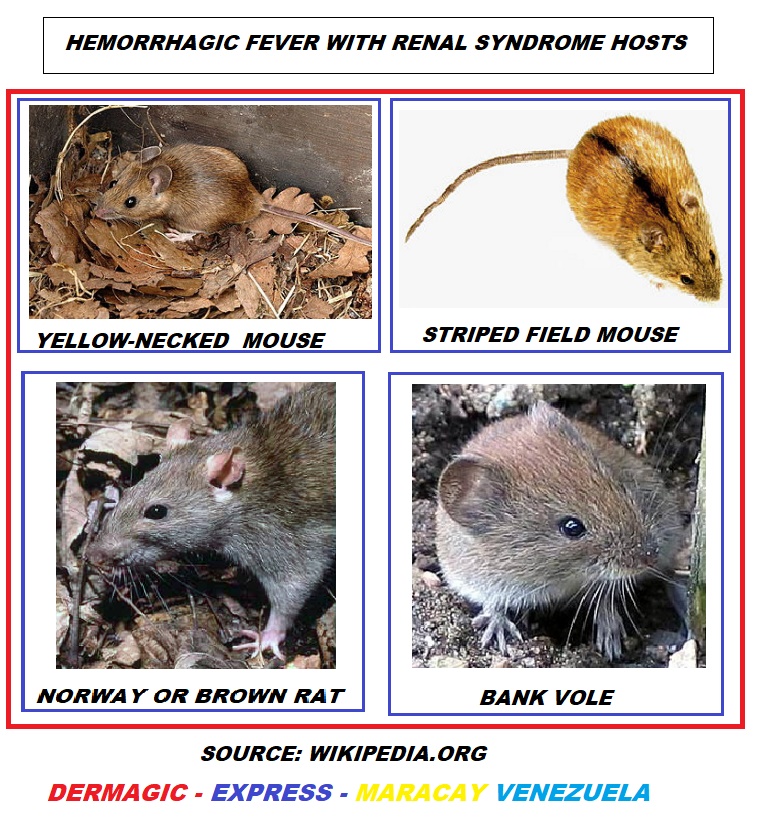
1.) DOBRA-BELGRADE VIRUS (DOVB):
===============================
Described for the first time in the village of
DOBRAVA, Slovenia, YUGOSLAVIA, later in
Russia, Germany and Eastern Europe. The
yellow-necked field mouse (Apodemus flavicollis),
carries Dobrava virus. This virus has three
genotypic variants of pathogenicity:
A.) DOBRAVA GENOTYPE VIRUS: Found in the
yellow-necked mouse (Apodemus flavicollis)
B.) KURKINO GENOTYPE VIRUS: Found in the
field striped mouse (Apodemus agrarius)
C: SOCHI GENOTYPE VIRUS: Found in the Black
Sea field mouse (Apodemus ponticus).
DOBRAVA VIRUS
fatality reaches 12% and
16% - 48% of renally affected patients
require dialysis.
2. SEOUL VIRUS (SEOV):
====================
First described in Seoul Korea by the Virologist
Dr. Lee Ho-Wang, found in field mice of the
genus Apodemus, and was later found in rats in
Norway (Rattus norvegicus) or brown rat.
In 2,015 there was an outbreak of
EPIDEMIC HEMORRHAGIC FEVER from this virus in
HOLLAND, ENGLAND, WALES, FRANCE
AND SWEDEN.
In 2.016-2.017 appeared in the United States
State of Illinois, Wisconsin infecting 11 people,
all recovered, later the CDC, did an investigation
and found that the rats disseminated the
SEOUL VIRUS (SEOV) to the States:
Alabama, Arkansas, Colorado, Illinois, Indiana,
Iowa, Louisiana, Michigan, Minnesota, Missouri,
North Dakota, South Carolina, Tennessee, and Utah.
3. PUUMALA VIRUS (PUUV):
=======================
Found first in FINLAND in 1.980,
the bank vole
(Clethrionomys glareolus), the reservoir for Puumala
virus,
it has also been found in
Northern Europe, Poland
and Russia in the rodent (Myodes
glareolus), which is the reservoir of the virus,
which lives in wood forests in
Europe
and Asia.
The mortality rate of PUUMALA VIRUS is
less than 0.5%,
and 5% of renally affected patients
require dialysis. PUUMALA PUUV VIRUS,
is the most common etiological agent of
HFRS in EUROPE.
4.) SAAREMAA VIRUS (SAV):
=======================
Found in Slovakia en.2.006 is also
responsible for the mildest form of HEMORRHAGIC
FEVER WITH RENAL SYNDROME (HFRS), The reservoir is
the striped field mouse..
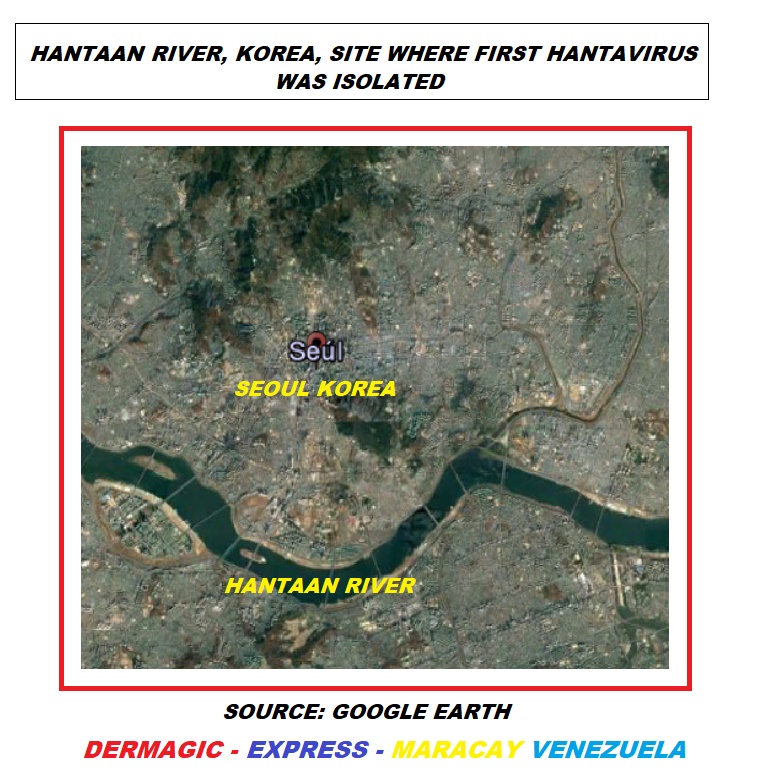
5. HANTAAN RIVER VIRUS (HNTV):
=============================
It was isolated from the striped field mouse (Apodemus
agrarius coreae) in the year 1.976 by the
aforementioned Korean Virologists Lee Ho Wnag and
The American Karl M Johnson. It is long-standing
since the earliest cases were seen in the Korean War,
1951-1953 when some soldiers had hemorrhage
fever, renal failure and shock.
The mortality of this species
HANTAAN VIRUS (HNTV): IS
10-12% as is the DOBRAVA VIRUS.
In addition to this
HANTAAN RIVER VIRUS (HNTV)
AND SEOUL VIRUS (SEOV) species, there
are 2 other
HANTAVIRUS species responsible for
HEMORRHAGIC FEVER WITH RENAL SYNDROME (HFRS)
in KOREA and are:
SOOCHONG VIRUS (SOO), isolated in 1.997
of Mouse Apodemus peninsulae (Korean mouse field)
and the
MUJU VIRUS (MUV).
6.) AMUR VIRUS (AMRV:
====================
HANTAVIRUS also causal agent of
HEMORRHAGIC FEVER WITH RENAL SYNDROME (HFRS),
isolated for the first time of the mouse Apodemus
peninsulae in
China also known in Korea as the Korean
mouse field or wood mouse. It is distributed in
Northeast Asia, including the Far East of
Russia, northern China, and the
Korean peninsula.
SYMPTOMS OF DISEASE:
=====================
The incubation period of the disease varies
between two (2) and four (4) weeks and the disease
presents several PHASES, including 1.)
HYPOTENSION, decreased platelets, fever,
tachycardia, hypoxemia, 2.) OLIGURIA, onset
of renal failure, then a 3.) DIURETIC phase
where the patient presents diuresis of 3 to 6 liters
per day, and 4.) CONVALESCENT phase, which
represents the improvement of the patient. In some
cases the patient has permanent
renal failure or
die.
Mortality by
HEMORRHAGIC FEVER WITH RENAL SYNDROME (HFRS)
or EPIDEMIC NEPHROPATHY, as I told
them oscillates between
10 and 12%.
In patients who recover, in some cases they have
permanent renal failure.
NO VACCINES ARE CURRENTLY available for
HEMORRHAGIC FEVER WITH RENAL SYNDROME (HFRS). in USA
and Europe.
HANTAVIRUS PULMONARY OR CARDIOPULMONARY
SYNDROME (HSP-HCPS):
=================================================================
This syndrome was first described in the year
1.993 in Southeast of the United States in the
Region called
"THE FOUR CORNERS", which comprise
the States of Arizona, New Mexico, Colorado
and Utah subsequently the name was changed
to the
SIN NOMBRE VIRUS (NAMELESS VIRUS) due
to a complaint of Native Americans for
stigmatizing the name "FOUR CORNERS". The same
has been described in other states of the
American continent.
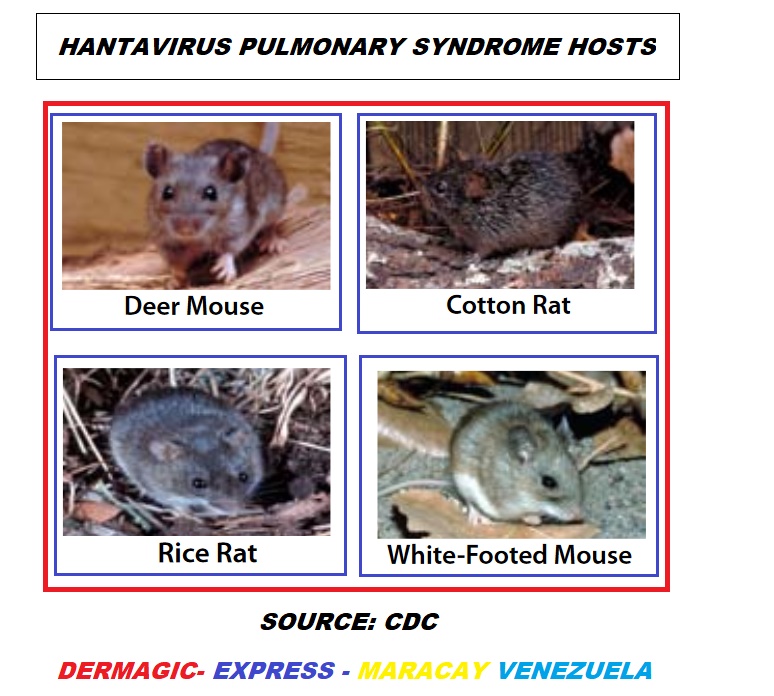
The virus is transmitted in the United States
by the following
RODENTS:
Cotton rat (Sigmodon hispidus),
rice rat (Oryzomys palustris),
deer mouse (Peromyscus maniculatus) and
white-footed mouse (Peromyscus leucopus)
The means of contagion: contact
with feces, urine saliva and biting of these
mice, rats, or inhaling excrement pulverized in
the air containing viral particles.
HUMAN-HUMAN transmission has not
been described, but recently
this fact was verified with one of the
transmitting species of CARDIOPULMONARY SYNDROME
(HCPS),
the ANDES VIRUS (ANDV) in
South America.
The species of
HANTAVIRUS transmitting
CARDIOPULMONARY SYNDROME BY HANTAVIRUS (HCSP)
are:
SIN NOMBRE VIRUS (NAMELESS)
(SNV), BAYOU VIRUS (BAYV) and
ANDES VIRUS (ANV), mainly in
America,
1.) SIN NOMBRE VIRUS (SNV): (NAMELESS)
====================================
Hantavirus of the well-known
BUNYAVIRIDAE family, first
described in the United States region known as
the "FOUR CORNERS" in the year 1.993, in a
patient presenting HANTAVIRUS PULMONARY SYNDROME
(HPS).
The main reservoir of the
SIN NOMBRE (NO-NAME VIRUS) (SNV) is
the
deer mouse (Peromyscus maniculatus),
but in addition to this rodent has been found in
three (3) already mentioned rodents.
The
SIN NOMBRE VIRUS (NAMELESS) (SNV) is
found virtually throughout the North American
Territory with the exception of Southeast
Texas, Florida and Northern Canada, and is
most commonly found in the western states of New
Mexico, Arizona and California states with
rural populations where there is greater contact
of the mouse with humans.
The fatality
of
PULMONARY SYNDROME (HPS) by HANTAVIRUS
was reported by the CDC in
1.993 by 63%, now
2,017
have decreased to 35%
3.) BAYOU VIRUS (BAYV):
====================
HANTAVIRUS
BAYOU VIRUS (BAYV), was first
described in the State of Louisiana in the
United States in 1.996, being isolated in
the marsh rice rat, being the natural reservoir
of the VIRUS which is scattered in
the Southeast of the United States
and
is the SECOND MOST COMMON HANTAVIRUS in
that country after the
SIN NOMBRE VIRUS (NO NAME (SNV), and is
also the etiologic agent of HANTAVIRUS PULMONARY
SYNDROME (HPS).
3.) ANDES VIRUS (ANV):
====================
HANTAVIRUS
ANDES VIRUS (ANDV): was described
in South America for the first time in April,
June of 1.997 in Argentina in an outbreak of
HANTAVIRUS PULMONARY SYNDROME (HPS), and
later in Chile in 1998.
The reservoir of this virus in Argentina and
Chile is the long-tailed rice rat
(Oligoryzomys longicaudatus) and represents the
ONLY HANTAVIRUS WHO HAS BEEN
DESCRIBED HUMAN-HUMAN TRNASMISION.
Several strains of this virus have been found
in
Argentina:
BERMEJO, LECHIGUANAS, MACIEL, ORAN AND PERGAMINO
VIRUS.
Cases of PULMONARY SYNDROME HCPS have also been
reported in
Bolivia, Uruguay, Paraguay
and Brazil,
The mortality of
ANDES VIRUS (ANDV) in
Argentina
is 25-35%
and in Chile 37%
In Brazil have been circulating the possible
lineage of the
ARARAQUARA VIRUS, and the
aforementioned
BERMEJO, LECHIGUANAS, LAGUNA NEGRA,
PERGAMINO, MEARIM, MACIEL, AND ORAN VIRUS
from rodents Oligoryzomys mattogrossae and
Oligoryzomys nigripes, ALL THESE are
considered STRAINS OF THE
ANDES VIRUS (ANDV) also responsible
for
PULMONARY SYNDROME (HPS).
In Venezuela is circulating in the area
of the Llanos
HANTAVIRUS
CA�O DELGADITO VIRUS, discovered in
rodents in 1990
SYMPTOMS OF DISEASE:
=====================
Symptoms of
HANTAVIRUS PULMONARY SYNDROME (HPS)
are
initially similar to a flu with
FEVER, COUGH, HEADACHE, GENERAL MALAISE,
WEAKNESS, AND MUSCULAR PAIN, ALSO ABDOMINAL
PAIN, NAUSEA, VOMITING, DIARRHEA. In
the late phase
4 to 10 days after the inital symptoms
THERE IS A SUBSTANTIAL START OF
LACK OF BREATH WITH PULMONARY EDEMA,
resulting in a failure in VENTILATION which
evolves rapidly and even with mechanical
respiratory assistance and potent diuretics can
cause
death.
The mortality rate for this disease is
35-36%.
THE HANTAVIRUS VACCINE:
=======================
The first vaccine developed against
HANTAVIRUS is called
HANTAVAX and was created in 1990 to
prevent
HANTAAN RIVER VIRUS that causes the
most severe form of HEMORRHAGIC FEVER
WITH RENAL SYNDROME (HFRS), and implemented
in
China, producing a NOTABLE
decrease in annual cases.
The vaccine is composed of viral particles of
HANTAAN RIVER VIRUS
inactivated in formalin, 3 doses are
placed in the months: 0, 1 and 13.
Other hantaviruses for which the vaccine is used
include the
SEOUL VIRUS (SEOV). However,
the vaccine is believed to be ineffective
against European hantavirus, including
Puumala virus (PUUV) and
Dobrava-Belgrade virus (DOBV)
There are currently other VACCINES being studied
but have not been approved in Europe or the
United States. HANTAVAX has also not been
approved by the FDA today 2.017
So, we have CARRYING RATS practically all over
the world, and the best way to
PREVENT HANTAVIRUS INFECTION is to
avoid contact with them, and their fluids, be
it
feces, urine, saliva
and bites.
In the attachs I put 8 rodents involved
in the diseases I described, but there are many
more...So if you see Rat or a Mouse in the
surroundings you have something to do for you
and your family,
knock
them
down. !!
HANTAVIRUS today are considered
among the
10 most dangerous VIRUS in the
world.
Greetings to all.
Dr. Jos� Lapenta.
EDITORIAL ESPAÑOL
=================
Hola Amigos de la red Hoy les traigo el
segundo capítulo de los HANTAVIRUS, LA
FIEBRE HEMORRÁGICA CON SÍNDROME RENAL (HFRS)
Y EL SÍNDROME CARDIOPULMONAR POR HANTAVIRUS
(HSPS). EL tema de estos virus es tan
largo que decidí dividirlo en 2 partes:
PRIMERO LAS ESPECIES CONOCIDAS, y hoy,
LAS DOS PRINCIPALES ENFERMEDADES
PRODUCIDAS POR ELLOS Y LOS VIRUS
INVOLUCRADOS con algunos aspectos
históricos.
Como les mencione en la edición previa, los
HANTAVIRUS están involucrados principalmente
en dos enfermedades conocidas como
FIEBRE HEMORRÁGICA CON SÍNDROME RENAL (HFRS)
o NEFROPATÍA EPIDÉMICA, que es más
frecuente en Europa, Africa y Asia y el
SÍNDROME PULMONAR O CARDIOPULMONAR POR
HANTAVIRUS (HPS), más frecuente en
las Américas, pero ambas se pueden
presentar en los países involucrados.
LA FIEBRE HEMORRÁGICA CON SÍNDROME RENAL
(HFRS):
=================================================
Conocida también como
NEFROPATÍA EPIDÉMICA, FIEBRE HEMORRÁGICA
COREANA O FIEBRE HEMORRAGICA EPIDEMICA
es transmitida por cinco (6) especies de
HANTAVIRUS:
RIO HANTAAN VIRUS, DOVRABA-BELGRADO VIRUS,
SAAREMA VIRUS, SEUL VIRUS, AMUR VIRUS Y
PUUMALA VIRUS.
Estas especies circulan principalmente en
EUROPA, ASIA
y AFRICA,
Siendo la más peligrosa el
DOBRAVA-BELGRADO quien causa la forma
mis severa de la enfermedad y tiene la mayor
mortalidad.
1.) DOBRAVA-BELGRADO VIRUS (DOVB):
==================================
Descrito por primera vez en la villa de
DOBRAVA,
Eslovenia, YUGOSLAVIA,
posteriormente en
Rusia, Alemania y el
Este de Europa. El reservorio del
virus Drovava es el rat�n de campo cuello
amarillo. Este virus tiene tres variantes
genot�picas de patogenicidad:
A.) VIRUS GENOTIPO DOBRAVA: Encontrado
en el ratón de cuello amarillo (Apodemus
flavicollis)
B.) VIRUS GENOTIPO KURKINO:
Encontrado en el ratón rayado de campo
(Apodemus agrarius)
C: VIRUS GENOTIPO SOCHI: Encontrado
en el Ratón de campo del Mar Negro (Apodemus
ponticus).
La fatalidad por el
VIRUS DOBRAVA alcanza el
12%
y 16%- 48% de los pacientes
afectados renalmente requieren diálisis.
2.) SEUL VIRUS (SEOV):
===================
Descrito por primera vez en SEUL Corea
por el Virologista Dr. Lee Ho-Wang,
encontrado en ratones de campo del genero
Apodemus, y posteriormente fue encontrado en
ratas en Noruega (Rattus norvegicus) o rata
marrón.
En 2.015 se produjo un brote de
FIEBRE HEMORRÁGICA EPIDÉMICA por este
virus en
HOLANDA, INGLATERRA, GALES, FRANCIA
Y SUECIA.
En 2.016-2.017 apareció en Estados Unidos
Estado de Illinois, Wisconsin infectando 11
personas, todas se recuperaron,
posteriormente el CDC, hizo una
investigación y encontró que las ratas
diseminaron el
VIRUS SEUL (SEOV) a los
Estados:
Alabama, Arkansas, Colorado, Illinois,
Indiana, Iowa, Luisiana, Michigan,
Minnesota, Misuri, Dakota del Norte,
Carolina del Sur, Tennessee, y Utah.
3.) PUUMALA VIRUS (PUUV):
=======================
Encontrado por primera vez en FINLANDIA
en 1.980, El reservorio es el
ratón
topillo rojo(bank vole).También se ha
encontrado en el Norte de
Europa, Polonia
y Rusia
en el roedor (Myodes glareolus) quien
es el reservorio del virus, el cual vive en
bosques madereros de
Europa
y Asia.
El porcentaje de mortalidad del
PUUMALA VIRUS es
menor del 0.5%, y el
5% de los pacientes afectados
renalmente
requiere de diálisis. El VIRUS
PUUMALA (PUUV), es el agente etiológico mas
común de la HFRS en EUROPA.
4.) SAAREMAA VIRUS (SAV):
========================
Encontrado en Eslovaquia en. 2.006
también es responsable de la forma más leve
de FIEBRE HEMORRÁGICA CON SÍNDROME RENAL. (HFRS).
El reservorio es el ratón rayado de campo..
5.) HAANTAN RIVER VIRUS (HNTV):
=============================
Fue aislado del ratón rayado de campo en
el año de 1.976 por los ya mencionados el
Virologistas Coreano Lee Ho Wnag y El
Americano Karl M Johnson. Es de larga
data pues los primeros casos Fueron vistos
en la guerra de COREA, 1.951-1.953
cuando algunos soldados presentaron
hemorragia fiebre, fallo renal y shock.
La mortalidad de esta especie
HAANTAN VIRUS (HNTV): Es del
10-12% al igual que el
DOBRAVA VIRUS.
Además de esta especie
HAANTAN RIVER VIRUS (HNTV) Y EL
SEUL VIRUS (SEOV) ya descrito existen
otras 2 especies de HANTAVIRUS responsables
de la
FIEBRE HEMORRÁGICA CON SÍNDROME RENAL (HFRS)
en COREA y son: el
SOOCHONG VIRUS (SOO), aislado
en 1.997 del Ratón Apodemus peninsulae
(ratón coreano de campo) y EL
MUJU VIRUS (MUV)
6.) AMUR VIRUS (AMRV:
====================
HANTAVIRUS también agente causal de
LA FIEBRE HEMORRÁGICA CON SÍNDROME RENAL (HFRS),
aislado por primera vez del ratón Apodemus
península en
China
también conocido en Corea como el
ratón Coreano de Campo o ratón de la Madera.
Se encuentra distribuido en
Asia Nororiental, incluyendo el
Lejano Oriente de
Rusia, el
norte de China, y la
península Coreana.
SÍNTOMAS DE LA ENFERMEDAD:
===========================
El periodo de incubación de la enfermedad
varia entre dos (2) y cuatro (4) semanas
y la enfermedad presenta varias FASES,
que incluyen 1.) HIPOTENSIÓN,
disminución de las plaquetas, fiebre,
taquicardia, hipoxemia, 2.) OLIGURIA,
inicio de la insuficiencia renal, luego una
fase 3.) DIURÉTICA donde el paciente
presenta diuresis de 3 a 6 litros por día, y
4.) CONVALECENCIA, que representa la
mejoría del paciente. En algunos casos el
paciente queda con
insuficiencia renal permanente o
muere
La mortalidad por LA
FIEBRE HEMORRÁGICA CON SÍNDROME RENAL (HFRS)
o NEFROPATÍA EPIDÉMICA, como les dije
oscila entre en
10 y 12 %. En los pacientes que
se recuperan, en algunos casos quedan con
insuficiencia renal permanente.
NO EXISTE VACUNA
actualmente para la FIEBRE HEMORRÁGICA CON
SÍNDROME RENAL (HFRS).
HANTAVIRUS SÍNDROME PULMONAR O
CARDIOPULMONAR (HSP-HCPS):
============================================================
Este síndrome fue primeramente descrito
en el año de 1.993 en SURESTE de Los Estados
Unidos en la Región denominada
"LAS CUATRO ESQUINAS",
que comprenden los Estados de Arizona,
New México, Colorado y Utah
posteriormente el nombre fue cambiado a
el
SIN NOMBRE VIRUS debido una
queja de los nativos Americanos por
estigmatizar el nombre de "CUATRO ESQUINAS".
El mismo ha sido descrito en otros estados
del continente Americano.
El virus es trasmitido en los Estados
Unidos por los siguientes
ROEDORES:
La rata algodonera (Sigmodon hispidus),
la rata del arroz (Oryzomys palustris),
el
ratón del Venado (Peromyscus
maniculatus) y el
ratón de patas blancas (Peromyscus
Leucopus)
El medio de contagio: el contacto con
heces, orina saliva y mordedura de estos
ratones, o inhalación de excremento
pulverizado en el aire que contiene las
partículas virales. No se ha descrito
transmisión HUMANO-HUMANO, pero
recientemente se comprobó este hecho
con una de las especies transmisoras del SÍNDROME
CARDIOPULMONAR (HPS), EL
ANDES VIRUS (ANDV) en
Sur América.
Las especies de
HANTAVIRUS transmisoras del
S�NDROME CARDIOPULMONAR POR HANTAVIRUS (HCSP)
son: EL
SIN NOMBRE VIRUS (SNV), BAYOU VIRUS (BAYV)
y el ANDES VIRUS (ANV),
principalmente en
América,
1.) SIN NOMBRE VIRUS (SNV):
========================
Hantavirus de la ya conocida familia
BUYAVIRIDAE, descrito por
primera vez en la región de los Estados
Unidos conocida como las "CUATRO ESQUINAS"
en el año de 1.993 en un paciente que
presento el SÍNDROME PULMONAR POR HANTAVIRUS
(HPS).
El principal reservorio del
SIN NOMBRE VIRUS (SNV) es el
ratón del venado
(Peromyscus maniculatus), pero además
de este roedor se ha encontrado en otros
tres (3) roedores que ya les mencione.
El SIN NOMBRE VIRUS (SNV) se
encuentra prácticamente en todo el
Territorio Norteamericano con la
excepción de sudeste de Texas, La florida y
Norte de Canadá, y se encuentra más
comúnmente en los estados occidentales Nuevo
México, Arizona y California estados con
poblaciones rurales donde hay mayor contacto
del ratón con los humanos.
La letalidad del
SÍNDROME PULMONAR (HPS) POR HANTAVIRUS
fue reseñada por el CDC en
1.993 en un 63 %, hoy
da
2.017 ha disminuido a un
35%
3.) BAYOU VIRUS (BAYV):
====================
El HANTAVIRUS
BAYOU VIRUS (BAYV), fue descrito por
primera vez en el Estado de Luisiana Estados
Unidos en el año 1.996 siendo aislado en
la rata del arroz del plátano, siendo esta
el reservorio natural, del VIRUS el cual se
encuentra
diseminado en el Sureste de Los Estados
Unidos y
es el SEGUNDO HANTAVIRUS MAS COMÚN en
ese país después del
VIRUS SIN NOMBRE (SNV),
y también es agente etiológico del
SÍNDROME PULMONAR POR HANTAVIRUS (HPS).
3.) ANDES VIRUS (ANV):
====================
El HANTAVIRUS
ANDES VIRUS (ANDV): fue descrito en
Sur América en por primera vez en Abril,
Junio de 1.997 en Argentina en un brote
de SÍNDROME CARDIOPULMONAR (HCPS) por
Hantavirus, y posteriormente en Chile en
1.998.
El reservorio de este virus en Argentina
y Chile es la rata de arroz de
cola larga (Oligoryzomys longicaudatus) y
representa
el UNICO HANTAVIRUS QUE SE LE HA
DESCRITO TRANSMISIÓN DE HUMANO-HUMANO.
Se han encontrado varias cepas de este
virus en
Argentina:
BERMEJO, LECHIGUANAS, MACIEL, ORAN Y
PERGAMINO VIRUS.
También han sido reportado casos en
Bolivia, Uruguay, Paraguay
y Brasil casos de SÍNDROME
PULMONAR (HPS)
La mortalidad del
ANDES VIRUS (ANDV) en
Argentina es del
25-35% y en
Chile del
37%
En Brasil han estado circulando los
HANTAVIRUS
JUQUITIBA VIRUS posible linaje
del
ARARAQUARA VIRUS, y los ya
mencionados
BERMEJO, LECHIGUANAS, LAGUNA NEGRA,
PERGAMINO, MEARIM, MACIEL, Y ORAN VIRUS
de los roedores Oligoryzomys
mattogrossae y Oligoryzomys nigripes,
TODOS ESTOS son considerados CEPAS DEL
ANDES VIRUS
responsables también del
SÍNDROME PULMONAR (HPS).
En Venezuela esta circulando en la
zona de los Llanos el HANTAVIRUS
CAÑOO DELGADITO VIRUS,
descubierto en roedores en 1.990
SÍNTOMAS DE LA ENFERMEDAD:
===========================
Los síntomas del
SÍNDROME PULMONAR POR HANTAVIRUS (HPS)
inicialmente son similares a una
gripe con FIEBRE, TOS, DOLOR DE CABEZA,
MALESTAR GENERAL, DECAIMIENTO Y DOLOR
MUSCULAR, también DOLOR ABDOMINAL ,
VÓMITOS Y DIARREA. Luego en la
fase tardía, 4 a 10 días después
de los síntomas iniciales HAY UN INICIO
SÚBITO DE
FALTA DE ALIENTO con EDEMA PULMONAR,
que produce un fallo en la VENTILACIÓN
el cual evoluciona rápidamente y aun con
asistencia mecánica respiratoria y
diuréticos potentes puede ocasionarte
la muerte.
El porcentaje de mortalidad por esta
enfermedad es del
35-36%.
LA VACUNA PARA LOS HANTAVIRUS
============================
La primera vacuna que se desarrollo
contra los
HANTAVIRUS se denomina
HANTAVAX y fue creada en
el año de
1.990 para prevenir el
HANTAAN RIVER VIRUS que ocasiona
la forma más severa de la FIEBRE
HEMORRÁGICA CON SÍNDROME RENAL (HFRS), y
puesta en práctica en
China, produciendo una
disminución NOTABLE de los casos anuales.
La vacuna esta compuesta por
partículas
virales del
VIRUS HANTAAN VIRUS
inactivadas en formalina, son 3 dosis que se
colocan en los meses: O, 1 y 13.
Otros hantavirus para los que se utiliza la
vacuna incluyen el
VIRUS SEUL (SEOV). Sin
embargo, se cree que
la vacuna no es eficaz contra los
hantavirus Europeos, incluidos los virus
Puumala (PUUV) y
Dobrava-Belgrade (DOBV)
Actualmente hay en estudio otras VACUNAS
pero NO HAN SIDO APROBADAS EN EUROPA NI
LOS ESTADOS UNIDOS. HANTAVAX tampoco ha
sido aprobada por la FDA hoy día 2.017
De modo que, Tenemos a LAS RATAS
portadoras prácticamente en todo el
mundo, y la mejor manera de
PREVENIR INFECCIÓN POR HANTAVIRUS,
es evitar el contacto con ellas, y sus
fluidos, bien sea
heces, orina saliva
y mordeduras.
En las graficas te puse 8 roedores
involucrados en las enfermedades que te
describo, pero hay muchos mas..De modo que
si ves una Rata o Un ratón en los
alrededores tienes que hacer algo por ti y
tu familia,
derríbalos,
acábalos,
evítalos
!!!
Los
HANTAVIRUS hoy día están considerados
entre los
10 VIRUS
mas peligrosos en el
mundo.
Saludos a todos.
Dr. José Lapenta.
=======================================================================
REFERENCIAS BIBLIOGRAFICAS/
BIBLIOGRAPHICAL REFERENCES
=======================================================================
1.) A Fatal Hantavirus Pulmonary Syndrome
Misdiagnosed as Dengue: An Investigation
into the First Reported Case in Rio de
Janeiro State, Brazil.
2) Serum levels of interleukin-6 are linked
to the severity of the disease caused by
Andes Virus.
3.) Hantavirus pulmonary syndrome, Southern
Chile, 1995-2012.
4.) Differential lymphocyte and antibody
responses in deer mice infected with Sin
Nombre hantavirus or Andes hantavirus.
5.) What Do We Know about How Hantaviruses
Interact with Their Different Hosts?
6.) First human isolate of Hantavirus (Andes
virus) in the Americas.
7.) Hantavirus infections.
8.) Antiviral therapy and prevention against
hantavirus infections.
9.) Becoming an International Scientist in
South Korea: Ho Wang Lee's Research Activity
about Epidemic Hemorrhagic Fever.
10.) A novel Sin Nombre virus DNA vaccine
and its inclusion in a candidate pan-hantavirus
vaccine against hantavirus pulmonary
syndrome (HPS) and hemorrhagic fever with
renal syndrome (HFRS).
11.) [Puumala and Dobrava viruses in the
northeastern and central regions of Bosnia].
12.) Puumala and Dobrava viruses cause
hemorrhagic fever with renal syndrome in
Bosnia-Herzegovina: evidence of highly
cross-neutralizing antibody responses in
early patient sera.
13.) Dobrava hantavirus causes hemorrhagic
fever with renal syndrome in central Europe
and is carried by two different Apodemus
mice species.
14.) Co-circulation of three pathogenic
hantaviruses: Puumala, Dobrava, and Saaremaa
in Hungary.
15.) Long-term immunogenicity and safety of
inactivated Hantaan virus vaccine (Hantavax™)
in healthy adults.
16.) Antibody responses in humans to an
inactivated hantavirus vaccine (Hantavax).
17.) Preliminary human trial of inactivated
golden hamster kidney cell (GHKC) vaccine
against haemorrhagic fever with renal
syndrome (HFRS).
======================================================================
======================================================================
1.) A Fatal Hantavirus Pulmonary Syndrome
Misdiagnosed as Dengue: An Investigation
into the First Reported Case in Rio de
Janeiro State, Brazil.
=======================================================================
Am J Trop Med Hyg. 2017 Jul;97(1):125-129.
doi: 10.4269/ajtmh.16-0845.
de Oliveira RC1, Guterres A1, Teixeira BR2,
Fernandes J1, Júnior JMP3, de Jesus Oliveira
Júnior R3, Pereira LS1, Júnior JB3,
Meneguete PS4, Dias CMG4, Bonvicino CR2,
D'Andrea PS2, de Lemos ERS1.
Author information
1
Laboratório de Hantaviroses e Rickettsioses,
Instituto Oswaldo Cruz, Fundação Oswaldo
Cruz (FIOCRUZ), Rio de Janeiro, Rio de
Janeiro, Brasil.
2
Laboratório de Biologia e Parasitologia de
Mamíferos Silvestres Reservatórios,
Instituto Oswaldo Cruz, Fundação Oswaldo
Cruz (FIOCRUZ), Rio de Janeiro, Rio de
Janeiro, Brasil.
3
Secretaria Municipal de Saúde, Setor de
Vigilância Epidemiológica Rio Claro, Rio de
Janeiro, Brasil.
4
Secretaria de Saúde do Estado do Rio de
Janeiro, Setor de Vigilância Epidemiológica,
Rio de Janeiro, Rio de Janeiro, Brasil.
Abstract
We report the results of an investigation
into a fatal case of hantavirus pulmonary
syndrome (HPS) in Rio de Janeiro State,
Brazil, where the disease had not been
reported previous to 2015. Following the
notification of an HPS case, serum samples
were collected from the household members
and work contacts of the HPS patient and
tested for antibody to hantaviruses.
Seroprevalence of 22% (10/45) was indicated
for hantavirus out of 45 human samples
tested. Blood and tissue samples were
collected from 72 rodents during fieldwork
to evaluate the prevalence of hantavirus
infection, by using enzyme-linked
immunosorbent assay IgG, and to characterize
the rodent hantavirus reservoir(s), by
reverse transcription polymerase chain
reaction and sequencing. Antibody prevalence
was 6.9%. The circulation of a single
genotype, the Juquitiba hantavirus, carried
by two rodent species, black-footed pigmy
rice rat (Oligoryzomys nigripes) and cursor
grass mouse (Akodon cursor), was shown by
analysis of the nucleotide sequences of the
S segment. Juquitiba hantavirus circulates
in rodents of various species, but mainly in
the black-footed pigmy rice rat. HPS is a
newly recognized clinical entity in Rio de
Janeiro State and should be considered in
patients with febrile illness and acute
respiratory distress.
======================================================================
2.) Serum levels of interleukin-6 are
linked to the severity of the disease caused
by Andes Virus.
======================================================================
PLoS Negl Trop Dis. 2017 Jul 14;11(7):e0005757.
doi: 10.1371/journal.pntd.0005757.
eCollection 2017 Jul.
Angulo J1, Martínez-Valdebenito C2, Marco
C2, Galeno H3, Villagra E3, Vera L3, Lagos
N3, Becerra N3, Mora J3, Bermúdez A4, Díaz
J4, Ferrés M2, López-Lastra M1.
Author information
1
Laboratorio de Virología Molecular,
Instituto Milenio de Inmunología e
Inmunoterapia (IMII), Departamento de
Enfermedades Infecciosas e Inmunología
Pediátrica, División de Pediatría, Escuela
de Medicina, Pontificia Universidad Católica
de Chile, Santiago, Chile.
2
Laboratorio de Infectología, Departamento
de Enfermedades Infecciosas e Inmunología
Pediátrica, División de Pediatría, Escuela
de Medicina, Pontificia Universidad Católica
de Chile, Santiago, Chile.
3
Subdepartamento de Virología Clínica,
Departamento Laboratorio Biomédico Nacional
y de Referencia, Instituto de Salud Pública
de Chile, Santiago, Chile.
4
Departamento de Asuntos Científicos,
Instituto de Salud Pública de Chile,
Santiago, Chile.
Abstract
Andes virus (ANDV) is the etiological agent
of hantavirus cardiopulmonary syndrome in
Chile. In this study, we evaluated the
profile of the pro-inflammatory cytokines IL-1β,
IL-12p70, IL-21, TNF-α, IFN-γ, IL-10 and IL-6
in serum samples of ANDV-infected patients
at the time of hospitalization. The mean
levels of circulating cytokines were
determined by a Bead-Based Multiplex assay
coupled with Luminex detection technology,
in order to compare 43 serum samples of
healthy controls and 43 samples of
ANDV-infected patients that had been
categorized according to the severity of
disease. When compared to the controls, no
significant differences in IL-1β
concentration were observed in ANDV-infected
patients (p = 0.9672), whereas levels of
IL-12p70 and IL-21 were significantly lower
in infected cases (p = <0.0001).
Significantly elevated levels of TNF-α, IFN-γ,
IL-10, and IL-6 were detected in
ANDV-infected individuals (p = <0.0001,
0.0036, <0.0001, <0.0001, respectively).
Notably, IL-6 levels were significantly
higher (40-fold) in the 22 patients with
severe symptoms compared to the 21
individuals with mild symptoms (p =
<0.0001). Using multivariate regression
models, we show that IL-6 levels has a crude
OR of 14.4 (CI: 3.3-63.1). In conclusion,
the serum level of IL-6 is a significant
predictor of the severity of the clinical
outcome of ANDV-induced disease.
======================================================================
3.) Hantavirus pulmonary syndrome, Southern
Chile, 1995-2012.
======================================================================
Emerg Infect Dis. 2015 Apr;21(4):562-8. doi:
10.3201/eid2104.141437.
Riquelme R, Rioseco ML, Bastidas L,
Trincado D, Riquelme M, Loyola H, Valdivieso
F.
Abstract
Hantavirus is endemic to the Region de Los
Lagos in southern Chile; its incidence is
8.5 times higher in the communes of the
Andean area than in the rest of the region.
We analyzed the epidemiologic aspects of the
103 cases diagnosed by serology and the
clinical aspects of 80 hospitalized patients
during 1995-2012. Cases in this region
clearly predominated during winter, whereas
in the rest of the country, they occur
mostly during summer. Mild, moderate, and
severe disease was observed, and the case-fatality
rate was 32%. Shock caused death in 75% of
those cases; high respiratory frequency and
elevated creatinine plasma level were
independent factors associated with death.
Early clinical suspicion, especially in
rural areas, should prompt urgent transfer
to a hospital with an intensive care unit
and might help decrease the high case-fatality
rate.
======================================================================
4.) Differential lymphocyte and antibody
responses in deer mice infected with Sin
Nombre hantavirus or Andes hantavirus.
======================================================================
J Virol. 2014 Aug;88(15):8319-31. doi:
10.1128/JVI.00004-14. Epub 2014 May 14.
Schountz T1, Quackenbush S2, Rovnak J2,
Haddock E3, Black WC 4th4, Feldmann H3,
Prescott J3.
Author information
1
Arthropod-borne and Infectious Diseases
Laboratory, College of Veterinary Medicine
and Biomedical Sciences, Colorado State
University, Fort Collins, Colorado, USA
Department of Microbiology, Immunology and
Pathology, College of Veterinary Medicine
and Biomedical Sciences, Colorado State
University, Fort Collins, Colorado, USA
[email protected].
2
Department of Microbiology, Immunology and
Pathology, College of Veterinary Medicine
and Biomedical Sciences, Colorado State
University, Fort Collins, Colorado, USA.
3
Laboratory of Virology, Division of
Intramural Research, National Institute of
Allergy and Infectious Diseases, National
Institutes of Health, Rocky Mountain
Laboratories, Hamilton, Montana, USA.
4
Arthropod-borne and Infectious Diseases
Laboratory, College of Veterinary Medicine
and Biomedical Sciences, Colorado State
University, Fort Collins, Colorado, USA
Department of Microbiology, Immunology and
Pathology, College of Veterinary Medicine
and Biomedical Sciences, Colorado State
University, Fort Collins, Colorado, USA.
Abstract
Hantavirus cardiopulmonary syndrome (HCPS)
is a rodent-borne disease with a high case-fatality
rate that is caused by several New World
hantaviruses. Each pathogenic hantavirus is
naturally hosted by a principal rodent
species without conspicuous disease and
infection is persistent, perhaps for life.
Deer mice (Peromyscus maniculatus) are the
natural reservoirs of Sin Nombre virus (SNV),
the etiologic agent of most HCPS cases in
North America. Deer mice remain infected
despite a helper T cell response that leads
to high-titer neutralizing antibodies. Deer
mice are also susceptible to Andes
hantavirus (ANDV), which causes most HCPS
cases in South America; however, deer mice
clear ANDV. We infected deer mice with SNV
or ANDV to identify differences in host
responses that might account for this
differential outcome. SNV RNA levels were
higher in the lungs but not different in the
heart, spleen, or kidneys. Most
ANDV-infected deer mice had seroconverted 14
days after inoculation, but none of the
SNV-infected deer mice had. Examination of
lymph node cell antigen recall responses
identified elevated immune gene expression
in deer mice infected with ANDV and
suggested maturation toward a Th2 or T
follicular helper phenotype in some
ANDV-infected deer mice, including
activation of the interleukin 4 (IL-4)
pathway in T cells and B cells. These data
suggest that the rate of maturation of the
immune response is substantially higher and
of greater magnitude during ANDV infection,
and these differences may account for
clearance of ANDV and persistence of SNV.
IMPORTANCE:
Hantaviruses persistently infect their
reservoir rodent hosts without pathology. It
is unknown how these viruses evade
sterilizing immune responses in the
reservoirs. We have determined that
infection of the deer mouse with its
homologous hantavirus, Sin Nombre virus,
results in low levels of immune gene
expression in antigen-stimulated lymph node
cells and a poor antibody response. However,
infection of deer mice with a heterologous
hantavirus, Andes virus, results in a robust
lymph node cell response, signatures of T
and B cell maturation, and production of
antibodies. These findings suggest that an
early and aggressive immune response to
hantaviruses may lead to clearance in a
reservoir host and suggest that a modest
immune response may be a component of
hantavirus ecology.
======================================================================
5.) What Do We Know about How Hantaviruses
Interact with Their Different Hosts?
======================================================================
Viruses. 2016 Aug 11;8(8). pii: E223. doi:
10.3390/v8080223.
Ermonval M1, Baychelier F2, Tordo N3.
Author information
1
Unité des Stratégies Antivirales,
Département de Virologie, Institut Pasteur,
25 Rue du Docteur Roux, 75015 Paris, France.
[email protected].
2
Unité des Stratégies Antivirales,
Département de Virologie, Institut Pasteur,
25 Rue du Docteur Roux, 75015 Paris, France.
[email protected].
3
Unité des Stratégies Antivirales,
Département de Virologie, Institut Pasteur,
25 Rue du Docteur Roux, 75015 Paris, France.
[email protected].
Abstract
Hantaviruses, like other members of the
Bunyaviridae family, are emerging viruses
that are able to cause hemorrhagic fevers.
Occasional transmission to humans is due to
inhalation of contaminated aerosolized
excreta from infected rodents. Hantaviruses
are asymptomatic in their rodent or
insectivore natural hosts with which they
have co-evolved for millions of years. In
contrast, hantaviruses cause different
pathologies in humans with varying mortality
rates, depending on the hantavirus species
and its geographic origin. Cases of
hemorrhagic fever with renal syndrome (HFRS)
have been reported in Europe and Asia, while
hantavirus cardiopulmonary syndromes (HCPS)
are observed in the Americas. In some cases,
diseases caused by Old World hantaviruses
exhibit HCPS-like symptoms. Although the
etiologic agents of HFRS were identified in
the early 1980s, the way hantaviruses
interact with their different hosts still
remains elusive. What are the entry
receptors? How do hantaviruses propagate in
the organism and how do they cope with the
immune system? This review summarizes recent
data documenting interactions established by
pathogenic and nonpathogenic hantaviruses
with their natural or human hosts that could
highlight their different outcomes.
======================================================================
6.) First human isolate of Hantavirus
(Andes virus) in the Americas.
======================================================================
Emerg Infect Dis. 2002 Jul;8(7):657-61.
Galeno H1, Mora J, Villagra E, Fernandez J,
Hernandez J, Mertz GJ, Ramirez E.
Author information
1
Public Health Institute of Chile, Santiago.
Abstract
We isolated Andes virus (formal name: Andes
virus [ANDV], a species in the genus
Hantavirus), from serum of an asymptomatic
10-year-old Chilean boy who died 6 days
later of hantavirus pulmonary syndrome (HPS).
The serum was obtained 12 days after his
grandmother died from HPS and 2 days before
he became febrile. No hantavirus
immunoglobulin (Ig) G or IgM antibodies were
detected in the serum sample. After three
blind passages, ANDV antigens were detected
in Vero E6 cells by immunofluorescence assay
and enzyme-linked immunosorbent assay, and
ANDV RNA was detected by reverse
transcription-polymerase chain reaction. A
fragment of the virus genome showed 96.2%
nucleotide identity with that of prototype
ANDV. To our knowledge, this is the first
isolation of any agent of hemorrhagic fever
with HPS from a human and the first such
isolation of hantavirus before symptoms of
that syndrome or HPS began.
======================================================================
7.) Hantavirus infections.
======================================================================
Clin Microbiol Infect. 2015 Jun 22. pii:
S1198-743X(15)00536-4. doi:
10.1111/1469-0691.12291. [Epub ahead of
print]
Avšič-Županc T1, Saksida A2, Korva M2.
Author information
1
Institute of Microbiology and Immunology,
Faculty of Medicine, Ljubljana, Slovenia.
Electronic address:
[email protected].
2
Institute of Microbiology and Immunology,
Faculty of Medicine, Ljubljana, Slovenia.
Abstract
Over the past few decades understanding and
recognition of hantavirus infection has
greatly improved worldwide, but both the
amplitude and the magnitude of hantavirus
outbreaks have been increasing. Several
novel hantaviruses with unknown pathogenic
potential have been identified in a variety
of insectivore hosts. With the new hosts,
new geographical distributions of
hantaviruses have also been discovered and
several new species were found in Africa.
Hantavirus infection in humans can result in
two clinical syndromes: haemorrhagic fever
with renal syndrome (HFRS) and hantavirus
cardiopulmonary syndrome (HCPS) caused by
Old World and New World hantaviruses,
respectively. The clinical presentation of
HFRS varies from subclinical, mild, and
moderate to severe, depending in part on the
causative agent of the disease. In general,
HFRS caused by Hantaan virus, Amur virus and
Dobrava virus are more severe with mortality
rates from 5 to 15%, whereas Seoul virus
causes moderate and Puumala virus and
Saaremaa virus cause mild forms of disease
with mortality rates <1%. The central
phenomena behind the pathogenesis of both
HFRS and HCPS are increased vascular
permeability and acute thrombocytopenia. The
pathogenesis is likely to be a complex
multifactorial process that includes
contributions from immune responses,
platelet dysfunction and the deregulation of
endothelial cell barrier functions. Also a
genetic predisposition, related to HLA type,
seems to be important for the severity of
the disease. As there is no effective
treatment or vaccine approved for use in the
USA and Europe, public awareness and
precautionary measures are the only ways to
minimize the risk of hantavirus disease.
======================================================================
8.) Antiviral therapy and prevention
against hantavirus infections.
======================================================================
Acta Virol. 2017;61(1):3-12. doi: 10.4149/av_2017_01_3.
Szabó R.
Abstract
Hantaviruses are emerging zoonoses hosted
by small mammals. In humans, they cause two
diseases. Hemorrhagic fever with renal
syndrome is mainly caused by
Dobrava-Belgrade virus, Puumala virus, Seoul
virus and Hantaan virus in Asia and Europe.
On the other hand, the most important causes
of hantavirus cardiopulmonary syndrome are
Sin Nombre virus and Andes virus in Americas.
Ribavirin yet remains the only licensed drug
against the hantavirus infections, but its
sufficient antiviral activity remains an
issue under discussion. There are still no
available vaccines against hantaviruses
except of some inactivated virus vaccines
licensed only in East-Asian countries. Some
of the vaccines are under development in
pre-clinical stages. The review discuses
about specific compounds with approved
antiviral activity against hantaviruses.
Other approaches such as development of
vaccines, are compiled as well.
======================================================================
9.) Becoming an International Scientist in
South Korea: Ho Wang Lee's Research Activity
about Epidemic Hemorrhagic Fever.
======================================================================
Uisahak. 2017 Apr;26(1):95-124. doi:
10.13081/kjmh.2017.26.95.
Shin M1.
Author information
1
Dept. of Science Studies, Chonbuk National
University, Jeonju-si, Jeollabuk-do, KOREA.
Abstract
In the 1960-70s, South Korea was still in
the position of a science latecomer.
Although the scientific research environment
in South Korea at that time was insufficient,
there was a scientist who achieved outcomes
that could be recognized internationally
while acting in South Korea. He was Ho Wang
Lee(1928~ ) who found Hantann Virus that
causes epidemic hemorrhagic fever for the
first time in the world. It became a clue to
identify causative viruses of hemorrhagic
diseases that were scattered here and there
throughout the world. In addition, these
outcomes put Ho Wang Lee on the global
center of research into epidemic hemorrhagic
fever. This paper examines how a Korean
scientist who was in the periphery of
virology could go into the central area of
virology. Also this article shows the
process through which the virus found by Ho
Wang Lee was registered with the
international academia and he proceeded with
follow-up research based on this progress to
reach the level at which he generalized
epidemic hemorrhagic fever related studies
throughout the world. While he was
conducting the studies, experimental methods
that he had never experienced encountered
him as new difficulties. He tried to solve
the new difficulties faced in his changed
status through devices of cooperation and
connection. Ho Wang Lee's growth as a
researcher can be seen as well as a view of
a researcher that grew from a regional level
to an international level and could advance
from the area of non-mainstream into the
mainstream. This analytic tool is meaningful
in that it can be another method of
examining the growth process of scientists
in South Korea or developing countries.
======================================================================
10.) A novel Sin Nombre virus DNA vaccine
and its inclusion in a candidate
pan-hantavirus vaccine against hantavirus
pulmonary syndrome (HPS) and hemorrhagic
fever with renal syndrome (HFRS).
========================================================================
Vaccine. 2013 Sep 13;31(40):4314-21. doi:
10.1016/j.vaccine.2013.07.025. Epub 2013 Jul
24.
Hooper JW1, Josleyn M, Ballantyne J,
Brocato R.
Author information
1
Virology Division, United States Army
Medical Research Institute of Infectious
Diseases, Fort Detrick, MD 21702, USA.
[email protected]
Abstract
Sin Nombre virus (SNV; family Bunyaviridae,
genus Hantavirus) causes a hemorrhagic fever
known as hantavirus pulmonary syndrome (HPS)
in North America. There have been
approximately 200 fatal cases of HPS in the
United States since 1993, predominantly in
healthy working-age males (case fatality
rate 35%). There are no FDA-approved
vaccines or drugs to prevent or treat HPS.
Previously, we reported that hantavirus
vaccines based on the full-length M gene
segment of Andes virus (ANDV) for HPS in
South America, and Hantaan virus (HTNV) and
Puumala virus (PUUV) for hemorrhagic fever
with renal syndrome (HFRS) in Eurasia, all
elicited high-titer neutralizing antibodies
in animal models. HFRS is more prevalent
than HPS (>20,000 cases per year) but less
pathogenic (case fatality rate 1-15%). Here,
we report the construction and testing of a
SNV full-length M gene-based DNA vaccine to
prevent HPS. Rabbits vaccinated with the SNV
DNA vaccine by muscle electroporation (mEP)
developed high titers of neutralizing
antibodies. Furthermore, hamsters vaccinated
three times with the SNV DNA vaccine using a
gene gun were completely protected against
SNV infection. This is the first vaccine of
any kind that specifically elicits
high-titer neutralizing antibodies against
SNV. To test the possibility of producing a
pan-hantavirus vaccine, rabbits were
vaccinated by mEP with an HPS mix (ANDV and
SNV plasmids), or HFRS mix (HTNV and PUUV
plasmids), or HPS/HFRS mix (all four
plasmids). The HPS mix and HFRS mix elicited
neutralizing antibodies predominantly
against ANDV/SNV and HTNV/PUUV, respectively.
Furthermore, the HPS/HFRS mix elicited
neutralizing antibodies against all four
viruses. These findings demonstrate a
pan-hantavirus vaccine using a mixed-plasmid
DNA vaccine approach is feasible and
warrants further development.
======================================================================
11.) [Puumala and Dobrava viruses in the
northeastern and central regions of Bosnia].
======================================================================
Acta Med Croatica. 2003;57(5):373-80.
[Article in Croatian]
Hukić M1, Muzaferović S, Tulumović D,
Calkić L, Sabović S, Karakas S, Sabitović D,
Pavić G, Osmancević E.
Author information
1
Zavod za mikrobiologiju Univerzitetski
klinicki centar Tuzla Trnovac bb 75000
Tuzla, Bosna i Hercegovina.
Abstract
Bosnia and Herzegovina has been known as a
highly endemic region for Hantavirus
infections for more than 50 years. Previous
studies have shown that at least two
different hantaviruses, the murine Dobrava (DOB)
and avricoline Puumala (PUU) viruses, each
carried by a different rodent species, have
been circulating in the area. However, there
is little information on rodent population
density fluctuations in Bosnia over the past
years as well as on the ratio of Puumala to
Dobrava infection in humans.
THE AIMS:
THE AIMS OF OUR STUDY WERE:
to identify the rodent species which may
serve as hantavirus reservoirs in the
north-east and central Bosnia; to assess the
geographical distribution, density and
population dynamics of rodent species in the
area; to assess the influence of climatic
conditions on the size of rodent population;
and to determine the ratio of Puumala to
Dobrava infection in humans.
METHODS:
The epidemiologic and epizootic study in
the north-east and central Bosnia was
conducted during the 8-year period
(1995-2003). The average yearly and monthly
temperatures, air humidity and precipitation
during the study period were analyzed. A
total of 381 small rodents were caught
during the epidemic years (1995 and 2002),
and in-between the epidemic periods (1999
and 2000). The animals were caught by
live-traps and identified by morphometric
methods. The density of animals was
estimated by counting the number of holes
per 1000 m2. Sera of 311 patients with
clinical signs and symptoms of hemorrhagic
fever with renal syndrome (HFRS) were tested
for the presence of antibodies reactive to
the Dobrava, Puumala and Seoul viruses by
using indirect immunofluorescence test (IIF),
and IgG and IgM ELIS. Sera of 84 patients
were tested using only IIF, and 227 sera
were tested by IIF and -capture IgM ELIS
tests.
RESULTS:
During the epidemic years, the average
monthly temperatures in February were by 4.3
times higher than the average temperatures
during the nonepidemic years, which may have
influenced the early reproduction of rodents
and development of "mouse years". The
rodents were identified as: Apodemus
flavicollis (n = 139), Apodemus sylvaticus
(n = 89), Apodemus agrarius (n = 4),
Clethrionomys glareolus (n = 117), Sorex
araneus (n = 5), Pytimus subterraneus (n =
23), Mus musculus (n = 1), Mycrotus arvalis
(n = 1) and Rattus norvegicus (n = 2).
Clethrionomys glareolus was predominant in
the regions with the altitude higher than
1160 meters and Apodemus species in the
regions with the altitude lower than 670
meters. The rodent population density
changes seasonally and cyclically. During
the epidemic years, the rodent population
density was marked as very high, whereas
during the nonepidemic years it was
designated from low to moderate. Well-known
natural hosts of Hantaviruses (A. flavicolis
and C. glareolus) are most widely spread
species of small rodents, and the increase
in their population is closely related with
outbreaks of epidemics of HVBS-a. Puumala
virus caused HVBS-a in 49.84% (155/311);
Dobrava virus in 23.15% (72/311) of cases,
whereas Hantaviruses serotype was not
identified in 27.00% (84/311) of cases.
Infections caused by Puumala virus were more
frequent than the infections caused by
Dobrava virus during both epidemic and
nonepidemic periods. The proportion of
humans infected with Puumala and Dobrava
viruses correlated with the number of
natural hosts of Hantaviruses in the areas
of HVBS outbreaks. The study of the
prevalence of hantavirus antibodies in the
populations of rodents and humans, which had
been under way, should elucidate these
relationships.
======================================================================
12.) Puumala and Dobrava viruses cause
hemorrhagic fever with renal syndrome in
Bosnia-Herzegovina: evidence of highly
cross-neutralizing antibody responses in
early patient sera.
======================================================================
Lundkvist A1, Hukic M, Hörling J, Gilljam
M, Nichol S, Niklasson B.
Author information
1
Swedish Institute for Infectious Disease
Control, Stockholm. [email protected]
Abstract
Hantavirus infection was diagnosed
serologically by mu-capture IgM and IgG
ELISAs in hemorrhagic fever with renal
syndrome (HFRS) patients admitted to Tuzla
Hospital, Bosnia-Herzegovina. The results
indicated that more than one hantavirus
caused the outbreak. To address the question
of which hantavirus serotypes were involved,
sequentially drawn sera were analyzed by
focus reduction neutralization test (FRNT)
for antibodies against Puumala, Hantaan,
Dobrava, and Seoul hantaviruses. The data
revealed that acute- or early
convalescent-phase sera, even when drawn as
late as 3 weeks after the onset of disease,
could not be used for typing of the
causative hantavirus; a significant number
of these samples showed similar reactivity
of neutralizing antibodies to several
different hantavirus serotypes. Moreover,
although several acute-phase sera showed the
highest FRNT titer to Hantaan virus,
convalescent sera from these patients in all
cases showed high specificity for Puumala or
Dobrava viruses. This phenomenon,
interpreted as a cross-neutralizing primary
antibody response, makes several earlier
reports concerning causative agents of HFRS
questionable. Serological examination of
small rodents trapped in the endemic area
identified Puumala- and Dobrava-like virus
infections. RT-PCR and sequencing of rodent
lung samples identified Dobrava virus in one
yellow-necked field mouse (Apodemus
flavicollis). Cross-FRNT data, using
polyclonal rabbit antibodies, clearly
confirmed Dobrava virus as a unique
hantavirus serotype. In conclusion, the
results revealed that both Puumala- and
Dobrava-like viruses caused HFRS in
Bosnia-Herzegovina, whereas no signs of
Hantaan or Seoul virus involvement were
found.
======================================================================
13.) Dobrava hantavirus causes hemorrhagic
fever with renal syndrome in central Europe
and is carried by two different Apodemus
mice species.
======================================================================
J Med Virol. 2001 Feb;63(2):158-67.
Sibold C1, Ulrich R, Labuda M, Lundkvist A,
Martens H, Schütt M, Gerke P, Leitmeyer K,
Meisel H, Krüger DH.
Author information
1
Institute of Virology, Charité School of
Medicine, Humboldt University, Berlin,
Germany.
Abstract
In central Europe, hemorrhagic fevers with
renal syndrome (HFRS) in humans are caused
by the hantavirus species Puumala (transmitted
by voles) and a second, Hantaan-related
species (transmitted by mice). The second
virus could be identified as Dobrava virus.
To date, 19 clinical cases of Dobrava
infection have been found in Germany and
Slovakia. All patients exhibited a mild/moderate
clinical course and no case fatality
occurred. Screening for infected rodents
revealed that the striped field mouse (Apodemus
agrarius) represents the main reservoir for
Dobrava virus in central Europe. Nucleotide
sequence comparisons and phylogenetic
analysis based on complete and partial
genomic S segment nucleotide sequences
placed the Slovakian A. agrarius-derived
hantavirus strains within the Dobrava
species, forming a cluster on the Dobrava
phylogenetic tree. In east Slovakia, a
single Dobrava virus-infected yellow-necked
mouse (Apodemus flavicollis) was trapped in
a locality that predominantly showed
Dobrava-infected A. agrarius. Comparison of
the S segment sequence (nucleotides 381-935)
revealed that the Dobrava strain from A.
flavicollis shows only 84.3% nucleotide
homology to A. agrarius-derived strains from
this location but 96.3% homology to A.
flavicollis-derived Dobrava strains from the
Balkans (southeast Europe). Phylogenetic
analysis of the partial S segment placed the
A. flavicollis-derived Dobrava strain from
Slovakia on a distinct Dobrava lineage (DOB-Af)
together with the south-east European A.
flavicollis-derived strains. The results
indicate that Dobrava strains from A.
agrarius (DOB-Aa) vs. A. flavicollis (DOB-Af)
could develop different degrees of virulence
in humans.
=======================================================================
14.) Co-circulation of three pathogenic
hantaviruses: Puumala, Dobrava, and Saaremaa
in Hungary.
=======================================================================
J Med Virol. 2009 Dec;81(12):2045-52. doi:
10.1002/jmv.21635.
Plyusnina A1, Ferenczi E, Rácz GR, Nemirov
K, Lundkvist A, Vaheri A, Vapalahti O,
Plyusnin A.
Author information
1
Department of Virology, Infection Biology
Research Program, Haartman Institute,
University of Helsinki, Helsinki, Finland.
Abstract
Hantaviruses (Bunyaviridae) cause
hemorrhagic fever with renal syndrome (HFRS)
in Eurasia and hantavirus (cardio)pulmonary
syndrome (HCPS) in the Americas. HFRS is
caused by Hantaan virus (HTNV), Seoul virus
(SEOV), Dobrava virus (DOBV), Saaremaa virus
(SAAV), and Puumala virus (PUUV). Of those,
only HTNV is not present in Europe. In
recent years, hantaviruses, described in
other parts of Europe, were also detected at
various locations in Hungary. To study the
genetic properties of Hungarian hantaviruses
in detail, sequences of the viral S and M
segments were recovered from bank voles (Myodes
glareolus), yellow-necked mice (Apodemus
flavicollis), and striped field mice (Apodemus
agrarius) trapped in the Transdanubian
region. As expected, the sequences recovered
belonged, respectively, to PUUV (two strains),
DOBV (one strain), and SAAV (one strain). On
phylogenetic trees two new Hungarian PUUV
strains located within the well- supported
Alpe-Adrian (ALAD) genetic lineage that
included also Austrian, Slovenian, and
Croatian strains. Analysis of the Hungarian
SAAV and DOBV genetic variants showed host-specific
clustering and also geographical clustering
within each of these hantavirus species.
Hungarian SAAV and DOBV strains were related
most closely to strains from Slovenia (Prekmurje
region). This study confirms that multiple
hantaviruses can co-circulate in the same
locality and can be maintained side-by-side
in different rodent species.
=================================================================
15.) Long-term immunogenicity and safety of
inactivated Hantaan virus vaccine (Hantavax™)
in healthy adults.
==================================================================
Vaccine. 2016 Mar 4;34(10):1289-95. doi:
10.1016/j.vaccine.2016.01.031. Epub 2016 Jan
28.
Song JY1, Woo HJ2, Cheong HJ1, Noh JY1,
Baek LJ3, Kim WJ4.
Author information
1
Division of Infectious Diseases, Department
of Internal Medicine, Korea University
College of Medicine, Seoul, Republic of
Korea.
2
Division of Infectious Diseases, Department
of Internal Medicine, Hallym University
College of Medicine, Seoul, Republic of
Korea.
3
Department of Microbiology, Institute for
Viral Diseases, Korea University College of
Medicine, Seoul, Republic of Korea.
4
Division of Infectious Diseases, Department
of Internal Medicine, Korea University
College of Medicine, Seoul, Republic of
Korea. Electronic address: [email protected].
Abstract
BACKGROUND:
Hemorrhagic fever with renal syndrome is a
serious health problem in Eurasian countries,
including Korea and China. This study
evaluated the long-term immunogenicity and
safety of formalin-inactivated Hantaan virus
vaccine (Hantavax™).
METHODS:
A phase III, multi-center clinical trial
was undertaken to evaluate the
immunogenicity and safety of Hantavax™ (three-dose
schedule at 0, 1, and 13 months) among
healthy adults. Immune response was assessed
using the plaque reduction neutralizing
antibody test (PRNT) and immunofluorescent
antibody assay (IFA). Antibody levels were
measured pre-vaccination and at 2, 13, 14,
25, 37, and 49 months after the initial
vaccination. Systemic and local adverse
events were assessed.
RESULTS:
A total of 226 healthy subjects aged 19-75
years were enrolled. Following two primary
doses of Hantavax™, the seroconversion rate
was 90.14% by IFA, but it was only 23.24% by
PRNT50. With booster administration,
seropositive rates were 87.32% and 45.07% at
one month post-vaccination according to IFA
and PRNT50, respectively. In young adults
(19-39 years), the seropositive rate
according to PRNT50 reached about 60% after
booster vaccination. The mean duration of
seropositive response was 735 days for
PRNT50 and 845 days for IFA. Solicited local
and systemic adverse events occurred in
47.79% and 25.22% of study subjects,
respectively, and most were grade 1.
CONCLUSION:
Hantavax™ showed a booster effect and
immunogenicity lasting two years with a
three-dose schedule. The neutralizing
antibody response was quite poor with two
primary doses, so an early booster
vaccination at 2-6 months might be warranted
to provide timely protection to high-risk
subjects.
======================================================================
16.) Antibody responses in humans to an
inactivated hantavirus vaccine (Hantavax).
======================================================================
Vaccine. 1999 Jun 4;17(20-21):2569-75.
Cho HW1, Howard CR.
Author information
1
Department of Virology, National Institute
of Health, Eunpyung Gu, Seoul, South Korea.
Abstract
Hantaviruses cause haemorrhagic fever with
renal syndrome (HFRS) and result in severe
human morbidity and mortality. Safe and
effective vaccines are needed urgently in
order to reduce the incidence of human
illness. Hitherto studies of hantavirus
vaccine efficiency have been limited to
individuals at low risk of infection. In
this study the immune response to an
inactivated hantavirus vaccine was measured
in 64 human volunteers at high risk of
infection by virtue of residence and
occupation. 30 d after vaccination, 79% of
subjects developed a significant hantavirus
antibody titre as measured by
immunofluorescence (IFA) and 62% by enzyme
linked immunosorbent assay (ELISA).
Seroconversion rates increased to 97% one
month after the booster dose. Neutralising
antibody titres paralleled this trend with
13% of vaccine recipients producing
neutralising antibody one month after the
first dose and 75% of vaccine recipients
responding one month after boosting.
Antibody titres had declined by one year,
however, with only 37% and 43% of sera
positive by IFA and ELISA, respectively. Re-vaccination
at this time produced a vigorous anamnestic
response with 94% and 100% of vaccine
recipients yielding positive antibody titres.
Only 50% of the sampled population, however,
produced neutralising antibodies following
the booster dose one year later. The vaccine
was well tolerated and there were no
apparent differences in the responses of
males and females. However, further
improvement of this vaccine is necessary in
order to induce a more longlasting humoral
immune response.
======================================================================
17.) Preliminary human trial of inactivated
golden hamster kidney cell (GHKC) vaccine
against haemorrhagic fever with renal
syndrome (HFRS).
======================================================================
Vaccine. 1992;10(4):214-6.
Song G1, Huang YC, Hang CS, Hao FY, Li DX,
Zheng XL, Liu WM, Li SL, Huo ZW, Huei LJ, et
al.
Author information
1
Institute of Virology, Chinese Academy of
Preventive Medicine, Beiming.
Abstract
An inactivated golden hamster kidney cell
culture (GHKC) vaccine against haemorrhagic
fever with renal syndrome (HFRS) has been
developed in recent years. A monovalent GHKC
vaccine (lot 88-17) was prepared with L99
strain of the rat-type hantavirus, adapted
in suckling mouse brain, cultivated in GHKC,
and inactivated with 0.025% formalin, and a
preliminary trial of the vaccine was carried
out in a small number of human volunteers
with the approval of the Ministry of Public
Health, PRC, in order to identify safety and
antibody response of the vaccine. Three
inoculations were made on days 0, 7 and 28
respectively, by the intramuscular route
with 1 ml vaccine each time for every
volunteer. No obvious side effect was
observed in vaccinees within 3 days after
each inoculation. All 12 vaccinees (10
received three inoculations, and two
received two inoculations of the vaccine)
showed positive seroconversion of IgG
antibody (by IFAT and ELISA) and
neutralizing antibody (by enzyme focus
reduction neutralization test, EFRNT), and
10 of them were still seropositive 180 and
360 days after the first inoculation. These
results suggest that this vaccine would be
safe for human use, and could effectively
induce IgG and neutralizing antibody
responses.
=======================================================================
===================================================================
DATA-MÉDICOS/DERMAGIC-EXPRESS No 19-(205) 30/09/2.017 DR. JOSÉ LAPENTA R.
===================================================================
Produced by Dr.
José Lapenta R. Dermatologist
Maracay Estado Aragua Venezuela 2017-2026
Telf.: 04142976087 - 04127766810
|


