|
Morinda
Citrofolia (noni) and Graviola (Guanábana) !!!
Morinda
Citrofolia (noni) y Graviola (guanábana) !!!
Data-Médicos
Dermagic/Express No. 4-(116)
05 Octubre 2.002 / 05 October 2.002
EDITORIAL ESPAÑOL
================
La morinda Citrofolia (noni) Hierba oriunda de Hawai, y la Graviola (Guanábana),
un árbol frutal que crece en las áreas tropicales de Norte y Sur América hasta
el Amazonas, representan 2 grandes alternativas terapéuticas contra el cáncer,
vale la pena intentarlo antes que entregarnos a la muerte.
Lean estas interesantes referencias que
espero ayuden a todos quienes están luchando contra esa plaga llamada cáncer y
que la Ciencia hoy día muy probablemente se niega a darnos la medicina
tradicional curativa que ya existe en los arsenales terapéuticos de los grandes
gobiernos Ellos no quieren ayudarnos, porque no les interesa ??? entonces
luchemos con lo que tenemos a nuestro alcance !!!
En las referencias los hechos !!!
Dr. José Lapenta R.
ENGLISH
EDITORIAL
================
The morinda Citrofolia (noni) Grass from Hawai, and the Graviola (Guanabana),
fruit-bearing tree that grows in the tropical areas in South and North America
including the Amazon, they represent 2 big therapeutic alternatives against the
cancer, it is worthwhile to attempt it before to surrender to the death.
Read these interesting references that I wait they help all who are fighting
against that plague called "cancer" and that the Science nowadays very probably
refuses to give us the healing traditional medicine that already exists in the
therapeutic arsenals of the big governments. Don't they want to help us, because
it doesn't interest them??? then we do fight with what we have within our reach
!!!! In the references, the facts !!!
Dr. José Lapenta R.
===============================================================
1.) MORINDA CITROFOLIA - NONI
===============================================================
Source:www.timewealth.com

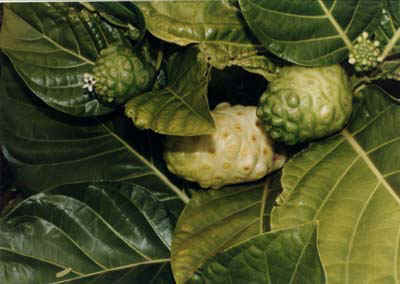 The Noni
In 1990, Mr. Herbert Moniz, a licensed
massage therapist on the island of Maui, in Hawaii, invented a method of
processing the Noni fruit into powder and putting it into capsules, thus
eliminating its pungent odor and taste, making for easy consumption.
Mr. Moniz, who recently was granted U.S. Patent No. 5,288,491 for his powdered
Noni as a pharmaceutical product, processes and distributes his Noni capsules
under the brand name "Maui Noni" by Herb's Herbs. This is his story...I am
Herbert Moniz, a licensed Massage Therapist, President and sole Owner of Herb's
Herbs, Inc. I was the first to transform the Noni Fruit into powder form and put
it into capsules. People constantly ask me: "How did you get involved with the
Noni and what inspired you to put it into powder form?" It's been uphill all the
way, and was made especially difficult by the County, State and Federal
authorities to accomplish this dehydration process - but the Inspiration is one
that carried me through with a firm commitment to make Noni into a form that
everyone could benefit from.
Well, in the year of 1985, my wife Lona had breast Cancer. She went through the
whole nine yards of chemotherapy and radiation. Several months went by, and one
day my wife's cousin said to her, "why don't you take Noni for prevention of
further cancer, and also to build your body up again". Come to think of it, she
had forgotten all about taking Noni, it had completely slipped her mind. Her
Tutu Wahine (Grandmother in Hawaiian) had always told them as children: "Noni is
medicine, so treat this Tree and 'every part' of it with great respect". But her
Tutu Wahine had never told her what they used it for.
So Lona's cousin brought her Noni and she ate the fresh pulp, keeping it in the
refrigerator. One day I saw this 'thing' in the refrigerator and said to myself
"Oh! Tonight I'm going to eat some poi (kalo/taro pounded into a traditional
Hawaiian food) for dinner". Well, much to my surprise when I opened the bag - I
was amazed as to how she could take this foul smelling, awful tasting pulp. She
replied, "If you're sick enough you'll take it, if it will do you good" and she
took 2 tablespoons of it every morning.
That along with God's Blessing gives me my wife today and she thanked the Lord
for this precious fruit, because her cancer never came back. He put this fruit
on earth for one reason, to help people to help themselves. God's gift to
mankind is Noni. Man's gift to God is Love, Faith, and most of all, Thanks.
So, then I started taking it. But I couldn't eat it. Then one day while I was
working on a patient doing my massage therapy, all I could see in my mind and
think of was capsules. I was saying to myself, "Why am I thinking of capsules?"
All of a sudden it came to me, "I can put this Noni into capsules!" And
thousands of people all over the world can get it, to help them for whatever
their needs might be. So I tried dehydration, but the process did not come out
right. I had all kinds of problems with the temperatures.... it would burn, or
it would not dry. (I've been working on Noni for years.)
But I did not give up. One night while I was asleep, about 1:00 - 1:30 a.m. it
came to me in a dream: figures and numbers. I immediately got up and wrote it
down on paper, and ever since then, till this day, it has never failed. Thank
God! I thank Him everyday, for this Gift he gave me - for it truly is a gift
from Him. It was in his plans. God could have taken my wife Lona, but he saved
her with Noni and picked one to perfect the Noni to distribute the Noni fruit in
powder form, in capsules, for the world.
I am the first person to change this fruit into powder form, and make it
available in capsules. There is a reason for all of this. God is telling people,
this is your last chance, and there will be a long time after the Noni, to find
another replacement to fight bacteria. Noni purifies and oxygenates the blood.
I perfected the Noni, and I've sold it all over the world. I've sent it to
Japan, Germany, England, and most of the United States. Then in February 1992
the state of Hawaii FDA stopped me from selling Noni. They said I was making
claims -- medical claims that is -- but I wasn't. I had health claims by people
who had used the Noni, they would call me to say that the Noni had really helped
them for whatever their problems were.
Anyway - I stopped selling it. For the next three years I didn't give up. I
sent it away to be analyzed at different labs, I worked back and forth with the
State of Hawaii FDA until I had it passed as G.R.A.S. (Generally Recognized As
Safe). It took a long time for it to be approved by them. It also cost me a lot
of money. But it paid off, for now I know that I have the best product anyone
can wish for.
We pick Noni only along the coastal areas and lava flow areas as we found that
it has more potency than inland Noni. The lava is very high in vitamins and
minerals, and the salt water from the ocean makes it the best Noni available.
All I can say is, try it and see what Maui Noni can do for you! Love & Aloha,
Herbert Moniz
================================================================
2.) The Noni Plant, A Hawaiian Gift of Healing
================================================================
Source:www.timewealth.com The
distant ancestors of today's Polynesians are believed to have migrated to Hawaii
from Southeast Asia. Several centuries before the time of Christ these sturdy
and brave people set out upon great sea voyages in humble canoes arriving in the
area of central Polynesia around the time of Christ, or approximately about 100
AD. Over the next several centuries the distinctive Polynesian culture emerged
and was dispersed to all the islands now considered to constitute Polynesia,
which extends in an arc from New Zealand in the southwest to Hawaii in the
northeast.
When these first settlers began their journey into the unknown they took with
them the plants and animals they considered to be essential for their survival
in the new lands they sailed toward.
Of the plants these settlers brought with them many had applications for
clothing, building supplies, containers, dyes, etc., but most were primarily
food and medicinal plants. Taro, yam, breadfruit, bananas and sugar cane are
five of the Polynesian food plants that have origins in Southeast Asia. Of the
twelve common Polynesian medicinal plants used by the Hawaiians, eight of the
most popular plants are believed to have been brought to Hawaii from south and
central Polynesia in canoe voyages about 1,500 years ago. Although about 317
species of plants were believed to be employed by 19th century Hawaiians for
herbal medicinal purposes, only a very small number were commonly used for the
most frequent health complaints.
According to Dr. Isabella Abbott, of the University of Hawaii, Hawaiians that
relied on herbal cures suffered from the same ailments that we, today, consider
to be a part of modern every day life (with the notable exception of
"headaches"). Before contact with the West (Captain Cook arrived in 1778) the
isolated Hawaiians were relatively disease free. Their medical conditions
addressed by herbal cures fell in the range of malignancies or tumors, purges or
consumption, skin afflictions, respiratory affections (including asthma),
indigestion, conditions associated with pregnancy, childbirth and old age, fever
and bruises, broken bones, sprains and cuts.
Contact with Captain Cook's crews introduced gonorrhea, syphilis and
tuberculosis, and continued contact in the 1800's decimated the Hawaiian
population with measles, small pox, cholera, mumps, influenza, pneumonia,
leprosy and other diseases. The Hawaiian pharmacopoeia could not deal with these
diseases, but the Western medicine had no cures for them either at that time.
One of the great tragedies of this devastation of the Hawaiian population was
the loss of information in many areas of Hawaiian culture, including the area of
herbal medicinal knowledge. The Hawaiian tradition required their men and women
who held knowledge in all areas of Hawaiian society to chose an apprentice to
pass that knowledge on to before they died. This was essential as most of their
teachings and traditions were taught verbally. The epidemics brought by contact
with the Western world swept through the Hawaiian peoples in a swift and deadly
manner that allowed no time for the ancient knowledge of several thousands of
years of civilization to be passed on. What little knowledge we have left to us
today has come from the efforts of early historians who tried to capture in
writing the details of practice and belief of the Hawaiians before the 1820's,
and the efforts of modern researchers to record the common knowledge of the
older Hawaiians.
Today, ancient Hawaiian medical knowledge is coming under the scrutiny of
renewed interest spurred on by researchers in the fields of ethnobotany and
ethnopharmacology. The call has gone out for systematic studies to determine
pharmacologically active compounds among the Hawaiian medicinal plants. The need
for these studies is underscored by the fact that today, in Western medicine, 60
per cent of written prescriptions are for substances that are naturally
occurring in nature. The paucity of studies to date on Hawaiian medicinal herbs
means that the "knowledge of the pharmacological properties of the majority of
Hawaiian herbs is still incomplete" says Dr. Isabella Abbott of the University
of Hawaii.
Dr. F.L. Tabrah and Dr. B.M. Eveleth, in a report to the Hawaii Medical
Journal, entitled Evaluation of the Effectiveness of Ancient Hawaiian Medicine,
stated that the "Hawaiian Kahunas were highly specialized experts with
considerable skill in physical diagnosis and pharmacology". A "Kahuna" was a
learned teacher of an ancient body of spiritual, medical and philosophical
knowledge called the Huna. Huna translates as "That Which is Hidden" and a
Kahuna was simply a teacher of the Huna. The Hawaiians readily accepted the
Christian teachings of the missionaries because the Huna also stated that there
was one God and they considered Jesus to have been a great and powerful Kahuna.
The Kahunas of ancient Hawaii, before their own cultural corruption by greedy
and bloodthirsty rulers and the subsequent loss of knowledge caused by the
arrival of the white man were reputed to be able to perform the self-same
miracles attributed to Jesus, including instantaneous healing and revival of the
dead. When the people realize that the missionary priests were not able to
duplicate the miracles of Jesus, their Kahunas rebelled and went back to the old
practices. The missionaries, to protect their efforts at converting the
Hawaiians to their Christian beliefs, had laws passed to declare the practice of
the Huna illegal and punishable by fines and imprisonment. It was not until the
1960's that these laws were repealed. In this manner a large body of knowledge
was lost, perhaps forever.
The ancient Hawaiian knowledge of medicine was practiced by several different
and distinct classes of Kahunas. The Hawaiians recognized two categories of
disease. Those caused by forces from without the body, and those caused from
forces within. The illnesses from within were treated by the kahuna haha
(medical diagnostician), kahuna lapa`au (medical doctor) or the kahuna la`au
lapa`au (herbalist).
The Kahuna la`au lapa`au began training at the age of five in the home of his
or her mentor. Over a period of approximately 20 years they learned about the
medicinal plants, their effect on the body, where they grew and how to prepare
and administer them. There are a few Kahuna la`au lapa`aus whom practice today,
and their array of medicinal plants still include those plants used by the
ancient Hawaiians, with the addition of some modern plants such as Aloe Vera and
comfrey.
Noni, whose scientific name is Morinda citrifolia, also called Indian
Mulberry, was one of the important plants that were brought to Hawaii by the
first Polynesians. Although, as mentioned before, there are 317 species of
plants that were documented by Kaaiakamanu and Akina in 1922 to have been used
by pre-20th century Hawaiian herbalists, only a very small number were commonly
used for known physical conditions of illnesses. Of the 12 most commonly
mentioned plants (8 of which were brought from Southeast Asia) Noni was the
second most popular plant mentioned for use in herbal remedies. Ethnobotanical
studies from Indonesia verify many of the same uses for Noni as those reported
by the Hawaiians.
The Hawaiians utilized the whole Noni plant. The roots, stems, bark, leaves,
flowers and fruit are all mentioned in various combinations in the almost 40
known and recorded herbal remedies involving Noni. In addition, the roots were
used to produce a yellow or red dye for the tapa cloths, and the fruit was eaten
during times of famine. There are numerous Polynesian stories of heroes and
heroines that survived famine by eating the Noni. There is one tale of
Kamapua`a, the pig god who loved Pele the volcano goddess, taunting Pele with
the chant, "I have seen the woman gathering Noni / Scratching Noni / Pounding
Noni". Supposedly, the chant referred to Pele's eyes which were red, and she
became so angry she plunged into battle with him. A Tongan myth tells of the god
Maui being restored to life by having the leaves of the Noni placed on his
body.
The Noni plant is a small evergreen tree found growing in open coastal regions
at sea level and in forest areas up to about 1,300 feet above sea level. The
plant is often found growing along lava flows.
It's identifiable by its straight trunk, large, bright green and elliptical
leaves, white tubular flowers and its distinctive, ovoid, "grenade-like" yellow
fruit. The fruit can grow to 12 cm or more and has a lumpy surface covered by
polygonal-shaped sections. The seeds, which are triangular shaped and reddish
brown, have an air-sac attached at one end which makes the seeds buoyant, (this
could explain, in part, the wide distribution of the plant throughout the
Hawaiian Islands). The Noni fruit, when mature, has a foul taste and odor. The
smell and taste of the fruit pulp is so foul that one researcher pronounced it
akin to 'vomitus'! Although well known and popular in the islands, (the
University of Hawaii's Botany department receives about 10 calls a week from
people trying to locate a source of Noni) this characteristic, until now, has
been a definite barrier to its widespread use on the mainland.
In 1992, Mr. Herbert Moniz, a licensed massage therapist and lifetime resident
of Maui, developed a process to dehydrate the Noni fruit into a powder that is
smell-less and tasteless when placed in capsules. Mr. Moniz learned about the
Noni fruit and its believed medicinal value when a family friend recommended it
to his wife, Lona, who was undergoing treatment for breast cancer. When Mrs.
Moniz's cancer did not recur, Mr. Moniz developed the process by which the Noni
fruit is pulped, the seed removed and saved for propagation of new plants, and
the pulp then dried into powder form.
The medical knowledge and pharmacopoeia of the ancient Hawaiians is now
believed to have been fairly complex and specific, and the modern day scientific
and medical communities are beginning to study the plants that were used by the
Hawaiian Kahunas. The importance of these studies is underscored in a quote from
a 1987 report in the Journal of Ethnopharmacology: "In the past, the
pharmaceutical industry has often relied on tropical plants as sources of new
drugs (e.g. quinine, vincristine, tubocurine, reserpine, cocaine and many
others). If the industry is to continue to use plants to develop new products,
there is an urgent need for the collection of basic ethnobotanical data..."
In a report to the 83rd Annual meeting of the American Association for Cancer
Research in May of 1992 (Hirazumi, A., Furusawa, E., Chou, S.C., Okano, C. and
Ching, C., University of Hawaii, Dept. of Pharmacology and Dept. of Medicine)
the juice of the fruit of the Noni plant was shown to significantly prolong the
life of mice with implanted Lewis lung carcinoma. Their conclusion was that it
seemed to suppress tumor growth indirectly by stimulating the immune system. The
mechanism of stimulation is still unknown and is under further study.
In a paper published in 1949 in the Pacific Science, a quarterly devoted to the
biological and physical sciences of the Pacific Region, the fruit of the Noni
exhibited moderate antibacterial properties against the bacteria M. pyrogenes,
E. coli and Ps. aeruginosa.
Most recently, in an article published in the Honolulu Star Bulletin on 9
February, 1992, Professor of Botany at the University of Hawaii, Isabella
Abbott, was quoted as saying "People are crazy about this plant. They use it for
diabetes, high blood pressure, cancer and many other illnesses." Also, former U
of H researcher, Dr. Ralph M. Heinicke, states that the fruit of Noni contains a
natural alkaloid xeronine, as well as a chemical that is converted to xeronine
in the digestive tract. The ailments he believes may possibly be helped by Noni
are: high blood pressure, menstrual cramps, arthritis, gastric ulcers, sprains,
injuries, mental depression, senility, poor digestion, arteriosclerosis, blood
vessel problems, drug addiction and pain. In addition, locally, people have
reported success by using Noni to treat breast cancer, and eye problems. Dr.
Joseph Betz, a research chemist with the FDA's Division of Natural Products
Center for Food Safety and Applied Nutrition states, "Morinda citrifolia has
been tested for a number of biological activities in animal and anti-microbial
studies." He reports that the dried fruit has a smooth muscle stimulatory
activity and a histaminergic effect. The root was also reported as possessing
analgesic and tranquilizing activity. In the September 30, 1993 issue of Cancer
Letters a report out of Keio University and The Institute of Biomedical Sciences
in Japan claimed isolation of a new anthraquinone compound from the Noni root
called damnacanthal which induced normal morphology and cytoskeletal structure
in K-ras-NRK cancer cells.
Today's researchers in the emerging fields of ethnobotany and ethnopharmacology
are reaching back through time to discover again what the ancient Polynesians
knew as they carefully, lovingly placed the young shoots of the valuable Noni
plant into their canoes, among the bananas, taro and yams, and set out for
horizons unknown. Almost nothing is known now about these early Hawaiians, how
they worshipped and what they would talk about amongst themselves as they
watched the brilliant tropical sun set, once again, into the vast and lonely
ocean that kept them isolated from the rest of the world for almost 2,000 years.
They've disappeared, the veil of time leaving us only hints of their lives, and
the evergreen gift of the Noni.
===============================================================
3.) Cancer preventive effect of Morinda citrifolia (Noni).
===============================================================
Ann N Y Acad Sci 2001 Dec;952:161-8
Wang MY, Su C.
Department of Pathology, UIC College of Medicine, Rockford, Illinois 61107,
USA. [email protected]
Morinda citrifolia (Noni) has been extensively used in folk medicine by
Polynesians for over 2,000 years. It has been reported to have broad therapeutic
effects, including anticancer activity, in both clinical practice and laboratory
animal models. The mechanism for these effects remains unknown. The hypothesis
that Morinda citrifolia possesses a cancer preventive effect at the initiation
stage of carcinogenesis was studied. Our preliminary data indicated that 10%
Tahitian Noni Liquid Dietary Supplement or Tahitian Noni Juice (TNJ), made from
Morinda citrifolia fruit by Morinda Inc, in drinking water for one week was able
to prevent DMBA-DNA adduct formation. The levels of DMBA-DNA adducts were
reduced by 30% in the heart, 41% in the lung, 42% in the liver, and 80% in the
kidney of female SD rats. Even more dramatic results were obtained in male C57
BL-6 mice: 10% TNJ was able to reduce DMBA-DNA adduct formation by 60% in the
heart, 50% in the lung, 70% in the liver, and 90% in the kidney. In order to
explore the mechanism of this preventive effect, the antioxidant activity of TNJ
was examined in vitro by lipid hydroperoxide (LPO) and tetrazolium nitroblue
(TNB) assays. In the LPO assay, LPO oxidizes leucomethylene blue to methylene
blue in the presence of hemoglobin. The resultant blue color was quantified at
660 nm spectrophotometrically. In the TNB assay, superoxide anion radicals (SAR)
reduce TNB into formazan blue that was also measured by absorption at 602 nm.
TNJ showed a dose-dependent inhibition of both LPO and SAR in our system. The
antioxidant activity of TNJ was compared to the effects of vitamin C, grape seed
powder (GSP), and pycnogenol (PYC) at the daily dose per serving level
recommended by U.S.RDAs or manufacturers. The results suggest that prevention of
carcinogen-DNA adduct formation and the antioxidant activity of TNJ may
contribute to the cancer preventive effect of Morinda citrifolia.
===============================================================
4.) Two novel glycosides from the fruits of Morinda citrifolia (noni) inhibit
AP-1 transactivation and cell transformation in the mouse epidermal JB6 cell
line.
===============================================================
Cancer Res 2001 Aug 1;61(15):5749-56
Liu G, Bode A, Ma WY, Sang S, Ho CT, Dong Z.
The Hormel Institute, University of Minnesota, Austin, MN 55912, USA.
The fruit juice of Morinda citrifolia (noni), a plant originally grown in the
Hawaiian and Tahitian islands, has long been used by islanders to treat
diseases, including cancer. Two novel glycosides,
6-O-(beta-D-glucopyranosyl)-1-O-octanoyl-beta-D-glucopyranose and asperulosidic
acid, extracted from the juice of noni fruits, were used to examine their
effects on 12-O-tedtradecanoylphorbol-13-acetate (TPA)- and epidermal growth
factor (EGF)-induced AP-1 transactivation and cell transformation in mouse
epidermal JB6 cells. The results indicated that both compounds were effective in
suppressing TPA- or EGF-induced cell transformation and associated AP-1
activity. TPA- or EGF-induced phosphorylation of c-Jun, but not extracellular
signal-regulated kinases or p38 kinases, was also blocked by the compounds,
indicating that c-Jun N-terminal kinases were critical in mediating TPA- or
EGF-induced AP-1 activity and subsequent cell transformation in JB6 cells.
===============================================================
5.) A new unusual iridoid with inhibition of activator protein-1 (AP-1) from
the leaves of Morinda citrifolia L.
===============================================================
Org Lett 2001 May 3;3(9):1307-9
Sang S, He K, Liu G, Zhu N, Cheng X, Wang M, Zheng Q, Dong Z, Ghai G, Rosen
RT, Ho CT.
Department of Food Science and Center for Advanced Food Technology, Rutgers
University, 65 Dudley Road, New Brunswick, New Jersey 08901-8520, USA.
[email protected]
[structure in text] From the leaves of Morinda citrifolia, a new unusual
iridoid, named citrifolinoside (1), showing significant inhibition of
UVB-induced Activator Protein-1 (AP-1) activity in cell cultures, has been
isolated. Its structure was elucidated on the basis of detailed high-field 1D
and 2D spectral analysis.
===============================================================
6.) An immunomodulatory polysaccharide-rich substance from the fruit juice of
Morinda citrifolia (noni) with antitumour activity.
===============================================================
Phytother Res 1999 Aug;13(5):380-7
Hirazumi A, Furusawa E.
Department of Pharmacology, John A., Burns School of Medicine, 1960 East West
Road, University of Hawaii, Honolulu, HI 96822, USA.
The fruit juice of Morinda citrifolia (noni) contains a polysaccharide-rich
substance (noni-ppt) with antitumour activity in the Lewis lung (LLC) peritoneal
carcinomatosis model. Therapeutic administration of noni-ppt significantly
enhanced the duration of survival of inbred syngeneic LLC tumour bearing mice.
It did not exert significant cytotoxic effects in an adapted culture of LLC
cells, LLC1, but could activate peritoneal exudate cells (PEC) to impart
profound toxicity when co-cultured with the tumour cells. This suggested the
possibility that noni-ppt may suppress tumour growth through activation of the
host immune system. Concomitant treatment with the immunosuppressive agent,
2-chloroadenosine (C1-Ade) or cyclosporin (cys-A) diminished its activity,
thereby substantiating an immunomodulatory mechanism. Noni-ppt was also capable
of stimulating the release of several mediators from murine effector cells,
including tumour necrosis factor-alpha (TNF-alpha), interleukin-1beta
(IL-1beta), IL-10, IL-12 p70, interferon-gamma (IFN-gamma) and nitric oxide
(NO), but had no effect on IL-2 and suppressed IL-4 release. Improved survival
time and curative effects occurred when noni-ppt was combined with sub-optimal
doses of the standard chemotherapeutic agents, adriamycin (Adria), cisplatin
(CDDP), 5-fluorouracil (5-FU), and vincristine (VCR), suggesting important
clinical applications of noni-ppt as a supplemental agent in cancer treatment.
Copyright 1999 John Wiley & Sons, Ltd.
===============================================================
7.) Immunomodulation contributes to the anticancer activity of morinda
citrifolia (noni) fruit juice.
===============================================================
Proc West Pharmacol Soc 1996;39:7-9
Hirazumi A, Furusawa E, Chou SC, Hokama Y.
Department of Pharmacology, John A. Burns School of Medicine, University of
Hawaii, Honolulu 96822, USA.
===============================================================
===============================================================
8.) Anticancer activity of Morinda citrifolia (noni) on intraperitoneally
implanted Lewis lung carcinoma in syngeneic mice.
===============================================================
Proc West Pharmacol Soc 1994;37:145-6
Hirazumi A, Furusawa E, Chou SC, Hokama Y.
Department of Pharmacology, John A. Burns School of Medicine, University of
Hawaii, Honolulu.
===============================================================
===============================================================
9.) Induction of normal phenotypes in ras-transformed cells by damnacanthal
from Morinda citrifolia.
===============================================================
Cancer Lett 1993 Sep 30;73(2-3):161-6
Hiramatsu T, Imoto M, Koyano T, Umezawa K.
Department of Applied Chemistry, Faculty of Science and Technology, Keio
University, Yokohama, Japan.
We have screened tropical plant extracts for substances that induce normal
morphology in K-rasts-NRK cells. As a result we isolated an anthraquinone
compound, damnacanthal, from the chloroform extract of the root of Morinda
citrifolia. Damnacanthal induced normal morphology and cytoskeletal structure in
K-rasts-NRK cells at the permissive temperature, without changing the amount and
localization of Ras. The effect of damnacanthal was reversible, and the compound
had no effect on the morphology of RSVts-NRK cells expressing the src oncogene.
Thus, damnacanthal is a new inhibitor of ras function.
===============================================================
10.) Antitumor agents 50. 1 Morindaparvin-A, a new antileukemic anthraquinone,
and alizarin-1-methyl ether from Morinda parvifolia, and the antileukemic
activity of the related derivatives.
===============================================================
J Nat Prod 1982 Mar-Apr;45(2):206-10
Chang P, Lee KH, Shingu T, Hirayama T, Hall IH, Huang HC.
===============================================================
===============================================================
11.) Anti-neoplastic property of a crystalline compound extracted from Morinda
lucida.
===============================================================
Planta Med 1974 Nov;26(3):208-11
Durodola JI.
===============================================================
12.) The Pharmacologically Active Ingredient of NONI.
===============================================================
Source:www.timewealth.com
R.M. Heinicke, university of Hawaii.
In "The Bulletin ", in April 1972, Maria Stewart described how the Hawaiians
solved many of their medical problems by drinking infusions of the fruit of the
noni tree (Morinda citrifolia , Rubiaceae). The missionaries, who frequently had
to minister to the body as well as the soul, were impressed with the efficacy of
these options. Yet identifying the pharmacologically active ingredient of noni
has been difficult - for an understandably good reason. The active ingredient is
not present in the plant or fruit! Only after the potion has been drunk does the
active ingredient form. Sometimes!
My search for the ingredient which is active in noni began with a series of
studies on the pineapple plant. Since about 1972 I had been attempting to
identify the unknown ingredient in "bromelain" which gives crude preparations of
this enzyme their potent pharmacological properties. (Sometimes!) After many
discouraging years of research I eventually identified this ingredient as a new
alkaloid to which I gave the name "xeronine." Noticing that the clinical claims
of efficacy for bromelain and noni were practically identical, I tried the same
techniques on noni fruit which I had developed for isolating xeronine from the
pineapple plant. The technique worked! Not only was I able to isolate the same
compound from noni fruit, but he yields were excellent. Today noni is one of the
best raw materials to use for the isolation of xeronine.
Xeronine is a relatively small alkaloid which is physiologically active in the
picogram range. (Ed. note: a picogram is one trillionth of a gram) It occurs in
practically all healthy cells of plants, animals and microorganisms. However,
the amount of free alkaloid is minute and is well below the limits of normal
chemical analytical techniques.
Even though noni fruits have a negligible amount of free xeronine, they
contain appreciable amounts of the precursor of xeronine. This precursor, which
I have named "proxeronine", is a strange molecule. The molecular weight is
relatively large, namely about 16,000. In contrast to most plant colloids, this
colloid contains neither sugars, amino acids nor nucleic acids. Thus most
biochemists have overlooked this relatively abundant molecule which occurs in
most tissues.
Noni fruits also contain the inactive form of the enzyme which releases
xeronine from proxeronine. Unless this proenzyme becomes properly activated,
however, noni juice will cause few pharmacological reactions. Fortunately if
noni juice is taken on an empty stomach, the critical proenzyme escapes
digestion in the stomach and enters the intestines. Here, the chances are high
that it may become activated.
Many years of research are still required to demonstrate convincingly how
xeronine functions at the molecular level in a cell. In the meantime I can
suggest certain hypotheses which can act as a guide in planning experiments. I
am basing these hypotheses both on clinical results with bromelain pills as well
as on a limited number of laboratory and animal experiments carried out with
pure xeronine.
I am proposing that the primary function of xeronine is to regulate the
rigidity and shape of specific proteins. Since these proteins have different
functions, we have the usual clinical situation where administering one simple
drug causes an unbelievably wide range of physiological responses.
The action which xeronine has on a person depends upon which of his tissues
has a suboptimal level of xeronine. Thus xeronine can alleviate certain subsets
of almost any known disease. For no disease, however, will xeronine be a
panacea. A physiological disease, for example senility, may be caused by a
deficiency or imbalance of a number of different biochemicals as well as by
malfunctioning blood vessels, hormone systems or immune bodies. Only if the
disease is specifically caused by a lack of xeronine will xeronine alleviate the
symptoms of the problem.
I believe that each tissue has cells which contain proteins which have
receptor sites for the absorption of xeronine. Certain of these proteins are the
inert forms of enzymes which require absorbed xeronine to become active. Thus
xeronine, by converting the body's procollagenase system into a specific
protease, quickly and safely removes the dead tissue from burns. It is for this
reason that aloes, bromelain and noni are such effective treatments for burns.
Other proteins become potential receptor sites for hormones after they react
with xeronine. Thus the action of ginseng, bromelain and noni in making a person
feel well is probably caused by xeronine converting certain brain receptor
proteins into active sites for the absorption of the endorphins, the well being
hormones. Other proteins form pores through membranes in the intestines, the
blood vessels and other body organs. Absorbing xeronine on these proteins
changes the shape of the pores and thus affects the passage of molecules through
the membranes. Thus the action of bromelain, noni and ginseng in improving
digestion may be ascribable to this action. These are just a few of the many
exciting actions of this newly discovered alkaloid. Since noni is a potential
source of this alkaloid, noni juice can be a valuable herbal remedy.
There are some practical problems, however, in using noni juice as a medicine
or tonic. If one is dying and all other remedies have failed, then and only then
will the average person drink noni juice. The flavor of juice made from ripe
Hawaiian noni is terrible. None of my colleagues would touch the untreated
juice. Even after I had removed most of the disagreeable flavor (several organic
acids) from the juice, my colleagues still found it unfit to drink. For a price
the odoriferous chemicals can be removed from the Hawaiian variety. However,
other varieties grown in other Pacific Islands are milder in flavor.
Another critical problem in using noni juice as a medicine or health tonic is
timing. If the juice is drunk on a full stomach, it will have very little
beneficial action. The pepsin and acid in the stomach will destroy the enzyme
which liberates xeronine. For a seriously sick person taking the juice on an
empty stomach rarely poses a problem; the patient is too sick to want to eat
anything. However, for the average person who wants to drink noni juice as a
health tonic, timing is critical. I would recommend taking 100 ml of noni juice
a half hour before breakfast. At this time the juice will pass rapidly through
the stomach and into the intestines, where it may be converted into the active
enzyme. At any other time of the day, especially at meal times, the primary
effects of drinking noni juice will be psychological and caloric. Because of the
strong flavor the psychological effect might not necessarily be positive. To
obtain the maximum effect of the active ingredient in noni, I would recommend
also that noni juice not be taken with coffee, tobacco or alcohol. At times the
combination of these materials and noni can give some unexpected side effects.
At other times the combination merely lowers the potentially beneficial effect
of xeronine.
Although the Hawaiian recommended both green fruit and ripe fruit for treating
various ailments, my personal recommendation would be to use only the green
fruit. The green fruit has more of the potentially valuable components and less
of the undesirable flavor. In light of the new information on the action of
xeronine what are some of the possible applications of noni juice?
First I should make the caveat that for all of the possible applications which
I am listing, one must always add the phrase "some types but not other types."
Some of the problems which drinking noni juice might favorable affect are: high
blood pressure, menstrual cramps, arthritis, gastric ulcers, sprains, injuries,
mental depression, senility, poor digestion, atherosclerosis, blood vessel
problems, addiction, relief for pain and many others. Although this list looks
like a page torn out of traveling medicine man's manual, it is probably
conservative.
The old Hawaiian people were truly fortunate to have herbal medical doctors
who recognized a valuable natural product and who knew how to administer this
medicine with the proper psychological persuasion.
=======================================================
13.)
La Farmacia natural de la Polinesia
=======================================================
Source:www.freeyellow.com
El Noni (Morinda Citrofolia ) se ha venido usando
por las sanadores polinesios para tratar fiebres de niños o siendo colocada en
una diapositiva para su examen más cercano en el laboratorio de un bioquímico,
el fruto del noni tiene una historia más intrigante y un futuro más
emocionante que cualquier medicamento natural disponible en el mundo. Noni es
el nombre hawaiano común de la Morinda citrifolia. La planta originaria de la
Polinesia, Malasia, Australia, India y el Sureste de Asia, es un tipo de
planta de hojas perenne cuyo tamaño varía desde un pequeño arbusto hasta un
árbol de 6 a 10 metros de altura. Debido a su valor medicinal y nutritivo, la
M. Citrifolia se considera la reina de las otras 80 especies que pertenecen a
la antigua familia mundial de las rubiáceas.
Aproximadamente del tamaño de una papa el fruto de NONI tiene una apariencia
grumosa con una cáscara cerosa y traslúcida cuyo color puede variar desde
verde hasta casi negro. Los aborígenes de Polinesia lo reconocen sin necesidad
de verlo debido a rancio olor y sabor de su fruto cuando está completamente
maduro. Este fruto de forma poligonal tiene numerosos huesos que contiene
varias semillas. Se le llama planta errante porque adjunta a cada semilla hay
una bolsa de aire que le permite viajar sobre el agua por meses, de una isla a
otra.
Más rara que la apariencia y el olor del Noni es su larga historia de usos
medicinales eficaces por los aborígenes. Los sanadores tradicionales
polinesios empleaban todas las partes de la planta del Noni, flores, corteza,
raíces y especialmente, el fruto para tratar problemas de salud que iban desde
las aftas hasta el reumatismo. Las lombrices intestinales, fiebres y las
infecciones de la piel eran algunas de las enfermedades más comunes tratadas
con esta panacea polinesia.
El Noni está recibiendo más atención de los herbólogos, médicos y bioquímicos
de alta tecnología de la actualidad. Estudios científicos realizados en los
últimos años apoyan las afirmaciones de los polinesios con respecto a su raro
poder curativo. Estos estudios han demostrado que el jugo del fruto contiene
atributos curativos incluso, pero sin limitarse a compuestos antibacterinos,
antiinflamatorios, analgésicos, hipotensivos e inhibidores del cancer. Estos
estudios implican al noni como un medicamento natural que reduce la presión
sanguínea y la inflamación de las articulaciones, detiene las infecciones
internas y externas, despeja las congestiones y hasta evita el crecimiento de
células precancerosas.
Además, un investigador, el Dr. Ralph Heiniche, quien anteriormente trabajo en
la Universidad de Hawai, ha identificado que el fruto de noni contiene una
proenzima que estimula al cuerpo humano para producir xeronina, un elemento
vital para las moléculas proteínicas del cuerpo.
Debido a sus propiedades fortalecedoras de las proteínas, la xeronina
alcalóidea afecta potencialmente el cuerpo humano en una multitud de maneras
que van desde el aumento de la vitalidad de una persona hasta la reducción de
la dependencia de las drogas. Las proteínas son los catalizadores más
importantes del cuerpo humano y afectan casi todos los aspectos de la salud de
las personas. La aplicación de la Xeronina del Noni a quemaduras extrernas y
tejidos infestados ha acelerado considerablemente el tiempo necesario para que
los tejidos se reparen solos. Otros trastornos internos y neurogénicos también
pueden reaccionar positivamente a la xeronina debido a la habilidad de dicho
compuesto para normalizar las proteínas encontradas en todos los tejidos
vivientes esenciales, aún los del cerebro.
Source:
www.rain-tree.com
GRAVIOLA
 Family:
Annonaceae
Family:
Annonaceae
Genus: Annona
Species: muricata
Common name: Soursop, Graviola, Brazilian Paw Paw,
Corossolier, Guanabana, Guanavana, Toge-Banreisi, Durian benggala, Nangka
blanda, Nangka londa
Part Used: Leaves, Seeds, Fruit
|
DESCRIPTION
|
|
Properties/Actions: |
Antibacterial,
Anticancerous, Antiparasitic, Antitumorous, Antispasmodic, Astringent,
Cytotoxic, Febrifuge, Hypotensive, Insecticide, Nervine, Pectoral,
Piscicide, Sedative, Stomachic, Vasodilator, Vermifuge |
|
Phytochemicals: |
Acetaldehyde, Amyl-caproate,
Amyloid, Annonain, Anomuricine, Anomuricinine, Anomurine, Anonol,
Atherosperminine, Beta-sitosterol, Campesterol, Cellobiose, Citric-acid,
Citrulline, Coclaurine, Coreximine, Dextrose, Ethanol, Folacin,
Fructose, Gaba, Galactomannan, Geranyl-caproate Glucose, HCN,
Isocitric-acid, Lignoceric-acid, Malic-acid, Manganese, Mericyl-alcohol,
Methanol, Methyl-hex-2-enoate, Methyl-hexanoate, Muricine, Muricinine,
Muricapentocin, Muricoreacin, Myristic-acid, P-coumaric-acid, Paraffin,
Potassium-chloride, Procyanidin, Reticuline, Scyllitol, Stearic-acid,
Stepharine, Stigmasterol, Sucrose, Tannin, Xylosyl-cellulose |
|
Traditional Remedy:
|
One-half cup leaf
infusion or bark decoction 1-3 times daily or 1-3 ml of a 4:1 tincture
twice daily or 2 to 5 grams of powdered leaves in tablets or capsules
twice daily.
|
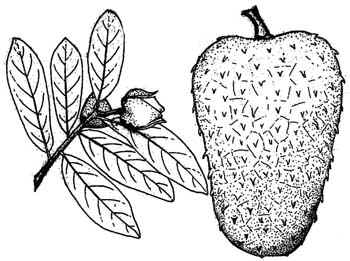
Graviola is a small, upright evergreen tree
growing 5 to 6 meters in height with large dark green and glossy leaves. It is
indigenous to most of the warmest tropical areas in South and North America
including the Amazon. It produces a large heart-shaped edible fruit that is
6-9", yellow green in color, with white flesh. The fruit is sold in local
markets in the tropics where it is called Guanabana or Brazilian Cherimoya and
is excellent for making drinks and sherbets and, though slightly sour-acid,
can be eaten out-of-hand.
All parts of the Graviola tree are used in natural medicine in the tropics
including the bark, leaves, roots, fruit and fruit-seeds. Different properties
and uses are attributed to the different parts of the tree. Generally the
fruit and fruit juice is taken for worms and parasites, to cool fevers, to
increase mother's milk after childbirth (lactagogue), and as an astringent for
diarrhea and dysentery. The crushed seeds are used as a vermifuge and
anthelmintic against internal and external parasites and worms. The bark,
leaves and roots are considered sedative, antispasmodic, hypotensive and
nervine and a tea is made for various disorders for those purposes. Graviola
leaves are used throughout the West Indies for their sedative or soporific
properties and a decoction of the young shoots or leaves is regarded as a
remedy for gall bladder trouble, as well as coughs, catarrh, diarrhea,
dysentery and indigestion. In Ecuador leaves are taken as an analgesic and
antispasmodic Mashed fresh leaves are used as a poultice to alleviate eczema
and other skin afflictions and rheumatism, and the sap of young leaves is put
on skin eruptions.
Graviola has a long rich history of use in herbal medicine as well as a long
recorded indigenous use. In the Peruvian Andes, a leaf tea is used for catarrh
and the crushed seed is used to kill parasites In the Peruvian Amazon the bark
roots and leaves are used for diabetes and as a sedative and antispasmodic.
Indigenous tribes in Guyana use a leaf and/or bark tea of Graviola as a
sedative and heart tonic. In the Brazilian Amazon, a leaf tea is used for
liver problems and the oil of the leaves and unripe fruit is mixed with olive
oil and used externally for neuralgia, rheumatism and arthritis pain. In
Jamaica, Haiti and the West Indies, the fruit and/or fruit juice is used for
fevers, parasites, as a lactagogue, and diarrhea; and the bark or leaves are
used as an antispasmodic, sedative, and nervine for heart conditions, coughs,
grippe, difficult childbirth, asthma, asthenia, hypertension and parasites.
Many bioactive compounds and phytochemicals have been found in Graviola as
scientists have been studying its properties since the 1940's. Its many uses
in natural medicine has been validated by this scientific research. The
earliest studies were between 1941 and 1962. Several studies by different
researchers demonstrated that the bark as well as the leaves had hypotensive,
antispasmodic, vasodilator, smooth muscle relaxant and cardiodepressant
activities in animals. Researchers re-verified Graviola leaf's hypotensive
properties in rats again in 1991. Several studies over the years have
demonstrated that leaf, bark, root, stem and seed extracts of Graviola are
antibacterial in vitro against numerous pathogens and that the bark has
antifungal properties. Graviola seeds demonstrated active antiparasitic
properties in a 1991 study, and a leaf extract showed to be active against
malaria in two other studies in 1990 and 1993. The leaves, root, and seeds of
Graviola demonstrated insecticidal properties with the seed demonstrating
strong insecticidal activity in a early 1940 study. In a new 1997 clinical
study, novel alkaloids were found in Graviola fruit with anti-depressive
effects in animals.
In an 1976 plant screening program by the National Cancer Institute, the
leaves and stem of Graviola showed active cytotoxicity against cancer cells
and researchers have been following up on this research ever since. Much of
the research on Graviola focuses on a novel set of phytochemicals called
annonaceous acetogenins. The potent antitumor, pesticidal and/or insect
antifeedant properties of these annonaceous acetogenins have been reported and
patented. Graviola produces these natural compounds in leaf, bark and twig
tissues, and they have be documented to possess both highly anti-tumor and
pesticidal properties. Mode of action studies in three separate laboratories
have recently determined that acetogenins are superb inhibitors of Complex I
in mitochondrial electron transport systems from several organisms including
tumors. Research on various Annona species of plants has yielded many
extremely potent acetogenins. Many of them have cytotoxicity with ED50 values
as low as 10-9 ug/ml. Active compounds from Graviola and other Annona plants
have been submitted to the NIH anti-AIDS screen by Purdue University and their
work is continuing with a number of other active plant species in the Annona
plant family. Thus far, Purdue and/or it's staff have filed at least 9 U.S.
and/or international patents on their work around the antitumorous and
insecticidal properties and uses of these acetogenins. Three separate research
groups have isolated novel compounds in the seeds and leaves of Graviola which
have demonstrated significant anti-tumorous, anticancerous and selective
toxicity against various types of cancer cells, publishing 8 clinical studies
on their findings. One study demonstrated that an acetogenin in Graviola was
selectively cytotoxic to colon adenocarcinoma cells in which it was 10,000
times the potency of adriamycin (a chemotherapy drug). Cancer research is
ongoing on Graviola, and four new studies have been published in 1998 which
further narrow down the specific phytochemicals which are demonstrating the
strongest anticancerous and antiviral properties.
Annonaceous acetogenins are only found in the Annonaceae family. In general,
various annonaceous acetogenins have been documented with antitumor,
antiparasitic, pesticidal, antiprotozoal, antifeedant, anthelmintic, and
antimicrobial activities. There has been much interest in the chemicals which
have demonstrated potent antitumor properties and several research groups are
trying to synthesize these chemicals for new chemotherapeutic drugs. In a
review of these natural chemicals in The Journal of Natural Products in 1999
they noted: "The Annonaceous acetogenins are promising new antitumor and
pesticidal agents that are found only in the plant family Annonaceae.
Chemically, they are derivatives of long-chain fatty acids. Biologically, they
exhibit their potent bioactivities through depletion of ATP levels via
inhibiting complex I of mitochondria and inhibiting the NADH oxidase of plasma
membranes of tumor cells. Thus, they thwart ATP-driven resistance
mechanisms."
Another review in the Skaggs Scientific Report 1997-1998 states, "Annonaceous
acetogenins, particularly those with adjacent bis-tetrahydrofuran (THF) rings,
have remarkable cytotoxic, antitumor, antimalarial, immunosuppressive,
pesticidal, and antifeedant activities. Many of these fatty acid derivatives
have similar carbon skeletons; their striking diversity originates mainly from
the relative and absolute configuration of their various stereogenic oxygen
functions."
Purdue University has conducted a great deal of research on annonaceaous
acetogenins, much of which has been funded by The National Cancer Institute
and/or the National Institute of Health. In one of their reviews titled Recent
Advances in Annonaceous Acetogenins, they state: "Annonaceous acetogenins are
waxy substances consisting of C32 or C34 long chain fatty acids which have
been combined with a 2-propanol unit at C-2 to form a lactone. They are only
found in several genera of the plant family, Annonaceae. Their diverse
bioactivities as antitumor, immunosuppressive, pesticidal, antiprotozoal,
antifeedant, anthelmintic, and antimicrobial agents, have attracted more and
more interest worldwide. Recently, we reported that the Annonaceous
acetogenins can selectively inhibit the growth of cancerous cells and also
inhibit the growth of adriamycin resistant tumor cells. As more acetogenins
have been isolated and additional cytotoxicity assays have been conducted, we
have noticed that, although most of acetogenins have high potencies among
several solid human tumor cell lines, some of the derivatives within the
different structural types and some positional isomers showed remarkable
selectivities among certain cell lines, e.g., against prostate cancer (PC-3).
We now understand the primary modes of action for the acetogenins. They are
potent inhibitors of NADH: ubiquinone oxidoreductase, which is in an essential
enzyme in complex I leading to oxidative phosphorylation in mitochondria. A
recent report showed that they act directly at the ubiquinone-catalytic
site(s) within complex I and in microbial glucose dehydrogenase. They also
inhibit the ubiquinone-linked NADH oxidase that is peculiar to the plasma
membranes of cancerous cells."
In 1997, Purdue University published information with promising news that
several of the Annonaceous acetogenins: "not only are effective in killing
tumors that have proven resistant to anti-cancer agents, but also seem to have
a special affinity for such resistant cells." In several interviews after this
information was publicized, the head Purdue pharmacologist in Purdue's
research explains that cancer cells that survive chemotherapy may develop
resistance to the agent originally used against them as well as to other, even
unrelated, drugs. "The term multi-drug resistance (MDR) has been applied to
this phenomenon," he says. He explains that such resistance develops in a
small percentage of cancer cells when they develop a "P-glycoprotein mediated
pump" capable of pushing anti-cancer agents out of the cell before they can
kill it. Normal cells seldom develop such a pump.
"If having this pump was such a good deal, all cells would have it. But all
cells don't," the Purdue researcher says. "In a given population of cancer
cells in a person, maybe only 2% of the cancer cells possess this pump. But
it's those 2% of cancer cells that eventually grow and expand to create
drug-resistant tumors." They go on to say that some studies have tried to
bypass these pumps by keeping them busy with massive doses of other drugs,
like the blood pressure agent verapamil. In this way, it was hoped that some
of the anti-cancer drugs would enter the cell and destroy it. But this only
caused potentially fatal side effects such as loss of blood pressure.
In the June issue of Cancer Letters, the Purdue researchers reported that the
Annonaceous acetogenin, bullatacin, preferentially killed multi-drug resistant
cancer cells because it blocked production of adenosine triphosphate, ATP --
the chief energy-carrying compound in the body. "A multi-drug resistant cell
requires a tremendous amount of energy to run the pump and extrude things out
of the cell," Purdue head pharmacolgist says. "By inhibiting ATP production,
we're essentially pulling the plug on its energy source." But what about the
effect on ATP in normal cells? "Normal cells and standard cancer cells may be
able to minimize the effect of this compound because they don't require vast
amounts of energy needed by the pump-running cells," the Purdue researcher
says. "The resistant cell is using its extra energy for this pump as well as
to grow, so it is really taxed for energy. When we mess with the energy
supply, it kills the cell."
In the June issue of the Journal of Medicinal Chemistry, Purdue researchers
described a study of 14 Annona compounds that seem to be potent ATP blockers,
including several found only in Graviola. "This study tells us how to maximize
this activity, so we have a pretty good idea what compounds we'd like to try
in animals with multi-drug resistant tumors," they say. Cancer research will
obviously be ongoing on these important plants and plant chemicals as several
pharmaceutical companies and universities continue to research, test, patent
and attempt to synthesize these chemicals into new chemotheraputic drugs.
|
Country |
ETHNOBOTANY: WORLDWIDE
USES
|
| Bahamas |
Chill, Fever, Flu, Nervousness,
Palpitation, Rash, Sedative, Skin Disease |
| Brazil |
Analgesic, Fever, Neuralgia,
Parasites, Rheumatism |
| Curacao |
Childbirth, Gall-Bladder,
Nervousness, Parturition Sedative, Tea, Tranquilizer |
| Elsewhere |
Analgesic, Arthritis, Asthma,
Astringent, Antiphlogistic, Dysentery, Febrifuge,
Insecticide,Cyanogenetic, Kidney, Lactagogue, Malaria, Pectoral,
Pediculicide, Piscicide, Scurvy Stomach, |
| Haiti |
Asthenia, Cataplasm, Cicatrizant,
Cough, Diarrhea, Emetic, Grippe, Pediculicide, Pellagra, Soporific,
Sore, Spasm, Stomachic, |
| Jamaica |
Antispasmodic, Diuretic, Fevers,
Lactagogue, Vermifuge |
| Malaya |
Boil, Cough, Dermatosis, Rheumatism |
| Mexico |
Astringent, Diarrhea, Dysentery,
Fever, Liqueur, Pectoral, Ringworm, Scurvy |
| Panama |
Anthelmintic, Diarrhea, Dyspepsia,
Internulcer, Kidney, Piscicide, Ulcer(stomach), Vermifuge |
| Trinidad |
Depurative , Fainting, Flu,
Hypertension, Glactagogue, High Blood Pressure, Insomnia, Palpitation,
Ringworms |
| Venezuela |
Bilious, Diarrhea |
| West Indies |
Childbirth, Diarrhea, Hypertension,
Lactagogue, Worms |
References:
- de Feo, V. 1992. Medicinal and
magical plants in the northern Peruvian Andes. Fitoterapia63:
417-440
- Vasquez, M. R., 1990 Useful
Plants of Amazonian Peru. Second Draft. Filed with USDA's National
Agricultural Library. USA
- Grenand, P., Moretti, C., Jacquemin,
H., 1987. Pharmacopees taditionnels en Guyane: Créoles, Palikur, Wayãpi.
Editorial l-ORSTROM, Coll. Mem No. 108. Paris, France
- Branch, L.C. and da Silva, I.M.F.
1983. "Folk Medicine of Alter do Chao, Para, Brazil." Acta Amazonica
13(5/6):737-797.
- de Almeida, E.R., 1993. Plantas
Medicinais Brasileiras, Conhecimentos Populares E Cientificos. Hemus
Editora Ltda.: Sau Paulo, Brazil.
- Asprey, GF. & Thornton, P. 1955.
Medicinal Plants of Jamaica. III West Indian Med J 4: 69-92
- Ayensu, ES. 1978. Medicinal Plants of the West
Indies. Unpublished manuscript: 110P-(1978) Office of Biological
Conservation Smithsonian Institution, Washington, DC
- Weniger, B. et.al., 1986. Popular
Medicine of the Central Plateau of Haiti. 2. Ethnopharmacological Inventory
J Ethnopharmacol 17 1: 13-30 (1986)
- Alali FQ, et.al., Annonaceous acetogenins: recent
progress. J Nat Prod. 1999 Mar;62(3):504-40. Review.
- Feng, P.C. et.al., Pharmacological
Screening of Some West Indian Medicinal Plants. J Pharm Pharmacol
14 : 556-561 (1962)
- Meyer, TM. The Alkaloids of Annona
Muricata. Ing Ned Indie 8 6: 64- (1941)
- Carbajal, D., et.al., Pharmacological
Screening of Plant Decoctions Commonly Used in Cuban Folk Medicine. J
Ethnopharmacol 33 1/2: 21-24 (1991)
- Misas, CAJ et.al., Contribution to
the Biological Evaluation of Cuban Plants. IV. Rev Cub Med Trop 31
1: 29-35 (1979)
- Sundarrao, K et.al., Preliminary
Screening of Antibacterial and Antitumor Activities of Papua New Guinean
Native Medicinal Plants. Int J Pharmacog 31 1: 3-6 (1993)
- Heinrich, M. et.al., Parasitological
and Microbiological Evaluation of Mixe Indian Medicinal Plants (Mexico)
J Ethnopharmacol 36 1: 81-85 (1992)
- Lopez Abraham AM, 1979 Plant extracts
with cytostatic properties growing in Cuba. I. Rev Cubana Med Trop
31(2), 97-104 (1979)
- Bories, C. et.al., Antiparasitic
Activity of Annona Muricata and Annona Cherimolia Seeds Planta Med
57 5: 434-436 (1991)
- Antoun, MD. et.al., Screening of the Flora of Puerto
Rico for Potentialantimalarial Bioactives. Int J Pharmacog 31 4: 255-258
(1993)
- Gbeassor, M., et.al., In Vitro
Antimalarial Activity of Six Medicinal Plants. Phytother Res 4 3:
115-117 (1990)
- Tattersfield, F., et.al., The
Insecticidal Properties of Certain Species of Annona and an Indian Strain of
Mundulea Sericea (Supli). Ann Appl Biol 27 : 262-273 (1940)
- Hasrat JA, et al. Isoquinoline
derivatives isolated from the fruit of Annona muricata as 5-HTergic 5-HT1A
receptor agonists in rats: unexploited antidepressive (lead) products. J
Pharm Pharmacol. 1997 Nov; 49(11): 1145-1149.
- Unpublished Data, National Cancer Institute. Anon:
Nat Cancer Inst Central Files - (1976) from Napralert Files, University of
Illinois, 1995
- Zeng L, et al. Five new
monotetrahydrofuran ring acetogenins from the leaves of Annona muricata.
J Nat Prod. 1996 Nov; 59(11): 1035-1042.
- Rieser MJ, et al. Five novel mono-tetrahydrofuran
ring acetogenins from the seeds of Annona muricata. J Nat Prod.
1996 Feb; 59(2): 100-108.
- Wu FE, et al. Additional bioactive
acetogenins, annomutacin and (2,4-trans and cis)-10R-annonacin-A-ones, from
the leaves of Annona muricata. J Nat Prod. 1995 Sep; 58(9):
1430-1437.
- Wu FE, et al. New bioactive
monotetrahydrofuran Annonaceous acetogenins,
annomuricin C and muricatocin C, from the leaves of Annona muricata. J
Nat Prod. 1995 Jun; 58(6): 909-915.
- Wu FE, et al. Muricatocins A and B,
two new bioactive monotetrahydrofuran Annonaceous acetogenins from the
leaves of Annona muricata. J Nat Prod. 1995 Jun; 58(6): 902-908.
- Wu FE, et al. Two new cytotoxic
monotetrahydrofuran Annonaceous acetogenins, annomuricins A and B, from the
leaves of Annona muricata.
J Nat Prod. 1995 Jun; 58(6): 830-836.
- Rieser MJ, et al. Bioactive
single-ring acetogenins from seed extracts of Annona muricata. Planta
Med. 1993 Feb; 59(1):
- Rieser, M J. et.al. Muricatacin: a
Simple Biologically Active Acetogenin Derivative from the Seeds of Annona
Muricata (Annonaceae). Tetrahedron Lett 32 9: 1137-1140 (1991)
- Kim GS, et al. Muricoreacin and
murihexocin C, mono-tetrahydrofuran acetogenins, from the leaves of Annona
muricata. Phytochemistry. 1998 Sep;49(2):565-71.
- Padma P, et al. Effect of the extract
of Annona muricata and Petunia nyctaginiflora on Herpes simplex virus. J
Ethnopharmacol. 1998 May;61(1):81-3.
- Gleye C, et al.
cis-monotetrahydrofuran acetogenins from the roots of annona muricata1. J
Nat Prod. 1998 May;61(5):576-9.
- Kim GS, et al. Two new mono-tetrahydrofuran
ring acetogenins, annomuricin E and muricapentocin, from the leaves of
Annona muricata. J Nat Prod. 1998 Apr;61(4):432-6.
- K.L. Mikolajczak, J.L. McLaughlin, and J.K.
Rupprecht, "Control of Pests with Annonaceous Acetogenins," (pesticidal use
patent on acetogenins) U.S. Patent No. 4,721,727, issued January 26, 1988.
- K.L. Mikolajczak, J.L. McLaughlin, and J.K.
Rupprecht, "Control of Pests with Annonaceous Acetogenins," (divisional
patent on asimicin) U.S. Patent No. 4,855,319, issued August 8, 1989.
- J.L. McLaughlin and Y.-H. Hui, "Chemotherapeutically
Active Acetogenins," (bullatacin and bullatacinone) U.S. Patent No.
5,229,419, issued July 20, 1993.
- J.L. McLaughlin, Z.-M. Zu, and G.-X. Zhao, "Bioactive
Acetogenins and Derivatives," (Protects several new structures), U.S. Patent
No. 5,536,848, issued July 16, 1996 (International Serial No. PCT/US95/07490,
international date June 13, 1995).
- D.C. Hopp and J.L. McLaughlin, "Use of Selectively
Cytotoxic Annonaceous Acetogenins," filed February 4, 1997, P-97006.00 U.S.
- D.C. Hopp and J.L. McLaughlin, "Annonaceous
Acetogenins Selectively Cytotoxic Against Pancreatic Tumors," filed February
17, 1997, P-97019.00 U.S.
- N.H. Oberlies and J.L. McLaughlin, "Use of
Annonaceous Acetogenins to Treat Multidrug Resistant Tumors," disclosed to
Purdue Research Foundation, February 17, 1997, P-97020.00.U.S..
- J.L. McLaughlin, F.Q. Alali, W. Kaakeh, and G.W.
Bennett, " Use of Annonaceous Acetogenins against Pesticide-Resistance, "
disclosed to Purdue Research Foundation, October 15, 1997, P-97059.00. US.
==================================================================
DATA-MÉDICOS/DERMAGIC-EXPRESS No 4-(116) 05/09/2.002 DR. JOSÉ LAPENTA
R.
==================================================================
Produced by Dr. Jose Lapenta R. Dermatologist
Maracay Estado Aragua Venezuela 2.002
-2026
Telf.: 04142976087 -
04127766810 |

