| Lindisfarne Castle is situated on Holy Island, off the
Northumbria Coast.
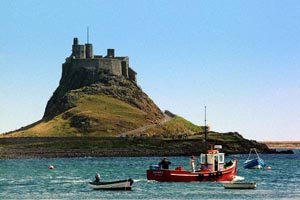
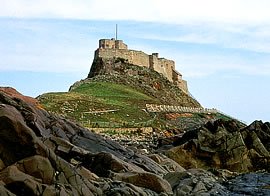
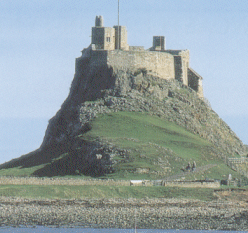
Perched on the top of a rocky crag and accessible over a causeway at low tide only, the castle presents an exciting and alluring aspect. Originally a Tudor fort, it was converted into a private house in 1903 by the young Edwin Lutyens. |
 |
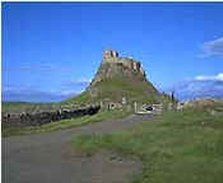 |
The castle was built on the outcrop of rock known as
Beblowe Crag in 1570-2.
The Tudor fort was built to safeguard a harbour that sheltered English ships at war with Scotland. After the two kingdoms became united in 1603 the castle lost it's importance as a border fort. |
| The rooms in the castle are filled with a fine collection
of antique furniture, mostly oak, of the early 17th century.
Ornaments and pictures are in harmony creating a unique picturesque home. The castle's small walled garden was designed by Gertrude Jekyll and is only open when the gardener is present. |
 |
 |
Holy Island derives its name from the priory of St Aidan
built in 635, but abandoned in 875 and the later Benedictine monastery
founded in 1082.
In 1902 the castle was bought by Edward Hudson, the founder of Country Life. After 1968 the castle was no longer inhabited and was taken over by the National Trust. The Trust has preserved the castle as if it was still lived in, creating an air of timelessness. |
The only attack that was ever made on the castle was in 1715 when the castle was briefly seized by the Stuarts. |
|