The house boasts the most complete and least-altered sequence of Robert Adam interiors in England, with the magnificent state rooms retaining their great collections of paintings and original furniture.
The Eastern Museum houses a fascinating range of objects collected by Lord Curzon when Viceroy of India (1899-1905)
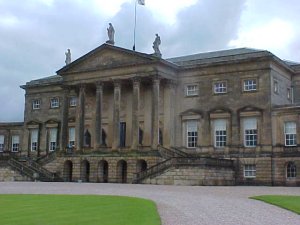
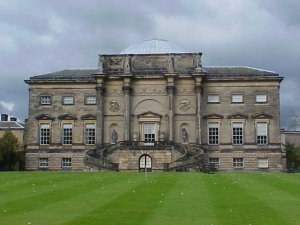
Into this design he introduced a strong sense of movement with the play of light and shade on the projecting columns and statues making this one of his greatest architectural achievements.
Inside, Adam's monumental marble hall, with ten alabaster columns like tree-trunks on either side and classical statues in niches along the walls, is top-lit to suggest the open courtyard of a Roman villa.
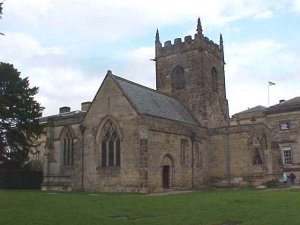
In 1906 the Curzon memorial chapel was added by George Nathaniel, Lord Curzon of Kedleston, in memory of his beloved wife.
The church is all that is left of the village of Kedleston which was removed a mile down the road to allow for the landscaping of the park.
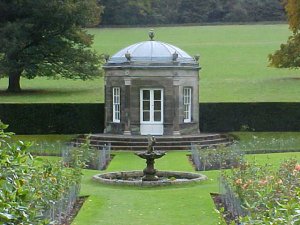
The peaceful gardens include a sunken rose garden, an hexagonal summer house, an Orangery (both designed by George Richardson) and a number of garden sculptures.
A pair of gates leads into Long Walk, a winding three-mile circuit of the south side of the park.
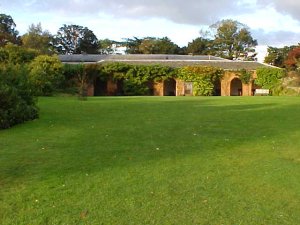
Today there are only a few parts of the Pergola remaining and a grass lawn now covers the area which was the swimming pool, that was removed in 1989.
Adjacent to the Pergola are the remains of an ice house.
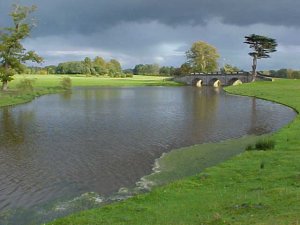
The long drive from the great arched gateway of Adam's north lodge runs through his idealised landscape park with carefully placed clumps of trees and a chain of serpentine lakes.
The three-arched bridge was built as an eye-catcher from the house, and as a raised platform to give visitors a magnificent view of the entrance front.
Fallen deadwood within the SSSI provides a valuable habitat for 137 species of invertebrates, six of which had not been formally been found in Derbyshire.

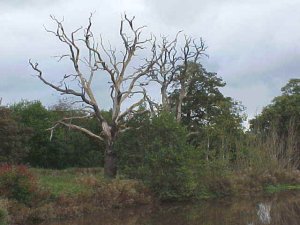
Standing deadwood is more valuable than fallen deadwood in ecological terms as it lasts longer and provides habitat for a wide variety of species including owls, bats, woodpeckers and many invertebrate species.
The Curzon family continue to live in the north-east pavilion of the hall, thus maintaining the long association of the family with Kedleston.