The park is about 4.5 miles north-west of Ashbourne in Derbyshire.
Within the park there is a National Trust shop, tearoom, information centre (situated in the original stable block) and an education room for visiting school groups.
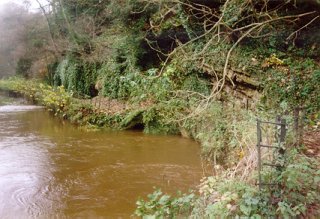
The 'Boil Holes' are so known as the water appears to bubble and boil as it appears from underground.
The River Hamps also emerges from underground a few yards up river inside a small cave and together they form the largest such rising in the country.
The park has 84 acres of superb parkland and broad leaved woodland to explore.
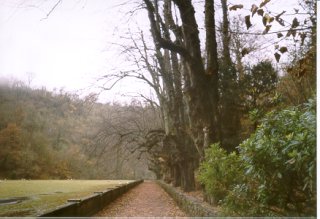
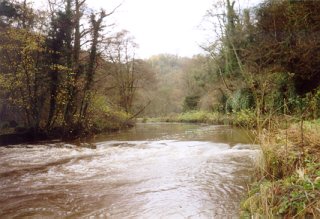
Alongside the river is the Paradise Walk, a remnant from the Victorian era. The woodland fringing the walk consists of lime, yew and beech and was planted as a 'pleasure ground' for the occupants of the hall.
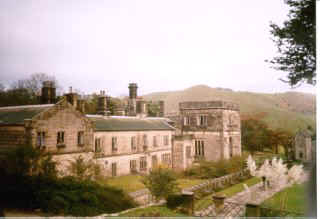
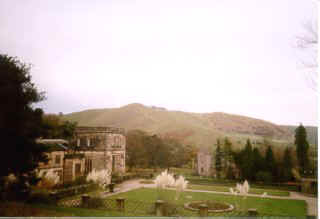
Ilam Hall was owned by the Port family for 250 years, from the time when it was handed to them by Henry VIII, after the dissolution of the monasteries.
In 1809 it was sold to David Pike-Watts upon whose death the estate went to his daughter Mary.
John Tubshawe designed the new hall in a grand gothic style with lavish formal rooms, soaring towers, and ornamental chimneys and parapets.
Jesse Watts-Russell also had the village of Ilam built to designs by Sir George Gilbert in a Swiss Alpine style. The village cross was erected in 1840 in memory of his wife Mary.
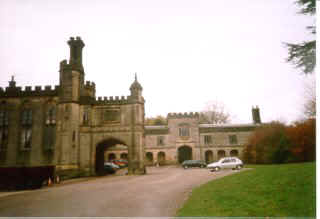
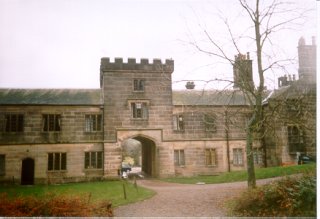
Mr Backhouse ran the hall as a luxury hotel with a restaurant and golf course, but the enterprise was not a success and the hall was sold to a demolition contractor.
A large part of the hall was demolished in the 1930's but was saved from total destruction by the intervention of a local conservationist, F.A. Holmes.
About three-quarters of the hall was demolished, but the remainder was made good and presented to the National Trust in 1934 on the understanding that it was to be used, as it is today, as an international youth hostel. (The hall is not open to the general public).
The youth hostel opened its doors in 1935.
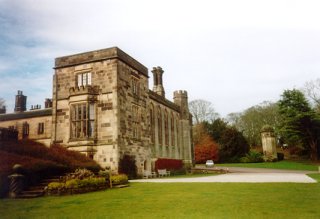
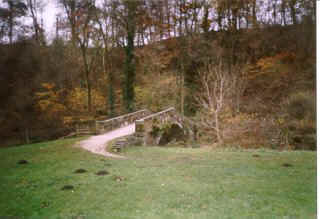
In 1839 the bridge was restored after being weakened by the huge loads of stone which were taken across the bridge to build the hall.
This park is a very pleasant place to visit with a number of interesting and intriguing points to see.
A gentle stroll around the estate takes about an hour to complete and the tearoom is a delightful place to finish off a visit.