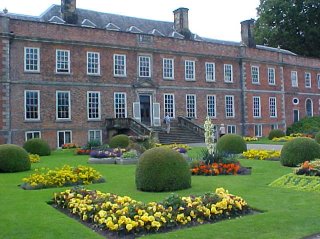
| Erddig is a seventeenth-century house with formal gardens
and parklands set in beautiful unspoilt countryside, two miles south of
Wrexham.
This is a fascinating house, not least because of the unusually close relationship that existed between the family of the house and their servants. All great houses buried in the country were once the heart of a self-sufficient community, but Erddig presents a unique picture of how these empires were nurtured day by day. |
 |
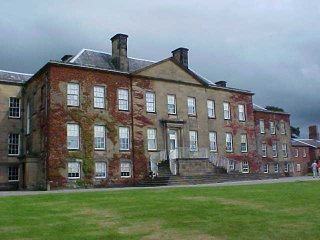 |
The central block of the house was built between 1684 and
1689 by Thomas Webb, a local master-mason, for Joshhua Edisburg, who lost
most of his money and sold Erddig to John Meller, a London lawyer, in
1716.
It was Meller who added two wings and sumptuously refurnished the almost empty house. |
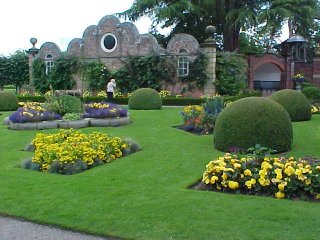
| The large walled garden has been restored to its 18th
century formal design and has a Victorian parterre and yew walk. It also
contains the National Collection of Ivies.
Plums, pears, peaches and apricots are trained on the walls, most of them varieties that were listed as growing here in 1718, and a range of flowering plants in the borders below includes old varieties of daffodils and narcissus. The 1,900 acre estate includes an extensive country park with many woodland walks and nature reserves. |
 |
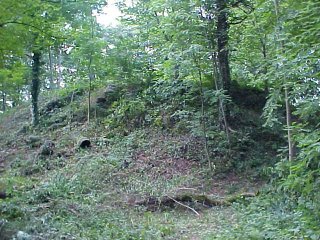 |
Included in the estate woodlands is the site of an 11th
century Motte and Bailey
castle.
Although now covered with trees and vegetation, this area is being cleared to show the commanding position this castle had over the surrounding area. This is one of the finest examples of a Motte and Bailey in this area. |
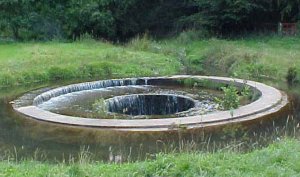
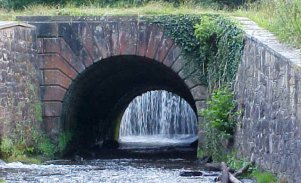
| As the house is built on a hill within the
grounds a hydraulic pump was constructed to pump water to the house.
Adjacent to the pump house a folly known as the Cup and Saucer was built. The water from the stream cascades down a large hole in the middle of an artificial pond and then emerges from a tunnel about 20 metres downstream. The construction of the pump and the folly are an indication of the craftsmanship and engineering skills of workmen, hundreds of years ago. The idea and design for the Cup and Saucer came from William Emes who was employed to landscape the park between 1767-89. |
 |
 |
|
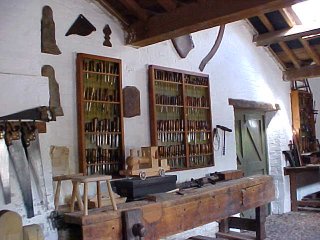 |
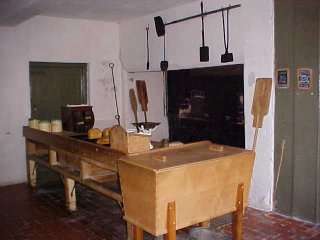
The beautiful and evocative range of outbuildings
includes a kitchen, laundry, bakehouse, stables, sawmill, smithy and
joiner's shop.
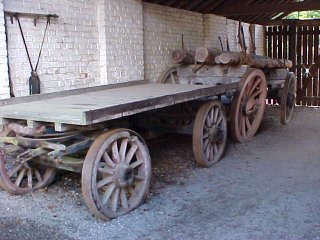
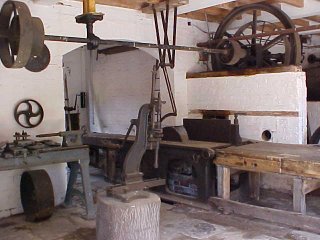
Saws hang on walls of the pit where timber was cut into manageable widths, the tools in the blacksmith's shop are the very ones that were used to repair the fine eighteenth-century ironwork screen in the formal garden, and the dry laundry sports a mangle in which clothes were pressed using the weight of a box of stones. |
| The stunning state rooms display most of their
original 18th and 19th century furniture and furnishings, including some
exquisite Chinese wallpaper.
The collection of gilt and silver furniture is considered to be one of the finest and best documented in any country house. Especially fine is the state bed, made in 1720 and upholstered in beautifully embroidered Chinese silk. |
 |
 |
The Yorke family, squires of Erddig since 1733, are noted
for what has turned out to be a fortunate reluctance to discard obsolete
effects - personal, household or estate.
This proud claim that nothing was ever thrown away has been thoroughly exploited in presenting the house for public viewing. |
| Perhaps the most fascinating facet of Erddig is the
amount of information about the life of the domestic staff who worked
here.
The Yorkes were particularly good to their servants and kept their portraits with poetic descriptions of them which are now in the servants hall. |
 |
Erddig represents a departure for the National Trust from its customary style of country house management. many conventions are abandoned, and visitors first taste of the house is an informal, below stairs view the workshops and the stableyard. |
|