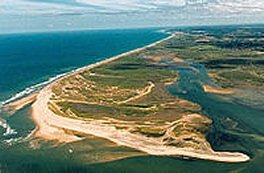
| Blakeney Point is a 3.5 mile long sand and shingle spit
protruding into the North Sea on the
Norfolk coast.
It is one of Britain's foremost bird sanctuaries, noted in particular for its colonies of breeding terns and for the rare migrants that pass through in Spring and Autumn. It was Norfolk's first nature reserve, becoming part of the National Trust in 1912. |
 |
 |
The Point is extraordinarily
rich in flora and fauna and is an internationally important site for
research on vegetation, being one of the few places in this country where
shingle bank, sand dunes and saltmarsh occur together.
It was formed through the process of accretion: the deposition of material that has gradually been moved along the coast by wave action. |
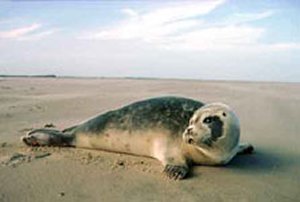
| Both common and
grey seals can be seen, as well as an
interesting range of coastal plants.
The common seals vary in colour from silvery grey to brown or even black with a fine spot pattern. The grey seals are of variable colour but in the main much darker, with a heavier blotchy pattern. |
 |
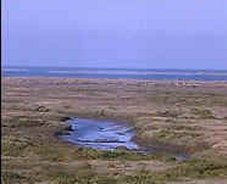 |
The two hour walk from Cley Beach is an experience of
peace and solitude with just the birds and the seals for company.
The Point and surrounding marshes at Morston and Cley form over 2400 acres of protected conservation area. |
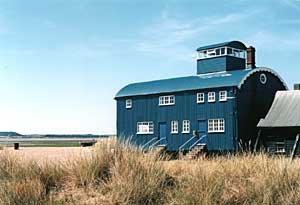
| In 1910 University College London bought the Old
Lifeboat House at Blakeney Point and established a purpose built
laboratory in 1913. It has been used as a study centre ever since.
The Old Lifeboat House also acts as an information centre and offers what it calls 'light refreshments' between April and September |
 |
There is so much to see with native plants, butterflies and life along the shoreline, but Blakeney Point is best known for the 400 strong colony of Grey and Common seals. |
|