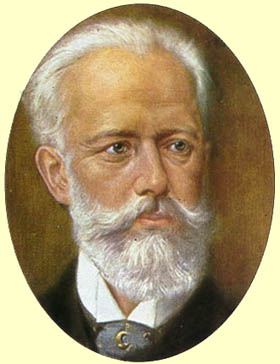
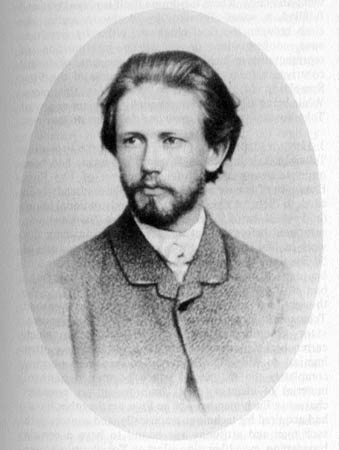
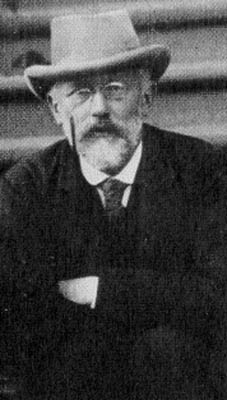
Composers : Pyotr Ilyich Tchaikovsky
|
||||||
|
||||||
| No. | Song Name | No.of pages | Transcription by | MIDI |
| 1 | Barcarolle Op37A No.6 | 1 | Jerry Snyder | |
| 2 | Chanson Triste Op40 No.2 | 1 | Jerry Snyder | |
| 3 | Concerto No.1 Op23 | 1 | Jerry Snyder | |
| 4 | Humoresque Op10 No.2 | 1 | Jerry Snyder | |
| 5 | March Of The Tin Soldiers Op39 No.5 | 1 | Jerry Snyder | |
| 6 | Morning Prayer Op39 No1 | 1 | Jerry Snyder | |
| 7 | Old French Song Op31 No.16 | 1 | Jerry Snyder | |
| 8 | Romeo and Juliet | 1 | Jerry Snyder | |
| 9 | Russian Song Op39 No.11 | 1 | Jerry Snyder | |
| 10 | Swan Lake Op20 | 1 | Jerry Snyder | |
| 11 | Sweet Dreams Op39 No.21 | 2 | Jerry Snyder | |
| 12 | Symphony No.5 Second Movement Op64 | 1 | Jerry Snyder | |
| 13 | Symphony No.6 Op74 Second Movement | 2 | Jerry Snyder | |
| 14 | Triquet's Couplets | 1 | Jerry Snyder |
Pyotr
(Peter) Ilyich Tchaikovsky
(Russian:
Пётр Ильич
Чайкoвский, Pëtr
Il’ič Čajkovskij or Pyotr Il'ich Chajjkovskijj; listen
(7 May 1840
[O.S.
25 April] – 6
November 1893 [O.S.
25 October]), also
transliterated Piotr Ilitsch Tschaikowski, Petr Ilich Tschaikowsky,
Piotr Illyich Tchaikovsky, as well as many other versions, was a Russian
composer of
the Romantic
era. Although not a member of the group of Russian composers usually known in English-speaking
countries as 'The
Five', his music has come to be known and loved for its distinctly Russian
character as well as for its rich harmonies and stirring melodies. His works,
however, were much more western than those of his Russian contemporaries as he
effectively used international elements in addition to national folk melodies.
Peter
(Pyotr) Tchaikovsky was born on April
25, 1840 (Julian
calendar) or May
7 (Gregorian
calendar) in Votkinsk,
a small town in present-day Udmurtia
(at the time the Vyatka
Guberniya
under Imperial
Russia), the son of a mining engineer in the government mines and the second
of his three wives, Alexandra, a Russian woman of French
ancestry. He was the older brother (by some ten years) of the dramatist,
librettist,
and translator
Modest
Ilyich Tchaikovsky. Musically precocious, Pyotr began piano
lessons at the age of five, and in a few months he was already proficient at Friedrich
Kalkbrenner's composition Le Fou. In 1850,
his father was appointed director of the St
Petersburg Technological Institute. There, the young Tchaikovsky obtained an
excellent general education at the School
of Jurisprudence, and furthered his instruction on the piano with the
director of the music library. Also during this time, he made the acquaintance
of the Italian
master Luigi
Piccioli, who influenced the young man away from German
music, and encouraged the love of Rossini,
Bellini,
and Donizetti.
His father indulged Tchaikovsky's interest in music by funding studies with Rudolph
Kündinger, a well-known piano teacher from Nuremberg.
Under Kündinger, Tchaikovsky's aversion to German music was overcome, and a
lifelong affinity with the music of Mozart
was seeded. When his mother died of cholera
in 1854, the
14-year-old composed a waltz
in her memory.
Tchaikovsky
left school in 1858
and received employment as an under-secretary in the Ministry of Justice, where
he soon joined the Ministry's choral group. In 1861,
he befriended a fellow civil servant who had studied with Nikolai
Zaremba, who urged him to resign his position and pursue his studies
further. Not ready to give up employment, Tchaikovsky agreed to begin lessons in
musical theory with Zaremba. The following year, when Zaremba joined the faculty
of the new St
Petersburg Conservatory, Tchaikovsky followed his teacher and enrolled, but
still did not give up his post at the ministry, until his father consented to
support him. From 1862
to 1865,
Tchaikovsky studied harmony,
counterpoint
and the fugue
with Zaremba, and instrumentation and composition under the director and founder
of the Conservatory, Anton
Rubinstein, who was both impressed by and envious of Tchaikovsky's talent.
After
graduating, Tchaikovsky was approached by Anton Rubinstein's younger brother Nikolai
to become professor of harmony, composition, and the history
of music. Tchaikovsky gladly accepted the position, as his father had
retired and lost his property. The next ten years were spent teaching and
composing. Teaching proved taxing, and in 1877
he suffered a breakdown. After a year off, he attempted to return to teaching,
but retired his post soon after. He spent some time in Switzerland,
but eventually took residence with his sister, who had an estate just outside Kiev.
Tchaikovsky
took to orchestral conducting
after filling in at a performance in Moscow
of his opera The
Enchantress (Russian:
Чародейка)
(1885-7). Overcoming a life-long stage
fright, his confidence gradually increased to the extent that he regularly
took to conducting his pieces.
Tchaikovsky
visited America
in 1891 in a
triumphant tour to conduct performances of his works. On May
5, he conducted the New
York Music Society's orchestra
in a performance of Marche
Solennelle on the opening night of New
York's Carnegie
Hall. That evening was followed by subsequent performances of his Third
Suite on May 7,
and the a
cappella choruses Pater
Noster and Legend
on May 8. The US
tour also included performances of his First
Piano Concerto and Serenade
for Strings.
Just
nine days after the first performance of his Sixth
Symphony, Pathétique, in 1893,
in St Petersburg, Tchaikovsky died (see section below).
Some
musicologists (e.g. Milton Cross, David Ewen) believe that he consciously wrote
his Sixth Symphony as his own Requiem. In the development section of the first
movement, the rapidly progressing evolution of the transformed first theme
suddenly "shifts into neutral" in the strings, and a rather quiet,
harmonized chorale emerges in the trombones. The trombone theme bears absolutely
no relation to the music that preceded it, and none to the music which follows
it. It appears to be a musical "non sequitur", an anomaly — but it
is from the Russian Orthodox Mass for the Dead, in which it is sung to the
words: "And may his soul rest with the souls of all the saints."
Tchaikovsky was interred in Tikhvin
Cemetery at the Alexander
Nevsky Monastery in St Petersburg.
His
music included some of the most renowned pieces of the romantic period. Many of
his works were inspired by events in his life.
Tchaikovsky in later life
During
his education at the School of Jurisprudence, he was infatuated with a soprano,
but she married another man. One of his conservatory students, Antonina
Miliukova, began writing him passionate letters around the time that he had
made up his mind to "marry whoever will have me." He did not even
remember her from his classes, but her letters were very persistent, and he
hastily married her on July
18, 1877.
Within days, while still on their honeymoon, he deeply regretted his decision.
Two weeks after the wedding the composer supposedly attempted suicide by putting
himself into the freezing Moscow River. Once recovered from the effects of that,
he fled to St
Petersburg his mind verging on a nervous breakdown. He never returned to his
wife after that but did send her a regular allowance through the years. Though
they never again cohabitated with each other, they remained legally married
until his death.
The
composer's homosexuality,
as well as its importance to his life and music, has long been recognized,
though any proof of it was suppressed during the Soviet era.[1]
Although some historians continue to view him as heterosexual, many others —
such as Rictor
Norton and Alexander Poznansky — accept that some of Tchaikovsky's closest
relationships may have been homosexual, (citing his servant Aleksei Sofronov and
perhaps even his nephew, Vladimir "Bob" Davydov.) Evidence that
Tchaikovsky was homosexual is drawn from his letters and diaries, as well as the
letters of his brother, Modest, who was also a homosexual.
A far
more influential woman in Tchaikovsky's life was a wealthy widow, Nadezhda
von Meck, with whom he exchanged over 1,200 letters between 1877
and 1890. At her
insistence they never met; they did encounter each other on two occasions,
purely by chance, but did not converse. As well as financial support in the
amount of 6,000 rubles
a year, she expressed interest in his musical career and admiration for his
music. However, after 13 years she ended the relationship unexpectedly, claiming
bankruptcy. During this period, Tchaikovsky had already achieved success
throughout Europe and by 1891,
even greater accolades in the United
States. In fact, he was the conductor,
on May 5th, 1891,
at the official opening night of Carnegie
Hall.
Tchaikovsky's benefactress, Nadezhda von Meck
Meck's
claim of financial ruin is disregarded by some who believe that she ended her
patronage of Tchaikovsky because she supposedly discovered the composer's
homosexuality. The two were related by marriage in their families-- one of her
sons, Nikolay, was married to Tchaikovsky's niece Anna Davydova.
Tchaikovsky's
life is the subject of Ken
Russell's poorly researched and highly fictionalized motion picture The
Music Lovers (1970).
Two other motion pictures were based on his life - the low-budgeted, sanitized
and also highly fictionalized Song
of My Heart, released in 1948, and the 1972 Russian-language "Tchaikovsky"
, which was nominated for an Academy
Award for Best
Foreign Language Film.
His
last name derives from the word chaika (чайка),
meaning seagull
in a number of Slavic languages. His family origins may not have been entirely
Russian. In an early letter to Nadezhda
von Meck, Tchaikovsky wrote that his name was Polish
and his ancestors were "probably Polish."
(In fact, the Polish equivalent of his name, Czajkowski, is a not uncommon
Polish surname.)
Most
biographers of Tchaikovsky's life have considered his death to have been caused
by cholera,
most probably contracted through drinking contaminated water. In recent decades,
various theories have been advanced by some sources that his death was in fact a
suicide.
In
the biography Tchaikovsky Day by Day, the Russian musicologist Aleksandra
Orlova stated such a view based on oral evidence and various
circumstantial events surrounding his death (such as discrepancies over death
dates, and handling of Tchaikovsky's body) suggesting that Tchaikovsky poisoned
himself with arsenic.
Orlova cites little documentary reference for these claims, however, and other
well-respected biographies of the composer have concluded natural causes (such
as in Tchaikovsky: The Quest for the Inner Man, Alexander
Poznansky; Tchaikovsky: The Final Years, David
Brown). The issue over the cause of Tchaikovsky's death remains, however, in
dispute amongst researchers.
The
English composer Michael
Finnissy composed a short opera, Shameful Vice, about Tchaikovsky's
last days and death.
Main
article: Compositions
by Pyotr Tchaikovsky
Tchaikovsky
is well known for his ballets,
although it was only in his last years, with his last two ballets, that his
contemporaries came to really appreciate his finer qualities as ballet
music composer.
Tchaikovsky
completed ten operas,
although one of these is mostly lost and another exists in two significantly
different versions. In the West his most famous are Eugene
Onegin and The
Queen of Spades.
Full
score destroyed by composer, but posthumously reconstructed from sketches and
orchestral parts
Was
not completed. Only a march sequence from this opera saw the light of day, as
the second movement of his Symphony
#2 in C Minor and a few other segments are occasionally heard as concert
pieces. Interestingly, while Tchaikovsky revised the Second symphony twice in
his lifetime, he did not alter the second movement (taken from the Undina
material) during either revision. The rest of the score of Undina was destroyed
by the composer.
Premiere
April 24
[OS April 12], 1874,
St
Petersburg
Revised
later as Cherevichki, premiere December
6 [OS November 24], 1876,
St
Petersburg
Premiere
March 29
[OS March 17] 1879
at the Moscow
Conservatory
Premiere
February
25 [OS February 13], 1881,
St
Petersburg
Premiere
February
15 [OS February 3] 1884,
Moscow
Premiere
January 31 [OS January 19], 1887,
Moscow)
Premiere
November 1
[OS October 20] 1887,
St
Petersburg
Premiere
December 19 [OS December 7] 1890,
St
Petersburg
First
performance: Maryinsky
Theatre, St
Petersburg, 1892.
Originally performed on a double-bill with The
Nutcracker
(Note:
A "Chorus of Insects" was composed for the projected opera Mandragora
[Мандрагора]
of 1870).
Tchaikovsky's
earlier symphonies
are generally optimistic works of nationalistic character, while the later
symphonies are more intensely dramatic, particularly in the Sixth, a clear
declaration of despair. The last three of his numbered symphonies (the fourth,
fifth and sixth) are recognized as highly original examples of symphonic form
and are frequently performed.
He
also wrote four orchestral suites
in the ten years between the 4th and 5th symphonies. He originally intended to
designate one or more of these as a "symphony" but was persuaded to
alter the title. The four suites are nonetheless symphonic in character, and,
compared to the last three symphonies, are undeservedly neglected.
The
title used in English-speaking countries is a linguistic hybrid: it contains an
Italian word ("Capriccio") and a French word ("Italien"). A
fully Italian version would be Capriccio Italiano; a fully French version
would be Caprice Italien.
For
a complete list of works by opus number, see [2].
For more detail on dates of composition, see [3].
Public
Domain Sheet Music: