


NORTERN PROVINCE FIRE

TRAINING

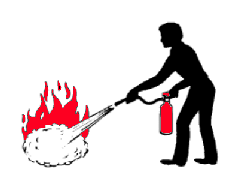
HOW TO USE YOUR FIRE EXTINUISHER



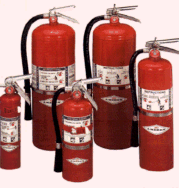
HOW TO IDENTIFY THE PROPER FIRE EXTINGUISHER
* ALL RATINGS ARE SHOWN ON THE EXTINGUISHER FACEPLATE
* Some extinguishers are marked with multiple ratings such as AB, BC and ABC.
* These extinguisher are capable of putting out more than one class of fire
Class A and B extinguishers carry a numerical rating that indicates how large a fire and experienced person can safely put out with that extinguisher.
Class C extinguishers have only a letter rating to indicate that the extinguishing agent will not conduct electrical current. Class C extinguishers must also carry a Class A or B rating.
DO NOT USE water extinguisher on energized electrical equipment
NEVER ATTEMPT TO FIGHT A FIRE UNTIL YOU SOUND THE FIRE ALARM AND ...
* Your method of escape is known
* You know how to use an extinguisher
* You have the correct extinguisher for the job
* The extinguisher is fully charged and can extinguish the fire.
lHOW TO USE A PORTABLE FIRE EXTINGUISHER
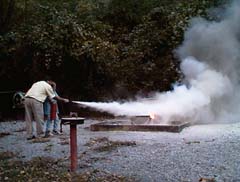
Remember the acronym P.A.S.S
P ......Pull the Pin
A .......Aim the extinguisher nozzle at the base of the flames
S .......Squeeze the trigger while holding the extinguisher upright
S .......Sweep the extinguisher from side to side, covering the area of the fire with the extinguising agent
w
GENERAL
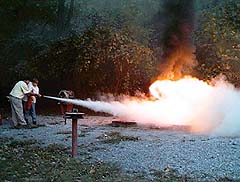
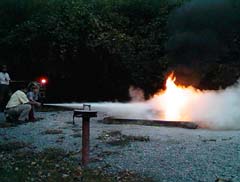
When you are dealing with a fire, speedy attack is essential. The object of instruction and training is to help you become familiar with the correct action to take under various circumstances, and to avoid fumbling and hesitation when you need to use extinguishers. Suitable training can be obtained from your local Civil Defence branch.
NOTE - The correct method of use is stated on the extinguisher, and these instructions and relevant pictograms should be studied regularly after the purchase of the extinguiser.
AT HOME/AT WORK
Take up a position where access to the fire is unrestricted, and where a quick and safe, retreat is possible, for example on the side of the fire nearest a door or, when outside, to windward of the fire. Take care to ensure that the fire is completely extinguished and not liable to re-ignite or continue smouldering.
ON A FARM
An adequate water supply is absolutely essential. Ample water capacity and pressure must be made available close to the sheds and to other areas that require special protection. Ensure that for your machinery and fuel storage areas, dry powder extinguishers are available. (Consult Northern Province Fire for the necessary details).
OPERATING INSTRUCTIONS
Water Extinguishers: Direct the jet towards the base of the flame and keep it moving across the area of the fire. A fire that is spreading vertically should be attacked at its lowest point and followed up. Seek out any hot spots after the main fire has been extinguished.
Dry Chemical Extinguishers: On fires that involve spilled liquids, direct the jet or discharge nozzle towards the near edge of the fire and, with a rapid sweeping motion, drive the fire towards the far edge until all the flames have been extinguished. On fires in falling liquids, direct the jet or nozzle towards the base of the flames and sweep upwards.
WARNING: Be very careful when using an extinguisher on burning liquids in a pan or other container. The high pressure jet from the extinguisher can cause extensive splashing of the hot liquid which can cause serious burning if it splashes onto the operator. Stand well clear of the flame and slowly approac it only when it is under control.
On fires in electrical equipment, the first requirement is to turn off the electric current. Then direct the jet or nozzle straight at the fire. Where the equipment is enclosed, direct the jet or nozzle into any opening within the aim of penetrating to the interior.
NOTE: - Do not use water as a fire-fighting medium unless the electricity has been switched off.
Fires in flammable liquids: Water should not be used on the burning liquid itself, but can be effectively used to cool and extinguish fires in the surroundings. If the extinguisher has no shut-off control, continue to discharge over the area of the fire. If the extinguisher is of the controlled-discharge type, shut off the discharge when the fire appears to have been extinguished, wait until the atmosphere clears and, if any flame is still visible, discharge again.
Fires in electrical equipment: Water is a conductor of electricity and should not be used if the equipment is live; once the power has been cut off, however, water can be effectively used, except on burning liquids, greases or fat.
Fires in gas: Water should be used to cool containers and surroundings but gas flames should be extinguised only by cutting off the gas supply. Where gas cylinders are involved, take up a position where you will be protected should a cylinder explode.
FIRES INSIDE A CAR
In the case of a fire in the passenger compartment, evacuate the vehicle, taking the extinguisher with you. Attack the fire from outside.
FIRES IN A CAR ENGINE
The first sign of fire in the engine is usually smoke. Immediately evacuate the passenger compartment, taking the fire extinguisher with you. Cautiously open the bonnet, taking care not to be overcome by smoke fumes. Immediately aim the extinguisher at the fire. If you must investigate, do so afterwards. Never open the bonnet just to investigate and then go back for the extinguisher; by the time you get back the engine (if, by then, you are able to get back at all), the engine may have been destroyed.
FIRES IN A CARAVAN
Evacuate the caravan, taking the extinguisher with you. Attack the fire from a safe distance, near an escape route, taking care not to be trapped alongside a non-exit wall.
FIRES IN A POWER BOAT
Treat this as you would a fire in the engine of your car.
WHEN TO CALL FOR HELP
With fires, quick decisions have to be taken. Often, one of the difficult decisions is whether to call the fire brigade, or fight the fire alone. Almost all fire officers and fire prevention organizations agree it is better for the fire brigade to be called out over minor matters than to have to eventually fight huge, costly and dangerous conflagrations.
AS A GENERAL RULE:
*If two or more persons are present, one should telephone the brigade while the other attempts to extinguish the fire.
* If you are alone, and can immediately control a small outbreak, do so.
* If you are alone and in doubt, call for help first, then tackle the fire.
* if the fire has taken hold, immediately evacuate the premises.


