History of Chemistry II
HISTORY OF CHEMISTRY II
Return to History of Chemistry I
Hermann Staudinger (1881- ) studied high-molecular-weight compounds: macromolecules. Produced experimental evidence
that macromolecules were covalently bonded, very large molecules.
Herman Mark (1895- ) concluded that macromolecules have
loose, easily rotated chains. Used the x-ray diffraction patterns
of polymers to show that they were indeed macromolecules.
In the early 1900s Max von Laue predicted that
x-rays would be diffracted by the atomic nuclei in a crystal.
William Henry Bragg (1862-1942) and William
Lawrence Bragg (1890- ) developed the x-ray diffraction equipment and
equations respectively.
(the cell serves as a minuscule beaker for carrying out biological
chemistry)
Frederick Sanger (1918- ) unravelled the amino acid
sequence for insulin.
(without molecular bonds there would be no compounds, but without
intermolecular forces all compounds would be gases)
Hydrogen bonding occurs between protein chains. The vast majority
of enzymes are proteins (there are over 2000 known) and each has
its own specific three-dimensional structure which is key to its
functionality. In the late 1800s Emil Fischer
(1852-1919) expressed this as the "lock and key" model. John
Cornforth used this model to explain why natural molecules are
formed in only one of two possible mirror images. Cornforth saw
that the enzyme acted as a three-dimensional template and only one
shape would come off the mould.
Jokichi Takamine in the early 1900s isolated
the first hormone, adrenaline.
Insulin was isolated in 1921 by Frederick G.
Banting (1891-1941) and Charles H. Best (1899- )and its
structure was determined in 1954 by Frederick
Sanger.
Leopold Ruzicka (1887- ) converted cholesterol into
androsterone.
Lewis H. Sarrett developed a 37-step process
for synthesizing cortisone.
Chemists at Syntex created 19-norprogesterone which was better at
inhibiting ovulation than progesterone and "the pill" was
born.
Alexander Fleming (1881-1955) observed the antibiotic
effect of the mould Penicillium notatum. The active agent
penicillin was isolated by Howard Florey and Ernst Chain.
Dorothy Hodgkin determined structures of penicillin, B12 and insulin.
Wendell Stanley isolated crystals of tobacco
mosaic virus.
DNA and RNA are the molecules in the cell that store and transfer
genetic information during self-replication. Both DNA and RNA are
polymers: their monomer units are called nucleotides and consist of
three parts: a phosphate group, a pentose and a nitrogen-containing
base. DNA can have as many as 30,000 base pairs and they are the
largest of all natural molecules. The three-dimensional structure
of DNA is a double helix. The outside handrails are the sugar-phosphate backbones. The inside steps are pairs of bases joined by
hydrogen bonds. The key to the three-dimensional structure is that
only certain bases pair up and their base pairing explains the
replicating capabilities of DNA.
Rosalind Franklin used x-ray diffraction data
to show double helix of DNA.
James Watson and Francis
Crick came up with the structure for DNA.
Instrument Revolution:
Improved and new instrumentation developed before and during World
War II:
- x-ray crystallography
- spectrometers
- chromatography
- mass spectroscopy
Petroleum industry provided stimulus for long-range research and
immediate industrial application for organic and inorganic
chemists.
Carl Bosch (1874-1940) and Friedrich
Bergius developed industrial high-pressure processes of adding
hydrogen to coal to turn this into liquid gasoline.
In the 1920s Franz Fischer (1877-1947) and Hans Tropsch (1889-1935) made gasoline with a carbon monoxide
and hydrogen mixture called water gas generated by passing air,
then steam, over red-hot coal. They used an iron oxide catalyst at
elevated temperatures and moderate pressures.
George Curme developed electric-arc and thermal
methods for cracking petroleum to produce ethylene, propylene and
other doubly bonded (unsaturated) hydrocarbons. The reactive,
doubly bonded hydrocarbons were then used to produce materials for
use in the syntheses of drugs, dyes and polymers.
(the art of synthetic chemistry has been compared to a game of
chess. The synthetic chemist must know the reactivities of all the
compounds involved and be familiar with the synthetic routes used
by others).
Three-dimensional structure influences physical and chemical
properties.
Leopold Ruzicka synthesized ring structures
with 15 and 17 carbons.
Herman Sachse in the late 1910s proposed that
cyclohexane could assume a boat shape or a chair shape.
Odd Hassel showed that the chair conformation
was preferred by six-membered carbon rings.
Derek Harold Richard Barton (1918- )explained behaviour
of steroids. The rings were not flat. Explained that if were in
chair conformation their preferred reactivity could be explained.
Kathleen Lonsdale (1903-1971) solved the structure of
hexamethylbenzene by x-ray crystallography and showed that it was
both flat and symmetrical (bonding electrons were evenly
distributed over the ring).
Robert Robinson (1886- ) showed that benzene electrons
have mobility on the ring and could go wherever they were needed.
Used arrows to indicate the movement of electron pairs.
Kenichi Fukui showed that the reactivity of the
molecule as a whole was dictated by the shape of the highest energy
occupied molecular orbital (the frontier orbital theory of
reactions). Orbitals that extend furthest from the nuclei should be
the most important in reactions. They can overlap with the lowest
unoccupied reagent orbitals.
Robert Burns Woodward and Roald Hoffmann came up with the Woodward-Hoffmann rules which use the symmetry of frontier molecular orbitals to predict the outcome of certain photochemical and thermal reactions.
Charles J. Pedersen discovered crown ethers. They can form complexes with metal ions. The metal ion sits in the hole at the centre of the crown. Crown ethers are used to carry metal ions into organic solvents. Also used to carry metals out of organic solvents. Also used to model biological systems because of structural relationship to biological molecules.
Thomas Midgley discovered that tetraethyllead helped prevent engine knock and also discovered that dichlorodifluoromethane (freon) made an efficient refridgerant.
Geoffrey Wilkinson and Ernst Otto Fischer came to same conclusion that ferrocene consisted of an iron nucleus sandwiched between two five-membered hydrocarbon rings attached as ligands.
Fluxional was first observed in ferrocene.
Not all inorganic chemistry is organometallic chemistry i.e. it does not necessarily involve carbon. There is lots of inorganic chemistry that does not even involve metals.
Two boron centers joined by a hydrogen bridge violates the single-bond behaviour that hydrogen shows in carbon compounds.
Neil Bartlett in early 1960s was able to oxidize the noble gass xenone to form a yellow, solid platinum fluoride derivative of xenon and thus show that the noble gas elements are not inert.
Metal ligand systems are found in vitamins and other coenzymes, hemoglobin, and chemotherapeutic agents such as cisplatin an anticancer drug.
George Washington Carver (1864-1943) developed products from biomass.
Ludwig Ferdinand Wilhelmy (1812-1864) measured quantitatively the rate of a chemical reaction. Solution of cane sugar in the prescene of acids slowly turns into a mixture of glucose and fructose. Wilhelmy found that the initial rate of the reactions was proportional to the concentrations of both the sugar and the acid. Wilhelmy found a mathematical expression for the rate.
Augustus George Vernon Harcourt and William Esson came up with methods for interpreting reaction rates that are essentially the same as those used today. Thses results were complemented by the work of van't Hoff. van't Hoff proposed seveal equations showing that these rates depend on temperature. One of these equations was adopted and expanded by Arrhenius and is known as the Arrhenius equation where the rate goes up exponentially with temperature.
Max Bodenstein studied kinetics (concentrated his research on gas-phase reactions). He suggested chain reaction mechanism in 1913. Observed that a single photon might initiate the reaction of millions of molecules. Required the postulation of the mementary existence of free radicals.
In the early 1920s Frederick Alexander Lindemann suggested that unimoleculare decompositions were collisionally induced i.e. a molecule gained excess energy from collisons even with its own species and therefore the rate of its reaction appeared not to depend on the concentration of a second reagent.
Understanding reaction intermediates was made in the 1930s by such workers as Henry Eyring. Eyring along with Michael Polanyi produced a map of the potential energy surface for the reaction between a hydrogen atom and molecular (diatomic) hydrogen.
Dudley R. Herschbach and Yuan Tseh Lee received the Nobel Prize in 1986 for molecular beam work.
Reactions at surfaces become important where there is a great deal of surface or when the surface serves as a catalyst. Examples of surfaces: surfaces of reaction vessel, stirring utensil, colloids, powders, bubbles, enzymes. Systemiatic studies of catalysis were carried out in Germany by Wilhelm Ostwald, in France by Paul Sabatier (1854-1941) and in the United States by Irving Langmuir (1881-1957). Langmuir proposed that surface catalysis took place on the catalyst's surface. He also developed a description of adsorption behaviooour called the Langmuir isotherm, which was characteristic of surface coverage by a layer one molecule thick. Also filled lightbulbs with an inert gas to reduce the tungsten evaporation that was causing the blackening of the bulbs.
Agnes Pockels invented a surface film balance and conducted studies of surface films and monomolecular layers.
Langmuir and Katharine Blodgett perfected a technique for transferring successive monomolecular layers from a water surface to a solid and creating what are called Langmuir-Blodgett films.
B.P. Belovsov and A.M. Zhabotinskii first observed oscillatin reactions. These regulate the heartbeat and are involved in metablolism and tissue formation and differentiation. A feedback loop (predator-prey model) seems to be a neccessary condition for an oscillating reaction and also that the reaction has to be far from equilibrium.
Lars Onsager made the assumption that on the molecular level, at equilibrium, the forward reaction and the reverse reaction take place at the same rate. If there are small displacements from equilibrium, the flow of material or heat will be proportional to a thermodynamic force. One can then calculate the behaviour of the system on its return to equilibrium.
Ilya Prigogine developed an extension of nonequilibrium thermodynamics for systems far from equilibrium. Prigogine's treatment of systems far from equilibrium predicted oscillationg reactions and self-organizing systems. Wrote book "Order Out of Chaos, Man's New Dialogue with Nature" in 1984.
Rutherford suggested that the nucleus contained protons and neutrons.
Cloud chamber invented by Charles Thomson Rees Wilson (1869-1959) making it possible to observe the path of charged particles.
Frederick Joliot and Irene Curie
James Chadwick (1891- ) discovered the neutron. How could you find the Invisible Man ... by the people he collided with.
Enrico Fermi (1901-1954) along with Emilio Segr�, Edoardo Amaldi and Franco Rasetti had created transuranic elements (heavier than uranium).
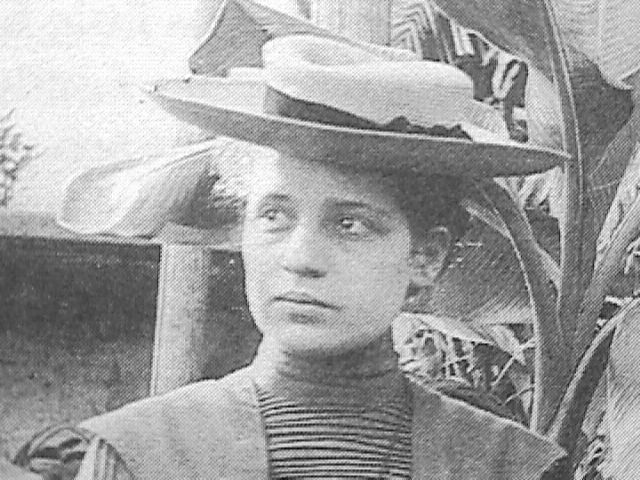
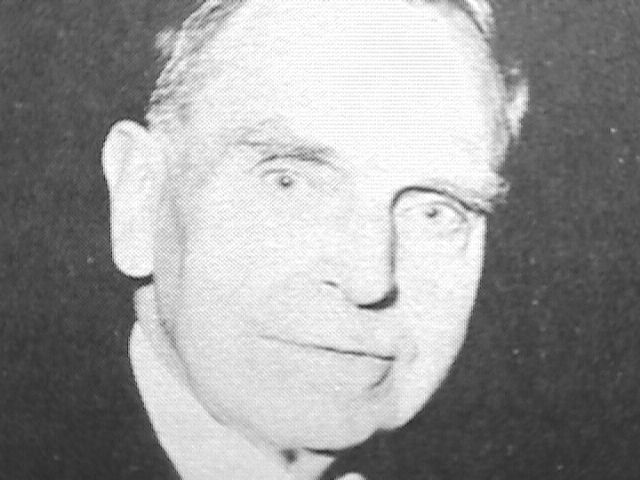
Lise Meitner and Otto Hahn discovered protactinium in 1918.
F. Soddy called chemically identical elements with slightly varying atomic weights isotopes.
Hahn, Meitner and Fritz Strassmann (1902- ) theoretically explained splitting of atom.
Enrico Fermi began working on nuclear fission whereby if neutrons caused fission and fission produced neutrons then one fission reaction might cause another and under the right conditions this reaction might be self-sustaining and might provide a source of energy. Energy from a fission chain reaction might also make a bomb.
Joliot found that neutrons had to be slowed down to be absorbed efficiently by fissioning nuclei and he found the best material for this was deuterium discovered by Harold Urey.
Glenn Seaborg studied the chmistry of neptunium. Seaborg's group made plutonium. They found that plutonium-239 was more fissionable than uranium-235.
To produce a lot of plutonium, a lot of free neutrons are needed, and the best place to find free neutrons is in a self-sustaining fission chain reaction. Fermi's group demonstrated the feasibility of a uranium chain reaction in 1942.
Project Y of the Manhattan Project was devoted to nuclear bomb design and assembly and was located at Los Alamos.
The uranium-235 gun assembly weapon was used on Hiroshima on August 6, 1945. The plutonium-235 implosion assembly was used in the bombing of Nagasaki three days later.
Linus Pauling led a campaign to stop atmospheric testing of nuclear weapons, which included nonviolent civil disobedience.
The principle behind the hydrogen bomb was atomic fusion rather than atomic fission. Atomic fusion is the joining together of two atomic nuclei. The heat to initiate the fusion reaction is provided by a fission reaction and once ignited the reaction spreads like a normal thermochemical reaction hence thermonuclear. The first test of a thermonuclear device was in 1952.
After discovery of neptunium and plutonium Seaborg's group continued to look for more transuranics using cycloton bombardment.
Elements were becoming increasingly unstable and shorter lived as they became heavier.
Georg von Hev�sy (1885- ) was the codiscoverer of hafniym and the first to use radioactive isotopes as biological tracers.
(the most sensitive, reliable smoke detectors use americium-241)
The center of chemical activity has moved from Africa to India to Asia to Arabia to Europe to North America - if a center, that is, still exists. Chemistry has become increasingly delocalized and is now better described as a global enterprise.
Technical advances in computers, transistors, lasers and space travel have opened completely new areas of study.
Astrochemistry
Over 100 different molecules have been detected by spectroscopists in space including carbon monoxide, ammonia, formaldehyde, cyanoacetylene, acetaldehyde, methylmercaptan and ethanol.
(necessity may be the mother of invention, but invention appears to be the parent of need)
Environmental Chemistry
Bioremediation = use of microorganisms to digest waste. Some bugs even digest TNT and nitroglycerine.
Use of spuercritical carbon dioxide as a solvent for chemical reactions or cleaning. The carbon dioxide is maintained at asuch a high temperature that it is a gas but under such high pressure that it still has liquid-like properties.
Electrochemistry
In the late 1900s it developed storage batteries for electric cars, solar cells, and novel synthetic routes for inorganic and organic compounds.
Cold fusion lesson: valid chemical theory must be based on verified results obtained with sound scientific methods.
Biocatalysis
Biocatalysis is the use of microorganisms to make chemicals. For example, yeast is used to make ethanol. Chaim Weizmann used fermentation to produce acetone during World War I. Now enzymes are being controlled and even engineered.
Inorganic Superconductivity
In the early 1900s it was discovered that metallic mercury cooled to 4 kelvins superconducts i.e. offers zero resistance to the flow of electrons and also superconductors completely repel magnetic fields.
Paul C.-W. Chu made a ceramic with 1 part yttrium, 2 parts barium in a matrix of varying amounts of copper oxide which superconducts above 77 kelvins.
Buckminsterfullerene is the third solid form of carbon - the other two being diamond and graphite. Buckminsterfulleren has 60 carbons linked into a sphere and was nicknamed buckyball. Spheres containing 32 and 44 carbons have also been found as well as larger spheres with up to 960 carbons in a single spherical molecule and buckytubes. These can trap atoms and molecular complexes in their spherical cages. Other atoms can be attached to the outside of the cage. In the early 1990s it was found that compounds of buckyballs with potassium or rubidium are superconducting.
Lasers used in femtosecond chemistry which is used to probe the transition state and fast intermolecular interactions.
Biochemical Engineering
Genentech Corporation in the late 1970s programme a bacterium to produce human insulin by splicing the insulin gene into the bacterial DNA. Human growth hormone is also produced this way.
The design of drugs now includes structure-based drug design. The three-dimensional structure of the target enzyme, virus or disease causing entity is found then a drug is designed that attaches to and alters this three-dimensional structure.
Polymerase Chain Reaction
In 1983 a method was discovered of making many copies of DNA from a single piece of material in a short time.
In 1989 Thomas R. Cech and Sidney Altman independently discovered that a molecule does not have to be a protein to be an enzyme. The nonprotein enzymes that they found were RNA.
It has now been shown that mercury-201 bombarded with electrons undergoes electron capture and in the process mercury - the element with 80 protons - is transmutted into element number 79, gold.
Maria Gertrude Goeppert Mayer came up with a shell theory of the nucleus which explains magic numbers - the numbers of protons and neutrons that seem to give nuclei special stability.
Calculations seem to indicate that elements beyond lead should have diminishing stability but that an element with atomic number 114, with 184 neutrons (one of the Superheavies) might show some special stabiltity.