|
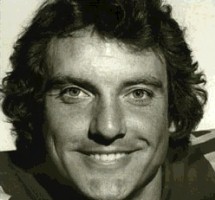
ESKIMOS PAST: GEORGE MCGOWAN: THE GREATEST RECEIVER NOT IN THE HALL OF FAME? |
||||
|
By TED SOUTAR |
||||
|
|
||||
|
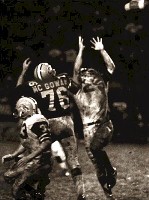
GEORGE MCGOWAN, #76 |
||||
|
RECEIVER, |
||||
|
|
||||
|
|
Monday,
July 8, 2002 |
|||||||
|
|||||||
|
|
|||||||
|
Born in |
|||||||
|
"Playing football stopped being a game for me the day I
first started in high school. We had the type of program where we
played football year-round." |
|||||||
|
Football
had always interested the youngster, but he wanted it to be more than just a
passing interest. In a 1974 interview he recalled, |
|||||||
|
"It's been pretty much what I've been interested in all
my life, but as a profession." |
|||||||
|
After
high school, McGowan attended two years of junior college in |
|||||||
|
As for
McGowan, he had a very good year himself, with 32 receptions for 592 yards
and five TDs. |
|||||||
|
In spite
of these numbers - the 32 receptions was just three off the then-KU record
for one season - the coaches thought he'd make an even better defensive
back. As a result, his senior year at KU was unremarkable. |
|||||||
|
"My senior year really wasn't much fun. Here I was,
a good receiver, playing as an ordinary defensive back." |
|||||||
|
Ordinary
defensive backs aren't usually high on NFL teams' list of priorities.
Drafted by the Atlanta Falcons in the 6th Round of the 1970 NFL draft,
McGowan quickly found himself on the outside looking in. |
|||||||
|
"That's when I realised I'd
made the worst mistake of my life," he later admitted. "Pepper
Rodgers thought Norm Van Brocklin would be a good
coach for me, so I signed with the Falcons even though I knew they had 15
receivers in camp." |
|||||||
|
McGowan
was a teammate of Bruce Lemmerman's in |
|||||||
|
"I was really down, until the Eskimos called me.
They worked me out as a defensive back too, so I didn't crack the
lineup. But my friends told me to keep at it, and I was happy when I
received an invitation to return to |
|||||||
|
|
|||||||
|
|
|||||||
|
Finally,
in 1973 the team finished in first to set up the classic Western Final with
the 'Riders. For his 81 catches for 1,123 yards and nine majors,
McGowan was rewarded with the Schenley Award as the
Most Outstanding Player in |
|||||||
|
And
according to coaches around the league at that time, he deserved to be
mentioned in the same breath as those gridiron legends. Former BC Head
Coach Eagle Keys (who played against Patterson) often compared the 6'2"
190 lb McGowan to Patterson, another KU grad. |
|||||||
|
His
former coach Ray Jauch recalled, |
|||||||
|
"George really stood out in practice because he was
prepared to work. You could see he'd be a great receiver in time.
He'd catch anything in a crowd." |
|||||||
|
"George ran patterns just like they were drawn up in the
playbook. He'd get to the correct spot and catch the ball. And
although he didn't possess great speed, his quickness allowed him to break
the odd long one. He could run with almost anyone for the first 30 or
40 yards." |
|||||||
|
And from
Bruce Lemmerman, |
|||||||
|
"I'd rate him as one of the best receivers in the
league. George had a great pair of hands, and would run his patterns
perfectly. He'd catch as well in a crowd as he did in the open." |
|||||||
|
Although
never a huge physical specimen - described as slender in fact - McGowan
rarely, if ever backed away from the physical aspect of the game.
Though he didn't go looking for it either. |
|||||||
|
"If a guy pops you, you have to give it back a
little. I'd rather play it loose, but you have to go with things the
way they are." |
|||||||
|
In his
first two years in the league, McGowan quickly grew to respect the abilities
of a number of opposing defensive backs. Included in his "best
defenders" list were the likes of Hamilton's John Williams, and |
|||||||
|
"Williams and Cook liked to bump and run with you.
Especially Williams. For a little guy he sure liked the contact.
And Dushinski was one of the best zone players that
I ever ran up against." |
|||||||
|
McGowan
never sought the limelight away from the field, either. Preferring to
stay home and read, rather than hit the nightlife, he still liked to have a
good time away from football. |
|||||||
|
|
|||||||
|
|
|||||||
|
"McGowan had the greatest eye-hand coordination I ever
saw. He was the best in the league." |
|||||||
|
|
|||||||
|
|
|||||||
|
The
Canadian Football Hall of Fame has a twenty-five year time frame in which to
add a player (no limit for a builder), and the time for McGowan's inclusion
is growing short. 2003 will be his final year of eligibility, and it's
a mystery as to why he's not been named thus far. |
|||||||
|
McGowan
was often in rivalry with THE other great receiver of the era, Tony
Gabriel. Though not as big as Gabriel, and although Gabriel led the
East every year between 1974 and 1978 (McGowan's last), his numbers certainly
rate him as one of the best in the CFL at that time. In fact, all
indications at the time of his retirement were that he was a lead-pipe cinch
to make the Hall of Fame. |
|||||||
|
In 1973,
the year he won the Schenley, he led all receivers
with 81. No one else was even close. |
|||||||
|
"The only two times I tried to play that year I was
pathetic",
he later recalled. "At least in '77 I was able to play most of the
games." |
|||||||
|
|
|||||||
|
|
|||||||
|
Several
players have since passed that mark, but it would stand until 1981, when |
|||||||
|
In 1976
he was again injured in preseason - this time his knee - but still managed to
catch 60 passes to finish second in the West behind |
|||||||
|
For all
intents and purposes, his career was over then, but he would hang on for two
more injury-filled seasons before finally calling it a career. Hugh
Campbell recalled, |
|||||||
|
"He couldn't run deep. We tried to fool people into
thinking he still could, but really, that was it for him." |
|||||||
|
The
story making the rounds in |
|||||||
|
When he
suffered one final knee injury at training camp in 1979, he knew it was
time. He just couldn't be George McGowan anymore. He played in five
Grey Cups, losing in 1973, 1974 and the "Ice Bowl" game of 1977,
and winning in 1975 and again in 1978. With that final cup win, McGowan
hung up his cleats forever. |
|||||||
|
|
|
STATS
& RECORDS:
|
||||||||||||||||||||||||||||||||||||||||||||||||||||||||||
|
OTHER
ACHIEVEMENTS: |
||||||||||||||||||||||||||||||||||||||||||||||||||||||||||
|
|
||||||||||||||||||||||||||||||||||||||||||||||||||||||||||
|
GREY CUP WINNER: 1975 1978 |
||||||||||||||||||||||||||||||||||||||||||||||||||||||||||
|
GREY CUP RUNNER-UP: 1973 1974 1977 |
|
SOURCES:
|