Makanna's Gathering by Thomas Pringle
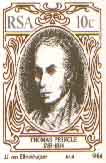 Wake! Amakosa, wake!
And arm yourselves for war.
As coming winds the forest shake,
I hear a sound from far:
It is not thunder in the sky,
Nor lion's roar upon the hill,
But the voice of HIM who sits on high,
And bids me speak his will!
He bids me call you forth,
Bold sons of Kahabee,
To sweep the White Men from the earth,
And drive them to the sea:
The sea, which heaved them up at first,
For Amakosa's curse and bane,
Howls for the progeny she nurst,
To swallow them again.
Hark! 'tis UHLANGA'S voice
From Debe's mountain caves!
He calls you now to make your choice-
To conquer or be slaves:
To meet proud Amanglezi's guns,
And fight like warriors nobly born:
Or, like Umlao's feeble sons,
Become the freeman's scorn.
Then come, ye Chieftains bold,
With war-plumes waving high;
Come, every warrior young and old,
With club and assegai.
Remember how the spoiler's host
Did through our land like locusts range!
Your herds, your wives, your comrades lost-
Remember-and revenge!
Fling your broad shields away-
Bootless against such foes;
But hand to hand we'll fight today,
And with their bayonets close.
Grasp each man short his stabbing spear-
And, when to battle's edge we come,
Rush on their ranks in full career,
And to their hearts strike home!
Wake! Amakosa, wake!
And muster for the war:
The wizard-wolves from Keisi's brake,
The vultures from afar,
Are gathering at UHLANGA'S call,
And follow fast our westward way-
For well they know, ere evening-fall,
They shall have glorious prey!
Questions
- Who was Makanna? If you don't know say what sort of person he was.
- From the context, who is Uhlanga? (Why is it written in capitals?)
- What is the tone of the poem?
- Does the poet regard Makanna's rising as justified? Explain your answer.
- Does the fact that the poem was written by a White colonist change your view of the poem?
- Identify and explain three different figures of speech from the poem.
Teacher's Note
This poem could be studied alongside and compared with some modern protest poetry. The background could be studied by getting students to do a project on "Makanna". The questions should be answered in groups to facilitate discussion, especially if used in comparison with modern poems.



