Comprehension Passages
Let's Stop Grandstanding Racism!
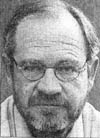
by Max du Preez (from his Maximum Headroom column in The Star)
Adolf Hitler, may he burn in hell, had one positive legacy: we regard him as the most evil of all dictators in recent memory, so we use him as an example of what mad dictators could become if not stopped. In much the same way, "apartheid" has become the world's word to use in cases of extreme racism or ethnic discrimination.
That was the power of our liberation: the "most racist society in the world" had made peace with itself. Well, at least formally Clearly we have not nearly eradicated racism in our society I don't know any society that has, really While we set a good example for other troubled societies with our negotiated settlement, I believe we could also become a model of genuine (as opposed to superficial) racial tolerance and harmony.
For too long the debate around racism has been a simplistic one with commentators and politicians ranting and raving emotionally and condemning everybody in sight. We have to combat racism, not grandstand it. To fight it, we have to really understand it. Perhaps we should all start to talk openly about racism in all its manifestations in the weeks leading up to the big conference on racism at the end of the month.
If we as a people don't think about and debate this phenomenon now, the conference could well end up being a mindless forum for public figures playing the Wit Gevaar card - something like the Human Rights Commission's enquiry into "racism in the media".
Please allow me to throw a few ideas into the pot.
Idea One. There is a difference between racism and racial fear. A suburban housewife who answers a knock at the door and is startled when she sees it is a black man, is not automatically a racist. There is a possibility that she was simply conditioned through her background into believing that black people are a threat to whites, and while she may not wish any harm or mind being governed by black people on all levels, she fears a one-on-one meeting with an unknown black person. Many sweet, gentle white people would be fearful if they have to go into a squatter camp or go to a rally with thousands of black people. It could be fear born from ignorance and conditioning, rather than feelings of racial superiority or resentment.
Idea Two. Many, if not most, whites who act or speak in a racist manner, do not do it because of a sense of superiority, but exactly because of a sense of insecurity, almost an inferiority complex.
This is especially true of white workers, lower-income groups, rural people and people with a low self-esteem.
The ideology of apartheid had taught them that white people were superior to blacks, but deep down they know they are not, and that is unsettling. Then they have to pretend they are superior, especially when the5r are in groups.
Idea Three. Let's learn very quickly to distinguish between class discrimination or classism and racism. In many cases a person who acted in a manner that seemed to be simply racist, would have acted exactly the same towards a person of the same race simply because that person was of a lower class.
Of course, this is as despicable as racism, but it would help our thinking if we distinguished between the two. I have personally experienced white and black people acting in a humiliating manner towards people of the same colour as them, simply because they were poor or illiterate and unemployed.
Idea Four. Accusing all whites of racism all the time is counter productive. So are emotional threats and showing off how insulting one can be. Let us be merciless when we see racist abuse and put the guilty in jail for a long time, but let us use persuasion rather than threats to others.
Idea Five. The doctrine we believed in for so long, namely that blacks cannot be racist because only people with power can be racist, is losing its validity fast in our new society And while I'm on the topic, isn't it time black people stopped using derogatory terms when referring to whites?
Apart from several names used in indigenous languages, the word "Boer" is the one whites understand. I actually heard a young black female SABC reporter use the word - she actually pronounced it "boors" - in a news bulletin, simply referring to a group of whites.
It can be exactly as hurtful as the word "kaffir". And yes, some Afrikaners call themselves Boere. Well, nobody blinks an eye when African Americans talk about themselves in certain contexts as "niggers", but serious offence is taken when a white American uses that word. Same thing with the Boere.
Racism is a multi-faceted, multi-layered phenomenon. If we are sincere about combating it, we should try to stop being always on the offensive or the defensive. We should in the weeks to come try to break through the stereotypes and try to reach a deeper understanding of this enemy to our nation's harmony
Questions
- Find synonyms from the passage for the following words
- think of
- totally removed
- on the surface
- putting up with
- meeting
- Why is "apartheid" (paragraph 1) in quotation marks?
- Why is "most racist society in the world" (paragraph 2) in quotation marks?
- "(M)ay he burn in hell" (paragraph 1) is an example of a: (Circle the letter of the most appropriate answer)
- hyberbole
- euphemism
- innuendo
- curse
- In what two ways, one good, and one bad, has South Africa been a model to the world?
- In what way does Max du Preez hope South Africa will lead the world?
- Max du Preez says that Adolf Hitler had one "positive legacy".
- What is his positive legacy, according to du Preez?
- What is ironic about this?
- Why might du Preez have written "Wit Gevaar" (paragraph 4) in italics?
- What does he mean by "playing the Wit Gevaar card" (paragraph 4)?
- In the article, du Preez puts forward five ideas for combating racism. Which of the following two ideas are not ideas he puts forward? (Circle the letter of the two most appropriate answers)
- classism is often mistaken for racism
- calling yourself a derogatory name is also racist
- blacks cannot be racist
- ignorance and social conditioning are not necessarily the same as racism
- threats alone will not work
- Du Preez uses derogatory terms like "Boer", "kaffir" and "nigger". Explain whether in your opinion, this makes him a racist.
- What is the "enemy to our nation's harmony" mentioned in the last sentence of the passage?



