
The Cause
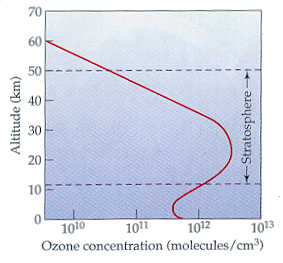
Ozone layer is situated in the stratosphere of the atmosphere. Ozone is a blue gas that gives our sky blue in colour when the weather is fine. The ozone there is kept in constant concentration by the action of ultraviolet light.
 Reactions
responsible for the destroy of ozone:
Reactions
responsible for the destroy of ozone:


Reactions responsible for the formation of ozone:


Under this natural equilibrium, the rate of destroy equals the rate of formation. Therefore, the concentration of ozone is fairly constant in the stratosphere.
Chlorofluorocarbons (CFCs) is the killer of ozone. They generate chlorine radicals that attack and destroy ozone molecules. CFCs are important compounds in industry and domestic uses. This renders the depletion of ozone layer severe. Now a region of low ozone concentration (commonly called the 'hole') is situated over Antarctica and the Arctic region.
Why CFCs are accumulated?
 There
are 3 major sources of escape of CFCs:
There
are 3 major sources of escape of CFCs:
CFCs have a relatively long lifetime. They are inert in nature that gives enough time for them to be transported into the stratosphere. For instance, trichlorofluoromethane (CCl3F) has a lifetime in the atmosphere of 75 years. Their low solubility in water makes them difficult to be removed by rainfall or dissolution in the vast ocean.
Mechanism
It is a complex chemical process. The following just gives an outline.
Chain initiation

Chain propagation

The depletion of ozone molecules is greater than the formation of ozone. The balance of concentration is disturbed here. Also the chlorine radical is regenerated, the presence of one such radical can effectively destroy many ozone molecules.
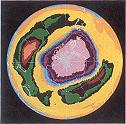 The
map showing on the right shows us the total ozone present in the Southern Hemisphere
in October 1994. This satellite map represent the different ozone concentration
by means of colours. The vast pink area is the area of lowest ozone concentration.
The
map showing on the right shows us the total ozone present in the Southern Hemisphere
in October 1994. This satellite map represent the different ozone concentration
by means of colours. The vast pink area is the area of lowest ozone concentration.
Chain termination

Stratospheric clouds & ozone depletion
Various chemists and atmospheric scientists have been contributed in the study of ozone depletion over Antarctica from the mid-1970s. A puzzling phenomenon happens in which the rate of depletion maximises in September and October, the beginning of Antarctica spring. About 70% of ozone is destroyed in the stratosphere (the height of 12 and 30 km).
Recent studies shows that the ozone hole is formed by the interaction
of both chemical and physical effects. Photodissociation of CFCs generates free
chlorine radicals (Cl·). They destroy ozone molecules and form chlorine
monoxide (ClO·). The two radicals undergo reactions with other atmospheric
contents, like methane (CH4) and nitrogen dioxide (NO2):

Neither HCl nor ClONO2 reacts directly with ozone. As more Cl· and ClO· are tied up in these so-called chlorine 'reservoir'. No further destruction of ozone happened.
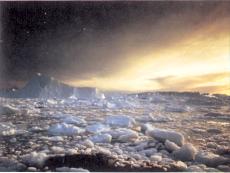 The
presence of polar stratospheric clouds (PSCs) accelerates
the depletion of ozone. This form of uncommon clouds removes nitrogen dioxide
from the atmosphere. This stops the removal of ClO·. The crystalline
surfaces of clouds acts as seeds which catalyse the formation of chlorine (Cl2).
The
presence of polar stratospheric clouds (PSCs) accelerates
the depletion of ozone. This form of uncommon clouds removes nitrogen dioxide
from the atmosphere. This stops the removal of ClO·. The crystalline
surfaces of clouds acts as seeds which catalyse the formation of chlorine (Cl2).

When spring approaches (in September), the chlorine formed
is photodissociated by sunlight into its free radicals. They begin to attack
ozone molecules again. Due to the lack of nitrogen dioxide in the atmosphere,
the ClO· produced is not tied up in the chlorine 'reservoir'. It self-combines
to form a molecule of Cl2O2. And then it photodissociates
into oxygen (O2) and free chlorine radicals.

The cycle of destruction begins anew. The PSCs make the free chlorine radicals more readily to destroy more ozone molecules. Each single radical may destroy thousands of ozone molecules before deactivated by a hydrocarbon or nitrogen dioxide.
The mass destruction continues into November. The warming temperature and wine currents break up the clouds. The destruction ends and the ozone-lack air flows out into the southern hemisphere. The overall ozone concentration in these areas decreases.
The effect of ozone depletion in Antarctica is severe, however, the ozone in the Arctic region should not be neglected. There is a trend showing the concentration of ozone there starts decreasing (over 30%). Global warming is a problem that our human race must face.
Effects
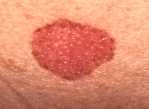 Ozone
layer in the stratosphere filters out 99% of dangerous ultraviolet radiation
from the sun. The thinning of the ozone layer may lead to an increase of
Ozone
layer in the stratosphere filters out 99% of dangerous ultraviolet radiation
from the sun. The thinning of the ozone layer may lead to an increase of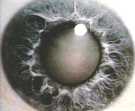 skin cancer and eye cataract. The presence of 'ozone hole' over
Antarctica and the southern hemisphere has introduced incidence of increasing
victims of skin cancer. The yield of crops may also decrease.
The expanse in medical cure and economical loss in food is uncountable.
skin cancer and eye cataract. The presence of 'ozone hole' over
Antarctica and the southern hemisphere has introduced incidence of increasing
victims of skin cancer. The yield of crops may also decrease.
The expanse in medical cure and economical loss in food is uncountable.
 The
increase in intensity of sunlight may induce global warming that
melt the ice caps at the poles. If this happens, the sea level will rise
from a few centimetre to a few metre. The low-lying areas will become underwater.
It is an ecological disaster. However, the economic centres are always located
along the coast. Hence flooding can lead to great economical loss.
The
increase in intensity of sunlight may induce global warming that
melt the ice caps at the poles. If this happens, the sea level will rise
from a few centimetre to a few metre. The low-lying areas will become underwater.
It is an ecological disaster. However, the economic centres are always located
along the coast. Hence flooding can lead to great economical loss.
Related Topics
Carbon dioxide
Ozone
Chlorofluorocarbons (CFCs)
I would love to hear your comments. Please e-mail to [email protected]