
 Source
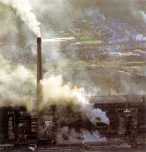
Particulates make up smoke. They may be ashes from burning of fuels. If fossil fuels (like coal and oil) are burnt, the tiny particules formed are mainly soot (carbon) from incomplete combustion. Incineration plants, factories and diesel vehicles are sources of emission.
Health Effects
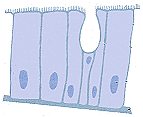 Smaller
particulates can penetrate into small airways and lung bypassing the
'muco-ciliary
defence' (The trapping of germs and dust by secreted mucus and cilia on
epithelium along the respiratory tract.). Soot particles may blacken the
alveoli, causing damage to the delicate epithelial linings. Toxicity depends
on the concentration accumulated and linked to the increased risks of respiratory
and cardiovascular illnesses and death. Cancer may also be induced.
Smaller
particulates can penetrate into small airways and lung bypassing the
'muco-ciliary
defence' (The trapping of germs and dust by secreted mucus and cilia on
epithelium along the respiratory tract.). Soot particles may blacken the
alveoli, causing damage to the delicate epithelial linings. Toxicity depends
on the concentration accumulated and linked to the increased risks of respiratory
and cardiovascular illnesses and death. Cancer may also be induced.
 The
suspension of particulates in the air reduces the ground level light
intensity. This lowers the rate of photosynthesis. The deposit of
smoke may coat plant leaves, reducing photosynthesis by preventing light
from penetrating or by blocking stomata.
The
suspension of particulates in the air reduces the ground level light
intensity. This lowers the rate of photosynthesis. The deposit of
smoke may coat plant leaves, reducing photosynthesis by preventing light
from penetrating or by blocking stomata.
Social Effects
Smoke, ash and soot become deposited on clothes, cars and buildings. They are costly to clean. The visibility reduces when there is smoke. This highly affects the safety of navigation and aviation. It is a reduction of appeal on tourists to come to a smoky, choky place.
Related Topics
I would love to hear your comments. Please e-mail to [email protected]