
Source
 Carbon
monoxide [CO(g)] occurs in exhaust emissions from cars and other
vehicles. The fuels that the vehicles used are mostly carbon-containing. Normal
combustion of petrol produces only carbon dioxide and water.
Carbon
monoxide [CO(g)] occurs in exhaust emissions from cars and other
vehicles. The fuels that the vehicles used are mostly carbon-containing. Normal
combustion of petrol produces only carbon dioxide and water.
Using heptane as an example of a fuel, complete combustion
of this is:

With limited supply of oxygen, the exhaust may contain certain amount of carbon monoxide and carbon particles (known as soot). This is called incomplete combustion.
Health Effects
 CO(g)
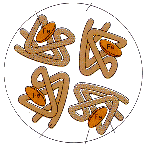
is a poisonous gas on account of having an affinity of haemoglobin,
the red pigment that carries oxygen in blood, some 250 times greater than
oxygen itself. The combination, carboxyhaemoglobin, is not released and
prevents oxygen from combining with it. Continued inhalation leads to death
as all haemoglobin become attached to CO(g) (the condition known as asphyxia).
CO(g)
is a poisonous gas on account of having an affinity of haemoglobin,
the red pigment that carries oxygen in blood, some 250 times greater than
oxygen itself. The combination, carboxyhaemoglobin, is not released and
prevents oxygen from combining with it. Continued inhalation leads to death
as all haemoglobin become attached to CO(g) (the condition known as asphyxia).
In small concentrations, it may cause dizziness and
headache. The concentration rarely exceed 4% and it never accumulate
due to bacterial and algal action. Cigarette smokers often have their concentration
of CO(g) in blood up to 10%.
I would love to hear your comments. Please e-mail to [email protected]