
Pollution, has its origins in the Latin word polluere, means 'contamination of any feature of the environment'. Pollution has the following characteristics:
 |
 |
 |
|
These
are pollutants.
|
||
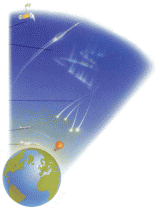

The layer of air which supports life extends about 8 km above the Earth's surface and is known as troposphere. The composition of air remains remarkably constant except there may be small localised variations. Air pollution has existed since humans first used fire. The problem becomes significant since the industrial revolution in the 19th century. Almost all air pollutants is the result of burning fossil fuels, either in the home, by industry or in internal combustion engine.
I would love to hear your comments. Please e-mail to [email protected]