|

The exhilarating sport of eventing is considered by many to be the most complete test of a horse, as it incorporates the three disciplines of dressage, cross country and showjumping, and calls on the full extent of a horse's ability and its rider's skill. Smaller competitions, especially for novice horses, may be one-day events (in fact, high numbers of entrants sometimes dictate that the three phases of the competition are speard over two days), but all major competitions are three-day events. In the mid-1990s, the name of the sport was changed to 'Horse Trials' but was then dropped again in favour of the term 'Eventing'; this is now usedworldwide except in France, where the sport is known as the 'Course Complet'
No two events are alike because of the variation in the natural terrianwhere they are built. It is this factor, together with the state of the going, the altitude and the weather - quite apart the different obstacles to be negotiated - that provides the unique challenge. The permutations are endless, and the horses must be fit and bold enough to cope with them all as they gallop and jump over a course they have never seen. Riders are permitted to walk the course on the previous day in order to work out the speed, the line of approach to the obstacles, the angle and the exact point at which to jump them (there is often a choice, with one or more alternatives being easier but more time-consuming than the most demanding route).
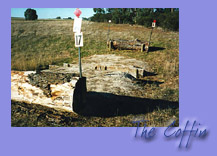
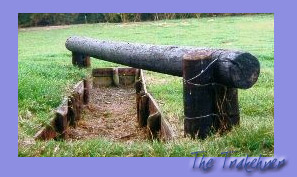
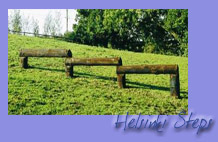
The course builders job is to test the riders' judgement and nerve, and the horses scope, courage and obedience, but without making unnatural demands. His or her course must produce a worthy winner without destroying the losers, and course-building - undoubtedly a job that calls for considerable skill - has developedinto a challenging caeer. Certain obstacles have become bywords in the sport, and are found in similar form on many courses: the Coffin (a narrow trough at the bottom of a ditch, with a post-and-rails fence on banks other either side), the Trakehner (a tall post-and-rails set in the bottom of a ditch), and the Helsinki Steps (rails forming the outline of steps dropping down a hillside, which first appeared in the 1952 Olympic Games) are all good examples.
|