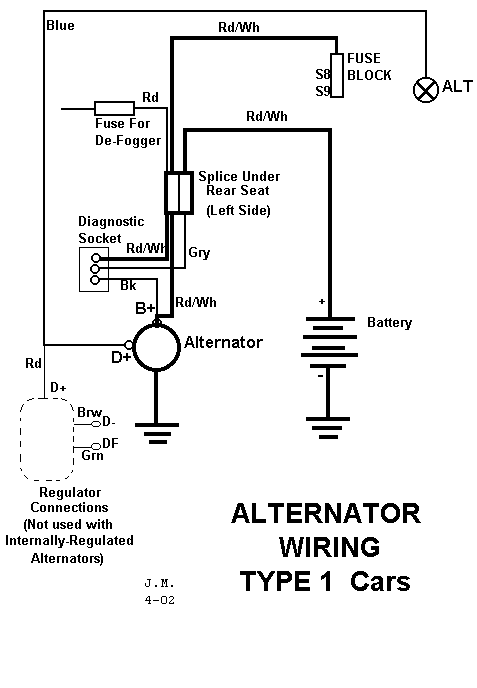
Alternator wiring for both internal and external voltage regulators is covered in this article -
When wiring the internal-VR alternator, remove the blue and green wires from the old external regulator and splice them together. Run the green wire to the D+ terminal on the new alternator. This provides the wiring to the indicator light or course, which is an essential sensing part of the alternator internal wiring.
See the following wiring diagram for the alternator with an internal voltage regulator (the diagram includes the wiring arrangement for the capacitive discharge ignition (CDI) system) -

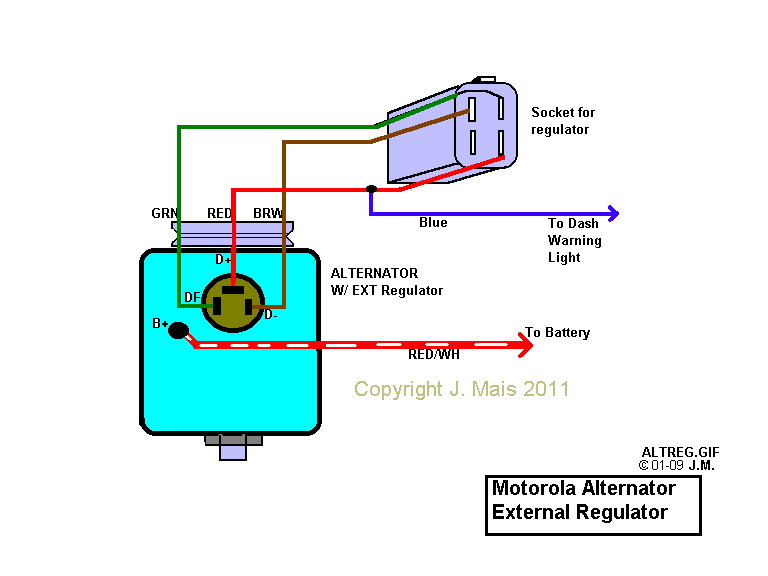
This wiring diagram is courtesy of "Speedy Jim," the smartest person we know when it comes to VW electrics.
When wiring your new internal VR alternator, you must disconnect BOTH wires from the B+ terminal on the old external voltage regulator, but keep them spliced together (they should currently have a double spade connector on the regulator), and then add the red wire from the D+ on the regulator to make a three way splice.
In the process the red wire that WAS on D+ gets moved to B+. Since the voltage regulator is now internal, you just bypass the old regulator with the red wires. (You might need to put an small extension in this wire if it's not long enough to meet the other two - if so make sure it's of similar thickness).
All of the red wire is 10-gauge (larger). "Speedy Jim" reminds us that you need to have substantial connectors for this job. In Australia the hardware stores sell 240v screw type connectors in either 15amp or 30amp varieties. There are two types - single hole where the wires are twisted and poked in the one hole and the screw tightened (these usually have a nice soft plastic cover over them - self insulating), and a block type where you can poke in wires from either end and screw two screws up to tighten each wire - this type has the lower amp rating.
I'm not sure what you'd have in the U.S. with 110v, but choose the heaviest and it should be fine. The "single hole" type are particulaly good as you twist the wires before poking in the hole - this means the screw just jams the wires together and the brass "bolk" doesn't actually carry much current. In the double ended type, the brass block carries all the current from one wire to the other.
My reason for saying this is that the red wires carry up to 50 amps, so they should be the single hole twisted wire type if you can get them - less likely to be a resistance point in the circuit. The thin wires can be any screw or clip connector, since that carries only a small current.
Dave wrote, in response to a question -
It is absolutely essential that the D+ terminal on the alternator be connected to a functioning "Alt" warning light in the instrument cluster. If this light is missing or defective, the alternator will NOT charge the battery! See my hand-drawn wiring diagram above. See also Speedy Jim's diagram (much better than mine! :-)
The system is very simple, but absolutely critical that you get it right. The D+ terminal on the alternator MUST connect to a functioning warning light in the instrument cluster.
Rob responded -
Dave's right, there should be just one wire (blue) from the D+ connector on the alternator to the button on the bottom of the normal indicator light in the dash. Again, see Speedy Jim's wiring diagram referenced above. The body of the bulb is connected to ground via the light holder (which also provides the ground connection for the other dash lights.)
The alternator must get a feedback current through this lamp so it can sense the battery voltage; it uses that as part of the alternator's internal circuitry needed to charge the battery. In other words, with the ignition on but engine off, the indicator light sees 12v from the battery and glows, but with the engine running, it sees 2v (14v minus 12v) running the other way, from the alternator. It doesn't glow (needing more than 2v to do that), but the alternator still "sees" the connection to the battery.
An LED light won't work for this purpose. LED's are diodes and will not allow current to flow in the opposite direction. With the LED, it would see the 12v, but the reverse flow 2v would be stopped by the diode nature of the LED, so that wouldn't work.
The 12v 2w indicator bulbs are available at any VW parts store. The same bulb is used for the speedometer illumination bulbs (two of them) and the other indicator bulbs in the speedo. You can borrow one of the illumination bulbs to replace a blown Alt indicator bulb -- the speedometer will be a bit dim on one side but can still be seen until you get a replacement bulb.
Disclaimer stuff: Rob and Dave have prepared this information from their own experiences. We have not assumed any specialised mechanical knowledge, but we DO assume that anyone using this information has at least some basic mechanical ability.
We hope you find this information useful, but we don't take any responsibility for anything which happens to you, other people, your VW or any other property or goods resulting from your use of this material.
Feel free to print off any of this information for your own use. If you intend to link this material to another site, reprint it, or in any other way redistribute it, please leave the information complete, including this disclaimer section, and provide a link to this Web site.
Last revised 20 August 2004.