Traffic

membros da banda
discografia
Traffic (artigo de 1970)
in the beginning...
letras de can��es


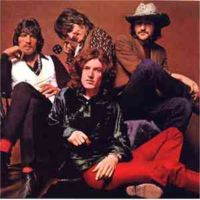
A banda inglesa Traffic surgiu em 1967. Steve Winwood, ainda antes de sair dos Spencer Davis Group, tinha j� idealizado e formado a banda. O grupo representava a Inglaterra psicad�lica tanto no estilo visual como no musical e na atitude. A sua mistura de estilos era inovadora e ousada, criada na atmosfera comunit�ria de uma vivenda na zona de Berkshire.

O seu primeiro single, "Paper Sun", com uma abertura de c�tara, obteve sucesso imediato,sucesso que se manteve com "Hole In My Shoe" e o tema do filme "Here We Go Round The Mulberry Bush", que inclu�a outras duas can��es do grupo. Mason sa�u ao fim de um ano, quando o primeiro �lbum, "Mr. Fantasy" foi lan�ado. O �lbum continha "Dear Mr. Fantasy", que j� indicava a inclina��o do grupo para longas pe�as musicais, fundindo rock, blues e jazz.

Dali em diante os Traffic deixaram de ser uma banda de singles e lan�aram-se numa grande carreira, especialmente nos Estados Unidos. O segundo �lbum, "Traffic mostrava um grande progresso. Mason tinha regressado temporariamente e duas das can��es que comp�s para o disco eram particularmente memor�veis: "You Can All Join In" e "Feelin Alright"" (depois gravada por Joe Cocker e pelos Three Dog Night, entre outros).

Em "Who Knows What Tomorrow Might Bring?", Winwood canta:

N�o somos como os outros
Estamos aqui todos os dias
Vem para c�
Senta-te aqui
D� uma passa
Dorme um pouco
Baby, n�o tens que justificar nada
traduzindo o estilo de vida hippie do final dos anos sessenta. Outra can��o excelente, "Forty Thousand Headmen" combinava um texto l�rico de pura fantasia, com flauta ritmada e tempo de jazz.

O terceiro album, "Last Exit", era um trabalho fragmentado e durante a grava��o Mason foi-se embora mais uma vez. O segundo lado consistia de duas m�sicas gravadas ao vivo com a forma��o de trio. Winwood tenta dar unidade ao grupo cantando e tocando um �rg�o Hammond, al�m de usar os pedais graves para compensar a falta de um baixo. Nesta altura a banda desfez-se e Winwood juntou-se aos Blind Faith. Os outros juntaram-se mais uma vez a Mason para formar o ef�mero "Mason, Capaldi, Wood e Frog".

Neste mesmo ano de 1969 foi foi lan�ada a compila��o "Best of Traffic" Depois de uma breve passagem pelos "Ginger Baker�s Airforce", Winwood desenvolveu um projecto a solo com a designa��o de "Mad Shadows", onde participaram Wood e Capaldi, e isto acabou por se transformar de novo nos Traffic. O �lbum resultante foi o bem recebido "John Balleycorn Must Die". Este trabalho apresentava can��es mais longas e com uma forte inspira��o jazz�stica.

Em 1971, os Traffic incorporaram Rick Grech (Family, Blind Faith e Airforce) no baixo e Jim Gordon (Derek & The Dominos) na bateria, para uma tourn� pela Europa. Na Su�cia conheceram Reebop Kwaku Baah, percursionista africano que passou a fazer parte da banda, numa forma��o que se mostrou a mais criativa e prof�cua de toda a exist�ncia do grupo. Foi com ela que foi gravado o �lbum ao vivo "Wellcome to the Canteen" (com a participa��o "especial" de Dave Mason) e o maravilhoso "Low Spark of the High Heeled Boys", apresentando na can��o-t�tulo uma viagem com mais de doze minutos pelo funky e blues.

Em 1973 Grech e Gordon foram substitu�dos por David Hood e Roger Hawkins, que eram m�sicos de est�dio. Com essa forma��o foram produzidos o �lbum de est�dio "Shoot Out at the Fantasy Factory", o �lbum ao vivo "On the Road" (que tinha Barry Beckett nos teclados, libertando Winwood para a guitarra) e o v�deo "Traffic Live in Santa Monica". Em 1974, sem Hood, Hawkins e Reebop, com Rosko Gee no baixo e Capaldi de novo na bateria, os Traffic, agora um quarteto, operam uma mudan�a de rumo com "When the Eagle Flies", que tem arranjos mais simples e intimistas e um resultado final coeso, apesar de n�o abandonar a via experimental; "Dream Gerrard" � um bom exemplo de m�sica progressiva. Logo depois o grupo desfez-se.

Rosko Gee juntou-se aos Can, onde j� estava Reebop. Chris Wood morreu em 1983, quando estava a produzir o seu primeiro trabalho a solo, "Volcano". Reebop tinha morrido no final de 1982, quando terminava a produ��o de um disco com Jonas Hellborg, "Melodies in a Jungle Man"s Head". Winwood e Capaldi proseguem carreiras a solo com sucesso . Em 1991 foi lan�ada a compila��o "Smiling Phases", que inclui os singles "Paper Sun", "Hole in My Shoes" e as in�ditas "Here We Go Round the Mulberry Bush" e "Smiling Phases".

Em 1994 Winwood tentou reunir os Traffic de novo, mas Mason preferiu continuar nos Fleetwood Mac e apenas Capaldi e Rosko Gee participam em "Far From Home", que inclui boas can��es como "Here Comes the Man", "Some Kinda Woman" e "State of Grace".

Em finais de 1998 e 1999 Capaldi e Mason viajaram pelos Estados Unidos apresentando um trabalho conjunto, que culminou no lan�amento do disco "40.000 Headmen - Live in tour". Em 2000 sa�u mais uma compila��o do grupo, "Feeling Allright", abrangendo toda a obra dos Traffic.


Membros dabanda
  • Stephen Lawrence Winwood (Steve Winwood); natural de Handsworth, Birmingham, 12 de Maio de 1948 - teclados, guitarra, baixo, percuss�o e vocais
  • Christopher Gordon Blandford Wood (Chris Wood); Birmingham, 24 de Junho de 1944, falecido a 12 de Junho de 1983 - flauta, sax, teclados, percuss�o e vocais
  • Nicola James Capaldi (Jim Capaldi); Evesham, Worchestershire, 24 de Agosto de 1944 - bateria, percuss�o e vocais
  • David Thomas Mason (Dave Mason); Worcester, 10 de Maio de 1946 - guitarra, melotron, c�tara, tambura, shakkai, baixo e vocais
  • Richard Roman Grech (Rick Grech); baixo (entrou em Nov, 1970)
  • Reebop Kwaku Baah: percuss�o (entrou em 1971)
  • Jim Gordon: bateria (entrou em 1971)
  • David Hood: baixo (entrou em 1972)
  • Roger Hawkins: bateria (entrou em 1972)
  • Barry Beckett: teclados (entrou em 1973)
  • Roscoe Gee: baixo (entrou em 1974)

  • Discografia

    1967 - Mr. Fantasy

    1. Heaven is in your mind (Steve Winwood/Jim Capaldi/Chris Wood) 4:16
    2. Berkshire Poppies (Steve Winwood/Jim Capaldi/Chris Wood) 2:55
    3. House for everyone (Dave Mason) 2:02
    4. No face, no name and no number (Steve Winwood/Jim Capaldi) 3:31
    5. Dear Mr. Fantasy (Steve Winwood/Jim Capaldi/Chris Wood) 5:39
    6. Dealer (Jim Capaldi) 3:10
    7. Utterly Simple (Dave Mason) 3:17
    8.Coloured rain (Steve Winwood/Jim Capaldi/Chris Wood) 2.41
    9. Hope I never find me there (Dave Mason) 2.06
    10. Giving to you (Chris Wood/Dave Mason/Steve Winwood/Jim Capaldi) 4.17
    1968 - Traffic
    1. You can all join in (Dave Mason) 3:34
    2. Pearly Queen (Steve Winwood/Jim Capaldi) 4:20
    3. Dont't be sad (Dave Mason) 3:24
    4.
    Who knows what tomorrow may bring (S.Winwood/Capaldi/Chris Wood) 3:11
    5. Feelin' alright (Dave Mason) 4:16
    6. Vagabond virgin (Dave Mason/Jim Capaldi) 5:21
    7. Forty thousand headmen (Steve Winwood/Jim Capaldi) 3:15
    8. Cryin' to be heard (Dave Mason) 5:14
    9. No time to live (Steve Winwood/Jim Capaldi) 5:10
    10. Means to an end (Steve Winwood/Jim Capaldi) 2:39

    Faixas extras do CD:

    11. Here we go 'round thr mulberry bush
    12. Am I what I was or am I what I am
    13. Whitering tree
    14. Medicated goo
    15. Shangai noodle factory
    1969 - Last Exit
    1. Just for you (Dave Mason) 2:24
    2. Shangai noodle factory (S.Winwood/Capaldi/Fallon/Jimmy/Dave Mason) 5:04
    3. Something's got a hold of my toe (Steve Winwood/Dave Mason/Jimmy Miller) 2:14
    4. Whitering tree (Steve Winwood/Jim Capaldi) 3:10
    5. Medicated goo (Steve Winwood/Jimmy Miller) 3:36
    6. Feelin' good (Bricusse/Newley) 10:50
    7. Blind man (Malone/Scott) 7:10
    1969 - Best of Traffic (compila��o)
    1. Paper Sun
    2. Heaven Is in Your Mind
    3. No Face, No Name, No Number
    4. Coloured Rain
    5. Smiling Phases
    6. Hole in My Shoe
    7. Medicated Goo
    8. Forty Thousand Headmen
    9. Feelin' Alright
    10. Shanghai Noodle Factory
    11. Dear Mr. Fantasy


    1970 - John Barleycorn Must Die
    1. Glad (Steve Winwood) 6:30
    2. Freedom rider (Steve Winwood/Jim Capaldi) 6:02
    3. Empty pages (Steve Winwood/Jim Capaldi) 4:45
    4. Stranger to himself (Steve Winwood/Jim Capaldi) 4:05
    5. John Barleycorn (trad. arr. by Steve Winwood) 6:20
    6. Every mother son (Steve Winwood/Jim Capaldi) 7:05

    Faixas extras do CD:

    7. I just want to know
    8. Sittin' here thinkin' of my love
    9. Backstage & introduction
    10.
    Who knows what tomorrow may bring (live)
    11. Glad (live)
    1971 - Welcome To The Canteen
    1. Medicated goo (Steve Winwood/Jimmy Miller) 3:34
    2. Sad and deep as you (Dave Mason) 3:46
    3.
    Forty thousand headmen (Jim Capaldi/Steve Winwood) 6:19
    4. Should't have took more than you gave (Dave Mason) 5:36
    5. Dear Mr. Fantasy (Jim Capaldi/Steve Winwood/Chris Wood) 10:55
    6. Gimme some lovin' (Steve Winwood/Muff Winwood/Spencer Davis) 9:00
    1971 - The Low Spark Of High Heeled Boys
    1. Hidden treasure - 4:16
    2. The low spark of the high-heeled boys - 12:10
    3. Light up or leave me alone - (Jim Capaldi) 5:00
    4. Rock & roll stew - (Rick Grech/Jim Gordon) 4:29
    5. Many a mile to freedom - 7:30
    6. Tainmaker - 7:39

    Faixa extra do CD:

    7. Rock & Rroll stew (vers�o do single)

    (Can��es escritas por Steve Winwood/Jim Capaldi excepto quando referido)
    1973 - Shoot Out At The Fantasy Factory

    1. Shoot out at the fantasy factory
    2. Roll right stones
    3. Evening blue
    4. Tragic magic
    5. Uninspired
    1974 - Traffic On The Road (�lbum ao vivo)

    1. Glad/Freedom rider
    2. Tragic magic
    3. Uninspired
    4. Shoot out at the fantasy factory
    5. Light up or leave me alone
    1974 - When The Eagle Flies
    1. Something new - 3:15
    2. Dream Gerrard - (Steve Winwood/Viv Stanshall) 11:03
    3. Graveyard people - 6:05
    4. Walking in the wind - 6:48
    5. Memories of a rock n' rolla - 4:50
    6. Love - 3:20
    7. When the eagle flies - 4:24

    (Can��es escritas por Steve Winwood/Jim Capaldi excepto quando referido)
    1991 - Smiling Phases (compila��o)

    Disco 1
    1. Paper Sun
    2. Hole in My Shoe
    3. Smiling Phases
    4. Heaven Is in Your Mind
    5. Coloured Rain
    6. No Face, No Name, No Number
    7. Here We Go 'Round the Mulberry Bush
    8. Dear Mr. Fantasy
    9. You Can All Join In
    10. Feelin' Alright
    11. Pearly Queen
    12. Forty Thousand Headmen
    13. Vagabond Virgin
    14. Shanghai Noodle Factory
    15. Withering Tree
    16. Medicated Goo
    Disco 2
    1. Glad
    2. Freedom Rider
    3. Empty Pages
    4. John Barleycorn
    5. Low Spark of High Heeled Boys
    6. Light Up or Leave Me Alone
    7. Rock and Roll Stew
    8. Shoot Out at the Fantasy Factory
    9. Walking in the Wind
    10. When the Eagle Flies
    1994 - Far From Home

    1. Riding high
    2. Here comes a man
    3. Far from home
    4. Nowhere is their freedom
    5. Holy ground
    6. Some kinda woman
    7. Every night, every day
    8. This train won't stop
    9. State of grace
    10. Mozambique
    1998 - Heaven Is In Your Mind (compila��o)
    1. Paper Sun
    2. Dealer
    3. Coloured Rain
    4. Hole in My Shoe
    5. No Face, No Name, No Number
    6. Heaven Is in Your Mind
    7. House for Everyone
    8. Berkshire Poppies
    9. Giving to You
    10. Smiling Phases
    11. Dear Mr. Fantasy
    12. We're a Fade, You Missed This
    13. Utterly Simple
    14. Hope I Never Find Me There
    15. Here We Go 'Round the Mulberry Bush
    16. Am I What I Was or Am I What I Am
    2000 - Feeling Allright (compila��o)

    1. Paper Sun
    2. Hole in My Shoe
    3. Heaven Is in Your Mind
    4. Dear Mr. Fantasy
    5. You Can All Join In
    6. Feelin' Alright
    7. Pearly Queen
    8. Forty Thousand Headmen
    9. Shanghai Noodle Factory
    10. Glad
    11. Freedom Rider
    12. Empty Pages
    13. John Barleycorn
    14. Rock and Roll Stew
    15. Low Spark of High Heeled Boys

    Traffic

    1967: Traffic were formed by Winwood, Wood, Capaldi and Mason in 1967 shortly after Winwood had left the Spencer Davis Group. He had played with Eric Clapton in a short-lived studio band called Powerhouse, which contributed some tracks to the Elektra sampler "What's Shaking". Winwood had also jammed with Wood, Capaldi and Mason in clubs around the Birmingham area prior to leaving the Spencer Davis Group. The four of them resided at a cottage in Aston Tirrold in Berkshire for six months in order to - as the saying went - get it together in the country. They introduced themselves with the single "
    Paper Sun", which reached No. 5 in Britain. That and its sequel, "Hole In My Shoe", encapsulated the summer of 1967 as accurately as any overt flower-power anthem. The debut album "Mr. Fantasy", was a successful vehicle of the talents of the entire group, and served notice that Traffic would be more than merely a backing band for Winwood. However, Mason's flair for light melody was straightaway at odds with the more jazz-oriented ambitions of the other members, and he departed in December of 1967.

    1968: Mason returned in a matter of months to help out on the second album, "Traffic", to which he contributed "Feelin' Alright". Traffic were featured, along with the Spencer Davis Group, on the United Artists soundtrack to the film "Here we go round the mulberry bush". Later that year, Mason quit again, leaving the entire band to call it a day.

    1969: "Last Exit" was their farewell album. Island Records, their British company, administering the last rites, issued a "Best Of Traffic" in 1969. Winwood meanwhile had again joined Clapton in Blind Faith and when that collapsed, temporarily enlisted in Ginger Baker's Air Force. Wood, meanwhile did sessions with Dr John.

    1970: Winwood planned a solo album, tentatively entitled "Mad Shadows". He called in Wood and Capaldi to help out on the sessions, and as a result Traffic was formed as a trio, and in April released the incomparable "John Barleycorn Must Die", which showed the band's ability to merge jazz, rock and traditional folk-music and was also a magnificent tribute to Winwood's superb versatility, since he contributed the lion's share of the instrumentation. Since Winwood was handling all guitars, keyboards and vocals, the pressure on him inevitably proved too great, and in November Rick Grech was added to the line-up.

    1971: Traffic expanded the personnel again with a percussionist, Reebop; and for a short British tour in the summer of 1971, ex-Domino Jim Gordon came in to bolster the rhythm section, and the errant Mason again returned to the fold. This line-up played only a few dates together, but the live recording "Welcome To The Canteen" was recommendation enough of their corporate abilities. At the end of the year "The Low Spark Of The High-Heeled Boys", was issued while the band were touring America; it went gold in the US in 1972, and was made by the line-up as before, with the inevitable exception of Mason who had left again.

    1972: When the band returned from America, Grech and Gordon, too, had departed along the way. The band was now again in a state of flux, despite the excellence of their last albums. It proved an academic problem, since Winwood fell ill with peritonitis, and Capaldi adjourned to Muscle Shoals to make a solo album "Oh! How We Danced"; while there he established connections with Muscle Shoals sessioneers David Hood (bass) and Roger Hawkins (drums) who joined the band for "Shoot Out At The Fantasy Factory", which was recorded in Jamaica in 1972.

    1973: With Winwood recovered, the band set out on a 1973 world tour, for which they added Barry Beckett, also from Muscle Shoals, on keyboards. The vitality and strength of this line-up was fully demonstrated on the made-in-Germany live double-album, "On The Road". Traffic appeared in the movie "Glastonbury Fayre".

    1974: The Muscle Shoals recruits bowed out after this tour, and for an English tour in 1974 Roscoe Gee the bass-player from Gonzales, was added; since Reebop disappeared somewhere along the way, the band completed the tour in the form which they had originally started, the last performance of the tour was held at the Reading Festival on August 31, 1974. After the final album "When The Eagle Flies", which was very good instrumentally, but marred by some over-ambitious Capaldi lyrics, the band again went into one of its regular periods of hibernation; this time it proved to be for good, since no one apparently any longer had the will-power to hold it all together.

    (artigo de 1970)


    In the beginning....

    There was a time when "traffic" was no more than a loose description of innumerable assorted vehicles clogging up innumerable congested roads. Now at a time when the field of pop music is as crowded with groups as city streets are with cars, "Traffic" has come to mean something more ... a group of musicians who have emerged from pop's deafening din with a sound as refreshing and rare as an untraveled country lane.

    It was just such a country lane, in fact, that lead to the remote cottage hidden in the vast seclusion of the Berkshire Downs where, early in 1967, four voluntary exiles first brought Traffic into being. When the original gathering of Steve Winwood, Jim Capaldi, Chris Wood, and Dave Mason fled London's hectic pop scene for Berkshire's peace and poppies, they took with them a combined wealth for musical heritage and experience ... and then found themselves faced with the arduous and unenviable task of sorting it all out. Sort it they did, over a six-month period of self-imposed isolation which seemed to produce nothing but vague rumors about just exactly what they were or were not doing.

    What they were doing was preparing a sound which hit England and the top ten charts in rapid succession in June of that year. Then came a tour of Britain which gave everyone, at last, a chance to see as well as hear.

    "Here We Go Round the Mulberry Bush", the title song from the film for which Traffic wrote much of the music, was released as a single in November. And in December came "Mr Fantasy", Traffic's first album and the best reason yet for their months in the country. Traffic was destined to happen.

    The streets of every major city are littered with shells of child prodigies who didn't ever grow up or fulfill their early promise. Very few do.

    Steve Winwood is tall and pale, a daydreamer in another world. He was born May 12, 1948, in Birmingham, and eighteen years later he was being hailed as one of the world's musical geniuses. A great many things happened in between. He learned to play the piano at an early age ... the guitar as well, and for a while he alternated between the 2 instruments. Eventually he was faced with the need to make a choice. It was the piano, because his thoughts flow more easily onto a keyboard.

    There was never anything other than music for Steve. He wanted to learn how to read and write music, so he spent a year at a music college. When he had learned, he left to play with his brother Muff's jazz band. The two of them joined forces with a young teacher named Spencer Davis, and at 15 Steve was a thoroughly professional musician. A year later, after working clubs, ballrooms and concert halls 7 nights a week, week after week, they were being described in those terms which pop musicians reserve for a few among the very best of their colleagues .... "A group's group". By the time he was 18, Steve had gotten that tag of 'musical genius'. Fortunately, Steve was smart enough to think it a huge joke, and so he was one of the few who never took it seriously.

    Success with the Spencer Davis Group brought recognition, and recognition brought a greater need for freedom. And so it was that when Steve left Spencer Davis, it was to Berkshire that he went. And it was in Berkshire, of course, that Traffic was born.

    For almost 2 years Steve, Dave, Jim, and Chris held the rapt attention of thousands of their contemporaries. Three major-selling albums were released by the band, innumerable sell-out concerts were played, eulogies were heaped on them. Then the band split.

    Steve split because things got to be very unclear for him, and clarity of purpose is a necessity to Steve. For a few months he did very little, then teamed up with Eric Clapton and Ginger Baker to form Blind Faith. The show-biz machine took over. The purpose of Blind Faith - to make music a leisure and for pleasure - was lost, and so was the faith. Another period of inactivity, of thought, then Steve joined Baker's monstrously big Air Force. Too unwieldy for a good feeling, it only served to depress Steve more.

    And so when he started work on his solo album, it was inevitable that he call on 2 friends he knew he could rely on completely. And the circle was completed, and Steve Winwood came home to Traffic.

    Chris Wood started life with the intention of being an artisit. Which he is now, not with paint and easel, but a dazzling range of musical instruments, all of which he plays with equal facility and equal taste.

    Chris, who looks like a good-natured pixie, was born June 24, 1944, in Birmingham, and started off his musical career at the age of 5 with piano lessons. These didn't last very long and Chris, the sort of person who tends to find things out for himself, learned more from just having a go at the piano on his own. Later, he learned to play the flute in much the same way, for the man who taught him music didn't play the flute.

    He went on to study painting at art college, where he joined a group which played around at pubs, weddings, and socials. It was here that he took up the tenor sax, producing nothing but terrible noises until he eventually mastered the delicate switch from flute to a reed instrument. With his time and his interest so divided between art and music, it was inevitable that he should finally have to choose between the two. He chose music, but he still hopes to hold a proper exhibition of his paintings someday.

    Chris still has that original tenor sax, and has added 2 more, an alto and a soprano, to vary the group sound. He also has 2 flutes (one is a silver orchestral flute and the other, a less expensive model with a harder tone), an oboe, several pipes, and an assortment of percussion instruments. His musical tastes go through various phases, ranging from classical to folk to primitive. He has a number of favorite saxists - Charles Lloyd, Roland Kirk, and Johnny Griffen - but he feels that other instrumentalists, like folk and blues guitarists, have influenced him more basically. He has definite ideas on the best way to learn to play an instrument ... take lessons in technique, learn to recognize what you do not want to know, and then go to it by yourself.

    He plays piano, organ and guitar beautifully, but it was his flute and sax work with traffic which set him in the front ranks of rock musicians and eventually led to Chris being one of the most sought-after sessions musicians in Britain or America in 1969. His visits to the States in '69 brought him into contact with a wide range of people, and at one point Chris worked on stage with Dr John, although he never recorded with that gentleman. On his return to England, Chris was invited by Ginger Baker to join his Air Force. Like Steve, Chris found the band and the ensuing organizations hassles too much to handle, and he didn't need a second invitation when Steve suggested the re-formation of Traffic.

    The drummer par excellence. It's very hard to always lay down exactly the right kind of drumming, but Jim Capaldi manages it, and always has. Originally he was the best drummer in Birmingham, which is where Steve Winwood met up with him, heard him, and asked him to become a member of the new group he was forming. Now he's one of the world's best.

    Jim is the group translator, putting into words what Traffic puts into music. Born on August 24, 1944, in Evesham, Worcestershire, Jim comes from a musical family. His father is a music teacher who used to be on the stage and his mother was once a singer. So it was not purely by chance that he began to play the piano when he was 6. When he was older he formed a group with 3 friends, and set about to learn as much as he could about the business.

    But Jim was an apprentice engineer, and music was still a sideline when he got together his second group. And there is still some doubt as to what really happened then ... either Jim took up the drums or the drums took up Jim. Whichever the case, the engineering took a decidedly second place to music and Jim learned to play the drums. He took no lessons. He started by playing just the way he felt, he has played that way ever since, and he cannot imagine doing anything else.

    Jim also has the happy knack of being able to lay down exactly the right kind of drumming without obvious effort, and his free and very easy style has undoubtedly helped create the relaxed atmosphere that has always been synonymous with Traffic.

    When the band first broke up, Jim became one quarter of mason-Capaldi-Wood and Frog. And when that band went its separate ways, he found himself in great demand on sessions. One of the sessions he was asked to do was for the new Steve Winwood solo album ....

    With his beard, his dark hair, and his deep-set eyes, Jim looks not unlike a latter-day Rasputin. At which point a comparison must end. For he is as amiable as he is articulate, and he is always able to shed some sort of light on the inner workings of Traffic.

    It was inevitable that Traffic should come together again in one form or another. Too many good things were created by the band in their first incarnation for reincarnation not to follow. Add the fact that in Steve Winwood, Jim Capaldi, and Chris Wood you have 3 very good friends who see a lot of each other socially, and the odds against their pursuing totally separate lives were too great to fight.

    And so it was that in February 1970, they joined forces again, but without Mason, who made the original group a quartet; he had grown apart and into his own scenes. The reincarnation came about because Winwood was making an album. It was to be called "Mad Shadows", and he gathered Capaldi and Wood into the studio to help, because they were friends, because they were sympathetic, because they were the best he knew. After a very short while they realized that nothing had really changed, and that the Traffic should roar again.

    And back came the answering roar of approval from the world. Their first gig was like the return of the prodigal son, like a family reunion, a warm and happy occasion with smiles bouncing off the walls and ceiling of The Roundhouse, in London's Chalk Farm area. It had been more that a year since Traffic had played anywhere, and everyone present that night had felt the emptiness of those 18 months.

    Sure, there had been Blind Faith and Ginger Baker's Air Force. And for a few there had been Chris Wood playing with Dr John the Night Tripper .... And Jim Capaldi's tasty drums has raised quite a few anonymous tracks from average to good or brilliant. But there had been no focal point, no direction in which the 3 could collectively aim their efforts.

    "Mad Shadows" was discarded and work started on the 4th Traffic album. If we could be permitted a little sooth-saying, we think it's the best yet. Steve, Jim, and Chris think so too. They are tighter, lighter, harder, fiercer, softer than ever before. And most of it is due to Steve, who is dictating far more than he has in the past. He knows exactly what he wants now - the time spent with Blind Faith and as a sideman in the Air Force gave him the maturity and assurance.

    But of course credit for results must also be shared by Jim and Chris. On their live dates and the new album, they prove conclusively that they are superior musicians, playing with such empathy and sensitivity that the results are heart-stopping.

    Cr�dito: WinwoodFans.com


    Paper Sun

    Well you think you had a good time
    With the boy that you just met
    Kicking sand from beach to beach
    Your clothes all soaking wet
    But if you look around and see
    A shadow on the run
    Don't be too surprised if its just a paper sun

    Ahh Paper Sun, Ahh Paper Sun

    In the room where you've been sleeping
    All your clothes all thrown about
    Cigarettes burn window sills
    Your meter's all run out
    But then again its nothing
    You just split when day is done
    Hitching lifts to nowhere, hung up on the paper sun

    Standing in the cool of my room
    Fresh cut flowers give me sweet perfume
    Too much sun will burn!

    When you're feeling tired and lonely
    You see people going home
    You can't make the train fare
    Or the six pence for the phone
    And icicles your crying
    From your cheek have just begun
    Dont be sad, good times are had
    Beneath the paper sun

    Daylight breaks while you sleep on the sand
    A seagull is stealing the ring from your hand
    The boy who had given you so much fun
    Has left you so cold in the paper sun

    Who Knows What Tomorrow May Bring?

    (Winwood/Capaldi)

    We are not like all the rest, you can see us any day of the week
    Come around, sit down, take a sniff, fall asleep
    Baby, you don't have to speak
    I'd like to show you where it is but then it wouldn't even mean a thing
    Nothing is easy, baby, just please me, who knows what tomorrow may bring?
    If for just one moment you could step outside your mind
    And float across the ceiling, I don't think the folks would mind


    Forty Thousand Headmen

    (Winwood/Capaldi)

    Forty thousand headmen couldn't make me change my mind
    If I had to take the choice between the deafman and the blind
    I know just where my feet should go and that's enough for me
    I turned around and knocked them down and walked across the sea

    Hadn't traveled very far when suddenly I saw
    Three small ships a-sailing out towards a distant shore
    So lighting up a cigarette I followed in pursuit
    And found a secret cave where they obviously stashed their loot

    Filling up my pockets, even stuffed it up my nose
    I must have weighed a hundred tons between my head and toes
    I ventured forth before the dawn had time to change its mind
    And soaring high above the clouds I found a golden shrine

    Laying down my treasure before the iron gate
    Quickly rang the bell hoping I hadn't come too late
    But someone came along and told me not to waste my time
    And when I asked him who he was he said, 'Just look behind'

    So I turned around and forty thousand headmen bit the dirt
    Firing twenty shotguns each and man, it really hurt
    But luckily for me they had to stop and then reload
    And by the time they'd done that I was heading down the road

    Links

    WinwoodFans.com


    P�gina Principal


    Hosted by www.Geocities.ws

    1