|
�
|


Social gatherings
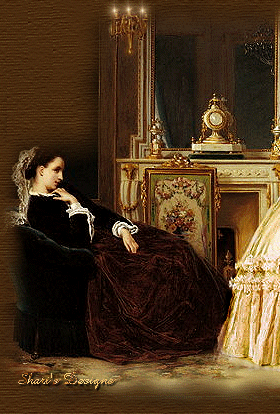
In the victorian period social gatherings were considered of utmost importance. People could meet one and other at the gatherings and catch up on the latest news. And moreover one was able to find a partner amongst the crowd. Women couldn't go into society themselves. They had to be presented into society. After this they could enjoy the many balls and other gatherings the Victorians organised and get themselves a good suitor. On this page you will read a little about Victorian debutants, followed by the important social gathering, the ball. Find more out about high tea by pressing the next button at the end of the page.
The victorian debutante
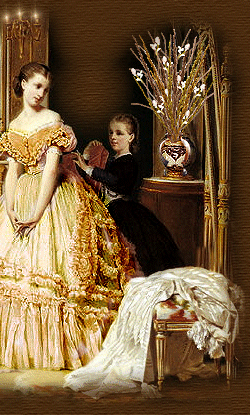
In the life of a Victorian debutante, there were probably few experiences more exciting than her presentation at her first ball. This event marked the young woman's entrance into Society, and allowed her opportunities of which she had previously been discounted. The extensive rules and etiquette surrounding this grand event were mind-boggling. The young lady's actual presentation took only a moment, yet the preparation for her brief appearance took several weeks. Prior to her long-anticipated "presentation day", she would endure fitting all kinds of gowns and jewelery. Equally as important, was her deportment training. This included learning to walk gracefully and learning to curtsy in the proper manner. Everything had to go well on the presentation day so that the debutant would make a positive first impression as to ensure her of a rich man.
Balls
After the debutant was presented she was able to attend balls and as a married woman she could even have her own balls. The weeks of preparation to host a ball were extensive. Some of the details ranged from sending out the invitations, selecting the dances to be played, determining food and beverages, and shining the ballroom floor to a mirrored reflection. If the hostess was successful, all her hard work could make her the talk of the social elite.In Victorian England, numerous balls could be held in one evening. The goal of the hostess was to have her guests arrive and stay late into the evening. This evidenced that her ball was the socially significant affair over those of her peers.
A lot of time was spend on making the ballroom look stunning. A successful ball required that the ballroom had "good ventilation, good arrangement, a good floor, good music, a good supper, and good company." According to The Habits of Good Society, a hostess should "secure a refreshment room, if not a supper room, on the same floor as the ballroom." This allowed for convenient access to refreshments by guests, particularly women who wore elaborate gowns. Refreshment consisted of tea, lemonade, iced sherbet, and cakes. Dancing was an important entertainment at a ball. Four musicians, including a pianist and violinist, were standard for a private ball. If the hostess had a large ballroom, she could employ a larger band.
Guests attending a large ball would receive a "double card containing on one side a list of the dances; on the other, blank spaces to be filled up by the names of partners." A pencil was connected to the card and presented when the guest deposited her wrap at the cloak room.
The most important dance of a ball was the Quadrille. The quadrille is a French dance that came about in the late eighteenth century. The dance wasperformed in a square that comprises up to four couples that dance opposite of each other.The dance to open the ball was always the quadrille*, followed by a waltz. A ball could have as many as twenty-four dances throughout the evening. A "break" intercepted the dancing, usually after the fourteenth dance. This gave everyone the opportunity to stop and eat supper, which in London was about midnight.

 



|
|
|
|
|
|
|