 |
|
|
|
|
|
|
|
|
|
|
|
|
|
|
|
|
|
|
|
|
|
|
|
|
|
|
|
|
|
|
|
|
|
|
|
|
|
|
|
|
|
|
|
|
| Name: Julia Nguyen |
|
|
|
Class: Religious Diversity |
|
|
| User name: uyenlnguyen2002 |
|
|
| http://www.geocities.com/uyenlnguyen2002/index.html� |
|
|
| Friday, 12:00~2:45pm |
|
|
|
Midterm |
|
|
| 1. List all your posting (copy and paste them or provide direct links to each specific post) |
|
|
| All my weekly postings are on my webpage: |
|
|
| http://www.geocities.com/uyenlnguyen2002/CS750.html |
|
|
| 2. Attendance: How many times late? How many classes missed? (be accurate) |
|
|
| I missed only one day in the first half of this semester. |
|
|
| 3.1st Digital Film :Name and Describe (how long? how did you edit it? in what format? on what day did you show it?) |
|
|
| My first digital movie named "Flowersf". As you said it could be anything on the first movie, so I made it with flowers because I love it. I will tell you this, I plan so many different flowers around my house, and it is so beautiful. Nevertheless, I can not live without it because when I am stressed out, the only thing to release it is taking care of them. My movie is about 1:00 minutes long, and showed it on Friday 10/24/2003. I edited the movie by using power point, which I think it might be easier than other methods. I noticed that the most difficult part of making movie was to connect the song into each picture. However, at the final making movie was interesting and satisfying to me because it was the first movie, which I made by my heart although it was not a great movie producing. Still, I will try my best for the second movie. |
|
|
| 4.To read or not to read, that is the question: Be honest. How much of the following books did you read? Consilience? World Religions in America? Meme Machine? |
|
|
|
As I read the first three chapters of Consilience I thought the book was going to eventually�get better but was I totally wrong.� I did read the whole book but I struggled throughout the experience. The terminology was very hard for me to understand but I believe I got the main points of the book.� After reading Consilience, World Religions in America was like a god-sent.� I read most of the chapters on the larger religions (ex. Protestant/Orthodox Christians, Catholism, Islam, Hinduism, Buddism) then I skimmed through the rest of the book and read whatever seems interesting.� As for the Meme Machine, I am about half-way through the book.� Out of the three books Meme Machine seems to be the most interesting.��� |
|
|
| 5. Give an example of a "consilience" explanation one specific religious phenomenon (e.g., why do people worship snakes, etc.). Be sure to choose your own example. |
|
|
| The "consilience" explanation I came up with regarding a religious phenomenon is that can be an example of people experience. We people are living in different forms the basis for the social sciences and that is people will have a specific religious phenomenon. Consilience seems to be the coming of knowledge by linking different disciplines such as Sociology, Psychology and Biology. For example: Sociology, the person's culture might value these types of experiences and make the person experiencing it feel important within that culture. Psychology, Humans are inclined to reject another human because of unseemliness. Just like how Catholics will feel rejected by their peers or even God if they feel dirty. Biology, since we are able to transmit through our systems such as our senses everything we see, smell, taste, hear and feel will enter the brain. This will allow for creation or new ideas. |
|
|
| 6. How can the theory of memetics help in understanding WHY certain religions are more successful than others (in terms of popularity) in the USA? Be sure to explain how memes are different than genes. |
|
|
| I think Christianity is the most successful religion in terms of popularity in the USA. It is popular because in the bible it says that good Christians will spread the word of God. They spread the world because they feel they will have a better chance of getting into heaven. |
|
|
| Meme: According to Susan Blakemore it's an element of a culture that may be considered to be passed on by non-genetic means imitation. A cultural example given is that on language, as a child one usually learns the language the parents know. |
|
|
| Gene: A hereditary unit that is composed of a sequence of DNA and occupies a specific position. |
|
|
| The difference between memes and genes is that memes are not biological. A gene carries information such as hair and eye color while memes carries thoughts and ideas. Both can be passed on from parents to child. |
|
|
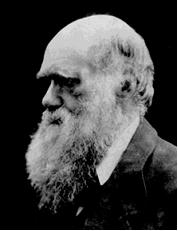
| 7. Describe how evolutionary theory (via natural selection as first presented by Charles Darwin and later by Richard Dawkins) helps in understanding human migration, cultural development, and social identity. (Think of evolutionary psychology). |
|
|
|
 |
|
|
| It was once believed that only animals lived by instincts while humans lost their instincts and lived by reason.� William James then took a totally opposite position.� He argued that we as humans, in fact have more instincts than animals that is why humans survived better than animals in most environments. |
|
|
| The theory of evolutionary psychology is the belief that humans have a part in their brain (instinct), which helps them adapt to their environment.� Human migration occurs because certain groups of people feel the urge to move somewhere else so their group can survive or flourish in numbers.� The groups of humans either have values that contradict against another dominant group then as a result are chased away or they already are prominent and can't expand anymore so they migrate.� The group of humans needs to find a better suited environment so they can flourish and thrive.� Once situated, the group of humans will begin to starts cultural development.�� Cultural development develops through the environment and surroundings.� The offspring of the humans will then take upon these values and social norms. Then as the group of people numbers grow there develops a social identity.� A social identity is a result of human migration; as generations pass people will begin to relate and identify with those who share the same beliefs or values.� This brings upon a sense of unity, which constitutes for a social identity. |
|
|
| Well use an example that can demonstrate how the process of evolutionary psychology ties in together.� The Puritans are an early group of American settlers.� They are a branch of Protestant in that after the reformation of the Catholic church, which it broke off into Protestants then which led to Lutheran then to Calvinists (founded by John Calivin) which led to Puritans.� The puritans tried to change the purity of the Church of England.� They eventually gave up and split into their own religion.� Knowing that they couldn?t expand in Europe they decided to move to a new country, which whom no one settled (human migration).� At this new continent they could establish their own religion and begin to build in numbers. Once they moved to the continent then the cultural development begins.� John Calvin preaches about Predestination, which is if you believe in a creator, so you must believe that God know that you want to be saved.� It was preordained that people will be saved.� This was the beginning of cultural development and so cultural values develop.� The Puritans did things differently from the Church of England.� They organized their church from the bottom up. �The people would elect their own deacon, there was a meeting house, men and women sat separately, and all people had to stand for prayer.� With the cultural values establish then the offspring of the parents will be passed on to the children.� Then, the people began to identify with those who share the same values as them.� This then brings upon a sense of unity or in other words, social identity.� (Nation of Nations: A Narrative History of the American Republic, James West Davidson, ch.1) |
|
|
| http://www.psych.ucsb.edu/research/cep/primer.html |
|
|
| http://usinfo.state.gov/usa/infousa/facts/history/ch1.html |
|
|
| sub heading: MASSACHUSETTS |
|
|
| 8. Describe the differences between Islam and Christianity. Be specific. You may wish to use an outline format and references to other websites. |
|
|
|
Islam |
|
Christianity |
|
|
|
Do not believe in the Trinity |
|
Christians believe in the Trinity (Father, Son, and Holy Spirit) |
|
|
|
|
|
God has informed us of only 99 of His beautiful names (Attributes). Many of them depict His beautiful aspects (Jamal), and some of them depict His power, authority and grandeur (jalal). |
|
|
|
Christians currently emphasize the beautiful aspects of God (i.e. God is Love) |
|
|
|
|
|
Jesus is a Prophet and a servant of God. Muhammad is also a Prophet and a servant of God. He was the last Prophet sent by God to guide and teach mankind. |
|
|
|
As a member of the Trinity, Jesus is viewed as God Himself. |
|
|
|
|
|
The Quranic teachings in this regard may be summed up as follows: (1) Christ was neither crucified nor killed by the Jews, notwithstanding certain apparent circumstances which produced that illusion in the minds of some of the enemies; and (2) Jesus was taken up to God (i.e.. God raised him up (raf'a) to Himself.) [Qur'an 4:157, 158 & 3:55 & 4:157] |
|
|
|
Christians believe that Jesus was crucified on a cross. |
|
|
|
|
|
Christians believe Jesus was resurrected (raised from the dead) three days after being crucified on a cross (Good Friday to Easter Sunday are the days when Christians remember and celebrate this.) Jesus' crucifixion they believe redeems Christians of their sins. |
|
|
|
Eschatology - Judgment will occur on Judgment Day (the end of the world when God will judge all human beings beginning from Adam and Eve). Persons who have been previously deceased, and are in their graves, are given an indication (via 'windows' in the grave) of what his or her future Judgment may be. The punishment of the grave will begin immediately. Rewards begin immediately too. (This intermediate stage of the grave may be regarded as similar to the Catholic Purgatory, and is called barzakh in Islam). The final abode of either Paradise or Hell will be pronounced on the Day of Judgment. |
|
|
|
Eschatology - most Christians believe that judgment takes place, immediately upon death (i.e. they will either go to Heaven or Hell, or as in the case of Catholics, they could also go to Purgatory immediately upon death). Christians also believe that the final Judgment Day is only for all those people who have not died yet and will be for those remaining on earth. |
|
|
|
|
|
Hell is a place of purification, and is permanent. Paradise as a reward and Hell as a punishment are but graphic terms to make us understand a state of things which is beyond all our notions of life in that world. Paradise will be eternal. Once meriting it, there can be no question of being ejected from it. As to whether Hell is also eternal for the unbelievers, there are two schools of thought: (1) A great majority of Muslims affirm that God may pardon every sin and every crime except disbelief in God. [Qur'an 4:48,116]
(2) Others believe that even the punishment of disbelief may one day terminate by the grace of God. [Qur'an 11:107, etc.]
The Qur'an 4:124 declares: If any do deeds of righteousness - be they male or female - and have faith, they will enter Paradise and not the least injustice will be done to them. In other words no religion has a monopoly on salvation! |
|
|
|
Hell is eternal, but Purgatory is not (note: Catholics believe in Purgatory whereas Protestants do not). While Catholics believe that Purgatory is precisely the same as Hell, it is not eternal. They believe it is a place or state of punishment wherein the souls of those who die in God's grace may do penance for past sins and hence become cleansed and fit for heaven. Only Christians can go to heaven. |
|
|
|
|
|
Christians believe in Original Sin, (all of mankind is held responsible for the sins of Adam and Eve) which only the sacrament of baptism in the name of Christ can expiate. |
|
|
All mankind is born pure and he/she is responsible for his or her own sins and not someone else's. |
|
|
|
|
|
Muslims do not believe in vicarious atonement. They believe that each person is responsible for his or her own actions and that no-one else can atone for them. However, you can pray to God for His Mercy and Forgiveness on behalf of another person. The Prophet Muhammad, p.b.u.h. -- and some others (like innocent babies who have passed away) are given the special privilege to intercede on behalf of their parents on the Day of Judgment. This is in accord with the Throne Verse in the Qur'an. So with God's graceful permission, they may have a specially bestowed privilege of pleading on behalf of others and begging for God's forgiveness for them on the Day of Judgment. This is known as intercession (shafa't). |
|
|
|
|
|
|
Christians believe in vicarious atonement -- that another person can extinguish the guilt incurred by another person's sins. Jesus is believed to have died so as to atone vicariously for man's sins. He was considered to be the Lamb of God, which means that Jesus was considered to be the perfect sacrifice by which the hold of Original Sin was broken. Christians believe in intercession and intercessors such as priests and monks. |
|
|
|
|
|
The holy Qur'an was revealed ('revelation' [wahi] is the highest form of inspiration with no possibility of error in the message or the conveyance of the message) to the Prophet Muhammad, p.b.u.h. through the angel Gabriel who was carrying out God's precise instructions. This occurred over a period of 23 years. The holy Qur'an is God's Word -- not the word of the Prophet Muhammad, p.b.u.h. |
|
Christians believe that divine inspiration (the Latin word is 'afflatus' which means 'divine wind') inspired the writers of the scripture. Hence they believe that the Gospel of St. Mark (obviously written by St. Mark) or the letters of Paul the Apostle are the Word of God. |
|
|
|
|
|
The Qur'an exists today exactlythe sameas it was revealed to Muhammad, p.b.u.h. There have been absolutely no changes whatsoever made to the wording. Special checks and balances and special means for the preservation of accuracy (.e.g. memorizing of the text by many people, etc. etc.) were put into place so that no error or change could possibly creep into the text. |
|
A council was called, in the early days of Christianity, where the church fathers and elders debated. This was presided over by the Roman (and Christian) Emperor Constantine (circa 324 A.D.). This council codified (systematized) standard Christian belief and gave the New Testament its present form, depriving some books of the status of Scripture (many of which still exist today and are known as the Apocrypha). |
|
|
|
|
|
All the Prophets, from Adam as. to Muhammad p.b.u.h. are pure and sinless/infallible. |
|
In the Old Testament (Jewish scriptures which most Christians regard as authoritative), Prophets are not portrayed as being infallible to say the least. |
|
|
|
|
|
There are many differences between the Quranic and the Biblical versions in the details of certain Biblical stories. |
|
There are many differences between the Quranic and the Biblical versions in the details of certain Biblical stories. |
|
|
|
For Muslims, Prophets are spiritually advanced and are very pure and sinless. They have been sent by God to guide and teach mankind. There have been 127,000 of them from Adam, a.s. to Muhammad p.b.u.h. who was the last Prophet sent, meaning that no more Prophets will come after him. Hence Muhammad p.b.u.h. was called the Seal of the Prophets. The Prophets were |
|
Prophets do not have the same stature in Christianity that they have in Islam. |
|
|
|
|
| �9. Why is the notion of "race" biologically obsolete, yet culturally viable? (Hint: difference between "nature" and "nurture".. or biology vs. sociology) |
|
|
| The notion of race was formed so that society is able to group people based on origin or color. Furthermore, race is biologically obsolete because there are no race genes, because all humans have the same genetic make-up. The human are all eat, sleep, know what love is and how to cry. That means we are all the same. Culture is seen as viable because when you look at two people, assume they from two different countries. They are the product of their own culture; you would be able to tell what type of culture they are by looking at a bare body or by looking at the internal organs. There is evidence that suggests that all humans come from the same gene pool. The notion of race does not come up until you look at one's culture. |
|
|
| 10. Susan Blackmore argues that religions serve as meaning memeplexes. Why, then, does she argue that there is no real or permanent self? How do her views dovetail with Buddhism? |
|
|
| Blackmore argues that religions serve as meaning memeplexes. These mememplexes must try to continue to survive so every week a person goes to church and gets those memeplexes reinforced. Memeplexes are subject to change over a person's lifetime, through experience and meme competition so there would be no real or permanent self. Everything we know has been tough to us. Religion is just memes complying with memeplexes. This dovetails with Buddhism because Buddhists believe that. Everything from gods to a blade of grass was undergoing a process of change, and nothing had a 'self' that endured from one moment to the next. Buddhism dovetails Susan's views in the sense that Buddhism sticks quite closely to the simplest teachings and includes no deities or hidden power. Buddhism teaches to go out on your own and find the truth for one self until the mind becomes clear. |
|
|
| 11. Explain how a religious idea/ritual/practice gets transformed in American soil. For example: I described how circumcision evolved form a religious ritual (from Egyptian to Judaic to Islamic) into a routinely performed medical procedure. This is a tougher question than you might suspect. Think before you leap. You want to describe how a religious idea/ritual/practice CHANGES in a North American environment. You can draw from ANY religion for your developmental example. |
|
|
| One of the best examples as to how a religious idea/ritual/practice gets transformed in American soil is Christmas. Christmas is viewed as a celebration of the birth of Christ, which is supported by Christians of some sects. (It is not acknowledged by some Christian religious sects.) What makes it interesting is that Christmas is totally integrated into the society as a whole and is shared by all those who live in the country whether they believe it was Christ's birthday or not, or whether there ever was a Christ. So we find millions of people celebrating Christmas with family, giving presents, having a tree, etc., but are not celebrating it because of their religious beliefs, but rather because the holiday has become more or less universal. It is also recognized by employers, giving people the day off with pay if it falls during a week day. However, a very small number of these people attend church on that day, or any other day. This was more or less due to commercialism of the holiday which brings benefit to the community as more money is spent on gifts, etc., which contributes to the economy. As the population has increased so has the importance of the holiday whether or not people celebrate it as a religious holiday. This is because it is widely promoted by commercialism as shown by the fact that even in November stores promote the buying of gifts. |
|
|
| 12. Explain Peter Berger?s concept of the ;heretical imperative (hint: think of class lecture: deductive, reductive, inductive) and how it applies to religious pluralism in general. |
|
|
| According to Peter Berger's concept of the Heretical Imperative, he states that modern man has three fundamental options in relation to religion: reductive, deductive, and inductive. The reductive option allows you to modernize religion as so it can fit in with today concepts and ways of thought. The deductive option reaffirms a particular religious traditional in spite of the arguments made against it. The inductive option focuses primarily on individual experience.� The Berger's concept applies to religious pluralism in general. Meaning all religions have there down falls. |
|
|
|
13. Take ONE new religious movement (any religion founded after the 16th century CE) and describe, in brief, its influence in North America. Use hypertext when necessary. |
|
|
|
Church of Christ: Organized by Presbyterians in Kentucky in 1804 and in Pennsylvania in 1809. The most recent dependable estimate lists more than 15,000 individual churches of Christ. The Christian Herald, a general religious publication, which presents statistics concerning all the churches, estimates that the total membership of the churches of Christ is now 2,000,000. There are more than 7000 men who preach publicly. Membership of the church is heaviest in the southern states of the United States, particularly Tennessee and Texas, though congregations exist in each of the fifty states and in more than eighty foreign countries.Missionary expansion has been most extensive since the World War Two in Europe, Asia and Africa. More than 450 full time workers are supported in foreign countries. The churches of Christ now have five times as many members as were reported in the U.S. Religious Census of 1936. |
|
|
| 14. How would Nietzsche describe the death of God and the rise of new religions? |
|
|
|
Nietzsche describes God as non-existent. He believes that the modern world will conquer the religious world.� There is no point to religion so it will die out and also has no proof of his existence. If God does not exist, then there is no immortality. There is nothing beyond the grave and it does not matter how you live your life. Nietzsche's unbelief should not be conflated with what he called the Death of God. This death is rather a cultural event, the realization that the belief in the Christian God has become unbelievable to the modern man. If God is dead, then one can certainly conclude that humanity is dead as well. In the absence of God, there is no one to have mercy on our souls. These above reasons lead to the raising up of new religions. They either come up with their own God or magically make the old God alive. |
|
|
| 15. How does Stephen Wolfram's new kind of science support Stephen Jay Gould's notion of spandrels or unintended consequences/complexities? Hint: think of how complexity is the result of simpler computational-like programs. |
|
|
|
Stephen Wolfram created Mathematical that was precisely to be able to do the science that is now in A New Kind of Science. A New Kind of Science. He designed the Mathematical language to be a symbolic notation that lets a very wide range of concepts and procedures be specified in a convenient way. A New Kind of Science gives licensing information for derivative works such as translations. The programs are all written in the Mathematical language, and you need to have a Mathematical system installed on your computer to be able to run them. That support Stephen Jay Gould's notion of spandrels or unintended consequences or complexities. |
|
|
|
17. How does Edward O. Wilson view theology? How would a "Consilience" approach in general, explain supernatural claims? |
|
|
|
Wilson proposes that consilience is achieved when all knowledge is subsumed under what is loosely called science Consilience is, in Wilson's words an extrapolation of the consistent past successes of the natural sciences . With consilience is achieved sound judgement will flow easily from one discipline to another . Specialists, presumably in every other field of human thought, will reach agreement on a common body of abstract principles and evidentiary proof . He is a sociobiology. When he speaks of uniting all human endeavors, he has a clear idea in mind: these things can be related, ultimately, to the human genome. It is unfortunate that sociobiology has been tainted by its association with eugenics and other unpalatable political movements, because these arise from a poor understanding of genetics. Wilson is far more sophisticated, and easily defeats those with an expressly political bent. Consilience goes far deeper. However, the fresh idea that Wilson develops is that of epigenetic rules, which perch between the pure genes on our chromosomes and the ultimate expression of these genes in our culture and conscious life. Common to all humans, these rules relate to things like incest avoidance, parental investment, and status seeking. They are, fundamentally, what is meant by human nature. Wilson's effort is not about mathematicizing psychology or sociology. It is about realizing that these fields can be approached with the same rigor as the natural sciences, even if the results will be completely different due to the staggering complexity of the objects of study. |
|