
Our Earth is important. We live in it. We need to take care of it!
|
Earth is the third planet from the sun. It is the denset and fifth-largest of the eight planets in the Solar Systom. It is also the largest of the Solar System's four terrestrial planets. It is sometimes referred to as the world or the Blue Planet.[23] Earth formed approximately 4.54 billion years ago, and life appeared on its surface within its first billion years.[24] Earth's biosphere then significantly altered the atmospheric and other basic physical conditions, which enabled the proliferation of organisms as well as the formation of the ozone layer, which together with Earth's magnetic field blocked harmful solar radiation, and permitted formerly ocean-confined life to move safely to land.[25] The physical properties of the Earth, as well as its geological history and orbit, have allowed life to persist.Earth's lithosphere is divided into several rigid segments, or tectonic plates, that migrate across the surface over periods of many millions of years. Over 70% percent of Earth's surface is covered with water,[26] with the remainder consisting of continents and islands which together have many lakes and other sources of water that contribute to the hydrosphere. Earth's poles are mostly covered with ice that is the solid ice of the Antarctic ice sheet and the sea ice that is the polar ice packs. The planet's interior remains active, with a solid iron inner core, a liquid outer core that generates the magnetic field, and a thick layer of relatively solid mantle. |
 |
 |
|
he atmosphere of Earth is a layer of gases surrounding the planet Earth that is retained by Earth's gravity. The atmosphere protects life on Earth by absorbing ultraviolet solar radiation, warming the surface through heat retention (greenhouse effect), and reducing temperature extremes between day and night (the diurnal temperature variation). The common name given to the atmospheric gases used in breathing and photosynthesis is air. By volume, dry air contains 78.09% nitrogen, 20.95% oxygen,[1] 0.93% argon, 0.039% carbon dioxide, and small amounts of other gases. Air also contains a variable amount of water vapor, on average around 1%. Although air content and atmospheric pressure vary at different layers, air suitable for the survival of terrestrial plants and terrestrial animals currently is only known to be found in Earth's troposphere and artificial atmospheres. The atmosphere has a mass of about 5.15×10¹⁸ kg, three quarters of which is within about 11 km (6.8 mi; 36,000 ft) of the surface. The atmosphere becomes thinner and thinner with increasing altitude, with no definite boundary between the atmosphere and outer space. The Kármán line, at 100 km (62 mi), or 1.57% of Earth's radius, is often used as the border between the atmosphere and outer space. Atmospheric effects become noticeable during atmospheric reentry of spacecraft at an altitude of around 120 km (75 mi). Several layers can be distinguished in the atmosphere, based on characteristics such as temperature and composition. |
 |
 |
|
Land, sometimes referred to as dry land, is the solid surface of the Earth that is not permanently covered by water.[1] The division between land and water is one of the most fundamental separations on the planet. As the vast majority of human activity occurs on land, in areas which support agriculture, habitat, and various natural resources, land has strong cultural value. Life forms have specialized to exist on land, including terrestrial plants and terrestrial animals, differing from predecessor species which came from early bodies of water. The demarcation between land and water varies by local jurisdiction. A Maritime boundary is one such political demarcation. A variety of natural boundaries exist to help define where water meets land. Solid rock landforms are more easy to demarcate than marshy or swampy boundaries, where there is no clear point at which the land ends and a body of water has begun. Demarcation can further vary due to tides and weather. Coastal zones are areas where land meets water. |
 |
 |
|
An ocean (from Ancient Greek Ὠκεανός (Okeanos); the World Ocean of classical antiquity[1]) is a body of saline water that composes much of a planet's hydrosphere, occupying more than two-thirds of Earth's surface.[2] On Earth, an ocean is one or all of the major divisions of the planet's World Ocean – which are, in descending order of area, the Pacific, Atlantic, Indian, Southern (Antarctic), and Arctic Oceans.[3][4] The word sea is often used interchangeably with "ocean" in American English but, strictly speaking, a sea is a body of saline water (generally a division of the World Ocean) that land partly or fully encloses.[5] Earth is the only planet that is known to have an ocean (or any large amounts of open liquid water). Saline water covers approximately 72% of the planet's surface (~3.6x10⁸ km2) and is customarily divided into several principal oceans and smaller seas, with the ocean covering approximately 71% of the Earth's surface.[6] The ocean contains 97% of the Earth's water, and oceanographers have stated that only 5% of the World Ocean has been explored.[6] The total volume is approximately 1.3 billion cubic kilometres (310 million cu mi)[7] with an average depth of 3,682 metres (12,080 ft).[8] The ocean principally comprises Earth's hydrosphere and therefore is integral to all known life, forms part of the carbon cycle, and influences climate and weather patterns. It is the habitat of 230,000 known species, although much of the ocean's depths remain unexplored, and over two million marine species are estimated to exist.[9] The origin of Earth's oceans remains unknown; oceans are believed to have formed in the Hadean period and may have been the impetus for the emergence of life. |
  |
 |
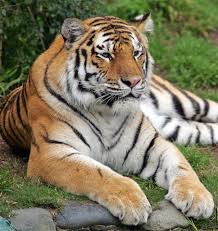


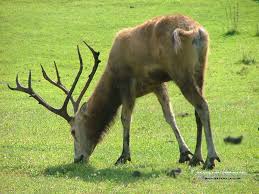
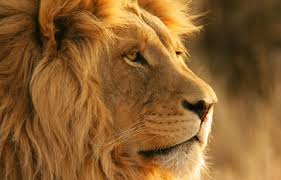
Animals are multicellular, eukaryotic organisms of the kingdom Animalia (also called Metazoa). Their body plan eventually becomes fixed as they develop, although some undergo a process of metamorphosis later on in their lives. Most animals are motile, meaning they can move spontaneously and independently. All animals must ingest other organisms or their products for sustenance (see Heterotroph).
Most known animal phyla appeared in the fossil record as marine species during the Cambrian explosion, about 542 million years ago. Animals are divided into various sub-groups, some of which are: vertebrates (birds, mammals, amphibians, reptiles, fish); mollusks (clams, oysters, octopuses, squid, snails); arthropods (millipedes, centipedes, insects, spiders, scorpions, crabs, lobsters, shrimp); annelids (earthworms, leeches); sponges; and jellyfish.
| Animal | Group Name |
|---|---|
| Albatross | Rookery |
| Antelopes | Herd, cluster, herd |
| Ants | Nest, army, colony, state, swarm, bike |
| Apes | Shrewdness, troop |
| Asses | Pace, drove, herd, coffle |
| Auks | Colony, flock, raft |
| Baboons | Troop, flange |
| Badgers | Cete, colony, set, company |
| Bats | Colony, cloud |
| Bears | Sloth, sleuth, slought |
| Beavers | Family, lodge, colony |
| Bees | Swarm, cluster, nest, hive, erst, bike, cast, college, drift, game, fry, peck, rabble, stand, range, butt, spindle, grist |
| Birds | Battery, cast, congregation, covert, covey, drift, flight, fleet, flock, flush, nest, aviary |
| Bison | Herd |
| Bitterns | Flock, sedge, siege |
| Bloodhounds | Sute |
| Boars | Sounder, singular, herd |
| Buffaloes | Troop, herd, gang, obstinacy |
| Bullfinches | Bellowing |
| Bullocks | Drove |
| Butterflies | Rabble, flight |
| Camels | Flock, train, caravan, herd |
| Caribou | Herd |
| Caterpillars | Army, nest |
| Cats | Clowder, clutter, cluster, colony, glorying, kindle, litter, dout, parliament, seraglio, glaring, destruction (wild cats) |
| Cattle | Drove, herd, bow, bunch, draft, drift, flote, head, diary |
| Chicken | Brood, clutch, hatching, nest, parcel, peep, battery, flock |
| Chinchilla | Colony |
| Clams | Bed |
| Cockroaches | Intrusion |
| Cod | Lap |
| Colts | Rake, rage |
| Cormorants | Colony, flight |
| Cows | Dairy, drove, pack, team |
| Crabs | Cast |
| Cranes | Flock, herd, sedge, siege, sege |
| Crocodiles | Bask, nest |
| Crows | Murder, parcel, hover |
| Deer | Herd, leash, bevy, game, quarry, bunch, mob |
| Dogs | Gang, legion, kennel, pack, stud |
| Dolphins | Team, school |
| Doves | Duet, dule, dole, flight, troop, pitying (of turtle doves) |
| Ducks | Bunch, brood, knob, raft, skein, string, mob, paddling, plump, sord, sore, team, waddling |
| Eagles | Aerie, brood, convocation, cargo |
| Eels | Swarm, bed, bind, draft, fry, wisp |
| Elephants | Herd, flock, parade |
| Elks | Gang, herd |
| Ferrets | Business |
| Finches | Chirm, charm |
| Fish | School, shoal, haul, draught, run, catch, cran, flote, flutter, cast, throw, warp |
| Flies | Business, hatch, grist, swarm, community, fare, rabble, cloud |
| Flamingoes | Stand |
| Foxes | Cloud, skulk, brace, leash, troop, earth |
| Frogs | Army, colony, froggery |
| Geese | Gaggle, clutch, flock, line, skein, nide, wedge |
| Giraffes | Herd, corps, troop, tower |
| Gnats | Swarm, cloud, horde, plague, rabble |
| Goats | Flock, trip, herd, tribe |
| Goldfish | Troubling |
| Gorillas | Band |
| Grasshoppers | Cloud |
| Hares | Down, flick, huske, kindle, tripp, drove, warren, dun |
| Hawks | Aerie, brood, cast, leash, mews, staff |
| Hedgehogs | Nest, array |
| Hens | Battery, brood, parcel, roost, mews, concatenation |
| Hippopotami | Bloat, school, pod, herd |
| Hornets | Nest, bike, swarm |
| Horses | Haras, stud, herd, string, field, set, team, stable, mews, mob, parcel, rag, slate |
| Insects | Horde, nest, swarm, rabble, plague |
| Jackrabbits | Husk |
| Jellyfish | Smuck, fluther, smack, stuck, smuth, brood |
| Kangaroos | Troop, mob, herd |
| Larks | Bevy, exaltation, flight, wisp |
| Leopards | Leap |
| Lice | Flock |
| Lions | Pride, troop, flock, sawt, souse |
| Locusts | Swarm, cloud, plague |
| Magpies | Tiding, tittering |
| Mallard | Flush, lute, puddling, sord, sute |
| Mice | Nest, colony, harvest |
| Midges | Bite |
| Minnows | Shoal, steam, or swarm |
| Moles | Company, labour, citadel (of mole burrows) |
| Monkeys | Troop, cartload, tribe |
| Moose | Herd |
| Mosquitoes | Scourge |
| Mules | Barren, span, mulada, rake |
| Nightingales | Watch, flock, route |
| Otters | Bevy, lodge, family |
| Owls | Parliament, stare |
| Oxen | Team, yoke, drove, or herd |
| Oysters | Bed, cast, clam, hive, set |
| Parrots | Company, flock, pandemonium |
| Peacocks | Pride, muster, ostentation |
| Pekingese | Pomp |
| Penguins | Parcel, rookery |
| Pigeons | Flight, flock, loft |
| Pigs | Drove, fare, litter, flock, hoggery, sounder, nest of trotters |
| Porpoises | School, crowd, herd, shoal, gam, pod, turmoil |
| Quail | Bevy, covey, jug |
| Rabbits | Bevy, bury (of conies), flick, kindle, nest, game, warren, colony |
| Racoons | Nursery |
| Ravens | Unkindness |
| Reindeer | Herd |
| Rhinoceros | Crash, stubbornness, herd |
| Rooks | Building, clamour, congregation, council, pack, shoal, wing |
| Salmon | Run, bind |
| Sardines | Family |
| Scorpions | Bed, nest |
| Seals | Pod, herd, trip, rookery, flock, plump, harem |
| Sharks | School or shoal |
| Sheep | Flock, hirsel, drove trip, drift, fold, hurtle, parcel, mob, down, pack |
| Snails | Escargatoire, rout, walk |
| Snakes | Bed, knot, den, pit |
| Spiders | Cluster, clutter |
| Squirrels | Drey, colony |
| Starlings | Cloud, chattering, murmuration, clattering |
| Stoats | Pack, trip |
| Storks | Flight, mustering, phalanx |
| Swallows | Flight, gulp, rush |
| Swans | Flock, bevy, bank, eyrar, drift, game, herd, sownder, team, wedge |
| Swine | Sounder, drift, herd, trip, drone, singular (of boars) |
| Tigers | Ambush, pack |
| Toads | Knot, nest, knob |
| Trout | Hover, leash, troup |
| Turkeys | Duet, crop, posse, rafter, gang |
| Turtles | Bale, dole, turn, dule |
| Vipers | nest |
| Vultures | Carpets, cast, drove, flock, herd |
| Walruses | Pod, herd, huddle |
| Wasps | Nest, knot, knab, bike, swarm |
| Weasels | Pack |
| Whales | School, gam, mob, pod, herd, plump, run, flote, shoal |
| Wildfowl | Lute, plump, scry, skein, sord, trip |
| Wolves | Rout, route, pack, head, horde |
| Woodpeckers | Descent |
| Worms | Bed, clew, bunch, clat |
| Zebras | Herd, zeal, cohorts |
Did you know Earth and
Mars are almost the same
size.


Nature, in the broadest sense, is equivalent to the natural, physical, or material world or universe. "Nature" refers to the phenomena of the physical world, and also to life in general. It ranges in scale from the subatomic to the cosmic.
The word nature is derived from the Latin word natura, or "essential qualities, innate disposition", and in ancient times, literally meant "birth".[1] Natura was a Latin translation of the Greek word physis (φύσις), which originally related to the intrinsic characteristics that plants, animals, and other features of the world develop of their own accord.[2][3] The concept of nature as a whole, the physical universe, is one of several expansions of the original notion; it began with certain core applications of the word φύσις by pre-Socratic philosophers, and has steadily gained currency ever since. This usage was confirmed during the advent of modern scientific method in the last several centuries.[4][5]
Within the various uses of the word today, "nature" often refers to geology and wildlife. Nature may refer to the general realm of various types of living plants and animals, and in some cases to the processes associated with inanimate objects – the way that particular types of things exist and change of their own accord, such as the weather and geology of the Earth, and the matter and energy of which all these things are composed. It is often taken to mean the "natural environment" or wilderness–wild animals, rocks, forest, beaches, and in general those things that have not been substantially altered by human intervention, or which persist despite human intervention. For example, manufactured objects and human interaction generally are not considered part of nature, unless qualified as, for example, "human nature" or "the whole of nature". This more traditional concept of natural things which can still be found today implies a distinction between the natural and the artificial, with the artificial being understood as that which has been brought into being by a human consciousness or a human mind. Depending on the particular context, the term "natural" might also be distinguished from the unnatural, the supernatural, or synthetic.
A natural disaster is a major adverse event resulting from natural processes of the Earth; examples include floods, volcanic eruptions, earthquakes, tsunamis, and other geologic processes. A natural disaster can cause loss of life or property damage, and typically leaves some economic damage in its wake, the severity of which depends on the affected population's resilience, or ability to recover.[1]
An adverse event will not rise to the level of a disaster if it occurs in an area without vulnerable population.[2][3][4] In a vulnerable area, however, such as San Francisco, an earthquake can have disastrous consequences and leave lasting damage, requiring years to repair.
In 2012, there were 905 natural catastrophes worldwide, 93% of which were weather-related disasters. Overall costs were US$170 billion and insured losses $70 billion. 2012 was a moderate year. 45% were meteorological (storms), 36% were hydrological (floods),12% were climatological (heat waves, cold waves, droughts, wildfires) and 7 % were geophysical events (earthquakes and volcanic eruptions). Between 1980 and 2011 geophysical events accounted for 14% of all natural catastrophes.[5]

During World War I, an estimated 40,000 to 80,000 soldiers died as a result of avalanches during the mountain campaign in the Alps at the Austrian-Italian front, many of which were caused by artillery fire.[6]
An earthquake is the result of a sudden release of energy in the Earth's crust that creates seismic waves. At the Earth's surface, earthquakes manifest themselves by vibration, shaking and sometimes displacement of the ground. The vibrations may vary in magnitude. Earthquakes are caused mostly by slippage within geological faults, but also by other events such as volcanic activity, landslides, mine blasts, and nuclear tests. The underground point of origin of the earthquake is called the focus. The point directly above the focus on the surface is called the epicenter. Earthquakes by themselves rarely kill people or wildlife. It is usually the secondary events that they trigger, such as building collapse, fires, tsunamis (seismic sea waves) and volcanoes, that are actually the human disaster. Many of these could possibly be avoided by better construction, safety systems, early warning and planning. Some of the most significant earthquakes in recent times include:

Volcanoes can cause widespread destruction and consequent disaster in several ways. The effects include the volcanic eruption itself that may cause harm following the explosion of the volcano or the fall of rock. Second, lava may be produced during the eruption of a volcano. As it leaves the volcano, the lava destroys many buildings and plants it encounters. Third, volcanic ash generally meaning the cooled ash - may form a cloud, and settle thickly in nearby locations. When mixed with water this forms a concrete-like material. In sufficient quantity ash may cause roofs to collapse under its weight but even small quantities will harm humans if inhaled. Since the ash has the consistency of ground glass it causes abrasion damage to moving parts such as engines. The main killer of humans in the immediate surroundings of a volcanic eruption is the pyroclastic flows, which consist of a cloud of hot volcanic ash which builds up in the air above the volcano and rushes down the slopes when the eruption no longer supports the lifting of the gases. It is believed that Pompeii was destroyed by a pyroclastic flow. A lahar is a volcanic mudflow or landslide. The 1953 Tangiwai disaster was caused by a lahar, as was the 1985 Armero tragedy in which the town of Armero was buried and an estimated 23,000 people were killed .
A specific type of volcano is the supervolcano. According to the Toba catastrophe theory 75,000 to 80,000 years ago a super volcanic event at Lake Toba reduced the human population to 10,000 or even 1,000 breeding pairs creating a bottleneck in human evolution.[8] It also killed three quarters of all plant life in the northern hemisphere. The main danger from a supervolcano is the immense cloud of ash which has a disastrous global effect on climate and temperature for many years.
Tsunamis can be caused by undersea earthquakes as the one caused by the 2004 Indian Ocean Earthquake, or by landslides such as the one which occurred at Lituya Bay, Alaska.
![[icon]](https://en.wikipedia.org/wiki/File:Wiki_letter_w_cropped.svg) |
This section requires expansion. (December 2010) |
A tornado is a violent, dangerous, rotating column of air that is in contact with both the surface of the earth and a cumulonimbus cloud or, in rare cases, the base of a cumulus cloud. It is also referred to as a twister or a cyclone,[12] although the word cyclone is used in meteorology in a wider sense, to refer to any closed low pressure circulation. Tornadoes come in many shapes and sizes, but are typically in the form of a visible condensation funnel, whose narrow end touches the earth and is often encircled by a cloud of debris and dust. Most tornadoes have wind speeds less than 110 miles per hour (177 km/h), are approximately 250 feet (80 m) across, and travel a few miles (several kilometers) before dissipating. The most extreme tornadoes can attain wind speeds of more than 300 mph (480 km/h), stretch more than two miles (3 km) across, and stay on the ground for dozens of miles (perhaps more than 100 km).[13][14][15]
"Dinosaurs
existed between 230 million years ago and 65 million years ago, but none of the
known dinosaur
species existed for this entire time period. Throughout the group's
existence, individual dinosaur species were evolving and going extinct. Some
species diverged and gave rise to other species, while others disappeared. A
mass extinction
event at the end of the Cretaceous period, 65 million years ago, ended the reign
of dinosaurs on Earth. Recently, many scientists have come to the conclusion
that, while dinosaurs may have disappeared, one dinosaur lineage had evolved
into birds long before the extinction event that wiped out the other dinosaurs
-- and so, in a sense, dinosaurs are still around today. "
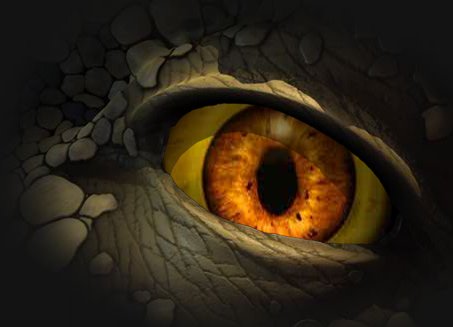
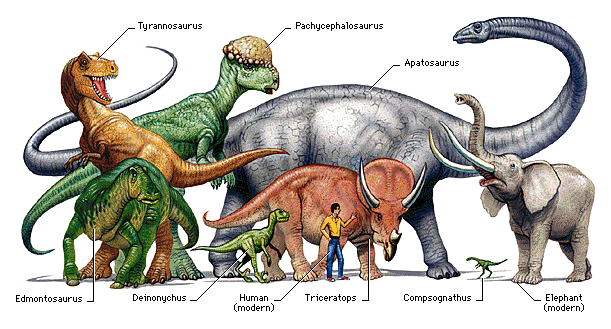
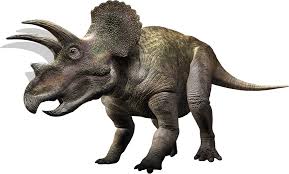
Dinosaurs lived throughout the Mesozoic Era, which began 245 million years ago and lasted for 180 million years. It is sometimes called the Age of the Reptiles. The era is divided into three periods.
Dinosaurs that lived during the Triassic period include:
Coelophysis (“hollow form”; found in the U.S.): a 9-foot long carnivore that was quick on its feet
Desmatosuchus (“link crocodile”; found in Texas): a reptile that looked like a crocodile and had sharp spikes on its back
Eoraptor (“dawn thief”; found in Argentina): the earliest-known dinosaur; walked on two feet
Ichthyosaurs (“fish lizards”; found in England, Germany, Greenland and Canada): this order of marine reptiles dominated the ocean during the Triassic period
Iguanadon (“iguana teeth”; found in North America, Europe and Asia): the first dinosaur to be discovered; its bones and teeth are different from any other known reptile
Plateosaurus (“flat lizard”; found in dozens of sites in Europe): an herbivore that had five-fingered hands with a clawed thumb
Plants, also called green plants (Viridiplantae in Latin), are living multicellular organisms of the kingdom Plantae. They form a clade that includes the flowering plants, conifers and other gymnosperms, ferns, clubmosses, hornworts, liverworts and mosses, as well as, depending on definition, the green algae. Plants exclude the red and brown algae, and some seaweeds such as kelp, the fungi, archaea and bacteria.
Green plants have cell walls with cellulose and characteristically obtain most of their energy from sunlight via photosynthesis using chlorophyll contained in chloroplasts, which gives them their green color. Some plants are parasitic and have lost the ability to produce normal amounts of chlorophyll or to photosynthesize. Plants are also characterized by sexual reproduction, modular and indeterminate growth, and an alternation of generations, although asexual reproduction is common.
Precise numbers are difficult to determine, but as of 2010, there are thought to be 300–315 thousand species of plants, of which the great majority, some 260–290 thousand, are seed plants (see the table below).[2] Green plants provide most of the world's molecular oxygen[citation needed] and are the basis of most of the earth's ecologies, especially on land. Plants described as grains, fruits and vegetables form mankind's basic foodstuffs, and have been domesticated for millennia. Plants serve as ornaments and, until recently and in great variety, they have served as the source of most medicines and drugs. Their scientific study is known as botany, a branch of biology.
Plants are one of the two groups into which all living things were traditionally divided; the other is animals. The division goes back at least as far as Aristotle (384 BC – 322 BC) who distinguished between plants which generally do not move, and animals which often are mobile to catch their food. Much later, when Linnaeus (1707–1778) created the basis of the modern system of scientific classification, these two groups became the kingdoms Vegetabilia (later Metaphyta or Plantae) and Animalia (also called Metazoa). Since then, it has become clear that the plant kingdom as originally defined included several unrelated groups, and the fungi and several groups of algae were removed to new kingdoms. However, these organisms are still often considered plants, particularly in popular contexts.
Outside of formal scientific contexts, the term "plant" implies an association with certain traits, such as being multicellular, possessing cellulose, and having the ability to carry out photosynthesis.[3][4]
When the name Plantae or plant is applied to a specific group of organisms or taxon, it usually refers to one of four concepts. From least to most inclusive, these four groupings are:
| Name(s) | Scope | Description |
|---|---|---|
| Land plants, also known as Embryophyta or Metaphyta. | Plantae sensu strictissimo | This group includes the liverworts, hornworts, mosses, and vascular plants, as well as fossil plants similar to these surviving groups. |
| Green plants - also known as Viridiplantae, Viridiphyta or Chlorobionta | Plantae sensu stricto | This group includes the land plants plus various groups of green algae, including stoneworts. The names given to these groups vary considerably as of July 2011. Viridiplantae encompass a group of organisms that possess chlorophyll a and b, have plastids that are bound by only two membranes, are capable of storing starch, and have cellulose in their cell walls. It is this clade which is mainly the subject of this article. |
| Archaeplastida, Plastida or Primoplantae | Plantae sensu lato | This group comprises the green plants above plus Rhodophyta (red algae) and Glaucophyta (glaucophyte algae). This clade includes the organisms that eons ago acquired their chloroplasts directly by engulfing cyanobacteria. |
| Old definitions of plant | Plantae sensu amplo | Old classifications placed diverse algae, fungi and bacteria in Plantae (e.g., Plantae Haeckel 1866 included land plants, some algae and fungi). |
Another way of looking at the relationships between the different groups which have been called "plants" is through a cladogram, which shows their evolutionary relationships. The evolutionary history of plants is not yet completely settled, but one accepted relationship between the three groups described above is shown below.[5] Those which have been called "plants" are in bold.
|
groups traditionally called "algae"
|
The way in which the groups of green algae are combined and named varies considerably between authors.

Algae comprise several different groups of organisms which produce energy through photosynthesis and for that reason have been included in the plant kingdom in the past. Most conspicuous among the algae are the seaweeds, multicellular algae that may roughly resemble land plants, but are classified among the brown, red and green algae. Each of these algal groups also includes various microscopic and single-celled organisms. There is good evidence that some of these algal groups arose independently from separate non-photosynthetic ancestors, with the result that many groups of algae are no longer classified within the plant kingdom as it is defined here.[6][7]
The Viridiplantae, the green plants – green algae and land plants – form a clade, a group consisting of all the descendants of a common ancestor. With a few exceptions among the green algae, all green plants have many features in common, including cell walls containing cellulose, chloroplasts containing chlorophylls a and b, and food stores in the form of starch. They undergo closed mitosis without centrioles, and typically have mitochondria with flat cristae. The chloroplasts of green plants are surrounded by two membranes, suggesting they originated directly from endosymbiotic cyanobacteria.
Two additional groups, the Rhodophyta (red algae) and Glaucophyta (glaucophyte algae), also have chloroplasts which appear to be derived directly from endosymbiotic cyanobacteria, although they differ in the pigments which are used in photosynthesis and so are different in colour. All three groups together are generally believed to have a single common origin, and so are classified together in the taxon Archaeplastida, whose name implies that the chloroplasts or plastids of all the members of the taxon were derived from a single ancient endosymbiotic event. This is the broadest modern definition of the plants.
In contrast, most other algae (e.g. heterokonts, haptophytes, dinoflagellates, and euglenids) not only have different pigments but also have chloroplasts with three or four surrounding membranes. They are not close relatives of the Archaeplastida, presumably having acquired chloroplasts separately from ingested or symbiotic green and red algae. They are thus not included in even the broadest modern definition of the plant kingdom, although they were in the past.
The green plants or Viridiplantae were traditionally divided into the green algae (including the stoneworts) and the land plants. However, it is now known that the land plants evolved from within a group of green algae, so that the green algae by themselves are a paraphyletic group, i.e. a group which excludes some of the descendants of a common ancestor. Paraphyletic groups are generally avoided in modern classifications, so that in recent treatments the Viridiplantae have been divided into two clades, the Chlorophyta and the Streptophyta (or Charophyta).[8][9]
The Chlorophyta (a name that has also been used for all green algae) are the sister group to the group from which the land plants evolved. There are about 4,300 species[10] of mainly marine organisms, both unicellular and multicellular. The latter include the sea lettuce, Ulva.
The other group within the Viridiplantae are the mainly freshwater or terrestrial Streptophyta (or Charophyta), which consist of several groups of green algae plus the stoneworts and land plants. (The names have been used differently, e.g. Streptophyta to mean the group which excludes the land plants and Charophyta for the stoneworts alone or the stoneworts plus the land plants.) Streptophyte algae are either unicellular or form multicellular filaments, branched or unbranched.[9] The genus Spirogyra is a filamentous streptophyte alga familiar to many, as it is often used in teaching and is one of the organisms responsible for the algal "scum" which pond-owners so dislike. The freshwater stoneworts strongly resemble land plants and are believed to be their closest relatives. Growing underwater, they consist of a central stalk with whorls of branchlets, giving them a superficial resemblance to horsetails, species of the genus Equisetum, which are true land plants.
The classification of fungi has been controversial until quite recently in the history of biology. Linnaeus' original classification placed the fungi within the Plantae, since they were unquestionably not animals or minerals and these were the only other alternatives. With later developments in microbiology, in the 19th century Ernst Haeckel felt that another kingdom was required to classify newly discovered micro-organisms. The introduction of the new kingdom Protista in addition to Plantae and Animalia, led to uncertainty as to whether fungi truly were best placed in the Plantae or whether they ought to be reclassified as protists. Haeckel himself found it difficult to decide and it was not until 1969 that a solution was found whereby Robert Whittaker proposed the creation of the kingdom Fungi. Molecular evidence has since shown that the most recent common ancestor (concestor), of the Fungi was probably more similar to that of the Animalia than to that of Plantae or any other kingdom.
Whittaker's original reclassification was based on the fundamental difference in nutrition between the Fungi and the Plantae. Unlike plants, which generally gain carbon through photosynthesis, and so are called autotrophs, fungi generally obtain carbon by breaking down and absorbing surrounding materials, and so are called heterotrophic saprotrophs. In addition, the substructure of multicellular fungi is different from that of plants, taking the form of many chitinous microscopic strands called hyphae, which may be further subdivided into cells or may form a syncytium containing many eukaryotic nuclei. Fruiting bodies, of which mushrooms are the most familiar example, are the reproductive structures of fungi, and are unlike any structures produced by plants.


