The Great Pikes Peak Debacle
(or, How I Started Climbing)
(Some names may have been changed to save face for some participants. Boy, I call people that do things like this idiots now.)
(Disclaimer: I was young and stupid. I knew what I could and couldn't do, and my training had included enough winter training, from school and mountain warfare, that I could more-or-less safely take care of myself; I did not then have the experience to know what I was in-part responsible for getting other people into. I apologize for my indiscretion, although none of those people are likely to ever read this, and hope that my subsequent experiences and current readers will judge fairly the story - for this is that, just a story. A true one. I hope others may take some of my experiences and benefit from them. Experience is a harsh mistress.)
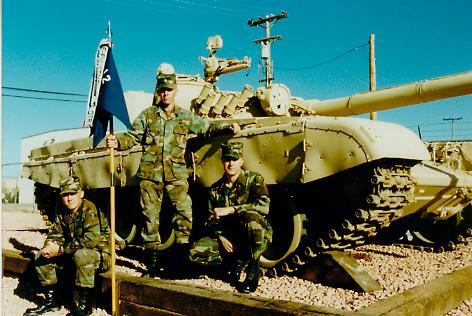
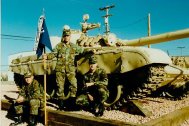 Back in 1995, I was still playing army games at Fort Carson. I'd been fortunate enough to receive my first choice in assignments (Infantry and the mountains), and was assigned as a young platoon leader with a mechanized company (small tanks). Being in a young, mostly hard-charging, mostly in-good-shape unit, we kept wanting to up the ante of what we could (and what the commanders would let us) do. Another platoon leader and I were of a mind to take our company on an off-base trip to climb over Cheyenne Mountain (over NORAD), and we eventually talked our commander, Johnny G., into letting us take a day for a reconnaissance. The trip we'd envisioned was a bust, as most of the mountain is claimed as private property by a number of business entities around Colorado Springs (most vehemently, by the Broadmoor); it was a long, 14-hour hike and bushwhack through some town history that not many people have heard about or know. We succeeded in completely traversing the mountain, but the difficulties in putting roughly a hundred people through what we'd done told us to work for something different.
Well, Pikes Peak sits just a few miles west of town and fairly dominates the skyline from most of the region; we thought, heck, that sounds like fun, too, not having any real idea of what we were getting ourselves into. The other PL and I did another recon on a weekend shortly after the Cheyenne Mountain trip, and hiked up to about 11000' to see how it would go. I don't want to bore anyone with the details, but it was long and hot in the sun, and ended in big snowfields that we hadn't brought any gear to get through. We didn't make it to treeline at the A-Frame, but came close enough to think that it was somewhat feasible. Back at Barr Camp, we spoke with the proprietors and they told us that no one had yet made the summit that year, due largely to the deep snowpack from the winter.
94-95 was a heavy winter in Colorado (one of the last good ones, to date). As my first winter here, it hadn't impressed upon me too well what that much snow really meant. There was a solid 15' of settled pack on the entire east face of Pikes (which we haven't seen since - it's been more like 6" that melts the next day), all the way to treeline, and deeper down into the forest where Barr Trail runs. Apparently the commanders who had to approve of our plans didn't realize the situation either, because after some gentle cajoling they approved the plan. Everyone thought that two, young, smart, way-in-shape LTs would have the wherewithal to decide whether our slightly less-in-shape comrades would be able to do whatever we could (mistake one). We decided to take the whole company of young, studly tankers and ground-pounders up in a long line, and to do it on a working weekday. It was kind of a reward (adventure training) for having spent most of the past year in the field playing wargames and being away from home.
Now, the army being what it is, we had to follow some (silly from a climbing perspective) rules (mistake two). The most bizarre was probably the packing list that we were supposed to carry. In heavy cotton uniforms (camouflage BDUs) and issue combat boots (which absolutely suck in snow and ice conditions, and aren't even much good if the pavement's wet), we were to carry 2 quarts of water and our issue ALICE packs (something I don't even want to get into). Each person was to carry dry socks and a t-shirt, and a wet-weather rain jacket (the Gumby suit top); for each 2 people, we'd split a single sleeping bag and a poncho. This was the contingency equipment. We figured we'd resupply water at Barr Camp, where they had a filtered source. The commander decided we'd travel as a single large group, with the company standard at the head; no one was to pass the standard, and we'd travel at the rate of the slowest soldier. We'd leave the trailhead around 8 (after all, it'd unfair to ask anyone to show up to work - at work - before 0630), and take a bus to the trailhead; and we'd have a bus pick us up at the summit that afternoon (!!! proper 2nd vehicle planning neglected). None of us had (surprisingly, considering our location and the number of people involved) ever climbed anything big before, and frankly didn't even know that there were these things called 'guide books.' So, all in all, we had no clue what we were doing (mistake three).
Okay, enough background: Time for The Story. We'd only left behind a couple of guys (the current gimps, with x or y medical problem or broken leg), and the rest of us got to the trailhead around 0730. Organizing everyone, checking with squad leaders to make sure everyone had everything they were supposed to, and all the army rigmarole took up the first half hour, and by the time we'd started it was a hot, sunny day and quite a warm climb up the east slopes zigzagging up to the top of the Incline. Quite a bit of water was drunk by the time we'd made 1500 vertical feet (of the total 7000). Since we were in more-or-less single file by platoons, I was actually pretty close to the front. We lost 4 or 5 guys in the first hour, due to poor physical conditioning; the First Sergeant had waited at the bottom to pick up returnees, so we didn't worry too much about it. A third lieutenant (of the 4 of us), who was supposed to be in much better shape and a role model, was one of these. By the time (about 1300) we'd reached Barr Camp (actually still on our schedule, as foolish as it was), we'd lost around a dozen.
 My Platoon Sergeant (best I ever had) was not looking kindly on the mess we'd already gotten into. He wasn't happy about the dropouts, and (more realistically than I) thought there was no way we could do the summit that day. The people at Barr Camp agreed. Still no one had summitted that year. The commander reached an agreement with the senior NCOs, and they gathered those not in 'good shape' or that thought that it wouldn't be a good idea to try more 'hard' hiking to reach the summit. We ended up with about 38 (the exact number escapes me, but 54 or so turned around) that wanted to continue. The next bad decision was for those turning back to take the heavy articles (ie, sleeping bags & ponchos) from those continuing (mistake four). Foolishly, I had no doubts that we could succeed on such a perfect day.
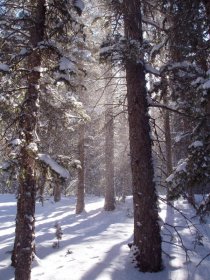
Our remaining party, about a third of those who'd started, mainly consisted of those of us who were either in incredibly good shape, or who had been coerced (one LT included) into continuing. We met the snowline head-on about half a mile past Barr Camp, and progress quickly slowed. I had carried my old, surplus army snowshoes (made of magnesium, in case one needed to start a fire without tinder), and took point; the rest of the company had to slog in punched-in steps we made. The next mile through the unconsolidated snow was not fun for the troop; a long rest break ensued at the A-Frame with several people wishing they had the gear I had. The party was in high spirits and well-fed and -hydrated, but none knew what would happen in the next, hardest 3000 feet.
As we continued on up, the party began to spread out, with some taking longer rest breaks and others continuing more quickly up the directissma (instead of the very-snow-covered Barr Trail). A group of perhaps 10 of us had passed the command group to punch in a path in the consolidated, sunbaked snow above treeline; although deep, it appeared most stable, and avies were the last thing I had to worry about. The slope, away from the NE ridge, wouldn't sustain much more than a sluff anyway. We continued on for a couple of hours, and eventually were strung out over about a mile of 'trail.'
Well, 4 o'clock runs about, and our group at the top (around 13000') could finally see the sky outside of the east bowl. I saw over the ridge dark clouds gathering on the Rampart Range, and they were just getting blacker and blacker. I hastened the others in our loose-knit forward party onward, and tried to yell back down to the others: "Get moving! There are dark clouds coming this way!" I got the big wave-off by groups sitting taking looooong rest breaks in the few rocks that poked through the snow. The best I felt I could do at that point was to pick up the close 'stragglers' and take them up with me.
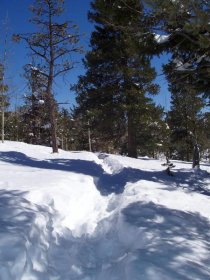 Around 5 it was getting pretty dark; spring storms on the Front Range can get ugly quickly, and this was shaping up to be one of those. One SSG and I were again at the front, punching in steps across a 50deg traverse that led to the summit block (we'd wandered too close to the NE ridge, under the cog railway terminus). By this time it was raining with some light hail, and the winds were blowing around 40mph, even across the somewhat-protected east bowl. Kicking steps was extremely important for those following us, so they'd have some idea of where to put their hands and feet to follow our trail. The SSG reached the summit about 200m ahead of me, and lo! no bus. Here's where mistake three took it's first hit at us. Without checking (or a physical recon of the road above Glen Cove) we'd assumed that a bus could get to the summit. Well, the road is unpaved above 11000' on the N side, and busses are stopped there. The mountain rangers found out about our plan during that day (mistake five, insufficient prior coordination), and had one with a Suburban on top to see it we'd show. We'd made the silly assumption that the summit house would be open and everything. I showed up shortly thereafter, and discovered the beginning of the problems we were to have.
Shortly before we hit the top, lightning started around us (not actually on the peak or NE ridge, but well within eyesight, thankfully), the precip turned to snow, the wind picked up, and the temperature really started to drop. I was (in all cotton, remember) soaked, so I took out the extras I'd carried: dry socks, a 5-button wool sweater, and wool glove liners. It was getting downright chilly, and it'd only get worse as the night approached. After changing in a windy alcove behind the summit house, I put my pack in the back of the Suburban and told the ranger of my new plan.
I would walk back down and start grabbing people, bring them to the truck, and repeat, ad infinitum. He told the base ranger station of the situation, and they dispatched the other two trucks to assist. Unbeknownst to me, they also put in a call to the summit house manager and told him what was going on. And so the adventure portion of the story begins.
By 7 it was pitch black with the storm, and the wind chill was into the negative range. I climbed down to the NE ridge a dozen or twenty times, each time bringing one or two soldiers up with me; sometimes leading, sometimes dragging by the shirt, sometimes with them leaning on me, sometimes almost carrying. My obvious first concern for the wet guys in the cold temperatures (with their cotton garb) was hypothermia (we escaped that bullet); as I'd drag them over the rail tracks and to the truck, I invariably heard things like 'I can't feel my (hands, feet, or other variations).' I'd open the door to the truck, toss the body in, and tell whoever was already in (with the heater cranking) to lift his shirt and put this guy's appendages on it. There wasn't much complaining on that end. And off I'd go again.
Around 9, I'd almost run out of people. I had 35 on top and headed down (one LT stayed up top for control, switching vehicles as they drove the guys down), but couldn't find anyone else within the top 400 feet or so (well below the steep section we'd kicked in below). The second LT managed, barely, to raise the commander on the radio, and he said that he and two privates were digging in; one couldn't walk anymore (too tired) and the other's knees ached. We couldn't get him to figure out exactly where he was on the slope from the visual cues, but from his description we deciphered his location to within about 200 feet (100 vertically). Mistake four plays significantly here. They, between the three of them, had their dry clothes and a poncho. Johnny very intelligently dug them a snow trench, built a roof, and they began to huddle. Of course, I had no idea of this at the time.
I went back on top, knowing very well the count of those still somewhere below. I was about completely frozen; it was -25F with wind chill, and I'd been out in it in a (now wet) wool sweater and wool glove liners, under nothing but an icy cotton set of BDUs. As I got into the last Suburban with the other LT and a ranger, the ranger asked if I'd like to call in SAR. I knew where the guys were, but couldn't get to them in my condition (the other LT was just out of steam). I took responsibility and made the call, making sure they knew it was me making the call. Maybe five minutes later, the owner/operator of the summit house made it up the road (apparently things like this happen every year or two), and opened up the doors for us. We moved into the new base of operations, hoping that Johnny and the privates would be okay. We used the cell phone we had (carried by one of the command group privates) to call back to the staff duty officer on Fort Carson, and told him what was up. I won't attempt to relate the interesting occurrences down there in this story, but will say that lots of people got woken up that night.
SAR was unexpectedly quick in showing up, and arrived only about two hours after we'd called them. In the meantime, the house operator plied us a gratis with much-appreciated liquid and food. I can't say enough about how he took care of us, nor of how much we appreciated it. I hope I can pass the marker along fully someday. The SAR guys, although much better equipped than we, had no idea how to read a map. We marked out a point we'd worked out to the bivy site (which turned out to be dead-on), and they ended up on the north side of the NE ridge, working the Bottomless Pit. One couldn't proceed with the mission from a bad case of AMS - neither a good sign from SAR in Colorado. Well, in any case, they didn't find the guys and returned around 0300. We spoke again with home base in Fort Carson, and they decided to set up a rescue with a Chinook; it couldn't fly in the storm (which was still raging), and they picked a time and LZ (about a thousand feet below the bivy) the next morning. I had a fairly significant headache by this point as well, and as nothing further could be accomplished with the equipment we had, I took a nap.
There's not much to this story beyond this until the aftermath. We got a ride down to the bus, which had waited until 0600 at the highway front gate, and went back to Carson. The battalion commander and executive officer were waiting for us, none too happy, and the guys flown out without incident or injury the next morning were taken to the hospital for observation, but released within hours. Almost unbelievably, there were no injuries or altitude/cold induced problems. We made the Washington Post. Now, almost no one (except those involved, of course) even remembers the incident or the details. It's important to keep track of these kinds of things, though, because they show us what kinds of trouble we can get ourselves into if we're not really ready to get into the situations.
This story is used extensively in Carson's Risk Management courses by Big Jim, the base safety officer, and my first name (but not my last) and rank is used extensively in talking about risk management, even to this day. The men we did get to the top had the biggest bragging story around for months, even after privately admitting (within the company) that it was the hardest thing they'd ever done (mine was and remains my first marathon, without training).
The only good things that came of the mission were more careful planning and oversight for some army operations, particularly involving 'adventure training,' and my addiction to climbing (in a much more safe and calculated manner). We learned so much the hard way. I'm just happy that it wasn't any a harder way than it was already. In my new pasttime/semi-career climbing and guiding, this is really something I'd rather forget; but five years and hundreds of harder, more desperate situations and climbs, and five years of experience in dealing with them (much, much) more safely makes me look back on this with not much more than regret for getting other people into the situation. I hope that this puts some of those demons that I push aside to rest.
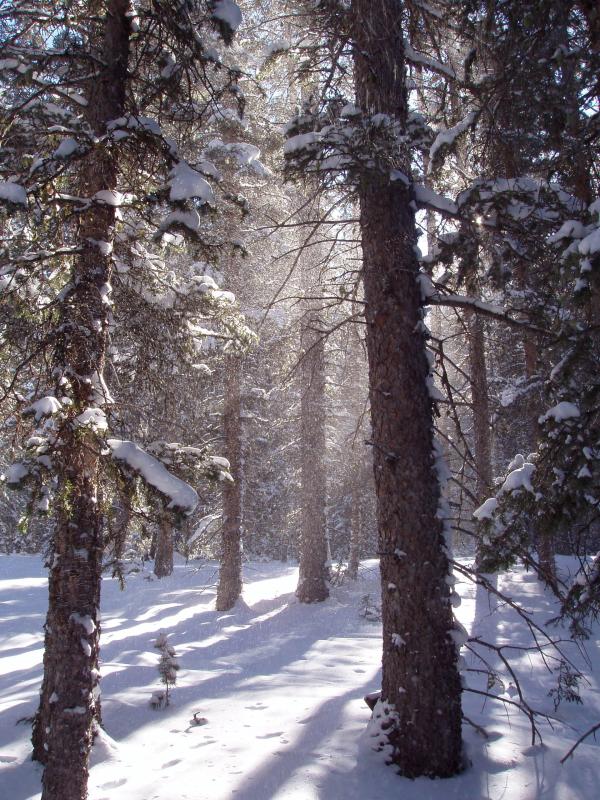 My Platoon Sergeant (best I ever had) was not looking kindly on the mess we'd already gotten into. He wasn't happy about the dropouts, and (more realistically than I) thought there was no way we could do the summit that day. The people at Barr Camp agreed. Still no one had summitted that year. The commander reached an agreement with the senior NCOs, and they gathered those not in 'good shape' or that thought that it wouldn't be a good idea to try more 'hard' hiking to reach the summit. We ended up with about 38 (the exact number escapes me, but 54 or so turned around) that wanted to continue. The next bad decision was for those turning back to take the heavy articles (ie, sleeping bags & ponchos) from those continuing (mistake four). Foolishly, I had no doubts that we could succeed on such a perfect day.
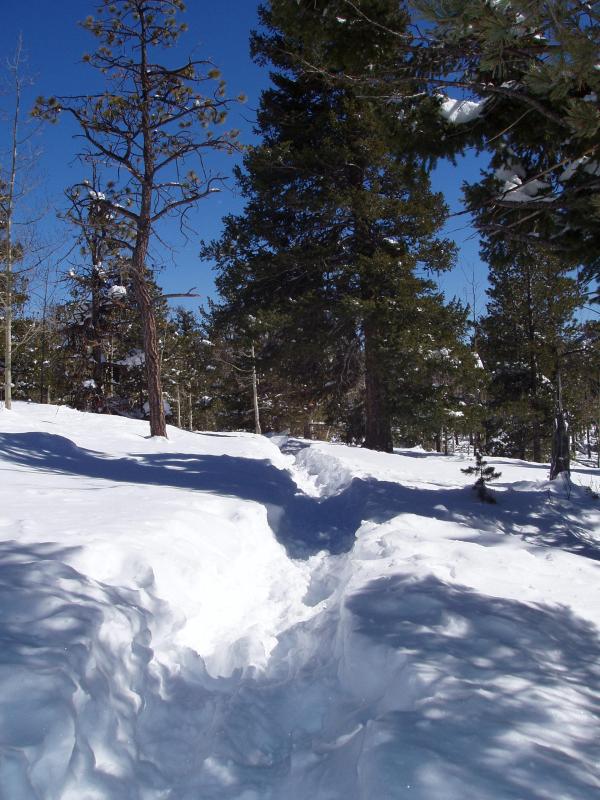 Around 5 it was getting pretty dark; spring storms on the Front Range can get ugly quickly, and this was shaping up to be one of those. One SSG and I were again at the front, punching in steps across a 50deg traverse that led to the summit block (we'd wandered too close to the NE ridge, under the cog railway terminus). By this time it was raining with some light hail, and the winds were blowing around 40mph, even across the somewhat-protected east bowl. Kicking steps was extremely important for those following us, so they'd have some idea of where to put their hands and feet to follow our trail. The SSG reached the summit about 200m ahead of me, and lo! no bus. Here's where mistake three took it's first hit at us. Without checking (or a physical recon of the road above Glen Cove) we'd assumed that a bus could get to the summit. Well, the road is unpaved above 11000' on the N side, and busses are stopped there. The mountain rangers found out about our plan during that day (mistake five, insufficient prior coordination), and had one with a Suburban on top to see it we'd show. We'd made the silly assumption that the summit house would be open and everything. I showed up shortly thereafter, and discovered the beginning of the problems we were to have.