Once settled in New Bedford, Massachusetts, Douglass joined a black curch and regularly attended abolitionist meetings, at which he was asked to share his story. He also subscribed to abolitionist Willam Lloyd Garrison's weekly journal The Liberator.
After sharing his story with church goers, he became a regular anti-slavery lecturer. Douglass' ability to give moving speechs impressed Garrison, who later featured him in The Liberator.
No face and form ever impressed me with such sentiments [the hatred of slavery] as did those of William Lloyd Garrison.
Frederick Douglass
A few days after the publishing of the story, Douglass was asked to deliver a speech at the Massachusetts Anti-Slavery Society's annual convention in Nantucket.
One correspondent spoke of the speech:
Flinty hearts were pierced, and cold ones melted by his eloquence.
Douglass would be the Society's lecturer for the next three years. This would be the start of his career as an abolitionist.
He was not always praised, however, during one of his lecture while on a Midwest tour, Douglass was chased and beat by an angry mob. His hand was injured in the process and bothered him for the rest of his life.
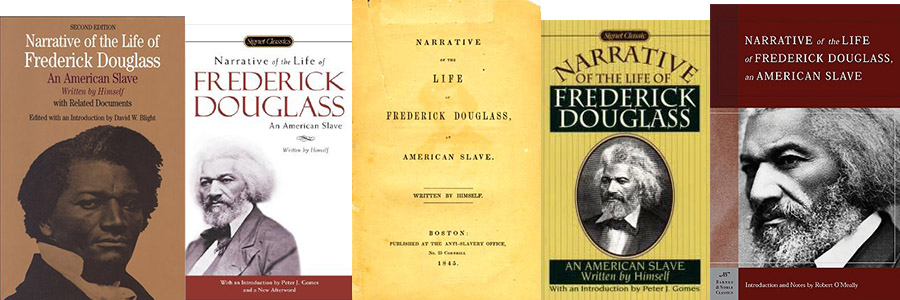
In 1845, with encouragements from William Lloyd Garrison, Douglass wrote and published his first autobiography, Narrative of the Life of Frederick Douglass, an American Slave, Written by Himself. The book was a bestseller in the United States and was translated into several European languages. His writing gained him many supporters that praise his work, as well as critics that doubted his history of being an uneducated slave.
In addition to being an abolitionist, Douglass, along with his wife, was a very outspoken supporter of women's rights. In 1848, he was the only African American to attend the first women's rights convention at Seneca Falls, New York.