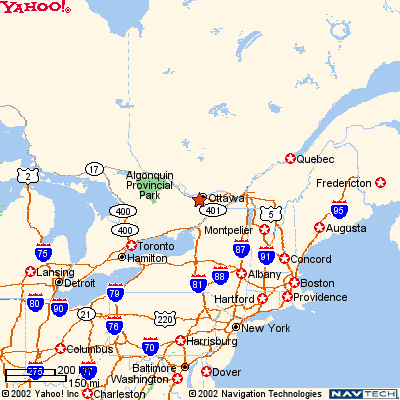
Hello ! This was my first Amateur Radio Field Day contest. I setup in my backyard in Kanata, Ontario, which is just west of Ottawa, the capital of Canada. The weather was perfect for my first field day, as it was warm and sunny.. nice for sitting in the back yard working the radios !!
Here is where I am located . For reference I am located in ARRL grid FN25.
I was only able to operate for a few hours on June 22, the first day of Field Day, but I still had a great time. The 6 meter band opened up nicely in the afternoon and then again in the evening which allowed me to make radio contacts all over the United States, from Ohio down to Alabama. In total I logged 21 6 meter contacts.. with only two in Canada.
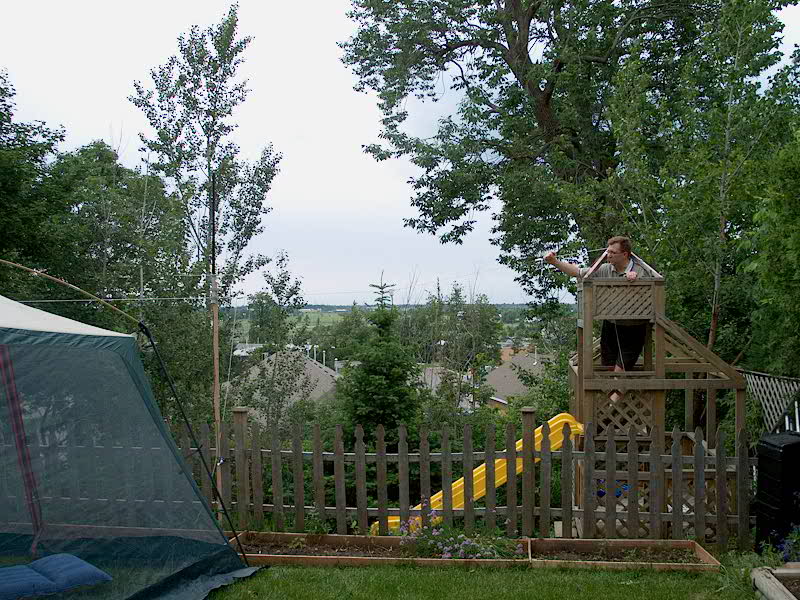
The following is a picture of me setting up my homemade 6 meter dipole antenna in my sons playhouse.. my first contact using this radio just prior to field day starting was a amateur operator in Florida. I would say that my antenna worked out quite well !!From this picture you can see my great location, on the South-West side of the "Kanata Hill", which gives me great radio exposure into the US.
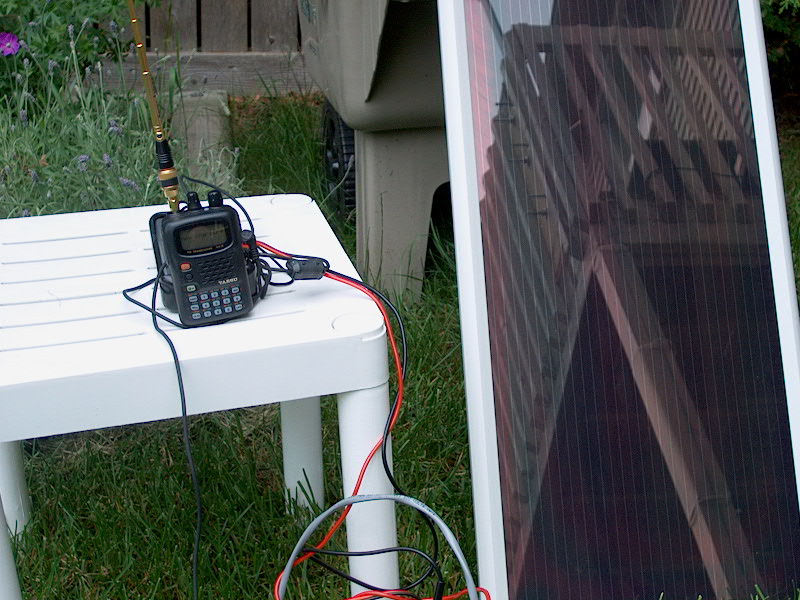
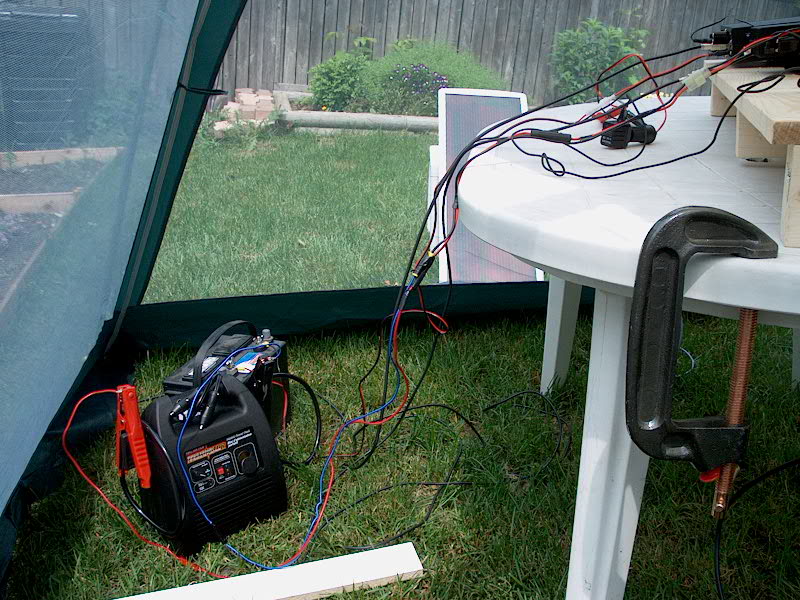
The main focus of field day is to exercise the emergency preparedness capabilities of amateur radio operators so that when a communications emergency occurs, we are ready to volunteer to help out. The following is a picture of my 15 Watt solar panel charging the batteries on my Yaesu VX-5 hand-held triband radio. This panel provides 15 volts at 1 amp in direct sunshine.. which will charge my VX-5 in a few hours and can be used to trickle charge larger deep cycle batteries.
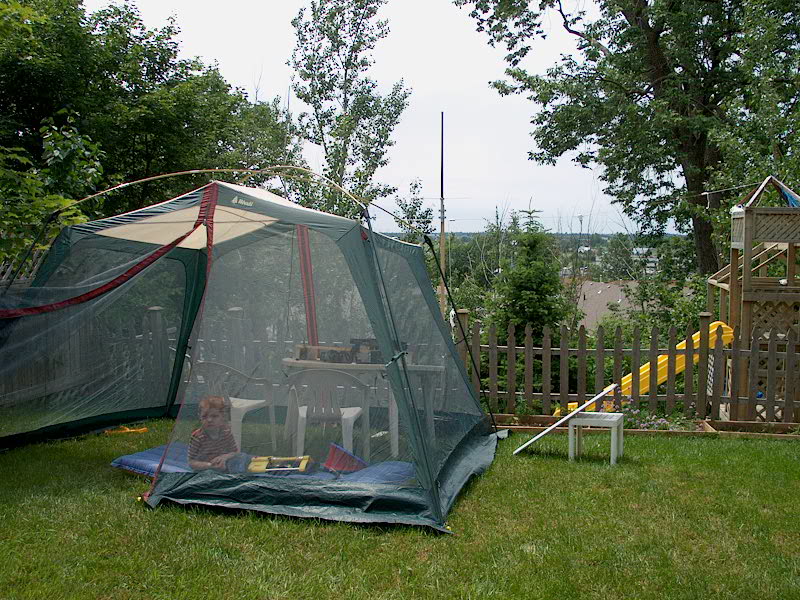
Next is a good picture of the dining tent that operated as my temporary radio shack. Note that ANLI A-100 2m/70cm GP antenna installed on the fence post, and the 6 meter dipole hanging to the right of it. (Also note my son, Matthew, trying to hide in the tent ;-)
For Field Day, I operated completely on emergency power. In this picture you can see the deep cycles battery and the 12 volt gel pack that I operated my radios on. These battery provide plenty of power for a weekends worth of radio work.
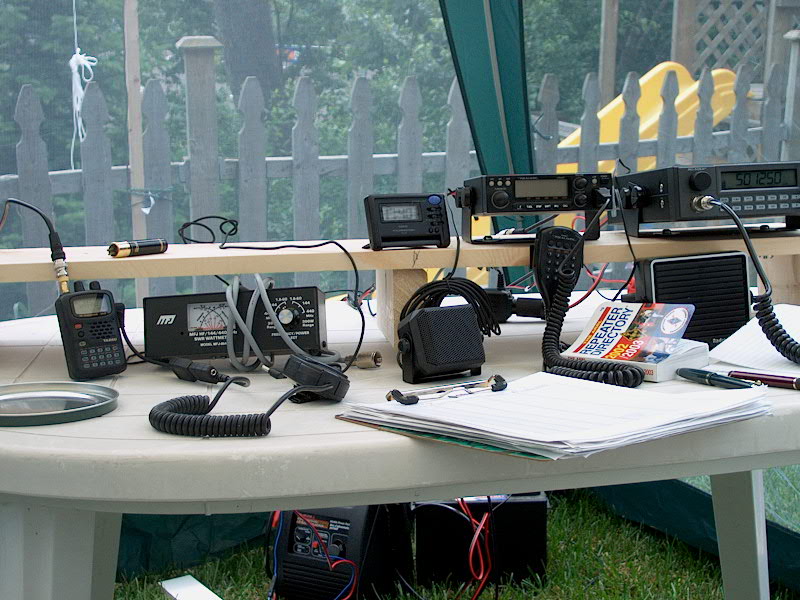
This picture shows the radios that I used. You can see my VX-5 handi-talkie on the left, then my Radio Shack HTX-212 2meter, and then my Ranger RCI-5054 all-band 6 meter transceiver.. The HTX-212 has 45 watts of output, while the Ranger has 25 watts output while working SSB. I used the VX-5 with a MFJ 1730 antenna to monitor local simplex activity.
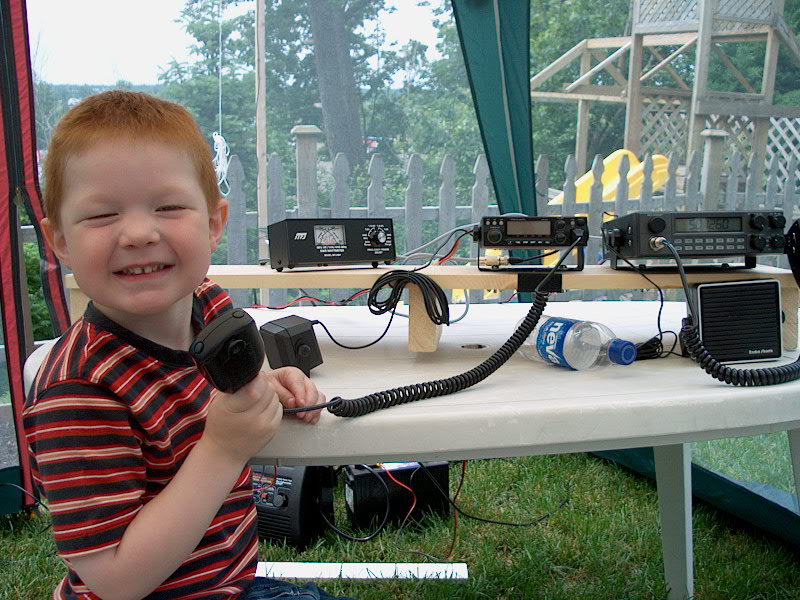
Here is a picture of my son (future Ham ?) "talking to the radio". Kids are great !!
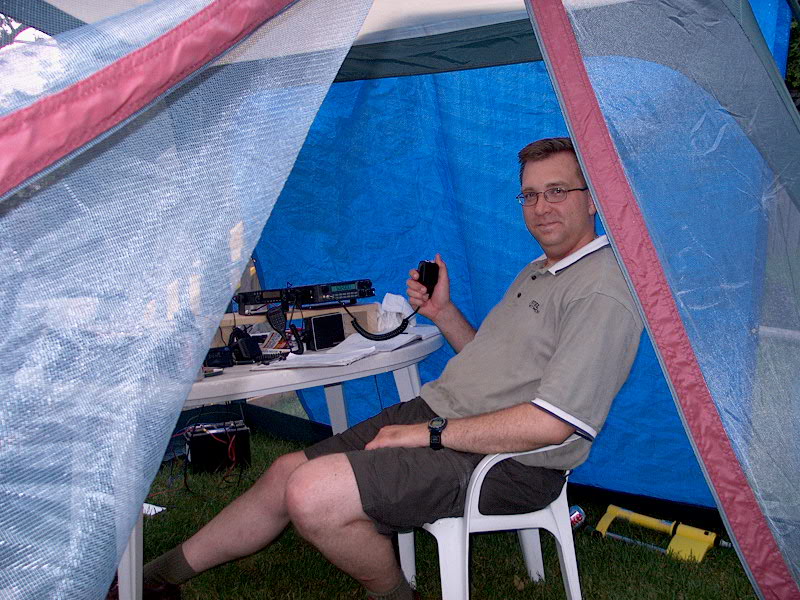
The weather threatened to turn nasty later in the evening, so I added a tarp to the side of my "shack". Here is a picture of me, KC2JMH, working the bands.
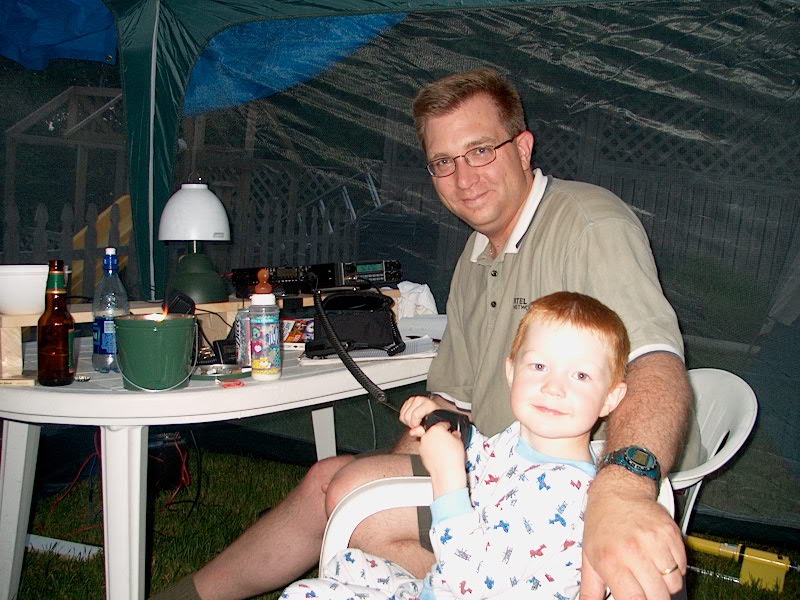
And finally, night time arrived and Matthew and I continued to work 6 meters looking for a few more contacts (note the "bottles" on the table!)
I have yet to tally up my score, but I do not think I will be winning any prizes this year. However, it was a fun setting up in the back yard, and I also learned a lot on how to operate outside of my permanent shack. Next year I hope to setup in a public location, and work HF with morse code !
cheers,
Tom Zinck (and Matthew)
KC2JMH/VE3
FN-25
Kanata, Ontario, Canada
[email protected]
