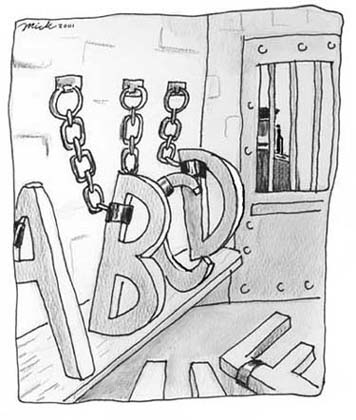
 Journalism is a picture of reality we can act upon. In
assembling that picture, it is essential for journalists to enjoy free
_expression.
Journalism is a picture of reality we can act upon. In
assembling that picture, it is essential for journalists to enjoy free
_expression. World Press Freedom Day - May 3
Journalism is a picture of reality we can act upon. In
assembling that picture, it is essential for journalists to enjoy free
_expression.
On World Press Freedom Day, we celebrate this freedom, and condemn those who wield the censor's pen — gun, cultural, traditional, ideological or political barriers — against those laboring to tell the truth through newspapers, magazines, radio reports, television news, photo images, and Web sites around the planet.
For journalists it is an often chaotic and dangerous world.
World Press Freedom Day honors sacrifices around the world made for freedom of the press and reminds governments of their duty to respect and uphold the right to freedom of _expression that is enshrined under Article 19 of the Universal Declaration of Human Rights. Proclaimed by the UN General Assembly in 1993, the day is celebrated each year on May 3, the anniversary of the Declaration of Windhoek, a statement of free press principles put together by African newspaper journalists in 1991.
UNESCO marks World Press Freedom Day by conferring the UNESCO/Guillermo Cano World Press Freedom Prize on a deserving individual, organization or institution that has made an outstanding contribution to the defense and/or promotion of press freedom anywhere in the world, especially when this has been achieved in the face of danger. Created in 1997, the prize is awarded on the recommendation of an independent jury of 14 news professionals. Names are submitted by regional and international non-governmental organizations working for press freedom, and by UNESCO Member States.
The Prize is named in honor of Guillermo Cano Isaza, a Colombian journalist who was assassinated in front of the offices of his newspaper, El Espectador, in Bogotá, on December 17 1986. Cano's writings had offended Colombia's powerful drug barons.
The 2006 Prize has been awarded to Lebanese journalist May Chidiac, a popular television news presenter who survived an assassination attempt in Beirut on 25 September 2005. She lost her left hand and leg when a bomb strapped to her car detonated minutes after she got in. She has come to be seen as a symbol of freedom of _expression in Lebanon, where the assassinations of two colleagues - Lebanese columnist Samir Kassir and newspaper publisher Gebran Tueni - in 2005 shocked the nation.
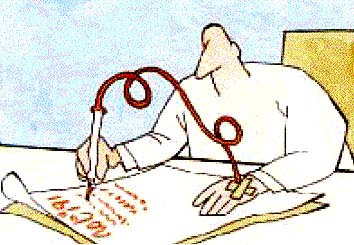
Freedom of the press is the guarantee by a government of free public press for its citizens and their associations, extended to members of news gathering organizations, and their published reporting. It also extends to news gathering, and processes involved in obtaining information for public distribution. Not all countries are protected by a bill of rights or the constitution pertaining to Freedom of the Press.
With respect to governmental information, a government distinguishes which materials are public or protected from disclosure to the public based on classification of information as sensitive, classified or secret and being otherwise protected from disclosure due to relevance of the information to protecting the national interest. Many governments are also subject to freedom of information legislation that are used to define the ambit of national interest.
In developed countries, freedom of the press implies that all people should have the right to express themselves in writing or in any other way of _expression of personal opinion or creativity.
The Universal Declaration of Human Rights indicates: "Everyone has the right to freedom of opinion and _expression; this right includes freedom to hold opinions without interference and to seek, receive, and impart information and ideas through any media regardless of frontiers.
---Remembering the hundreds of journalists killed in Iraq (16 in 2006 yet) and other parts of the world...