 International Workers' Day (May Day) is the commemoration of the ‘Haymarket Riot
of 1886’ in Chicago, US and a celebration of the social and economic
achievements of the international labor movement.
International Workers' Day (May Day) is the commemoration of the ‘Haymarket Riot
of 1886’ in Chicago, US and a celebration of the social and economic
achievements of the international labor movement. International Workers' Day
International Workers' Day (May Day) is the commemoration of the ‘Haymarket Riot
of 1886’ in Chicago, US and a celebration of the social and economic
achievements of the international labor movement.
The Chicago riots left such long lasting effects that that May Day was formally recognized as an annual event at the International's second congress in 1891.
Due to these ‘left-wing’ implications, May Day has long been a focal point for demonstrations by various socialist, communist, and revolutionary groups. In some circles, bonfires are lit in commemoration of the Haymarket Riot usually right as the first day of May begins.
In the 20th century, May Day received the official endorsement of the Soviet Union; celebrations in communist countries during the Cold War era often consisted of large military parades and shows of common people in support of the government.
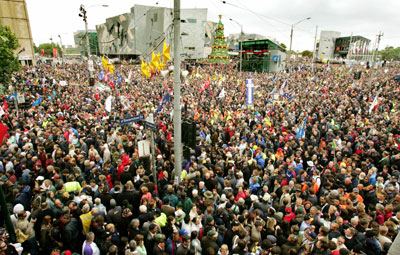
The apparent end of the left in the US ended May Day as a mass holiday in the United States, a phenomenon which can be seen as somewhat ironic given that May Day originated in Chicago. Meanwhile, in countries other than the United States, resident working classes fought hard to make May Day an official governmentally-sanctioned holiday, efforts which eventually largely succeeded. For this reason, May Day in most of the world today is marked by huge street rallies of workers led by their trade unions and various large socialist and communist parties — a phenomenon not generally seen in the U.S. (where the state has historically been anti-communism).
 In most
countries other than the U.S., May Day is often referred to simply as "Labor
Day" or "Workers’ day".
In most
countries other than the U.S., May Day is often referred to simply as "Labor
Day" or "Workers’ day".
The United States, Canada, Australia, and New Zealand celebrate their Labor Day on different dates, which has to do with how the holiday originated in those countries.
In Germany it was the Nazis, not the social democratic parties, who made May Day a holiday, calling it the "day of work", which is its official name in the country.
In the UK in recent years the anti-capitalist movement has organized a number of large protests in London that have resulted in clashes with the police. In 2000 the clashes ended with a branch of McDonalds being smashed and a statue of Winston Churchill being given a grass Mohican as a protest at his alleged crimes. The last few years, however, have seen little trouble, with protests consisting of peaceful marches and gatherings, particularly in central London.
Labor Day - What happened?
International Workers’ Day - a holiday set aside to commemorate the historic struggle of working people throughout the world. It is recognized in every country except the United States and Canada, despite the fact that the holiday began in response to the brutal massacre of workers and labor leaders demonstrating for an eight-hour work day in Chicago.
In 1884, the Federation of Organized Trades and Labor Unions passed a resolution stating that eight hours would constitute a legal day’s work from May 1, 1886. The Federation called for a general strike to achieve this goal, since legislative methods had failed to yield any results. Support for the eight-hour movement grew rapidly among the rank-and-file despite the indifference and hostility of many union leaders.
By April 1886, 250,000 workers were involved in the May Day movement throughout the country. The heart of the eight-hour movement was in Chicago, organized primarily by the anarchist International Working People’s Association. The business and governmental powers in Illinois were increasingly disturbed by the revolutionary character of the movement and began to prepare for a violent confrontation. Financed by local business leaders, the police and militia were increased in size and received new and deadlier weapons.
To give a specific example, Chicago’s Commercial Club purchased a two-thousand-dollar machine gun for the Illinois National Guard for use against striking workers. Despite the crackdown on labor and the military buildup of anti-union forces, by May 1 the movement had already won gains for many Chicago clothing cutters, shoemakers, and packing-house workers. When workers went on strike at Works' Factory on May 3, 1886, police fired into the crowd, killing four and wounding many others. The anarchists called for a mass rally the next day in Haymarket Square to protest the brutality shown by the police towards the strikers.
The rally proceeded without incident,
until the last speaker was ready to leave the platform. By this point, it was
getting late and it was starting to rain, so there were only about 200 or so
protesters left at the rally. It was then that 180 police officers marched into
the square and ordered the meeting to disperse. As the speaker left the stage,
someone threw a bomb at the approaching police, killing one and wounding
seventy. The police responded by firing into the crowd, killing one and injuring
many.
It was never determined who threw the bomb, but the incident was used as an excuse to try to wipe out all of the labor and progressive movements in Chicago. The police ransacked the homes and offices of suspected radicals, and several hundred were arrested without cause.
The anarchists in particular were targeted due to their involvement with the eight-hour movement. Eight of Chicago’s most active anarchists were charged with conspiracy to commit murder in connection with the Haymarket bombing, despite the fact that only one was even present at the meeting, and he was on the speakers’ platform. All eight were found guilty and sentenced to death, despite a complete lack of evidence that any of them had any connection to the person who threw the bomb. Albert Parsons, August Spies, Adolf Fischer, and George Engel were hanged on November 11, 1887, Louis Lingg committed suicide in prison, and the remaining three were finally pardoned in 1893.
Rather than suppressing the labor and radical movements, the events of 1886 and the execution of the Chicago anarchists actually mobilized many radicals of the next generation. Emma Goldman, a young immigrant at the time, later called the events surrounding the Haymarket affair her political birth. Lucy Parsons, the widow of Albert Parsons, called upon the poor to direct their anger toward the rich capitalists responsible for the horrible conditions the working class lived with. She later traveled the world urging workers throughout Europe to celebrate May Day and remember the events of Haymarket and the subsequent government-sponsored murder of those fighting for the rights of all workers. Instead of destroying the anarchist movement, the events in the wake of Haymarket served to strengthen the movement, spawning other radical organizations, including the Industrial Workers of the World.
We must recognize and commemorate May Day not only for its historical significance, but also as a time to organize around issues of vital importance to working-class people today. In that effort, activists, labor organizations, students, and all those outraged by the excesses and abuses of modern capitalism will not forget, and that together we can take back the world.
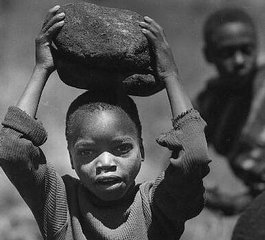
International Child Labor
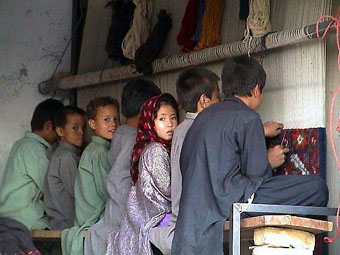
Child work: Children’s participation in economic activity - that does not negatively affect their health and development or interfere with education, can be positive. Work that does not interfere with education (light work) is permitted from the age of 12 years under the International Labour Organization (ILO) Convention 138.
Child labour: This is more narrowly
defined and refers to children working in contravention of the above standards.
This means all children below 12 years of age working in any economic
activities, those aged 12 to 14 years engaged in harmful work, and all children
engaged in the worst forms of child labour.
Worst forms of child labour: These involve children being
enslaved, forcibly recruited, prostituted, trafficked, forced into illegal
activities and exposed to illegal treatment.
Regional estimates indicate that: