
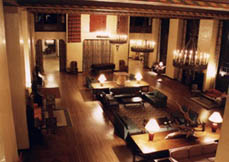
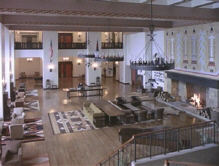
(pic : The Ahwanee Hotel, and The Overlook)
CODA
(pic : The Ahwanee Hotel, and The Overlook)
CODA
The final scenes of the film are also the most controversial, in so much as the vast majority of viewer have never actually seen them. They were deleted by Kubrick shortly after the films original cinematic release and have not been seen since, which, given their content, lessens the impact of the film, and the deletion also fails to make much sense.
In this scene, Ullman visits Wendy and Danny in hospital and informs her that searchers have been unable to locate Jack - or his body. The closing shot of the original cut of the film is that of Ullman throwing Danny a tennis ball - the same colour as the one rolled to Danny by the hotel outside Room 237 and the one used by Jack when avoiding his work - with the closing line �Hey, Danny, you forgot this�.
Barry Nelson, who played Ullman said in Premier magazine that
The Hotel itself is immortal : the land itself is cursed, and manipulates it�s occupants for its own amusement.. Already, as the current version of the film closes ominously, The Overlook has absorbed Jack into its timeless psyche. The final shot is that of Jack trapped forever within the hotel, inside a glass frame as if he were an animal trapped in a zoo for the amusement of onlookers - or The Overlook itself.
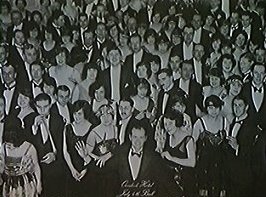
The camera closes in on a photograph of a smiling, jubilant man at a party at the Overlook Hotel on July 4th 1921 celebrating American Independence, America�s triumph over both the Britons and The Indians. For native Americans this date is no celebration, but the final nail in their defeat and the rape and pillage of their homeland.
That man is Jack Torrance - not only was he the caretaker of the Overlook that winter, but as he has been told : he�s always been the Caretaker. He�s not been absorbed into The Overlook : he never left. Not only did he spend a winter inside the prison that was the Overlook - it is where he will spend all his winters, in the home he wishes he could stay in forever. And ever. And ever.
As the credits roll, the ghostly voices of the song fade and a distant roar of applause, polite and murmured, is heard on the soundtrack. As the sounds of indistinct conversation echoes over the final frames of the film, Kubrick is again making a final, subtle comment upon those still in the theatre. We too are among those at the party, and those who have built our empires on the ruins of other. We too are those who paid our money to be entertained by watching a man descend into psychosis and murder his family. We too, are, in our banal way, as evil as The Overlook itself. The Overlook itself is not just a building, or a character, but the darkness that lurks in the hidden corners of all men.
home | reviews | rants | poems | writings | trivia | news | links | about mark | guestbook
� copyright Mark Reed, 1991-2003 except where indicated