
After the debacle earlier in the week at the office, some serious thinking was necessary. The coach arrived back in the town of Kayoma within 8 hours. I left the coach station and my feet, in their battered grey shoes, pounded dust across the sand and the near-molten tarmac. In the distance I could see the horizon shimmy as heat rose from the ground. Sometimes in places like this the road melts in the heat.
I arrived in sufficient time to get to the bank before it closed. I opened the safe deposit box, and there, as I had left it over six years before, lay a small box, contents intact.
My old ID cards, bank cards, drivers license and �100,000 cash lay there untouched. The only thing missing was my now useless passport, which had been given to Cecil the day I left as a badge of authenticity. I had no need for it anyway. My suit lay in the bag underneath the box, but it was crumpled, old, and aged. Whilst no insect could possibly have entered the area within the past few years, the fact remained that microbes had made a feast of my hand made suit. Cotton lay, ruffled and unshaped by time, but eaten and ragged at the edges.
It was unusable. Age had faded and withered the sharp cut which had been my trademark. It was now 4.30, and, at best I had 90 minutes to obtain a new suit before the shops closed for the evening and the town shut down again. At night this place was a ghost-town. A handful of bars open, and streets empty bar the odd car passing through. I took the contents of the box and emptied them quickly into my shabby pockets. I left the bank, and went to the nearest phonebox. Whilst such things were a throwback to a past age, I didn�t have a mobile. I booked myself into the most expensive hotel in the town, under my original name - a shabby man, with a beard grey and mottled with dirt and debris, hair long and matted, clothes torn and threads spilling out, talking into a plastic mouthpiece, in blazing summer sun, booking a room at the best hotel in town.
Of course, whilst most people have mobiles these days, I had tried to live as a humble man, living without the small pleasures and comforts. Even a small pleasure or comfort was ostentatious, excessive, in my wilderness. My integration back into the real world was near complete - though it didn�t seem very �real� as I re-entered, more flash, artifice, skin-deep. I knew if I came back too soon I would get the bends. Slowly slowly now. That�s why I walked back, smuggled, stowed away in ships, climbing over barbed wire fences. My appearance so ravaged that a perfect passport was no use, my appearance we so far gone that I just plain and simple didn�t bother with legal channels anymore.
Adam Versity was back. Under the baking sun, dressed in rags, I hadn�t felt a purpose like this for years. My beard, grey and flecked with dirt still itched, but by now, after so many years, I had found that it was a mere fact, no longer an irritation to me. I walked down the street, subject to wide berths from respectable, law abiding citizens. What was I? Some kind of monster? You would�ve thought so from the unspoken exclusion zone around me. The sight of a tall, large built bum with a grey dirty beard and a purposeful walk singled me out from a great distance, and security guards waited for me to do something, anything to throw me out. It still took some getting used to - being watched every step that I made, and people behaving as if I was a threat, a menace. A walking timebomb, to use a clich�. I can�t say I enjoyed it. Knowing every eye in the place was looking at me. But my steps had purpose, authority, I knew where I was going, and more importantly, I knew what to do to get there.
Thankfully I hadn�t lost or gained much weight in the past few years so I was still a respectable 38 inch waist. Leg 36. Shirt size 19. I picked out from the cheapest department store I could find a roughly matching suit set. It would not be my finest style moment, but my grand entrance required some attempt at respectability. I needed to do something like this, just to get away with it. I also purchased a new shirt, a pair of jogging bottoms, clean underwear and socks, and new shoes, size 11.
I paid cash, and whilst the counter assistant knew something was wrong, in the way she looked at me, the way she spoke to the supervisor, the way she asked for additional identification, the shop still served me. They hadn�t much choice not to. All shops still have the right to refuse service, but on what ground could they refuse to serve me? That I was in charge of an offensive smell? Behind me, like flies, security guards trailed at a discreet-but-obvious distance. They just wanted me out of the way as soon as possible, and it would hardly look good for some sleepy little town to be disrupted by an altercation, for them to throw out some homeless bum, because they knew that if they treated me without dignity, I could raise hell, and I would do so.
Time. Running out of time. Much like everyone else on the planet.
I�d been at the bottom for so long I�d almost forgotten what coming up for air was like. I had no choice. I was committed now, past the point of no return. I could almost feel the wash of clean money and respectability over me. Poverty brings a kind of dirt that sits under your skin, below your fingernails, that can�t be avoided, that precludes even basic hygiene. It taints the way you look at the world. When poverty strikes you, all you see is a world of taunting, impossible pleasure. It�s always just out of reach. Life becomes an exercise in denial, a punishment. Much like Christ on the hilltop, I learnt to resist everything I wanted and concentrate on nothing more, nothing less, than plain and simple survival.
In the end, I knew denial was the easiest option. You kid yourself you don�t want something, and eventually it becomes true. For a while, I�d suffered from that most debilitating of addictions: greed, and there is a limitless supply of money if you are prepared to do whatever it takes to get it. At the top of the earning tree, it is very possible to earn more than you can spend - it becomes, almost, an embarrassment, almost as much as poverty is.
To achieve that kind of wealth requires the vision, determination, and persistence that most people lack. Normally that means abandoning any empathy for anyone else - and that normally doing that, where one is unable to connect with another human being, is known as psychosis. The space where you might have been able to relate to others, to understand their actions, to emotionally predict their motives, or sympathise with their consequences, was wiped out. Void. It wasn�t even absent, it was if it had never existed. Capitalism is psychotic. All other human considerations were secondary in the survival instinct.
When one is safe, there is still a fear, an insecurity, that resides under the surface, that somehow the millions, the billions, might somehow run out, that somehow one might go back to the dreaded dark times that the majority have to suffer and toil in their entire lives. My addiction spiralled out of control - I thought I�d gone crazy.
So I cut myself off, and started again. I learned to live without possessions, needing only food and shelter. Like John Lennon. It was easy, if you try. I didn�t need a mobile phone, so I didn�t have one. I didn�t need a mansion, so I didn�t have one. But finally, the time came round. I knew if I didn�t go back, I might never be able to go back. The door would be shut forever and never open again. It was time to use my former status to an advantage.
Seven years after going missing, I knew I would be declared legally dead. My bitch wife would inherit my work, and no doubt spoil it on her latest run of rich, stupid lovers. She had had her grace period, and failed completely to redeem herself through her insatiable selfishness - the sin from which all of man�s downfall would come. Fear and selfishness. Like all great things, it was time for a comeback. Time for payback.
I ducked into a chemists, and there purchased a pair of hairclippers, a bathroom set, a pair of scissors and some soap. I knew I�d be needing a lot of these things.
I was walking everywhere. Everywhere is walking distance if you�ve got the time. I passed through the town and ate quietly at another JohnnyBurgers. After a while the body got used to digesting this junk. Whatever I was eating, it was product of approximately 97 cows from more than one country, and it was cold, poorly cooked, and a necessary evil. The patty sat palely next to a fraction of dismembered cow. It wasn�t food - more like fuel for the human machine.
Meal finished, I changed in the toilet stall. It was here I needed to be more effective. I needed to get past the bouncers on the door of the Milton Hotel. I peeled off the years and the layers of dirt and quickly put on the more casual clothes I had. I knew a homeless tramp wouldn�t even get in the door at the hotel I had booked myself in at. Layer, by layer, I was evolving from a caterpillar into a butterfly.
I could almost pass for a slightly scruffy, well off, gentleman, excluding the smell. I didn�t even look at my body for fear of being sick. I changed facing away from the mirror, and whilst looking down, only did so to gather what position I was in. The glimpses of my flesh were enough to persuade me to do this quickly. I imagined it black with dirt and sweat. The smell? Stale semen and old sweat, fermented, and radiating from my body visibly. Black rings circled me, like a tree trunk, a ring for every day, month, or year in the wild.
Within 3 minutes I vacated the restaurant and my bizarre visage was checking in at the Milton.
Sometimes I see dim traces of who I used to be. Years ago, in a different time, when I was a different person. When I had my own hair for example. They say inside the body of every adult, there�s a child trying to get out. Sometimes I pine for the way things used to be - old, lost days - where six weeks of summer holiday was a lifetime and sunshine felt warm against your skin. Sometimes I recognise who I used to be in mirrors and in dim faraway glances in my eyes. The only thing I have in common with my past are my memories.
We were born ordinary people. Ordinary lives, not especially rich or poor, not ugly, not beautiful, not exceptional, just plain and simple plain and simple. We learnt how to stretch the merest fractions of cash into a meaningful, if meagre, existence. We learnt how to subsist on the Value food ranges that were as tasteless as our homemade haircuts. Our evenings - knowing that the pretty ones we desired were well out of our reach - became exercises in depravity.
The pretty ones were taken, swayed by those with money, charm, and guile, spirited away from us. Knowing we could never achieve the art of beauty, we began to find the ugliest women we could, and win her affections.
Ugly women never ran from us - some were snotty - some knew our game - some were flattered - but all knew that in an age built purely on surface and appearance, that those without Mother Nature�s soft influence weren�t even a pretty face. They had to make up for this in other ways - having a personality, an open mind, or something else that distinguished them. A pretty face can get away with being vaccous, stupid, a trophy. Those who do not have the benefits of selective breeding ahve to find an alternate talent - something more.
The day after the evening before, where we all chase the least attractive lady there is, we meet up, discuss our success at being failures, and start all over again. Embarrasing text messages are often enough to prove (or not) your relative success at the task. She even sent me a text message, although it arrived on someone else�s phone.
Sometimes, we find that purely by chance, we actually like the person inside. We actually want to talk to them again. We actually want to meet them again. After a time, we even think about the future. It�s a long time to be alone, the future. Sometimes we find ourselves in a situation where we agree to pair off, join the great adventure with us, breed, conform.
Slowly we become our parents. Slowly we become everything we thought we�d never be. A process of a thousand small steps take us away from what we thought we were, and turned us into everything we hate. You can�t fight it. You can�t even outrun it. Time always wins in the end.
I paid by cash at reception. I knew I wouldn�t be long. I went straight up to the room, and repeated a ritual that I�d performed equally efficiently just under seven years ago. Christ, was it that long? Time is meaningless when there�s nowhere to go in a hurry. Days pass slowly, and yet in the blink of an eye. I made boredom an art form. I watched nothing happen slowly, for years.
I saw people begging for weeks, with nothing to show for their constant work, excepting that of stasis. Everything decays, everything dies, everything grows, even hair in death. I saw children with their arms and limbs hacked off, in order to increase their status on the begging rung in far distant lands. In the meantime, the rulers drove past in limos and comfort, looking down at the masses that supported them and kept them in place. The rulers thanked the huddled poor for their support, not knowing that even a nation of millions would be too tired, too poor, too exhausted to challenge anything. Beaten to submission. I saw governments rise and fall, tortures become tedium, and nothing ever changed except the names of the dignitaries in the limos. Motherfuckers in motorcades. Time for me to become another face in the parade.
Entering the room, I threw my bag on the bed, and my first move was to switch the television on to cover the sound. I knew what I was about to face would be uglier than any human degradation, because in some respects, this was self-inflicted. I�d chosen this route, to understand why those who have been made Saints achieved their greatness through inflicting suffering upon themselves for no reason other than to achieve some kind of lofty self-satisfied suffering in pursuit of a holy accolade.
This was my crusade, my time of suffering. I had come back to be crucified or to be celebrated.
I entered the bathroom and began running the taps to fill the bath with lukewarm water. It would the first contact my skin had had with water for a long time. I opened the bag, and laid out my suit and shoes clearly upon the bed. Next to them I assembled the hairclippers, the soap and towel, the shampoo, scissors, and the nail clippers in a clear order. First, make the grand gestures - the big wash, the cutting of the hair - then to refine and tidy the process. I imagined it would take me at least three hours to achieve even an approximation of cleanliness.
I wasn�t going to need the trouserpress for a long time. To ease myself in, I switched the television over to an everyday family entertainment show - TalkTV it was called - Jerry, Oprah, Ricki, Montel, Whoever.
Ditching the casual clothes as soon as I could, I began by staring naked at my body. My beard was long and brown, flecked with grey, dirt, and knotted from years of neglect. My hair was long, straggled and matted with time. Flecks of skin, dirt, dried mud and debris had burrowed deep below the visible hairline. Sand and dust was ingrained into the lines around my eyes, and there was a distinct line around my neck. Below the line my skin was black, tanned with years of dirt, unshed skin cells, and dirty clothes. My hands were rough, my skin strong and calloused, my nails black with grime. My toenails were hard claws of dirt.
I knew that even then, no matter how long I cleaned myself, I could never remove the marks of those years. As years of life take its toll, your body becomes looser, the skin flabbier. Years of shaving builds up a residual tolerance, like an addiction that can never truly be overcome. Every shave is ever so slightly further away than the last. Over the course of the years skin loses its softness, its definition. It migrates like icecaps and continents, away from youth.
I decided the best place to start would be my hands. I washed them thoroughly under the sink with several layers of soap and washing up liquid. I scraped the skin until I could see the red raw flesh underneath. Then I clipped each long, curved nail to the cuticle. Each nail snapped off harshly, smacking against the sink or the mirror. It hurt to do it. I then washed my hands again. There was dirt and dust ingrained deep within each fold of my skin, but I knew there was no point being immaculate at this stage. There was still much work to do. An approximation would suffice.
The bath had finished and so I dipped a finger in to assess the temperature. At best it had to be lukewarm, for a hot bath would scald and burn. You must learn to walk before you can run, and learn to hope before you can fly. My black skin trembled with fear. First, my feet entered. I had actually taken care of my feet, washing them regularly and changing my socks and shoes to prevent trenchfoot. Not everyone else was so thoughtful.
Black rings of dirt dissolved from my ankles as I stepped in, and soon the water was the kind of grey that only filth can bring. I lay in the bath, soaking in my own detritus, for five minutes, before scrubbing and soaping, and slowly revealing yet more, raw flesh from underneath the settled dirt. I washed my hair with the shampoo, softening it for the shave to come. My chest hair was matted as well - the only solution would be to shave it all off. I knew if I just tried to cut the hair in its present state, brittle, hard, matted, it would never come off easily or without pain. The dirt and clumps softened, moistened, came out easily as I gently ran a big brush slowly through the hair and held the other end of the hair with my hand. I was slowly quarantining my past. I exited the bath, drained it, and immediately began running another.
I almost recognised the shape in the mirror. There were still distinct layers of accumulated dirt and muck upon my flesh. It was as if I were a statue, cutting away all the bits that didn�t look like me. The black ring around my neck had yet to dissolve. The beard was clearer, the hair thinner. Clumps of hair had been yanked out with my brushing. I cut my hair short with scissors. Big clumps fell awkwardly, cartwheeling to the sink. I found the hairclippers and gently at first, then more confidently, shaved my skull.
Once a caterpillar, now a butterfly.
The cosmic ballet. The nine gates opened and the flood began. From all corners of the hall people streamed into the body, each an individual particle, each with lives, loves, hopes, secret lovers, each of whom have lips that kiss, hearts that beat, dreams that dare to breathe, people they hope to see again.
I am one of them - faceless, undifferentiated. I wear a uniform like everyone else - suit, tie, shirt, trousers, black shoes. I am trapped in my skin, and my body pounds with aches in places I can�t remember I had. I feel like my eyes should be taken out and replaced with a new pair. My feet feel as if the whole world is leaning over on me. Muscles ache, and my heart, that is, - my soul - feels some vague thing lacking deep inside. The thing that makes me whole. The thing that gives a life a narrative, a direction, something more than just eating, breathing, working. I need the thing that justifies the acts of being.
Of the thousands that flood from the nine gates, all at the same time, where the trains meet and arrive simultaneously, the flow of people moves as one. Like blood round a body, the mass of people is scattered to the corners of the hall. Each moves as an individual player in the symphony - one moves down slowly to the exit, another streams to the tube station, a third crosses the human flotsam to the newspaper stall.
I cut my way across them all - avoiding the beggars who look in an exhausted yet hopeful manner to me, past the children who are sizing up if I�m worth mugging or not - analysing the tone of my gait, the attitude of my walk, if I might cause trouble or just meekly handover my earnings - and past the potential lovers that could be mine, if only I make the effort.
And then, within a minute, they are all gone, leaving just a few lost stragglers, unsure of where they are, who they are, where they belong, where they�re going, and at any time, anytime at all in the history of mankind, we could find ourselves with them. There but for the grace of capitalism, go I.
And so, battling past beggars, muggers, buskers, and preachers I cut a path to the office again. Like yesterday. Like tomorrow. Like the next thirty years of my life. Ahead of me I see a man with a placard screaming at the passersby, all of whom huddle within their skins, like I do, pretending he�s not there. He�s asking us if we have seen the light, if we have let Jesus into our life. Like a cancer, he seeks to convert all the cells around him into clones. It�s hardly a good advertisement for the afterlife is it? Imagine being stuck forever with a wanker like that. Eternal Life? Nein Danke.
Even work seems preferable to an eternity with that.
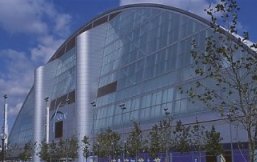
From the outside, Globex resembled nothing so much as a machine. Surfaces were sharp, yet soft. Edges were curved, but angular. We�d spent a lot of money making sure we got the message across. Fair, but firm. As a building it tried to subtly impose upon the landscape. It was as if we were trying to draw attention in a gentle way. It looked ahead of its time, yet not futuristic.
Futuristic implied dated, a vision that failed. Look at 2001:A Space Odyessy. How dated - who thought that in 2001 we really would be wearing silver suits and commuting to the moon? Yet mankind�s failure has always lied in overstating it�s importance, when really all human beings are part of the great cancer that is killing the earth. Soon the host will be so overtaken by the parasite that the host will simply disappear, and all human life will come to a undignified, messy halt.
At least that was the plan.
And so, whilst trying not to look ancient, we had carefully designed a building - award-winning in fact - that looked beyond the future, to the other place, to somewhere far beyond. Globex built its name on being always able to place itself in the optimum position to reap success. The right place, the right time, the right people, the right decisions. We weren�t lucky - we just felt things, an instinct, we called it, and we responded.
It was how we had got where we were today. But instinct had failed. I could see us going off the rails. An idiot was at the wheel. Even if it hadn�t legally been the right time, I had to reclaim my position or we would start to founder and fall.
Even so, Globex had a reputation, despite being big and powerful, for also being discreet. We were never in the headlines. Never made the front pages. We were always the unseen rulers. We let our friends in the House of Lords and the White House be the spokespeople for our policies, taking the advice of the leading figures of industry that they coveted so much. We were always the shadow at the corner of your vision that you knew was there but could never quite see. Even now, we stand behind your appliances under our various subsidary companies. Every component of every PC, every television, patented laser software and mobile comms technology could have very well come from us. We were without a name, without a presence, and yet we were everywhere. Our scientists designed the flavours for your breakfast cereals and soft drinks. The fashions on your backs and your high streets.
And yet, I was a great enigma. A legend. A man who few had seen and everyone had heard of - excepting a few rumours and investigative reporters trying to find out if I really was lounging with Elvis in a Hawaiian alcove nothing had been heard or seen of me in the past six years. Every once in a while an opportunist, or some might say, a fool, might attempt to fool someone he was me (and some had got some free meals out of it) - most were exposed quickly. Bone structure, finger print analysis, speech patterns. All these things could be proven by the latest technology. The only trace that truly remained was a photograph of me from years past mounted in the reception area. It was one of my few vanities. Everyone who entered or left the building had to pass through my gaze. I saw everything come and go.
Like every morning, main reception became vibrant around 8.30. It was almost as if you could set it by a clock. Globex always had a strong work ethic. Business. Another factor - one which not so many people realised - was the incoming times of the main trains and tubes into the City. At 8.33 for example, the reception was deserted. Thirty seconds later the tubes haemorraged people into the veins of the building. And just as suddenly, unless there was a shortage of lifts at the main hallways, they disappeared, swallowed up into the building. Absorbed in the corridors of business.
I had chosen my time for maximum exposure. There�s no point in making a big announcement. The rumour mill would be running over time, long before anything official. I would seep into the consciousness of the people long before they knew what had really happened.
My suit didn�t really fit me. The cut of the suit was not quite as precise as I would�ve liked, not as sharp as a dawn blade. But I was beyond that. I had changed. Something within me, deep below the surface had been altered forever by my past. I was tired though. A deep breath before my greatest performance in years even if I say so myself.
I timed myself, and entered the main reception precisely one minute prior to the arrival of the 8.31 tube.
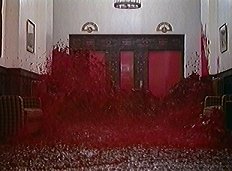
It was like going through an airlock. Where there was chaos, let me bring order. Where there was discord, union. Where there was poverty, prosperity. The air seemed different inside the reception. Processed, cleaner. As if all the dirt and the grime had been washed away. The marble panelling glinted in the harsh cut of the morning sun - the kind of sunlight that cuts like a blade. Sunlight that slices through everything and glows harshly on surfaces.
All around me people went about their daily business, doing the things that they do, sleepwalking, drugged, dulled. Men in suits looking uncomfortable, women arriving for work, all with rolled up newspapers, fresh cups of coffee and steam trails, queuing by lifts and timeclocks, logging in and out.
I strode purposefully across the reception to the desk where 25 hours earlier I had been so rudely ejected, cutting a path across the human flotsam beside me. The security guards, and the drones arriving for work, didn�t even give me a second glance. Though obviously somebody somewhere had been talking, as security seemed tighter than it had done the day before. There were more security guards here.
Patricia didn�t even bother to look up. Her hair remained the dominant feature as lights reflected off the marble panelling.
�Can I help you?� She asked without even looking up.
I cleared my throat. This was my big entrance. I had the necessary credentials to be verified.
�Good morning Patricia.� I said. �My name is Adam Versity and I have come to see Helen.�
She didn�t even look up when she sighed. Oh God, another one, she thought. From the corner of my eye I could see two security guards - thankfully not the same ones who were posted yesterday - glancing in a not very inconspicuous manner over at me. I glanced back, ensuring that I met their furtive stares. Their bodies stiffened with some form of recognition. Behind them I could see my portrait. It felt - good.
I removed my security pass and leant forward over the desk to show her. The security guards started walking towards me. Activity seemed to become a ballet - a stream of people flooded in from the main tube entrance and cut them off. Noise flooded the room.
Her face stopped. She looked up. A punch of recognition, more shock actually, spread across her face. She gasped, and the woman sat next to her looked across, then up, and then did the same. I enjoyed the feeling.
Composure quickly covered her face like a mask. We all wear masks. We hide our true feelings to ease our discomfort.
�Certainly sir, I will ring up and inform her.� She said.
�No, you won�t Patricia. If you value your job.� I asserted.
Her hand hovered over the keys that lead to her PA�s extension, hovered, and then fell awkwardly to the desk.
�Thank You Patricia.�
By now the crowd had cleared. Tweedledum and Tweedledee were heading towards me now, but slower, less threatening. I turned and met them, noticing quickly their ID numbers and name badges.
�Gentlemen,� I said, �Since I was last here I doubt that the Lift Preference Service has been taken out of use. You will escort me up to the 9th floor.�
Steve and Noel look somewhat surprised at this news. Noel has had a haircut in the past few months unless he was wearing a wig when that photograph was taken.
The two men nod in agreement. They don�t have any choice really - I�m sure they�ve heard of me - and even if they haven�t, I�m not going to be taking passengers along for the ride anymore. They�ll be begging for change on the Metro faster than you can say �no unions�. I lead the way past the main reception, and I note that two other guards are already marking the main entrance. Efficient - I hadn�t seen them appear.
By now most of the main crowd had dispersed, like confetti sprinkled at a wedding, and a handful of people remained in the main lobby. Me, Steve and Noel left the main reception, heels snapping at marble, and Noel leaned forward against the wall, flipping open a small box below the �Lift� button. He inserted a key and turned it.
Around us a circle of people were staring, in the quiet fashion that you do when you know you�re not meant to. Glances were passing amongst them. I knew then that the quickest and simplest way of spreading information - and sorting out those who were loyal to the company and those who were loyal to people - was to let word of mouth be my messenger. I stood in such a way that my ID card, prominently displayed upon my lapel, was clear. I hadn�t changed much since then. There was slightly less hair, and what there was of it was greyer. I�d lost a little weight - well, a breadline diet does that to you - and my skin was looser. It didn�t stick to my bones quite so well. But other than that, nothing. I was obviously, recognisably, still myself.
People weren�t meeting my glances. I don�t know why. When something momentous happens, for some reason, some people still feel that they ought to behave distantly. Normally when something bad happens - such as someone with pains shooting up their arms having a heart attack in a train station. We are trained by years of overexposure that we should generate a shield of apathy around us. That for some reason beggars and muggings just don�t exist even when we can see them there in front of our eyes. I can understand why. By looking at, even the gaze, the acknowledgement of its existence could mean that in some way we are implicated, involved. A glance from a mugger could mean that you are next. It�s fear. It�s hoping that we don�t really live in the world we created.
So nobody met my eyes. Even though they all knew it was me, and they all knew that in some way, their lives had changed in a small, but vital manner that was still yet to become clear - they couldn�t meet my gaze. The silence was painful. Everybody pretended to be looking somewhere else, doing something else.
Two lifts arrived near simultaneously. One beeped - the Preference Lift - the other made a buzz. The drones headed for the standard lift. As the people cleared around me, for a brief second I was alone. In the madness. From outside I could see a new wave of my people entering the people. I ensured that is stared at them directly. Some noticed. One woman dropped her security pass and bent down to pick it up, as the people behind tutted, swore, looked up, and recognised the man in the hallway in front of them. The look in their eyes was tasty.
The lift doors opened, we entered, and the door shut, taking us to the ninth floor.
home | reviews | rants | poems | writings | trivia | news | links | about mark |
� copyright Mark Reed, 1991-2002 except where indicated
