 TeamManley
 |
Webb And Geach The History and Progress of Mining in the Caradon and Liskeard Districts 1863 |
| This extract in taken from Webb and Geach's publication of 1863. The full publication is now available on CD-ROM |
| "The
South-Western portion of the parish of Linkinghorne adjoins the parishes of
St. Cleer and St. Ive. At this junction is
East Caradon,
which has excited so much attention of late years. The sett has three sides,
which form nearly an equilateral triangle South and
West Caradon being to the west, and Glasgow Caradon Consols and Caradon
Vale to the east. To the north is West Rose Down and
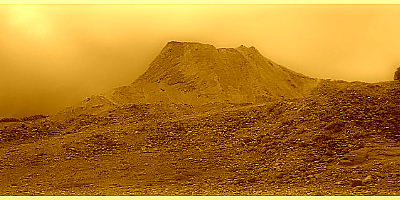
Marke Valley. The cone of
Caradon Hill is 1,200 feet above sea level, and falls rapidly for hundreds of
feet on either side, the land granted to this company forming the south
eastern slope. The northern boundary is 670 fathoms in length, and is parallel
to the lodes. From either end of this line the other two boundaries converge,
until at their southern extremities they meet at the same point. From this
description it is evident that though in the northern portion the lodes run
for a sufficient length through the sett, yet going south this length must
necessarily rapidly diminish. The relative position of this mine to
South Caradon and Gonamena is such, that nearly all the lodes of
the former, and many of the latter, must obviously pass through
East Caradon. It should,
however, be observed of Gonamena veins, that their rapid underlay north will
prevent their profitable working here. The mine is held under a grant from Mr. Symons, the late Mr. Marke, and the late Mrs. Doidge, at 1-18th dues, for 21
years from 1851. A brief description will now be given of the lodes discovered
and worked upon to December 1862, commencing from the southern apex of the
triangle, about 130 fathoms north of this apex is the new south lode, which
though very promising is at present giving but small profit to the
adventurers. It is opened on the 50 and 60, and in the first-named level is
worth about £8 per fm. A cross-cut is now driving to open up this lode at the
70, which will be reached about the middle of January next.
The Caunter lode is
a few fathoms further north, and is the same vein worked in the South Caradon
under the same appellation, in which mine it is very productive lode. The
junction of strata occurs at this lode-clay-slate or killas being to the
south, while the elvan and granite are adjacent north. In a work of this kind
it will not be thought necessary to give a particular account of the value of
the ores etc., even though this lode has created so much interest; a few general
remarks will suffice to give a sufficient idea of it. This lode has been
driven on both the 58 and 60 close up to the western boundary, while the
former level has been extended east to within about 40 fathoms of Glasgow
Caradon Consols. The whole length on the course of the lode at the surface in
this sett is about 200 fathoms. The lode at the 50 was very rich, at several
points worth £100 per fathom; varying in the Eastern drivage, which is 100
fathoms long, from £30 to £100 per fathom. It was also rich at the 60, having
been worth from £40 to £60 per fathom. The 70 has only been opened on about
10 fathoms, but does not look so well; the lode in the eastern end is five
feet wide, with two branches of copper ore running through it worth £30 per
fathom; the part of the lode being driven on west is about the same value. The
opinion formed from the appearances of this lode at he 70 east just now seems
to be rather unfavourable; but as the same lode in South Caradon has been rich
to a great depth at a short distance west, it is not improbable but that both
driving on and in going down it may be likewise prove a remunerative lode
here. The value of the ore raised above the 60 (little having as yet been done
at the 70) is about £60,000 and Captain Seccombe estimates that the reserves
at from £90,000 to £100,000. There is a large elvan course north of and
accompanying the caunter, and in the same elvan a little north, occurs
Fawcett’s lode, which has been opened on for some distance; but this lode is
small and will at present scarcely pay for working. An adit level has been
driven north from the caunter nearly 200 fathoms, and several lodes
intersected. An engine-shaft has been sunk 40 fathoms under this adit, such
shaft being 80 fathoms from the surface; and a cross-cut has been driven south
at this 80 fathom level, and intersected two or three of those lodes which
were not found productive. This operation, it must be observed, is 200 fathoms
north of the workings on the caunter, which was cut rich by means of a flat
rod extending that length to a shaft southwards, which is now at the 70 fathom
level, or 90 fathoms from the surface. At the 50 fathoms level, or 70 from the
surface, at this shaft, a cross-cut is being driven, to intersect some of
these lodes, one of which has been cut and driven on, but found unproductive.
On what was the flat rod-shaft a new 48-inch pumping engine has recently been
put up, with wrought iron beam, near to which is a 24-inch steam whim. With an
expenditure of £16,742. 8s. the mine has returned in dividends of £29,952." |